
Nuclear
U.S. Alleges China Conducted Undeclared Nuclear Test in 2020

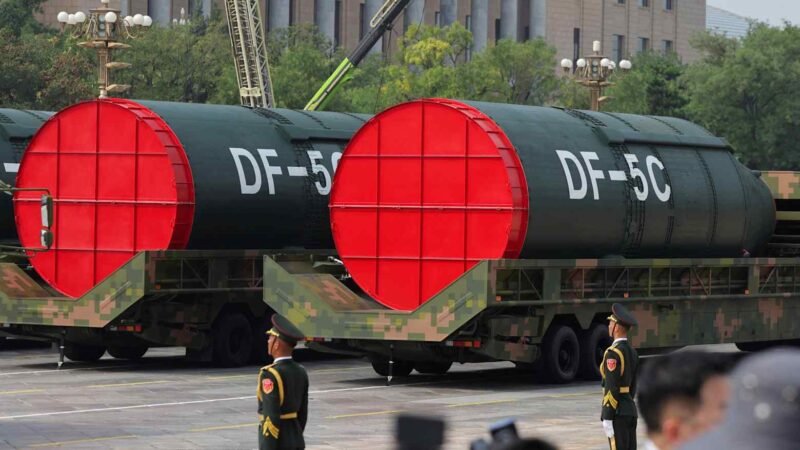
A mysterious seismic signal in 2020 is back in the spotlight — and Washington says it may point to a hidden Chinese nuclear test.
A senior U.S. official has disclosed new details about what Washington believes was a covert Chinese underground nuclear test in June 2020, an allegation Beijing firmly denies.
Speaking at the Hudson Institute in Washington, Assistant Secretary of State Christopher Yeaw said seismic data from a monitoring station in Kazakhstan detected what he described as a magnitude 2.75 “explosion” on June 22, 2020, near China’s Lop Nor test site in western China.
Yeaw said the signal, recorded roughly 450 miles away, was inconsistent with mining activity or natural earthquakes. Based on his review of additional data, he argued that the event matched what would be expected from a nuclear explosive test, possibly conducted using a method known as “decoupling” to muffle seismic signatures.
China’s last officially acknowledged nuclear test took place in 1996. Beijing has signed, but not ratified, the Comprehensive Nuclear-Test-Ban Treaty (CTBT), which prohibits all nuclear test explosions. The United States has also signed but not ratified the treaty.
The Comprehensive Nuclear-Test-Ban Treaty Organization (CTBTO), which operates a global monitoring network, said the data were insufficient to confirm that a nuclear test had occurred. Executive Secretary Robert Floyd noted that the seismic station in question recorded two small events spaced seconds apart but said they were below the threshold typically associated with nuclear explosions detectable with confidence.
China’s embassy in Washington rejected the U.S. accusation as “entirely unfounded,” calling it political manipulation aimed at justifying a possible resumption of American nuclear testing. Beijing urged Washington to reaffirm commitments by the five recognized nuclear-weapon states to refrain from testing and to support global nonproliferation efforts.
The renewed allegation comes amid heightened tensions over nuclear arms control. The New START treaty between the United States and Russia expired in February, raising fears of a new arms race. U.S. President Donald Trump has pressed China to join trilateral arms negotiations with Washington and Moscow, but Beijing has resisted, arguing that its arsenal remains far smaller than those of the two superpowers.
According to the Pentagon, China now possesses more than 600 operational nuclear warheads and could surpass 1,000 by 2030 — a buildup that continues to reshape the global nuclear balance.












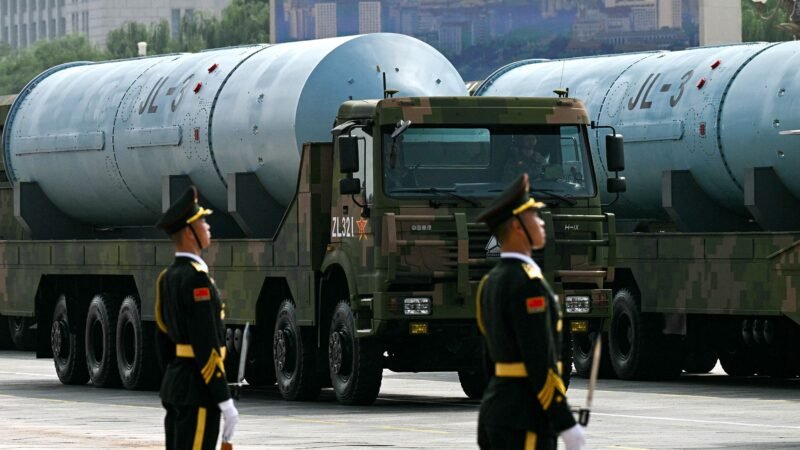
The last nuclear arms cap is gone — and Washington says it wants a bigger, tougher deal.
U.S. President Donald Trump has rejected a proposal by Russian President Vladimir Putin to voluntarily extend limits on strategic nuclear weapons deployments after the expiration of the New START treaty.
In a post on Truth Social on Thursday, Trump dismissed the idea of a one-year extension, calling New START a “badly negotiated deal” and urging instead the negotiation of a “new, improved and modernized” arms control agreement that could last longer and include additional powers.
Putin had proposed that both countries continue to observe New START’s caps — limiting each side to 1,550 deployed nuclear warheads on 700 delivery systems — for one year after the treaty’s expiry. The pact, signed in 2010, was the last remaining arms control agreement between the world’s two largest nuclear powers and expired after its sole five-year extension, agreed in 2021.
Arms control advocates warn that the treaty’s end removes key inspection and transparency measures, raising the risk of miscalculation and a renewed nuclear arms race. Trump, however, argued that Russia had already undermined the agreement by suspending on-site inspections in 2023, a move Moscow justified by citing U.S. support for Ukraine.
The Kremlin said it remains open to dialogue if Washington responds constructively, while the United Nations urged both sides to restore arms control mechanisms. China called the treaty’s expiration regrettable and encouraged renewed U.S.-Russia talks, though it has declined to join trilateral negotiations.
With no replacement agreement in place, analysts warn the U.S. and Russia could each deploy hundreds of additional warheads within a few years, further destabilizing global nuclear security.

Defense Secretary Hegseth Forces Out Army Chief

Bridges Fall, Missiles Rise—War Enters a More Destructive Phase

Iran Executes 18-Year-Old Protester


-
 US-Israel war on Iran1 month ago
UK Refuses Iran Strike Access, Trump Fires Back
-
 Russia-Ukraine War1 month ago
Europe’s Spies Challenge Trump’s Ukraine Peace Optimism
-
 Top stories1 month ago
War Expands Across Region as Iranian Militias Join Fight
-
 Top stories1 month ago
India Turns to Brazil in Strategic Minerals Push Against China
-
 US-Israel war on Iran1 month ago
Iran Pledges ‘Never, Ever’ to Hold Bomb-Grade Material
-
 US-Israel war on Iran1 month ago
Syria Under Fire on Two Fronts
-
 Russia-Ukraine War1 month ago
Estonia Warns NATO Would Strike Deep Inside Russia if Baltics Are Invaded
-

 Top stories3 weeks ago
Meloni Breaks Ranks: Italy Warns on Iran War