Ethiopia Frames Clean Energy Push as Regional Project, Linking Power Growth to Cross-Border Integration.
Ethiopia is no longer presenting clean energy as a domestic development project. It is framing it as a regional system, one that binds neighbors together through power lines, shared infrastructure, and economic interdependence.
Prime Minister Abiy Ahmed’s remarks at the inauguration of the Aysha II Wind Power Project made that strategy explicit. Standing alongside Djibouti’s President Ismail Omar Guelleh and Somalia’s President Hassan Sheikh Mohamud, Abiy cast Ethiopia’s renewable energy drive as inseparable from cross-border connectivity and regional cooperation.
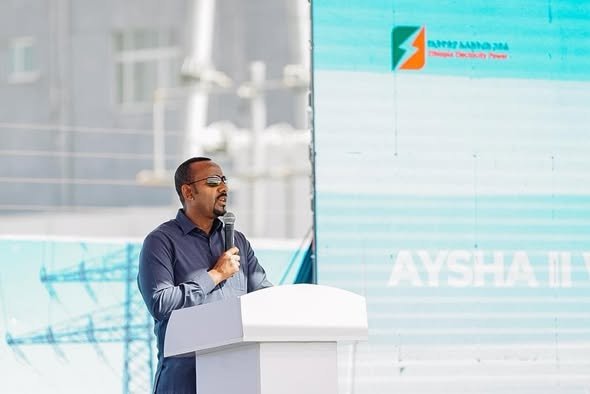
The symbolism of the location mattered. Aysha II sits in Ethiopia’s Somali Region, a peripheral area historically associated with marginalization rather than national transformation. By placing a major wind project there, Addis Ababa is signaling that its energy transition is also a political project—one aimed at integrating border regions into national and regional economic systems.
With a total planned capacity of 120 megawatts and 80 megawatts already feeding the national grid, Aysha II is modest compared with hydropower giants like the Grand Ethiopian Renaissance Dam. But its strategic value lies elsewhere. Wind power diversifies Ethiopia’s energy mix, reduces dependence on rainfall-dependent hydropower, and supports a narrative of climate-aligned growth that resonates with international partners.
Abiy’s repeated emphasis on regional integration reflects a deeper calculation. Ethiopia’s economic ambitions exceed what its domestic market alone can absorb. Power exports to Djibouti already generate revenue and political leverage. Expanding energy and transport links with Somalia and South Sudan would extend that influence, turning Ethiopia into a regional energy hub rather than just a large consumer.
The reference to the GERD reinforces this framing. By portraying the dam as an African achievement built with domestic resources, Abiy is positioning Ethiopia as proof that large-scale clean energy projects can be delivered without external dependency. At the same time, the dam remains a reminder that energy projects in the Horn are never purely technical. They reshape regional politics, provoke disputes, and redefine power relations.
This is why Abiy pairs energy with diplomacy. Cooperation with Djibouti on power, water and infrastructure offers a model of pragmatic integration. Engagement with Somalia carries higher political risk but also higher strategic payoff, especially as Addis Ababa seeks diversified access routes and economic corridors in a volatile region.
Hosting the upcoming COP-32 Summit adds another layer. Ethiopia intends to use the platform to present itself as a continental leader on climate and development, leveraging its renewable portfolio to attract financing, legitimacy and partnerships. Clean energy becomes both a development tool and a diplomatic asset.
The broader message is clear. Ethiopia is betting that shared infrastructure can stabilize relationships in a region marked by conflict and mistrust. Power lines, in this vision, are not just conduits for electricity but for influence and interdependence.
Whether that bet pays off will depend on political realities beyond turbines and grids. Regional tensions, internal conflicts, and competing ambitions could just as easily turn energy into a new fault line. For now, Addis Ababa is pushing a confident narrative: that East Africa’s future will be cleaner, more connected, and more integrated—and that Ethiopia intends to sit at the center of it.