
Endgame in the Horn
Somaliland Moves from De Facto State to Strategic Reality

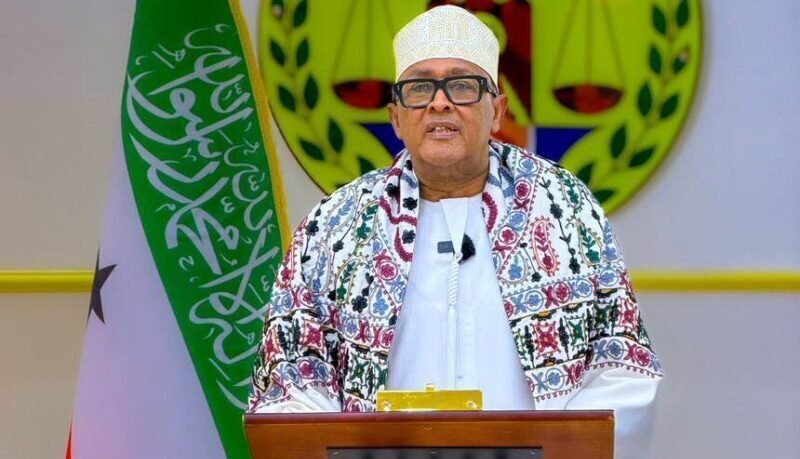
The geopolitical architecture of the Horn of Africa has entered a decisive phase, one that moves beyond theory and into the terminal mechanics of statehood. As December 2025 closes, Somaliland’s long-standing diplomatic limbo is giving way to a momentum increasingly shaped in Washington rather than Addis Ababa or Mogadishu.
What once appeared as an unresolved post–Cold War anomaly is now hardening into a strategic fact, leaving Somalia’s nominal sovereignty over the north ever more symbolic.
President Abdirahman Mohamed Abdullahi (Irro)’s administration has emerged from three years of sustained pressure—political, economic, and proxy-driven—with its authority intact and its strategic position strengthened.
Western intelligence assessments suggest that efforts by Turkey and aligned regional actors to destabilize Somaliland through clan-based levers have reached diminishing returns. Hargeisa’s institutional resilience, combined with a US political climate favoring transactional realism over multilateral caution, has brought the prospect of formal recognition closer than at any point since 1991.
In Washington, the Republic of Somaliland Independence Act (H.R. 3992) has become the legislative spine of this shift. For the Trump administration, Berbera is no longer viewed as a peripheral port but as a strategic counterweight to China’s entrenched presence in Djibouti. The emerging framework—often described by officials as “formal but partial” recognition—would exchange diplomatic acknowledgment for a permanent US military footprint.
It marks a clean departure from the African Union’s long-held doctrine of territorial stasis. Support from figures such as Senator Ted Cruz reflects a growing consensus that Somaliland’s record of internal stability and security cooperation outweighs the geopolitical fiction of a unified Somalia.
Regional resistance remains, led primarily by Turkey, whose investments in Mogadishu now face erosion from a widening Hargeisa–Israel–UAE alignment. Ankara’s broader confrontation with Israel has spilled into Red Sea logistics, where Somaliland has become a critical node. With more than 20 states reportedly signaling readiness to recognize Hargeisa, Turkish efforts to block the process via proxies appear increasingly ineffective.
On the ground, the separation is already operational. Somaliland’s November 2025 declaration of full airspace control and its refusal to recognize Mogadishu-issued visas amount to a final administrative severance. This is no longer a question of secession; it is the closing audit of an independent system asserting exclusive authority.
President Irro’s appearance at the 2025 World Governments Summit in Dubai functioned as a de facto induction into global political space. While the Ethiopia memorandum of understanding has faced delays, it remains the strategic anchor of Somaliland’s maritime vision, reinforced by DP World’s expansion of Berbera Port and growing British investment. Even speculative reports about Gaza-related diplomacy, widely dismissed, underscore the level of high-stakes engagement now centered in Hargeisa.
If recognition proceeds as expected, Somaliland’s transition from a de facto entity to a sovereign state would represent the most consequential alteration of African borders in the 21st century—less a rupture than the formal acknowledgment of a reality long established.
Ted Cruz Emerges as Somaliland’s Strongest Ally in the U.S. Senate
Cruz urges Trump to recognize Somaliland as independent state
Trump’s Africa Doctrine, China’s Shadow, and Why Somaliland Sits in the Crosshairs
Dubai’s DP World Calls for Somaliland Recognition, Praises Irro’s Leadership
Recognizing Somaliland and Reclaiming America’s Footprint in Africa
U.S. Senate Hearings Highlight Somaliland as Key to Maritime Security Strategy













Defense Secretary Hegseth Forces Out Army Chief

Bridges Fall, Missiles Rise—War Enters a More Destructive Phase

Iran Executes 18-Year-Old Protester


-
 US-Israel war on Iran1 month ago
UK Refuses Iran Strike Access, Trump Fires Back
-
 Russia-Ukraine War1 month ago
Europe’s Spies Challenge Trump’s Ukraine Peace Optimism
-
 Top stories1 month ago
War Expands Across Region as Iranian Militias Join Fight
-
 Top stories1 month ago
India Turns to Brazil in Strategic Minerals Push Against China
-
 US-Israel war on Iran1 month ago
Iran Pledges ‘Never, Ever’ to Hold Bomb-Grade Material
-
 US-Israel war on Iran1 month ago
Syria Under Fire on Two Fronts
-
 Russia-Ukraine War1 month ago
Estonia Warns NATO Would Strike Deep Inside Russia if Baltics Are Invaded
-

 Top stories3 weeks ago
Meloni Breaks Ranks: Italy Warns on Iran War