Why Somaliland Now Matters More Than Ever in the Red Sea Strategic Equation.
Turkey’s expanding footprint in Somalia is often framed as humanitarian partnership or infrastructure development. In reality, Ankara is constructing a shadow strategic order—one that uses Somalia as an offshore extension of Turkish power, giving President Recep Tayyip Erdoğan a launch corridor at one of the world’s most sensitive maritime choke points.
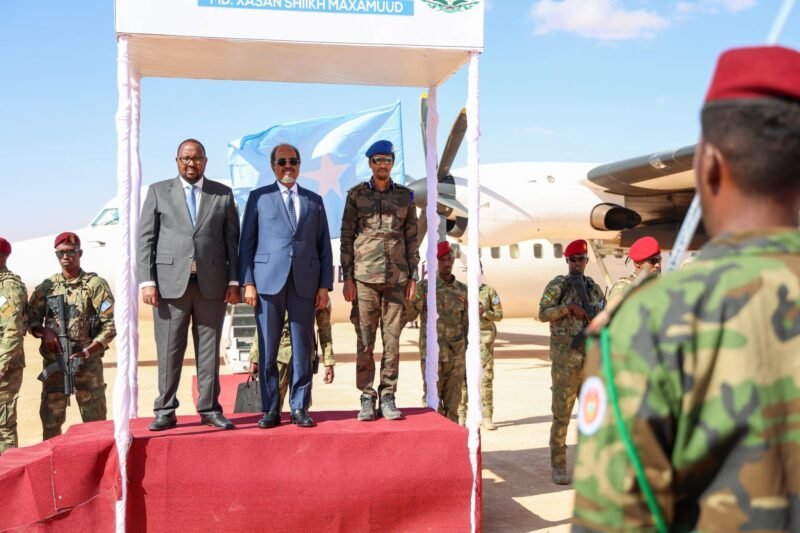
Under the banner of development, Turkey now trains thousands of Somali soldiers, operates the country’s central airport and port under long-term concessions, runs its flagship national hospital, and controls financial channels through Ziraat Katılım—the first foreign bank in Somalia in more than 50 years.
This is not philanthropy; it is leverage. Somalia receives security and infrastructure. Turkey receives coastline, deniability, and strategic depth.
While global headlines fixate on Houthi attacks in the Red Sea or Iran’s regional ambitions, the more decisive shift is unfolding quietly in Somalia. A NATO member is projecting power across the Horn of Africa in ways the alliance cannot monitor, Europe cannot shape, and the U.S. has been slow to recognize.
Turkey is building a second strategic geography: offshore, insulated from oversight, and designed to test capabilities that would be politically and legally constrained within NATO’s traditional framework.
Somalia is the laboratory. The Gulf of Aden–Red Sea corridor is the theatre.
Turkey’s missile-testing initiatives in Somalia—confirmed in Greek reporting by Marinos Gasiamis—are not tactical experiments but a foundational piece of Erdoğan’s long-term architecture.
This fits a decade-long pattern: nuclear infrastructure with ambiguous Russian clauses, quiet cooperation with Pakistan’s nuclear and missile expertise, exploratory uranium routes in Africa, and now a politically shielded African coastline from which missile doctrine can evolve without scrutiny.
If Turkey ever crosses the nuclear threshold, the balance that underpins deterrence from the Aegean to the Gulf would fracture.
The systems Ankara could test or deploy from Somali territory would outrun early-warning grids that regional states rely on—forcing a security recalculation across the Middle East and Africa.
None of this works without a compliant host. Somalia sold the keys.
Through bases, concessions, doctrinal influence, and total dependency, Turkey has created a model of “parallel sovereignty.” Somalia’s army, airports, ports, and financial arteries now run through Ankara.
This mirrors the Libyan playbook: enter through crisis, remain through law, cement through dependency.
But the Red Sea corridor is more volatile. Iran’s Houthi proxies close the strait with missiles; Turkey deepens its presence on the opposite shore; Iran gains reach; Turkey gains flexibility; and Europe loses the ability to distinguish cause from consequence.
A proxy system does not require coordination—just overlapping interests.
Israel, observing this map, is not blind. The flight distance from Israeli airbases to Mogadishu is comparable to its proven operational reach into Iran. Somalia is not beyond Israel’s horizon nor its doctrine of preemptive strike. Silence should not be misread as comfort.
But the Horn of Africa has two coastlines—and only one is behaving like a sovereign state.
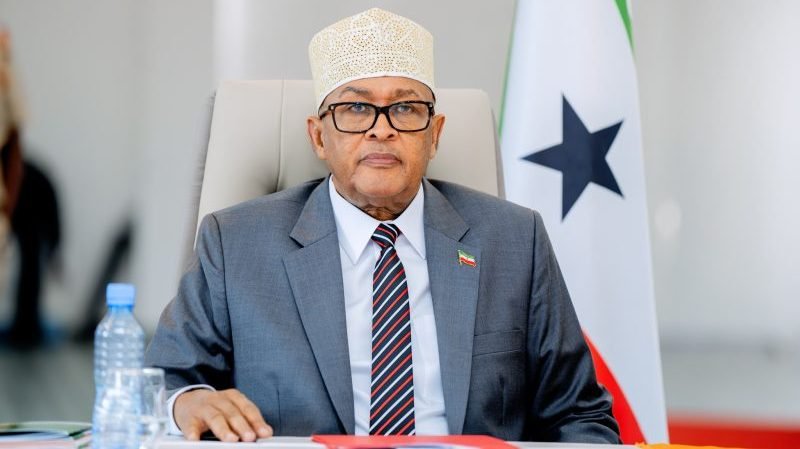
Somaliland, despite lacking formal recognition, stands as the counter-model: self-governing, democratic, and strategically positioned. Unlike Mogadishu, it has not leased its coastline to foreign ambitions.
Berbera, upgraded with UAE investment, now hosts early-warning systems acquired with third-party approval from Israel—quiet confirmation that the region’s strategic planners recognize Somaliland as an anchor of stability.
Recognition of Somaliland is not a moral gesture; it is a strategic correction. As Somalia becomes a proxy corridor for outsourced sovereignty, Somaliland remains the last intact coastline on the Red Sea route not absorbed into someone else’s strategic design.
The choice facing the international system is urgent: strengthen the only democratic, stable governance structure in the Horn—or watch Turkey’s shadow geography consolidate in silence until it becomes a permanent fact.
In a corridor shaped by speed and opportunism, hesitation is a decision in itself, and one that increasingly benefits Ankara.