
Terrorism
Exclusive: Puntland’s Operation Hilaac Fails to Cut ISIS Lifeline


Militants Thrive Off the Drought: ISIS Buys Goats and Cows to Survive in Al Miskaad Mountains.
Security officials in Puntland say Islamic State militants entrenched in the Al Miskaad Mountains continue to receive livestock supplies from local herders, exposing the persistent economic and logistical lifelines that have allowed the group to endure despite an ongoing regional offensive.
According to security sources, ISIS fighters purchase animals from nomadic families near the Baalade Valley, often offering two to three times the market price.
The inflated payments have drawn drought-stricken pastoralists struggling with debt, creating a covert supply chain that sustains the group’s mountain units even as Puntland forces tighten operations under the U.S.-backed Operation Hilaac campaign.
Since its launch in late 2024, Operation Hilaac has retaken multiple caves and outposts across the Golis and Al Miskaad ranges.
Yet officials acknowledge that small ISIS cells remain active, exploiting the rugged terrain and local vulnerabilities to maintain mobility and resupply networks.
In several recently reclaimed villages, Puntland troops discovered fresh slaughter sites believed to have been used by ISIS fighters.
The finds have reinforced assessments that the group still depends on local commerce and informal trade links with families living in remote settlements.
Regional authorities have repeatedly warned residents against providing material support or maintaining ties with ISIS.
Last month, Puntland’s Interior Ministry ordered the evacuation of Tasjiic and nearby villages in Bari region over concerns of collaboration, though the order stalled after residents protested that they had nowhere to relocate.
Fighting has intensified around the Baallade Valley and nearby water sources such as the Baarakalaah well. Puntland officials confirmed casualties among their forces but did not release figures.
ISIS claimed to have repelled six assaults and killed ten Puntland troops — a claim that remains unverified.
U.S. airstrikes have played a growing role in supporting Puntland’s campaign.
In February, authorities reported that American strikes killed 46 ISIS militants in the Al Miskaad range, while in July, Puntland forces captured Abdiweli Mohamed Aw Yusuf, the group’s finance and foreign-relations chief, who had been sanctioned by the U.S. Treasury as a Specially Designated Global Terrorist.
Despite heavy losses, analysts estimate ISIS retains roughly 100 fighters scattered across the Habley Mountains and Baallade Valley.
The continued flow of livestock and cash from impoverished herders underscores the enduring difficulty of isolating militant cells in Somalia’s harsh northern highlands.
















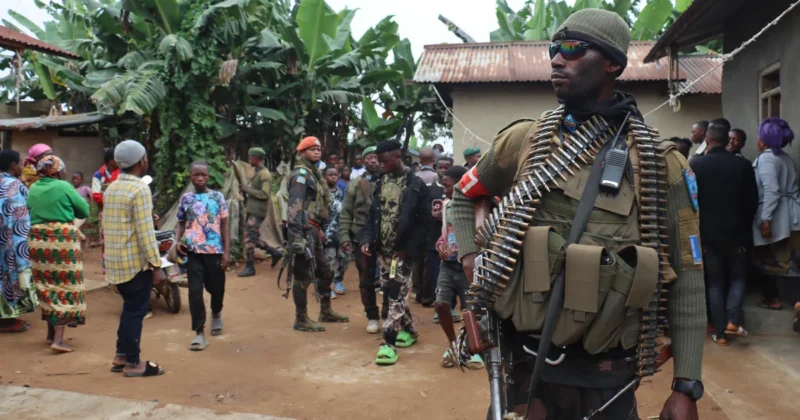
Islamic State-Linked Rebels Kill Dozens in Eastern Congo Village Attack
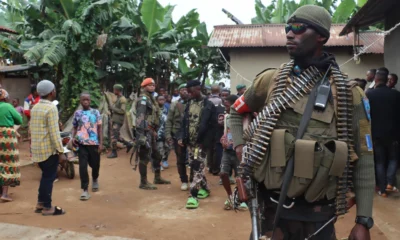
GOMA, Democratic Republic of Congo — At least 43 civilians were killed in an overnight attack in eastern Congo, officials said Thursday, in one of the latest assaults attributed to rebels linked to the Islamic State group.
Fighters from the Allied Democratic Forces attacked the village of Bafwakoa on Wednesday night, setting homes ablaze and targeting residents, according to local authorities and civil society representatives.
“They set fire to houses in the village,” said Samuel Banapia, a local civil society member, speaking by phone.
The Congolese military confirmed 43 deaths, while local officials said the toll could be higher—at least 56—with several people still missing and at least two reported abducted.
The ADF, an armed group with origins in neighboring Uganda, operates across the porous border and has been active in eastern Democratic Republic of the Congo for decades. It formally aligned itself with the Islamic State in 2019.
Military officials said the group avoids direct confrontation with government forces, instead targeting civilians in what they described as retaliatory attacks.
“The ADF avoids direct combat with the army and all its partners,” said Lt. Jules Ngongo, a military spokesperson in eastern Congo. “That’s why they attack the population in a way that sabotages peace efforts.”
Eastern Congo remains one of the most volatile regions in Africa, with multiple armed groups competing for control. Among them is the M23, which has seized key areas in recent years and further complicated security operations.
ADF attacks have intensified along the border with Uganda and expanded toward major population centers, including Goma and parts of Ituri province. Last year, the group killed dozens in a similar attack in a nearby area.
The latest violence underscores the challenges facing Congolese forces, which are stretched across multiple fronts and have struggled to protect civilians in remote regions.
Authorities said operations are ongoing to track the attackers and locate those still missing.
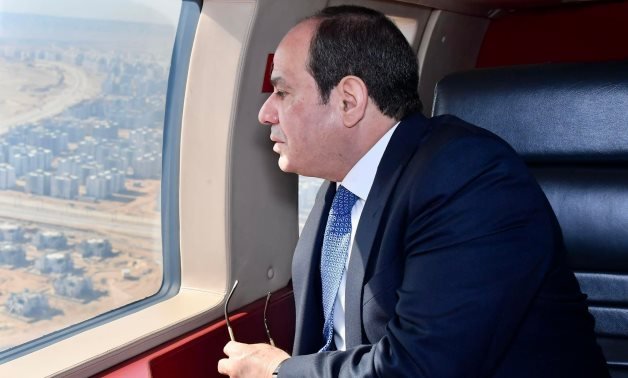
From assassination plots to anti-aircraft missiles—Egypt says it stopped a major attack before it began.
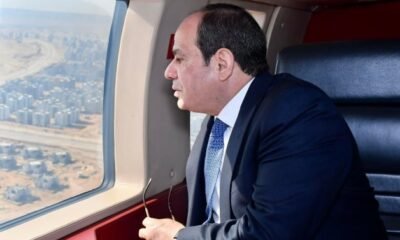
Egyptian authorities say they have foiled a high-risk plot involving shoulder-fired missiles aimed at a presidential aircraft, in what officials describe as one of the most serious security threats uncovered in recent years.
According to the Ministry of Interior, members of the Hasm Movement—which Cairo links to the Muslim Brotherhood—were arrested as part of a broader crackdown on alleged plans to destabilize the state.
Officials said the group had been preparing a series of coordinated attacks targeting key political and economic figures, including the Minister of Petroleum and a senior Interior Ministry official. The most alarming element, authorities claim, was a plan to use portable anti-aircraft missiles—specifically the Soviet-era SAM-7—to strike a presidential aircraft.
The allegations are based on confessions obtained from detainees, including a figure identified as Ali Mahmoud Abdel-Wanis, who reportedly described training in weapons handling and combat tactics.
Egyptian officials say the training took place both domestically and abroad, including in Gaza, and involved the use of heavy weapons and advanced operational planning.
Authorities further allege that senior fugitive leaders, including Yahya Moussa, directed the plot and coordinated efforts from outside the country. Moussa has previously been convicted in absentia in multiple high-profile cases, including the assassination of former Attorney General Hisham Barakat.
The Interior Ministry said the network was attempting to rebuild operational capacity inside Egypt, with plans to infiltrate trained operatives across borders and revive armed activity. Officials also cited the circulation of online videos showing desert-based training exercises and threats of imminent attacks.
The United States designated the Hasm Movement as a terrorist organization in 2021, reflecting broader international concern over its activities.
Still, the details of the alleged plot remain difficult to independently verify. As with many security-related announcements, much of the case rests on official accounts and confessions released by authorities, with limited external confirmation.
What is clear, however, is the scale of the threat as described by Egyptian officials.
Targeting an aircraft—particularly with portable missile systems—would represent a significant escalation in tactics, moving beyond conventional attacks toward more sophisticated and symbolic operations. Such weapons, if deployed successfully, could have implications not only for political leadership but also for civil aviation security.
The arrests come amid renewed warnings from Cairo about attempts by militant networks to regroup and exploit regional instability. Authorities say vigilance and preemptive action prevented what could have been a major attack.
Whether the plot was operationally imminent or aspirational, its exposure underscores a persistent reality.
Even as conflicts shift across the region, the threat of asymmetric attacks—small groups using high-impact weapons—remains one of the most difficult challenges for modern states to contain.
U.S. Preparing to Label Muslim Brotherhood a Terrorist Group, Trump Says
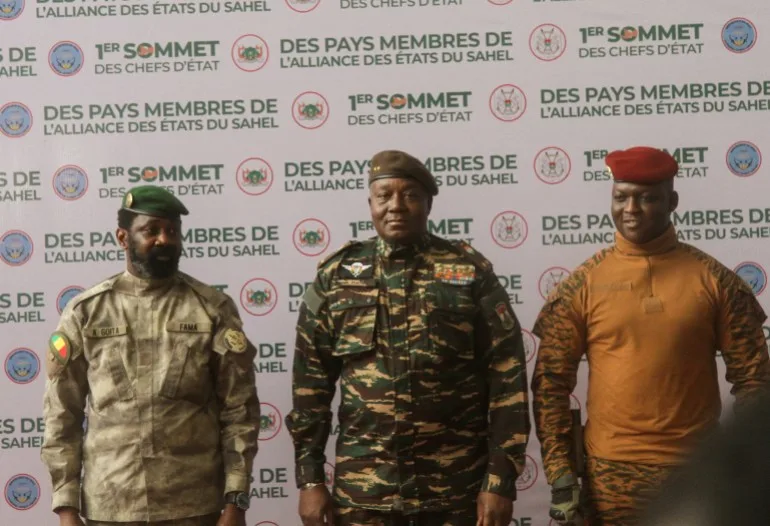
ECOWAS Plans 2,000-Troop Deployment by 2026 as Sahel Violence Spreads Toward Coastal States.
Thousands dead. Borders collapsing. Can a regional army stop West Africa’s spiraling insurgency?
West African leaders have agreed to activate the ECOWAS Standby Force (ESF) in response to escalating cross-border violence that has killed thousands and displaced hundreds of thousands across the Sahel and coastal states.
Military chiefs from the Economic Community of West African States met in Sierra Leone last week and endorsed a plan to mobilize an initial 2,000 troops by the end of 2026. The force is expected to target armed groups linked to al-Qaeda and ISIL that are expanding operations from Mali, Niger and Burkina Faso into Nigeria, Benin and Togo.
The Sahel has become one of the world’s deadliest conflict zones. Armed factions such as Jama’at Nusrat al-Islam wal-Muslimin (JNIM) and ISIL-affiliated groups have attacked military outposts, blocked fuel routes and even struck urban targets, including Niger’s capital earlier this year. According to regional monitors, nearly 13,000 conflict-related deaths were recorded in just the first half of 2025.
The ECOWAS Standby Force — previously known as ECOMOG — has a long history of intervention, including in Liberia, Sierra Leone, Côte d’Ivoire and The Gambia. Nigeria and Ghana traditionally provide the largest contingents. Unlike typical UN missions, past ECOWAS deployments have engaged directly in combat.
But this new mission presents tougher challenges.
First, funding. Nigeria — historically the bloc’s backbone — faces domestic economic strain and multiple internal security crises. Its military is already stretched combating insurgents in the northeast and armed gangs in other regions.
Second, politics. Mali, Niger and Burkina Faso formally exited ECOWAS in 2025 to form the Alliance of Sahel States (AES) after disputes over sanctions and election timelines. Those three states sit at the epicenter of the insurgency and have turned to Russian security partnerships instead.
Without coordination with the AES, cross-border operations could prove difficult. Analysts warn that intelligence-sharing and joint patrols may be limited unless political tensions ease.
Security experts also stress that military force alone will not suffice. Armed groups often win local support by offering services, protection or economic incentives in neglected rural areas. Without parallel social and governance reforms, recruitment pipelines may continue.
The decision to activate the standby force signals that West African leaders now view the crisis as existential. Whether 2,000 troops — in a region spanning thousands of miles — can reverse the insurgents’ momentum remains an open question.
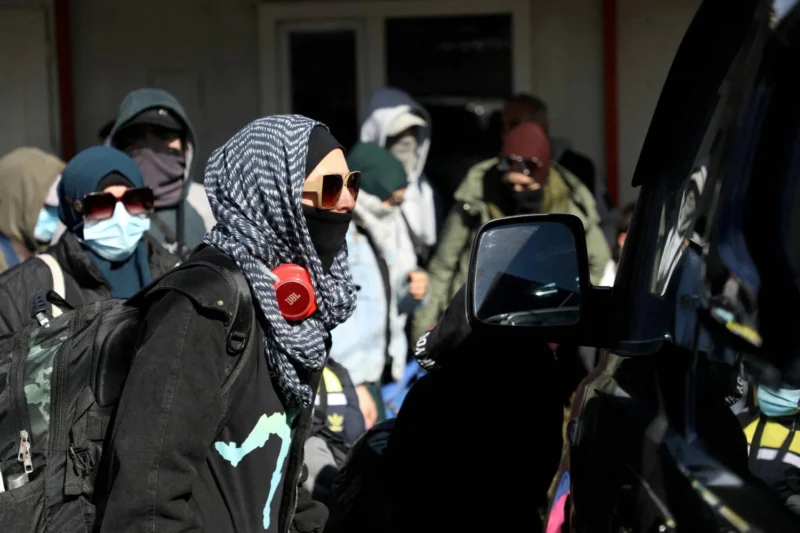
A reported repatriation deal sparks political tension in Canberra — but the government says it’s not happening.
Australia’s government has denied reports that it is preparing to repatriate 34 Australian women and children linked to suspected ISIS militants from a detention camp in northern Syria.
Home Affairs Minister Tony Burke on Sunday rejected a claim published in the Sunday Telegraph that Canberra was conducting preparations for their return.
“In that report, it makes a claim that we are conducting a repatriation. We are not,” Burke told the Australian Broadcasting Corporation. He also denied that the federal government had been coordinating with state authorities to manage the group’s arrival.
The individuals — 34 women and children — were briefly released from the Syrian camp last week but returned to detention for what officials described as technical reasons. Reports suggested they could travel to Damascus before eventually returning to Australia.
Prime Minister Anthony Albanese, leader of the center-left Labor government, said earlier this week that his administration would not facilitate the group’s return.
The issue remains politically charged. The repatriation of relatives of suspected ISIS fighters has long divided Australian lawmakers, with critics arguing it poses security risks. The debate has intensified amid rising support for the anti-immigration One Nation party led by Pauline Hanson.
Australia has previously repatriated small groups of women and children from Syrian camps, insisting that monitored returns are safer than leaving citizens in unstable conditions abroad.
For now, however, Canberra is drawing a clear line: no active repatriation effort is underway.

Militant Group Accuses Victims of Spying as Executions in Middle Juba and Lower Shabelle Mark One of Largest Single-Day Killings.
Ten men shot dead in public squares. Residents forced to watch. Al-Shabaab sends a message at the start of Ramadan.
Al-Shabaab has publicly executed 10 men it accused of spying for the Federal Government of Somalia and foreign states, in what appears to be one of the group’s largest single-day executions in recent years.
The killings took place Friday in two separate incidents in southern Somalia. In Bu’aale, a stronghold in Middle Juba region, five men were shot by a firing squad in an open area after what the group described as a ruling by its sharia court. Local residents were ordered to gather and witness the executions.
Eyewitnesses said the men were killed at close range and their bodies left on display for hours under the sun before being buried later by the militants.
On the same day, five more men were executed in Kunyo-Barrow in Lower Shabelle region. Residents of the agricultural town were similarly summoned to watch.
Al-Shabaab claimed its court had convicted the men of espionage. All those executed were Somali nationals. The group has repeatedly accused detainees of aiding government forces or facilitating drone strikes in areas under its control.
Sources say Al-Shabaab often detains individuals pulled from passenger vehicles, especially those suspected of having family ties to Somali security forces or government officials.
Trials in Al-Shabaab-controlled territory are conducted behind closed doors. There is no access to independent legal representation, and journalists are barred from reporting inside areas held by the group, which is affiliated with Al-Qaeda.
The executions, carried out at the beginning of the holy month of Ramadan, are widely seen as a show of force aimed at deterring dissent and reinforcing the group’s grip on communities under its control.
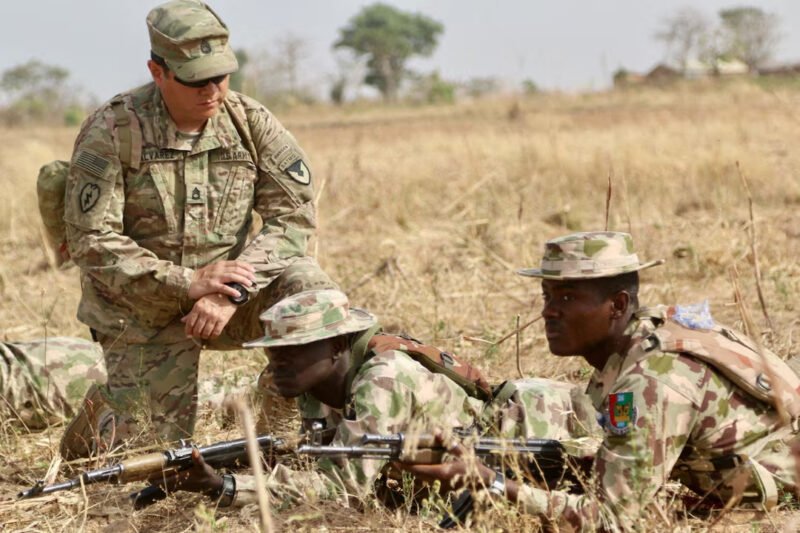
More U.S. boots on Nigerian soil — but not for combat. Washington deepens its security role in West Africa.
About 100 additional U.S. military personnel have arrived in Nigeria as Washington expands its support for the country’s campaign against insurgent groups, Nigerian defense officials confirmed.
Major General Samaila Uba, spokesperson for Nigeria’s Defense Headquarters, said the American troops will focus on training and advising Nigerian forces and enhancing intelligence capabilities. He stressed that the U.S. personnel will not participate directly in combat operations.
The deployment follows U.S. strikes in December targeting ISIS-linked militants and comes amid increased coordination between Abuja and the administration of Donald Trump. Trump has criticized Nigeria’s handling of extremist violence, accusing authorities of failing to protect Christian communities in parts of the northwest.
Nigeria has rejected those claims, maintaining that its security forces target armed groups regardless of religion. The country, Africa’s most populous with roughly 240 million people, is almost evenly divided between Muslims, predominantly in the north, and Christians, largely in the south.
Flight tracking data reviewed by Reuters showed multiple aircraft transporting U.S. personnel and equipment into northern Nigerian states in recent days. Earlier this month, Nigeria’s military indicated that up to 200 additional U.S. troops could arrive.
Presidential spokesperson Sunday Dare said Nigeria requires “massive support” from the United States, including fighter jets and munitions, though he did not specify numbers or timelines.
Nigeria continues to face significant security challenges from extremist organizations and armed groups operating across its northern regions. The expanded U.S. presence underscores growing international involvement in stabilizing a region that remains critical to West African security.
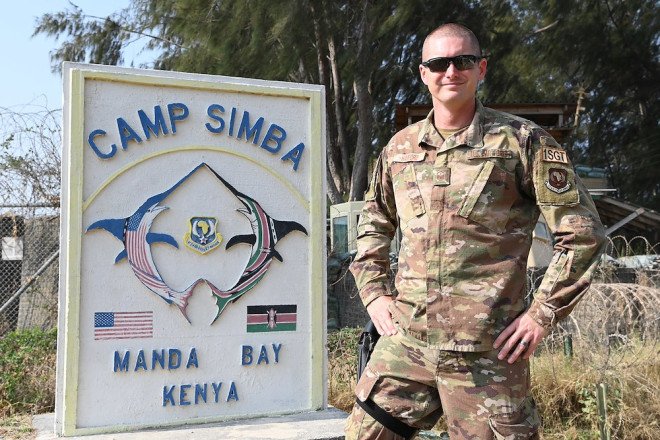
The U.S. Is Leaving Somalia, Not the Horn: Why Washington Is Repositioning Its War on Terror.
The United States is repositioning in the Horn of Africa, and the distinction matters. Washington is drawing down its presence in Somalia, but it is not disengaging from the region. Instead, it is relocating the architecture of its counterterrorism campaign to more stable ground, with Kenya emerging as the new operational anchor.
This shift reflects a hardening assessment in Washington that Somalia’s federal institutions are no longer a reliable platform for sustained security cooperation. Relations have deteriorated sharply since the U.S. president publicly questioned the existence of a functioning Somali government. That remark was not rhetorical excess; it was a policy signal. Confidence in Mogadishu’s ability to secure territory, protect partners, and manage sensitive operations has eroded.
The $70 million expansion of the Manda Bay Air Base in Kenya makes that recalibration explicit. Situated near the Somali border, Manda Bay allows the United States to project force, gather intelligence, and strike al-Shabaab targets without being entangled in Somalia’s internal political paralysis. Geography offers proximity. Governance offers predictability.
For Washington, this is about risk management. The attack on Camp Simba in 2020, which killed three Americans, underscored that even fortified positions inside Kenya are vulnerable. But Somalia presents deeper structural risks: fragmented authority, infiltration, and political volatility that complicate long-term basing and force protection. Relocating the operational hub reduces exposure while preserving reach.
Kenya also offers something Somalia currently cannot: a partner state capable of absorbing expanded U.S. presence without destabilizing its internal politics. Nairobi’s willingness to host U.S. forces, deepen intelligence cooperation, and position itself as a regional security pillar aligns with Washington’s preference for durable, state-centric partnerships. The previous administration’s move to elevate Kenya toward major non-NATO ally status signaled that trajectory long before the current base expansion.
The message to adversaries is deliberate. Al-Shabaab is being told that an American drawdown from Somalia does not equal retreat. Air power, surveillance, and special operations can still be launched quickly and with fewer political constraints. The Horn remains under watch, even if the flag is flying from a different runway.
There is also a broader regional logic at work. The Horn of Africa sits at the intersection of Red Sea security, Gulf rivalries, and great-power competition. Washington’s repositioning reflects an understanding that counterterrorism cannot be divorced from maritime security, regional alliances, and crisis response beyond Somalia’s borders. Kenya provides a platform that connects all three.
At the same time, the shift carries consequences for Somalia. Reduced U.S. presence limits Mogadishu’s access to direct military support and diplomatic leverage. It places greater responsibility on Somali forces and regional actors, while quietly signaling that international patience with chronic dysfunction is wearing thin.
This is not abandonment. U.S. strikes, intelligence sharing, and limited engagement will continue. But the center of gravity has moved. Washington is choosing flexibility over immersion, proximity over presence, and regional management over state-building experiments that have delivered diminishing returns.
The United States is not leaving the fight in the Horn of Africa. It is simply choosing where to fight it from.
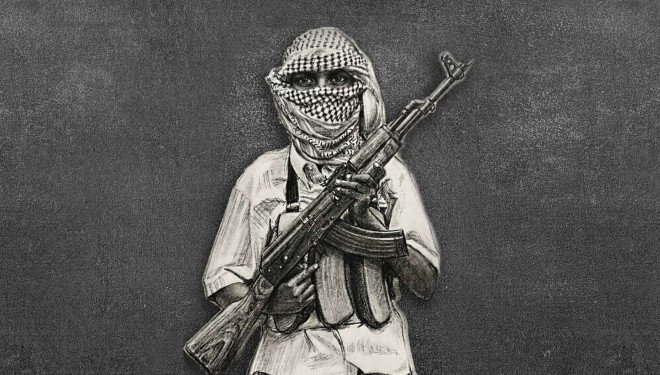
The $1 Million Signal: Why Washington Is Raising the Stakes in Kismayo.
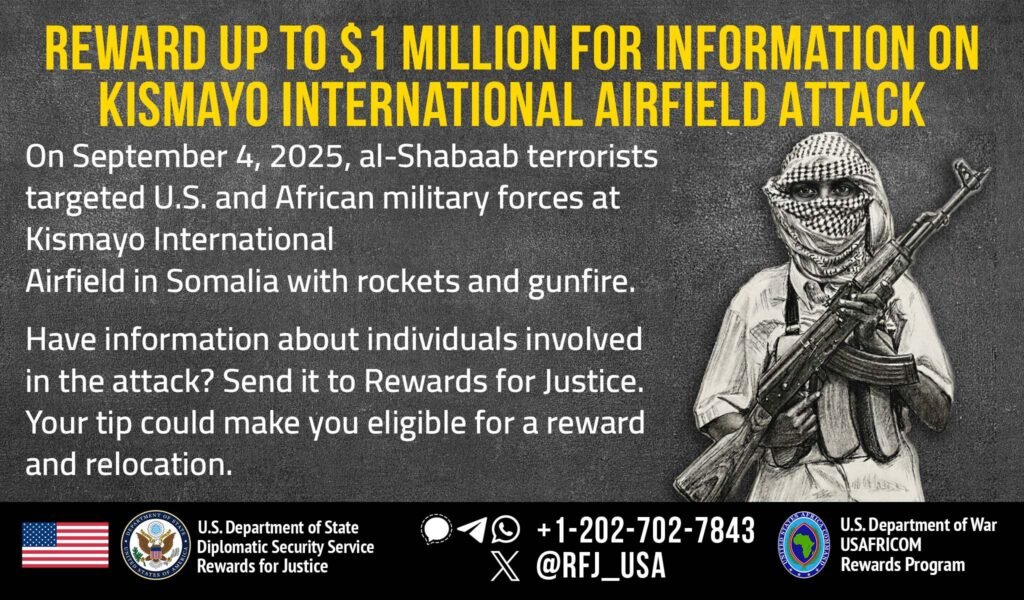
The United States’ decision to offer a $1 million reward for information on the al-Shabab attack at Kismayo International Airport is less about the rockets that landed — and more about the message they sent.
The attack itself caused no casualties and inflicted no damage on U.S. facilities. But in counterterrorism logic, restraint is not reassurance. For Washington, the assault underscored a deeper concern: al-Shabab’s continued ability to probe hardened targets, test defenses, and remind both local populations and international actors that it remains operationally relevant.
Kismayo is not just another airport. It is a strategic node in Somalia’s fragmented security architecture — hosting U.S. forces, elite Somali Danab units, Jubbaland forces, and African partners. It also sits at the intersection of regional politics, port economics, and counterterrorism campaigns. Any attack there is designed less to win a battle than to shape perceptions.
The $1 million reward, issued through the Rewards for Justice program, reflects a shift in emphasis from battlefield attrition to intelligence disruption. Rather than responding with visible escalation — airstrikes, troop surges, or public threats — Washington is betting on fragmentation from within. Rewards destabilize militant networks by injecting suspicion, incentivizing defections, and forcing operatives to operate under constant fear of betrayal.
This approach also signals Washington’s assessment of the current phase of the Somali conflict. Al-Shabab is no longer trying to seize major cities outright. Instead, it is playing a long game of erosion: indirect fire attacks, assassinations, and symbolic strikes meant to exhaust the state, intimidate civilians, and undermine confidence in international partners.
The U.S. response suggests a recognition that Somalia’s war is increasingly intelligence-centric. Precision now matters more than spectacle. A single informant, correctly placed, can collapse a network faster than weeks of kinetic operations.
There is also a regional subtext. As global attention shifts toward Ukraine, Gaza, and the Indo-Pacific, Washington is signaling that Somalia remains a live counterterrorism theater — not a legacy mission drifting on autopilot. The reward announcement reinforces the idea that U.S. forces in Somalia are not merely advising from the margins, but remain protected assets whose targeting carries consequences.
For al-Shabab, the danger is not the money itself, but what it represents: an open invitation for internal leakage. Every logistics runner, every facilitator, every sympathizer now carries a price tag — and a risk.
For Somalia’s federal and regional authorities, the message is sharper still. Counterterrorism is no longer just about holding territory. It is about information dominance, financial tracing, and dismantling the human infrastructure that sustains insurgency.
Kismayo was meant to be a warning shot. Washington’s response makes clear it heard it — and answered in a language insurgent networks fear most: incentives, exposure, and internal collapse.

Inside the UAE-Israel Air Defense Shield

How the UAE Became the Frontline of a War It Tried to Avoid

The Hormuz Paradox: Globalization’s Artery as its Executioner


-
 TECH3 weeks ago
China Bets on an AI-Powered Military Future
-
 US-Israel war on Iran2 weeks ago
Waves of Mystery Drones Breach U.S. Nuclear Base Airspace
-
 Terrorism7 days ago
Egypt Uncovers Alleged Plan to Down Presidential Plane
-
 US-Israel war on Iran2 weeks ago
Saudi Arabia Warns of Military Action After Iranian Missile Strike
-

 US-Israel war on Iran2 weeks ago
Former CIA Chief Blames White House for Escalating Iran War Crisis
-
 Top stories1 week ago
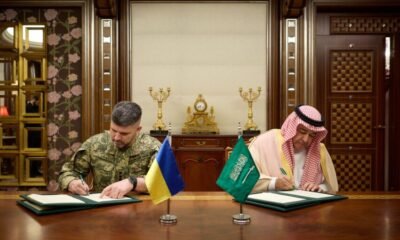
Saudi Arabia Deepens Defense Ties with Ukraine
-
 US-Israel war on Iran2 weeks ago
Iran’s Guard Leadership Hit Hard in Escalating Strikes
-
 Analysis2 weeks ago
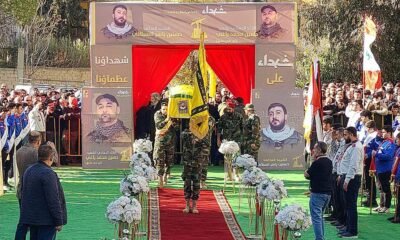
Inside the IRGC’s Quiet Rebuild of Hezbollah