
Top stories
Trump, Cuomo, and Musk Unite Against Mamdani as NYC Election Heats Up


Trump Calls Jewish Voters for Mamdani ‘Stupid’ in Explosive Election Day Remark.
Former President Donald Trump ignited a firestorm on Election Day after calling Jewish New Yorkers who vote for leftist mayoral candidate Zohran Mamdani “stupid,” in one of his most incendiary remarks of the campaign season.
“Any Jewish person that votes for Zohran Mamdani, a proven and self-professed JEW HATER, is a stupid person!!!” Trump wrote Tuesday morning on his Truth Social platform.
The post, published just hours before polls opened, has already stirred outrage among Jewish organizations and renewed debate over Trump’s history of provocative statements about Israel and the American Jewish community.
The attack comes amid a bitterly contested New York City mayoral race that pits three prominent candidates against each other:
Democratic Socialist Zohran Mamdani, former Governor Andrew Cuomo running as an independent, and Republican Curtis Sliwa.
With Mayor Eric Adams not seeking reelection, the race has become a national flashpoint over the direction of the Democratic Party and the city’s political identity.
Mamdani, 34, a state assemblyman and outspoken critic of Israeli policies, has faced intense criticism from Jewish leaders for his comments about Gaza and his statement that he would arrest Israeli Prime Minister Benjamin Netanyahu if he set foot in New York, citing International Criminal Court charges.
His supporters see him as a bold reformer challenging entrenched power structures; his detractors call him dangerously radical.
Cuomo, seeking a political comeback after his 2021 resignation, has branded himself as a centrist counterweight to Mamdani’s progressivism.
His campaign has attracted unlikely endorsements — including those of Trump and Elon Musk — who both describe Cuomo as the “only viable defense” against what they call Mamdani’s “anti-business extremism.”
Meanwhile, Sliwa, founder of the Guardian Angels, remains a long-shot candidate but continues to campaign on a law-and-order platform, emphasizing crime reduction and neighborhood security.
Despite the political drama, recent polls show Mamdani leading Cuomo, with Sliwa trailing in third place — a result that could make the first Muslim mayor of New York City a democratic socialist.
Trump’s latest comments, however, risk inflaming tensions in a city already polarized by issues of religion, race, and political ideology.
Analysts say his endorsement of Cuomo — and his attack on Mamdani’s Jewish supporters — is part of a broader strategy to reposition himself as both a defender of Israel and a disruptor of progressive politics in America’s largest city.
Whether his words sway voters or backfire remains to be seen. But as one analyst noted Tuesday, “Only in New York could an election between a socialist, a centrist, and a street vigilante end up becoming a referendum on Donald Trump.”













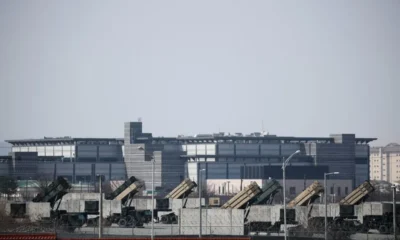


Executed at 18—Iran’s War Turns Inward as Protests Meet the Gallows.
At dawn outside Tehran, in the high-security confines of Ghezel Hesar Prison, an 18-year-old was led to the gallows. His case, rights groups say, reflects not only a judicial decision—but a wider shift in how the Iranian state is managing dissent during wartime.
Authorities executed Amir Hossein Hatami on Thursday after a rapid trial that activists and international organizations described as deeply flawed. He had been arrested during protests earlier this year, sentenced to death within weeks, and executed just 84 days after his detention, according to rights monitors.
Iran’s judiciary said Hatami had acted against national security on behalf of the United States and Israel, accusing him of attacking a military facility during unrest that began as economic protests before expanding into nationwide demonstrations. Officials framed the execution as part of a broader effort to restore order amid escalating external conflict.
But rights groups offer a starkly different account. Amnesty International called the execution “arbitrary,” citing allegations of torture, forced confessions, and a trial process that failed to meet basic legal standards. The Norway-based Iran Human Rights described the proceedings as a “tool of repression,” warning that hundreds more detainees could face similar outcomes in the coming weeks.
By the third layer of this case, the implications extend beyond a single execution. Iran’s leadership is confronting pressure on two fronts: an external war with the United States and Israel, and internal unrest fueled by economic strain and political discontent. The response, analysts say, is increasingly synchronized—military escalation abroad paired with tightened control at home.
Hatami is not alone. He is the fourth person executed in connection with the recent protest wave, which peaked in early January. Earlier this month, three others—including a 19-year-old athlete—were put to death, while additional executions tied to political charges have followed. The pace suggests an acceleration rather than an isolated action.
The legal process itself has drawn scrutiny. The cases were handled by a revolutionary court overseen by Abolqasem Salavati, a figure sanctioned by Washington and widely known among activists for issuing harsh sentences. Defense lawyers have argued that key evidence was contested and that security forces may have played a role in incidents used to justify the charges.
There are, however, competing narratives. Iranian officials maintain that the individuals involved were engaged in violent acts, including attacks on security installations, and that the judiciary is acting within the law to protect national stability.
The truth, as in many such cases, is contested—and difficult to independently verify.
What is clear is the broader trajectory. Executions are rising at a moment when the state faces heightened external threats. That convergence suggests a strategy: deter dissent by demonstrating the cost of opposition, even as the country mobilizes for conflict beyond its borders.
The risk is that such measures, while intended to consolidate control, may deepen underlying tensions. Protests rooted in economic hardship and political grievance rarely disappear under pressure; they recede, reorganize, and return under different conditions.
For now, the message from Tehran is unmistakable. In wartime, the definition of security expands—and so does the scope of enforcement.
The longer the conflict continues, the more those internal measures may shape the country’s future as much as any outcome on the battlefield.
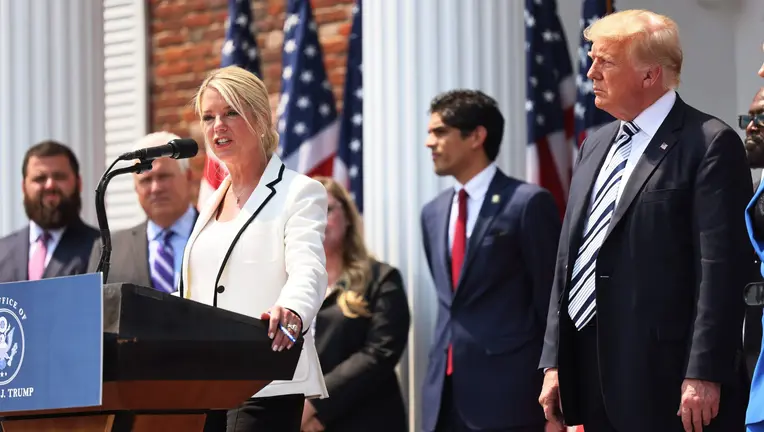
Power, Loyalty, and Fallout—Trump Ousts Attorney General Pam Bondi After Turbulent Tenure at Justice Department.
The announcement came with praise—but little ambiguity. On Thursday, Donald Trump confirmed that Pam Bondi is out as attorney general, closing a turbulent chapter that reshaped the culture and direction of the Justice Department.
Bondi’s exit follows months of mounting pressure, much of it from within Trump’s own political base. The handling of files tied to Jeffrey Epstein—long a flashpoint among conservative supporters—triggered renewed scrutiny, compounded by frustrations over failed efforts to prosecute several of Trump’s political opponents.
Publicly, the tone remained cordial. Trump described Bondi as a “great American patriot” and a loyal ally, signaling continuity even in dismissal. Privately, however, the decision reflects a deeper recalibration—one that has defined much of his approach to leadership across both terms.
By the third layer of this story, the significance extends beyond a personnel change. Bondi’s tenure marked a departure from the Justice Department’s traditional distance from the White House. Under her leadership, the department launched investigations into high-profile figures aligned against Trump, while overseeing sweeping internal changes, including the removal or departure of thousands of career employees.
Supporters framed those moves as necessary corrections—an effort to counter what they viewed as institutional bias under the previous administration. Critics saw something else: the erosion of a long-standing norm separating law enforcement from political influence.
That tension ultimately became unsustainable.
Bondi’s handling of the Epstein files crystallized the challenge. Early claims about a potential “client list” later had to be clarified, fueling distrust among allies and opening her to criticism from both sides. Even figures within Trump’s inner circle, including Chief of Staff Susie Wiles, publicly questioned her performance.
At the same time, legal setbacks weakened the administration’s broader strategy. Cases against prominent figures—including former officials like James Comey and Letitia James—collapsed in court, raising questions about both legal footing and prosecutorial approach.
The immediate transition has already begun. Trump named Todd Blanche as acting attorney general, while continuing to consider a permanent replacement. Among the names discussed is Lee Zeldin, though no final decision has been announced.
There are also institutional consequences. Bondi’s departure continues a pattern of turnover at the Justice Department, where leadership has shifted repeatedly amid conflicts over independence, loyalty, and political direction. Each change has further blurred the boundaries between governance and campaign-style decision-making.
Still, the broader strategy remains consistent. Trump has prioritized alignment—placing a premium on officials who not only execute policy but also reinforce his political narrative. When that alignment falters, even partially, change follows.
The question now is what comes next.
If the next attorney general leans further into political alignment, it could signal a continued transformation of the department’s role. If the choice reflects a recalibration toward institutional stability, it may suggest recognition of the limits of that approach.
Either way, Bondi’s exit underscores a central dynamic of this presidency: power is not just exercised—it is constantly renegotiated.
And in that process, even the most loyal figures can become part of the adjustment.
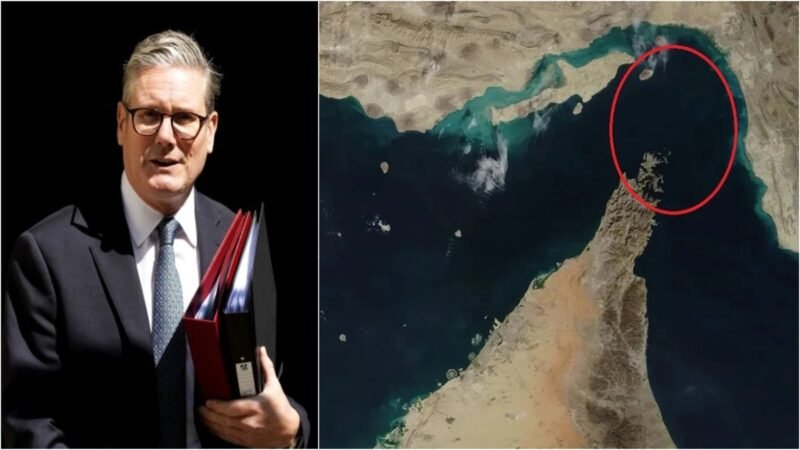
World Without the U.S.—35 Nations Scramble to Break Iran’s Grip on Global Oil Route.
Oil tankers sit idle at the mouth of the Strait of Hormuz, their routes stalled by a war that has turned one of the world’s most critical shipping lanes into a zone of calculated risk. For crews onboard, the threat is immediate. For global markets, the impact is already unfolding.
On Thursday, more than 30 countries—led by the United Kingdom—will convene to map out a response. The goal is straightforward, if not simple: restore the flow of commerce through a passage that carries a significant share of the world’s oil.
Keir Starmer framed the meeting as an effort to align diplomatic and political pressure, while also laying the groundwork for eventual security arrangements. Chaired by Yvette Cooper, the virtual gathering will focus on reopening the strait, protecting trapped vessels, and stabilizing energy flows disrupted by Iranian-linked attacks.
By the third layer of this crisis, the deeper shift becomes clear. This is not only about maritime security—it is about leadership. The absence of the United States from the meeting marks a departure from decades of American dominance in safeguarding global shipping lanes. President Donald Trump has signaled that responsibility now rests with other nations, telling allies to secure their own energy routes.
That decision is forcing a recalibration. Countries including the UK, France, Germany, Italy, Canada, Japan, and the United Arab Emirates have signed onto a joint statement urging Iran to halt its attempts to block the strait and pledging to support efforts to ensure safe passage. The coalition reflects a broad recognition that the economic stakes extend far beyond the region.
Still, the options are constrained. No country appears willing to forcibly reopen the waterway while active conflict continues. Iran retains the capacity to target vessels through missiles, drones, mines, and fast-attack craft—tools that can disrupt shipping without triggering a full-scale naval confrontation.
For now, diplomacy leads. Military planning is being deferred to a later phase, once conditions stabilize. Starmer acknowledged that restoring normal traffic will require both political coordination and eventual security guarantees—likely involving naval deployments and close cooperation with the maritime industry.
There are parallels to earlier coalition-building efforts, including European-led initiatives to support Ukraine’s long-term security. In both cases, the objective is not only operational but symbolic: to demonstrate that Europe and its partners can act collectively in the absence—or retreat—of U.S. leadership.
Yet the risks are immediate. With traffic through Hormuz largely halted, oil prices have surged, and supply chains are tightening. For countries dependent on energy imports, the disruption is not abstract—it translates into higher costs, inflationary pressure, and economic uncertainty.
The emerging coalition faces a narrow path. Move too slowly, and the economic damage deepens. Move too aggressively, and the conflict risks widening.
What is taking shape is a test of whether multilateral coordination can substitute for a single dominant power. If successful, it could mark a shift toward a more distributed model of global security. If not, it may expose the limits of collective action in moments of crisis.
Either way, the stakes extend far beyond the Gulf. The question is no longer just how to reopen a strait—but who, in this new landscape, has both the will and the authority to keep it open.

Inside the White House, the conversations have been quiet—but persistent. In recent days, Donald Trump has privately raised a question that cuts to the core of his administration’s legal strategy: whether to replace his attorney general, Pam Bondi.
The trigger is not a single event, but a convergence of pressure. Fallout from the handling of the Jeffrey Epstein files has reignited frustration within Trump’s political base, while internal dissatisfaction has grown over what some perceive as a lack of aggressive action against political rivals.
According to multiple sources familiar with the discussions, Trump has floated the idea of replacing Bondi with Lee Zeldin, a close ally who has remained in his orbit since his congressional career. The possibility, first raised months ago, has resurfaced as scrutiny intensifies around the Justice Department’s handling of sensitive investigations.
Yet, publicly, the tone remains controlled. Trump described Bondi as “a wonderful person” doing “a good job,” and the Justice Department has pointed to that statement as its official position. Behind the scenes, however, the calculus appears less settled.
By the third layer of this unfolding story, the issue is not simply personnel—it is control. The Justice Department occupies a unique space in American governance, where independence is expected but political pressure is often unavoidable. T
rump’s reported frustration reflects a broader tension between loyalty and autonomy, particularly as legal battles and political narratives increasingly overlap.
Bondi’s position has been complicated by her handling of the Epstein case. A widely noted statement suggesting that a client list was under review later had to be clarified, fueling criticism and confusion. While allies within the administration, including Chief of Staff Susie Wiles, have intervened at times to defend her, the episode has lingered as a point of vulnerability.
There are also practical considerations. Bondi was confirmed with a narrow Senate margin and entered office after Trump’s initial nominee withdrew. Replacing her would reopen confirmation battles and risk further political friction at a time when the administration is already navigating multiple fronts, including an ongoing war abroad.
At the same time, Trump’s willingness to consider change is consistent with a pattern. He recently removed Kristi Noem, marking the first cabinet-level dismissal of his second term. The signal is clear: positions, even at the highest levels, remain conditional.
Still, there are gray areas. Sources emphasize that no final decision has been made, and interactions between Trump and Bondi in recent days have been described as routine. The discussions, while serious, remain exploratory.
The strategic question is what this moment reveals about the administration’s direction. If Trump moves forward with a replacement, it would suggest a shift toward tighter alignment between political objectives and legal leadership. If he holds back, it may indicate recognition of the institutional costs of further disruption.
In either case, the episode underscores a broader reality. The Justice Department is not just a legal body—it is a political signal.
And in an administration defined by rapid recalibration, even the question of change can carry as much weight as the decision itself.
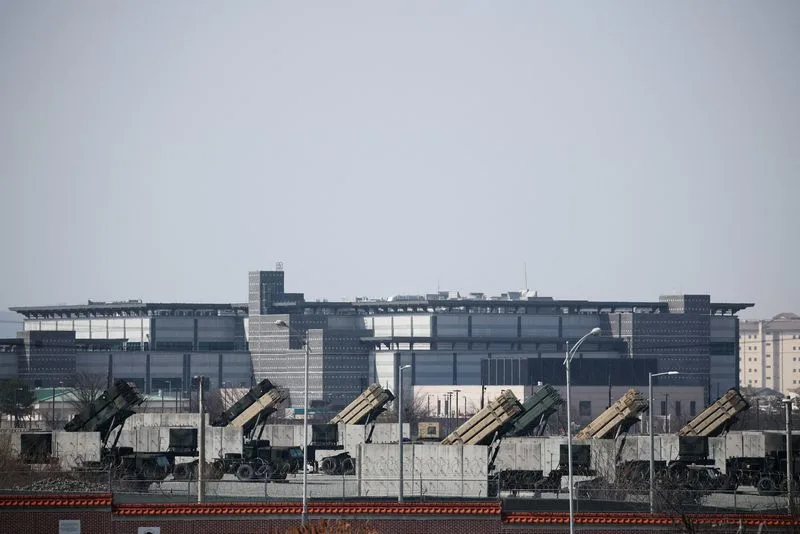
Trust on Hold—Switzerland Signals It Could Walk Away from U.S. Missile Deal.
In a quiet recalibration of defense priorities, officials in Zurich acknowledged this week that a major arms agreement with the United States is no longer guaranteed. Payments for the Patriot missile system have been paused, and for the first time, cancellation is openly on the table.
The issue is not cost or capability. It is certainty.
Swiss authorities say they are withholding further payments until Washington provides binding delivery timelines for the Patriot missile system. Without clear milestones, the procurement process—long seen as a cornerstone of Switzerland’s modern air defense—has entered a phase of negotiation rather than execution.
Defense Minister Martin Pfister struck a measured tone, emphasizing that Bern still intends to acquire the system but is “ruling nothing out.” The government is now exploring all options, including termination, even as it seeks clarity from U.S. counterparts.
By the third layer of this story, the stakes extend beyond a single contract. Switzerland’s hesitation reflects a broader tension in transatlantic defense relations: reliability versus dependence. For smaller, highly strategic states, delays in delivery are not logistical inconveniences—they reshape national security planning, force adjustments in readiness, and raise questions about supplier credibility.
At the same time, Switzerland has moved to safeguard another critical component of its defense modernization. A payment tied to its order of F-35A fighter jets has been advanced to March 2026, signaling that while one pillar of procurement is under review, another must proceed without disruption.
This dual-track approach reveals a careful balancing act. Switzerland is not stepping away from U.S. defense partnerships, but it is asserting leverage—separating timelines, renegotiating terms, and protecting its strategic interests in real time.
There are, however, gray areas. The Patriot system remains one of the most widely deployed and integrated air defense platforms among Western allies. Walking away would carry its own risks, including delays in finding alternatives, compatibility challenges with allied systems, and potential political costs in Washington.
Conversely, proceeding without firm guarantees exposes Switzerland to uncertainty at a moment when European security dynamics remain fluid. The war in Ukraine and rising concerns over missile threats have made timely delivery of defense systems more critical than ever.
The Swiss government has set a clear internal deadline. By the end of June, it will brief the Federal Council on the next steps—whether to proceed, renegotiate, or withdraw.
The decision will not simply determine the future of one weapons system. It will signal how smaller European states intend to navigate an increasingly complex defense market—where partnerships are essential, but predictability is no longer assumed.
In the longer term, this moment may reflect a subtle shift in strategy. Procurement is no longer just about acquiring capability; it is about managing risk across alliances, timelines, and geopolitical uncertainty.
And in that equation, even long-standing partners are now subject to a quieter, more transactional scrutiny.
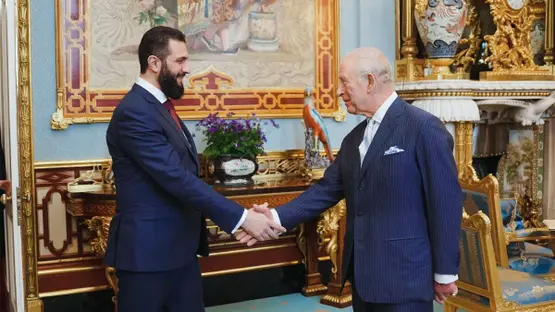
Syrian President Ahmed al-Sharaa Meets King Charles in London as UK Resets Ties with Damascus.
The handshake at Buckingham Palace was brief but heavy with symbolism. Just two years after toppling Bashar al-Assad, Syria’s new president, Ahmed al-Sharaa, stood beside King Charles III—a moment that would have been difficult to imagine during the darkest years of Syria’s civil war.
The meeting, confirmed by the Syrian presidency, focused on rebuilding ties and exploring cooperation “in a manner that serves mutual interests.” The king, according to the statement, expressed support for Syria’s recovery and its people’s efforts to rebuild after more than a decade of conflict.
But the visit is about more than diplomacy. By the third day of a carefully choreographed European tour, al-Sharaa had positioned Syria back into conversations that extend far beyond reconstruction—touching on migration, security, and the broader Middle East conflict.
At 10 Downing Street, al-Sharaa met Keir Starmer, where discussions turned to the escalating confrontation involving the United States, Israel, and Iran. Both sides emphasized the urgency of reopening the Strait of Hormuz, whose prolonged disruption has strained global energy markets and trade flows.
British officials also highlighted Syria’s recent operations against ISIS, signaling cautious approval of Damascus’s counterterrorism efforts. Starmer pressed for deeper cooperation on border control, migrant returns, and dismantling smuggling networks—issues that remain politically sensitive in Britain.
The numbers tell part of that story. Nearly 31,000 Syrians were granted asylum in the UK between 2011 and 2021, while across Europe, particularly in Germany, the Syrian diaspora has reshaped domestic debates over immigration and integration. For European leaders, engagement with Damascus is no longer just about diplomacy—it is about managing long-term internal pressures.
Still, the reset carries ambiguity. Britain only restored diplomatic relations with Syria in mid-2025, ending a 14-year freeze. Officials framed the move as pragmatic: support political transition, stabilize the economy, and reduce migration flows. Critics, however, question whether normalization risks legitimizing a government still navigating fragile internal dynamics.
Al-Sharaa’s parallel outreach to Europe underscores that tension. In Berlin, he met Friedrich Merz, where discussions reportedly included the potential return of large numbers of Syrians from Germany over the coming years—a proposal that highlights the delicate balance between reconstruction at home and political realities abroad.
For Syria, the strategy is clear: secure international legitimacy, attract economic support, and re-enter global systems after years of isolation. For Europe, the calculus is more cautious—engage enough to stabilize Syria, but not so far as to lose leverage.
The meeting at Buckingham Palace may appear ceremonial, but it signals something deeper. Syria is no longer treated solely as a crisis to contain. It is being repositioned—carefully, conditionally—as a state to engage.
The longer-term question is whether this re-engagement can hold. If Syria can translate diplomatic openings into economic recovery and internal stability, the shift could ease regional pressures, including migration and security risks. If not, today’s gestures risk becoming another cycle of tentative normalization followed by renewed instability.
For now, the image of a Syrian president inside Britain’s royal palace captures a quiet but consequential reality: the geopolitical map is being redrawn—not with declarations, but with meetings like this.
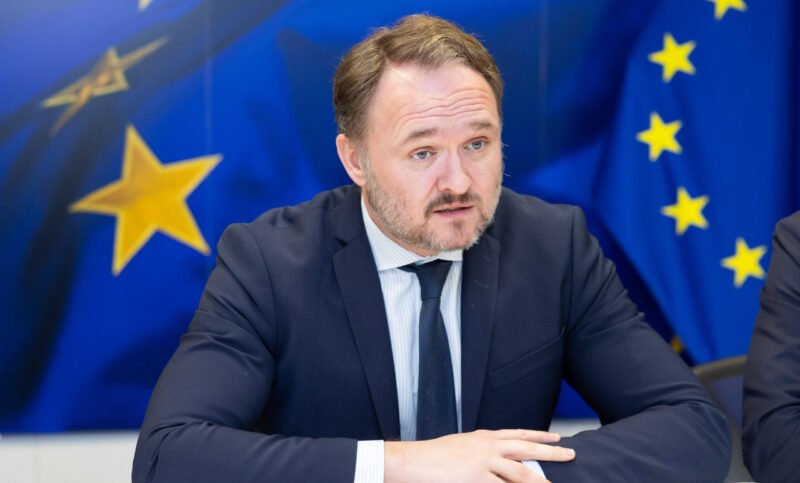
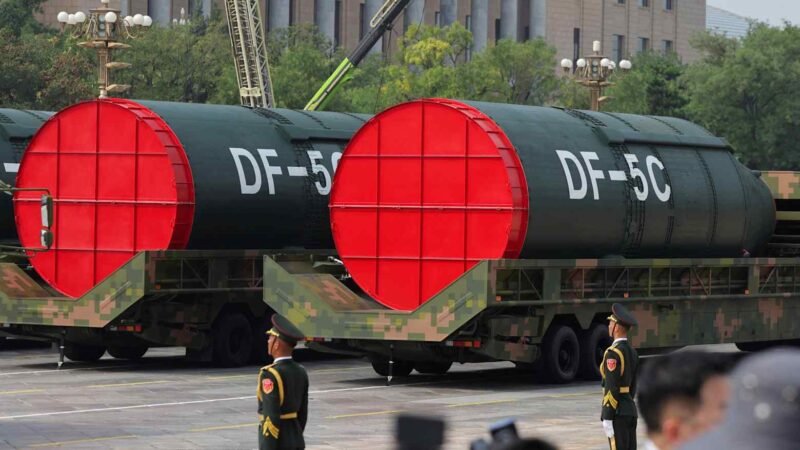
From Europe to Asia, countries are quietly asking a once-taboo question: do we need nuclear weapons now?
The war involving Iran is no longer confined to missiles and airstrikes—it is reshaping the global nuclear debate in ways that could outlast the conflict itself.
According to Bloomberg, governments across Europe and Asia are increasingly—and more openly—discussing whether they should develop their own nuclear arsenals. The shift reflects a growing sense that traditional security guarantees may no longer be sufficient in an era of escalating great-power confrontation.
At the center of this anxiety is the credibility of extended deterrence, particularly the U.S. nuclear umbrella that has protected allies for decades. Countries that once relied almost exclusively on Washington are now reassessing their options.
In Europe, both Poland and Germany are signaling openness to alternative arrangements, including support for France expanding its nuclear deterrent to cover the continent. The idea—once politically sensitive—is gaining traction as the war raises questions about long-term security guarantees and the risks of regional spillover.
The concern is not limited to Europe. Across the Western Pacific and other regions, policymakers are quietly revisiting assumptions that have guided nuclear restraint for decades.
Rafael Grossi, head of the International Atomic Energy Agency, warned that discussions about acquiring weapons of mass destruction are now taking place even in countries that had previously committed never to pursue them.
His message was stark: expanding the number of nuclear-armed states will not enhance global security—it will erode it.
Yet the logic driving this shift is difficult to ignore. The Iran conflict has exposed how quickly regional crises can escalate, how vulnerable global energy routes are, and how unpredictable great-power responses can become. For many governments, the lesson is not abstract—it is strategic.
Adding to the unease are reports that the United States—the only country to have used nuclear weapons in war—is considering resuming nuclear testing, a move that could further weaken the global non-proliferation framework.
Taken together, these developments point to a subtle but significant transformation. The world is not yet in a new nuclear arms race—but the conversation that precedes one has already begun.
The danger lies not in a single decision, but in a chain reaction.
If one country moves, others may follow—not out of ambition, but out of fear.
And in a geopolitical climate already defined by mistrust and fragmentation, that may be all it takes to shift the nuclear order from restraint to competition.

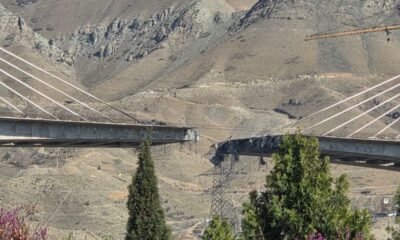
Bridges Fall, Missiles Rise—War Enters a More Destructive Phase

Iran Executes 18-Year-Old Protester

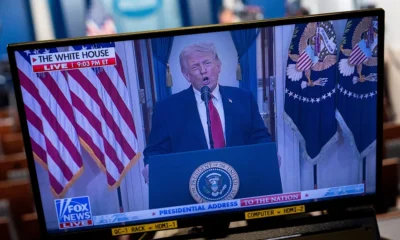
Trump Declares Victory as Iran Proves It’s Not Done


-
 US-Israel war on Iran1 month ago
UK Refuses Iran Strike Access, Trump Fires Back
-
 Russia-Ukraine War1 month ago
Europe’s Spies Challenge Trump’s Ukraine Peace Optimism
-

 Top stories1 month ago
War Expands Across Region as Iranian Militias Join Fight
-
 Top stories1 month ago
India Turns to Brazil in Strategic Minerals Push Against China
-
 US-Israel war on Iran1 month ago
Iran Pledges ‘Never, Ever’ to Hold Bomb-Grade Material
-
 US-Israel war on Iran1 month ago
Syria Under Fire on Two Fronts
-
 Russia-Ukraine War1 month ago
Estonia Warns NATO Would Strike Deep Inside Russia if Baltics Are Invaded
-

 Top stories3 weeks ago
Meloni Breaks Ranks: Italy Warns on Iran War