Connect with us

Somaliland

Swedish Parliamentary Delegation Visits the Republic of Somaliland

Published

on

The Republic of Somaliland proudly hosted an official visit by a parliamentary delegation from the Kingdom of Sweden, led by Member of Parliament Magnus Oscarson, Chair of the Somaliland Friendship Group in the Swedish Parliament.

The group, comprising more than 20 Swedish MPs from across the political spectrum, is dedicated to advancing Somaliland’s democratic achievements and international recognition.

The visit was organized in close coordination with the Embassy of the Republic of Somaliland in Sweden, under the leadership of Ambassador Zakaria Waes, and Mikael Torstensson, Somaliland’s Special Envoy to the European Union.

During their stay, the Swedish delegation held meetings with several senior officials of the Republic of Somaliland, including the Minister of Foreign Affairs, the Director General of the Ministry of Health, and the Vice President.

They also met with members of the House of Representatives, where they were received by Acting Speaker and First Deputy Speaker MP Saeed Mire Farah Giire for extensive discussions on governance, democracy, and bilateral cooperation.

Advertisement

As part of their visit, the delegation traveled to Berbera, where they were received by Mayor Abdishakur and toured the DP World Port and Free Trade Zone — key drivers of regional trade and investment.

The delegation also met with private sector representatives and visited Hargeisa’s central market, expressing admiration for the city’s high level of security, organization, and entrepreneurial energy.

In their concluding remarks, the Swedish delegation praised Somaliland’s enduring peace, democratic progress, and strong commitment to gender equality and human rights.

“We are deeply impressed by Somaliland’s stability and democratic commitment,” said Magnus Oscarson, Chair of the Somaliland Friendship Group in the Swedish Parliament. “We look forward to strengthening cooperation between Sweden and Somaliland in areas of mutual interest.”

Ambassador Zakaria Waes and Envoy Mikael Torstensson extended their gratitude to the Swedish delegation for their continued support and constructive engagement, reaffirming Somaliland’s dedication to advancing democracy, equality, and international partnership.

Advertisement

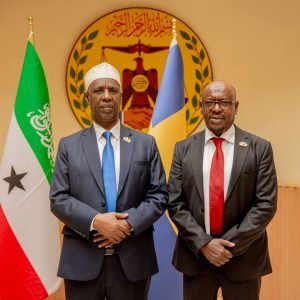
Somaliland Vice President Welcomes Swedish Parliamentary Delegation, Urges Support for Recognition
Advertisement


Somaliland

Somaliland at Davos: The Moment Somaliland Entered the World’s Inner Circle

Published

on

From Hargeisa to Davos: Somaliland at Davos: President Irro’s Arrival Signals a New Era of Global Legitimacy.

In global diplomacy, optics often matter as much as formal treaties. This week, as a helicopter touched down in the snow-covered enclave of Davos-Klosters, Switzerland, a single image quietly altered the political gravity of the Horn of Africa.

President Abdirahman Mohamed Abdullahi “Irro,” stepping onto Alpine ground at the World Economic Forum, did more than attend a conference. His arrival sent a message that resonated far beyond the Swiss mountains: Somaliland is no longer knocking at the door of international legitimacy — it is walking through it.

Davos is not just another summit. It is a gatekeeper of relevance. The World Economic Forum convenes leaders who shape capital flows, security architectures, and the future of global governance. Invitations are not extended to “regional administrations” or symbolic entities. They are reserved for actors deemed capable of influencing the world’s direction.

That is why the absence of Somalia — and the presence of Somaliland — carried such political weight.

Advertisement

For Mogadishu and Somaliland’s long-standing detractors, the shock was not merely symbolic. It was structural. While Somalia remains mired in dependency politics and internal fragmentation, Somaliland’s head of state was entering the room where global priorities are debated, funded, and implemented.

This is the “Spirit of Dialogue” made tangible — a dialogue in which Hargeisa is now formally present.

President Irro’s public message to Somalilanders spoke of “peace, prosperity, and goodwill.” But the subtext was unmistakable: sovereignty is no longer a claim; it is a practiced reality.

By linking his greetings to an image from Davos, Irro anchored Somaliland’s local struggle for recognition to the global pursuit of stability and growth. For citizens at home and in the diaspora, the image validated more than three decades of self-governance, democratic transitions, and economic resilience built without international recognition — and now, increasingly, without apology.

The theme of this year’s WEF, “Connecting leaders to make sense of global challenges,” aligns almost surgically with Somaliland’s emerging geopolitical posture. As Somaliland navigates the post-recognition phase following Israel’s recognition and its deepening integration into the UAE-led Red Sea security and trade architecture, Davos offers a critical platform to translate political legitimacy into material power.

Advertisement

Three strategic priorities stand out.

First, engaging global capital. Somaliland is signaling a shift from aid dependency toward direct investment, placing Berbera, logistics, energy, and digital infrastructure into conversations with sovereign wealth funds and multinational CEOs.

Second, solidifying alliances. In a neutral, high-level setting like Davos, Somaliland can quietly reinforce ties with Abraham Accords partners and maritime security stakeholders without the diplomatic noise that often surrounds bilateral visits.

Third, defining the Horn of Africa’s future. By positioning Berbera and the corridor linking Ethiopia to the Gulf as a cornerstone of global supply chains, Somaliland inserts itself into discussions previously dominated by Djibouti, Kenya, and fragile federal Somalia.

The symbolism could not be sharper. The roar of F-35s over Hargeisa days earlier spoke to territorial security. The hum of helicopter blades in Davos spoke to the expansion of influence. One secures the nation. The other projects it.

Advertisement

President Irro’s presence in Switzerland reflects more than diplomatic ambition. It represents a new Somaliland doctrine: security at home, legitimacy abroad, and relevance everywhere in between.

Somaliland has not simply arrived in Switzerland. It has arrived on the global stage — not as a petitioning territory, but as a contributing actor in shaping tomorrow’s world.

And for the first time in modern history, Somaliland is no longer asking to be recognized.

It is being recognized by where it stands.

Advertisement
Continue Reading

Somaliland

F-35s Over Hargeisa: The Night Somaliland’s Sovereignty Went Supersonic

Published

on

How Somaliland Entered the New Red Sea Security Order. This wasn’t an airshow. It was a message—to the Horn, the Red Sea, and the world.

At approximately 10:00 p.m., the sky above Hargeisa stopped being symbolic and became strategic.

Residents looked up to see the unmistakable silhouettes of F-35 fighter jets banking low over the capital. In most regions, such a sound triggers fear. In Somaliland, it triggered applause. Phones came out. Cheers followed. The moment carried a meaning far larger than the aircraft themselves: Somaliland had crossed a geopolitical threshold.

This was the visible confirmation of Israel’s formal recognition of Somaliland and the extension of the Abraham Accords into the Horn of Africa.

When Israeli Prime Minister Benjamin Netanyahu announced the recognition, he framed it not as a legal footnote, but as a strategic decision rooted in the Abraham Accords’ logic—security alignment, economic integration, and regional realignment. Somaliland was not being recognized out of sentiment. It was being integrated into a new order.

Advertisement

For years, the Abraham Accords reshaped the Middle East by replacing ideological paralysis with transactional cooperation. Somaliland’s inclusion extends that gravitational pull across the Red Sea. The implication is blunt: Somaliland is no longer peripheral. It is now a node in a high-value security and trade architecture linking the Gulf, the Levant, and East Africa.

This move fits seamlessly into an Emirati-centered political economy. The United Arab Emirates has spent the past decade building ports, logistics corridors, and military infrastructure along the Red Sea. The Port of Berbera Port is not an outlier in that strategy—it is one of its anchors.

By aligning with Israel, Somaliland locks itself into this UAE-led stability framework. This is not proxy politics. It is economic realism. It places Somaliland inside a system that rewards predictability, trade security, and modern defense capability rather than ideological posturing.

The F-35s themselves carry symbolism that goes beyond firepower. Valued at over $80 million per jet, they are among the most advanced machines ever built. Their presence signals entry into a modern defense tier—one defined by interoperability, intelligence fusion, and deterrence credibility.

Contrast this with Mogadishu, where officials reportedly reacted with shock. While Somalia remains trapped in internal fragmentation and reactive diplomacy, Somaliland has made a forward-looking bet: align early with the emerging Red Sea order rather than plead for relevance in collapsing ones.

Advertisement

Recognition is often discussed in abstract legal terms—resolutions, committees, corridors in New York. But last night demonstrated something more concrete. Recognition is also airspace. It is security guarantees. It is being included in who protects what—and why.

The roar over Hargeisa was not intimidation. It was validation. A 34-year project of state-building, stability, and strategic patience was acknowledged not with speeches, but with presence.

The Red Sea is being reorganized in real time. Trade routes are militarized. Alliances are hardening. And for the first time in modern history, Somaliland is not watching from the margins.

It is inside the architecture—visible, protected, and increasingly indispensable.

Advertisement
Continue Reading

Somaliland

Somaliland Accuses Turkey and Mogadishu of Preparing Military Offensive

Published

on

Somaliland Warns Turkey and Somalia Over Alleged Troop and Weapons Deployment to Las Anod.

The Republic of Somaliland has issued one of its strongest warnings yet, accusing Turkey and Somalia’s federal leadership of preparing a military offensive aimed at destabilizing Somaliland following Israel’s recognition of its sovereignty.

According to Somaliland officials, the Commander of the Turkish Armed Forces stationed at TurkSom has arrived in Las Anod, a move Hargeisa describes as direct interference coordinated with Mogadishu. Somaliland alleges that troops and weapons are being mobilized and transported to the contested town with Turkish logistical support.

President Abdirahman Mohamed Abdullahi Irro did not mince words. He warned that aircraft belonging to Turkey were allegedly ferrying Somali troops and arms into Las Anod, framing the buildup as preparation for an attack on Somaliland territory.

“The Somali government is preparing an offensive against Somaliland,” the president said, adding that Hassan Sheikh Mohamud has openly stated that Somalia and its allies aim to bring Somaliland back under Mogadishu’s authority.

Advertisement

Hargeisa views the developments as a dangerous escalation—one that risks igniting wider instability across the Horn of Africa. President Irro explicitly cautioned international actors against being drawn into what he described as a reckless strategy.

“I warn them not to take part in interfering in Somaliland, or to participate in actions that could cause instability in Somaliland or the Horn of Africa,” he said.

The accusations come as Hassan Sheikh Mohamud and Prime Minister Hamza Abdi Barre arrived in Las Anod for the inauguration of the leader of the so-called North East State administration—an event Somaliland sees as politically provocative and militarily sensitive.

In Hargeisa’s reading, the pattern is clear: diplomatic pressure failed, symbolic visits followed, and now alleged militarization is underway. Somaliland’s message is equally clear—any attempt to resolve political disputes through force will be met with firm resistance, and those enabling such actions will bear responsibility for the consequences.

What happens next in Las Anod may determine whether the region steps back from the brink—or crosses into a far more dangerous chapter.

Advertisement
Continue Reading

Somaliland

Somaliland Activates the Shield: 6,000 Troops Graduate

Published

on

Somaliland Graduates 6,000 National Army Soldiers in Sool Amid Rising Tensions With Somalia.

More than 6,000 Somaliland National Army (SNA) soldiers have completed intensive training in the Sool region, marking one of the largest single-force readiness milestones in recent years. The graduation ceremony, attended by the Commander of the National Army and the Minister of Defense, sends a clear and deliberate signal at a moment of escalating political and security pressure.

“We are united in discipline and pride. We stand prepared to defend our country against any aggression and safeguard the nation,” one graduating soldier said—language that reflects not ceremony, but posture.

The timing is not accidental. The training concludes as the Somali federal government intensifies diplomatic and political efforts to undermine Somaliland’s statehood, including symbolic incursions and rhetorical escalation centered on Lasanod. In response, Hargeisa is shifting from reassurance to deterrence.

This is not a mobilization for war, but a calibrated display of readiness. Somaliland’s leadership is signaling that sovereignty is not only defended in diplomatic rooms, but anchored in disciplined, deployable force on the ground.

Advertisement

According to insider security sources, foreign partners are closely watching developments. Both United Arab Emirates and Israel are reported to be directly monitoring the security situation in and around Lasanod, underscoring Somaliland’s growing integration into a wider regional security architecture.

As diplomatic pressure mounts and narratives intensify, today’s graduation reframes the equation. Somaliland is no longer reacting. It is positioning—quietly, deliberately, and with force readiness to back its political trajectory.

In the new phase unfolding in the Horn of Africa, Lasanod is no longer a question mark. It is becoming a line.

Continue Reading

Somaliland

Somaliland Draws Red Lines as Israel Signals Readiness

Published

on

Somaliland Warns of ‘Unforgettable Response’ After Somalia President Lands in Lasanod as Israel Raises Regional Alert.

Somaliland has issued a firm and calculated response after Somalia’s president, Hassan Sheikh Mohamud, landed in Lasanod—a city Hargeisa has administered as part of the Republic of Somaliland since June 26, 1960. The visit, framed by Mogadishu as political theater, is being interpreted in Hargeisa as a deliberate provocation at a moment when Somaliland’s international profile is rapidly advancing.

President Abdirahman Mohamed Abdullahi (Irro) made Somaliland’s position unmistakably clear: peace remains the preferred path, but sovereignty is non-negotiable. “Any aggression against Somaliland will be met with an unforgettable response,” the president warned—language signaling deterrence, not escalation. Behind the statement lies a broader message: Somaliland is no longer diplomatically isolated, nor strategically exposed.

The timing matters. Somaliland’s emerging alliances—most notably with Israel—have altered the regional calculus. On Friday, the Israel Defense Forces said it is operating at peak readiness amid rising regional tensions spanning Iran, the Red Sea, and the Gulf of Aden. IDF spokesperson Effie Defrin emphasized continuous situational assessments and preparedness “for a wide range of scenarios,” underscoring that Israel is closely monitoring developments beyond its immediate borders.

In Hargeisa, the Lasanod visit is seen as part of a broader campaign of diplomatic, media, and political pressure aimed at slowing Somaliland’s momentum. Officials argue the move attempts to manufacture relevance for a federal government still struggling with internal legitimacy, security dependence, and unresolved governance challenges.

Advertisement

President Irro has also sought to steady public sentiment, acknowledging heightened anxiety as regional tensions intensify. He urged citizens to ignore rumors and rely on official channels, stressing that Somaliland’s leadership is acting with restraint, clarity, and preparedness.

The strategic signal is clear: Somaliland is projecting calm confidence, backed by new partnerships and a sharpened security posture. While Mogadishu stages symbolic visits, Hargeisa is consolidating statecraft—anchoring its foreign policy in security cooperation, values alignment, and deterrence. In the evolving Horn of Africa landscape, Lasanod has become more than a city; it is a test of credibility.

Continue Reading

Somaliland

Somaliland Rejects Mogadishu’s Lasanod Provocation

Published

on

Somaliland Slams Somalia President’s Lasanod Visit as Minister Khadar Abdi Reasserts Sovereignty.

Somaliland has issued a sharp and calculated response after Somalia’s President Hassan Sheikh Mohamud landed in Lasanod, a city Hargeisa considers an integral part of Somaliland since independence on June 26, 1960. The visit, coming just weeks after Israel’s formal recognition of Somaliland, is widely viewed in Hargeisa as a political provocation rather than a peace gesture.

Minister of the Presidency Khadar Hussein Abdi framed the issue bluntly: Mogadishu is projecting authority it does not possess. His message was not emotional; it was surgical. A president who has failed to unify Mogadishu, Garowe, and Kismayo, failed to build a functional national army, and failed to deliver credible elections, has no standing to dictate affairs inside Somaliland’s borders.

The timing matters. Since Israel’s recognition, Somaliland has faced intensified diplomatic, media, and political pressure. The Lasanod visit fits that pattern — an attempt to manufacture relevance at a moment when Somaliland’s international status is advancing while Somalia’s internal legitimacy remains fragile.

Abdi’s statement reaffirmed two core points of the “Hargeisa Doctrine.” First, Lasanod is Somaliland — historically, legally, and administratively. Second, Somaliland remains committed to resolving disputes through dialogue and peaceful means, not escalation. The contrast is deliberate: confidence versus chaos, institutions versus improvisation.

Advertisement

By urging Hassan Sheikh Mohamud to “put his own house in order,” starting with elections that allow Somalis to choose leadership freely, Somaliland is shifting the burden of credibility back onto Mogadishu. This is no longer a debate about borders; it is a referendum on governance capacity.

The underlying message is unmistakable. Somaliland’s recognition is no longer theoretical — it is a political fact. Symbolic visits, rhetorical threats, or external agitation will not reverse it. As Hargeisa signals calm resolve, Mogadishu’s gestures increasingly look like noise in a region that is already moving on.

Continue Reading

Somaliland

Irro Speaks to the World: Somaliland Steps Out of the Shadows

Published

on

President Irro Declares New Era for Somaliland After Recognition in Wall Street Journal Op-Ed.

President Abdirahman Mohamed Abdullahi (Irro) has taken Somaliland’s case directly to the global elite, publishing a landmark op-ed in The Wall Street Journal that frames Israel’s recognition not as a diplomatic surprise, but as a historical correction.

Under the title “My Country, Somaliland, Recognized,” President Irro reminded international readers that Somaliland’s sovereignty predates its failed union with Somalia—and that Israel was among the first countries to recognize Somaliland in 1960. In doing so, he recast the current moment as a return to legitimacy rather than a break from the past.

“Our first embassy will be in the Jewish state, whose aspirations and history we share,” Irro wrote—an unmistakable signal that Somaliland’s foreign policy is now anchored in values, security cooperation, and strategic clarity.

The op-ed carefully contrasted Somaliland’s record of peace, democratic governance, and counterterrorism with Somalia’s continued instability, while also acknowledging the broader geopolitical contest unfolding in the Horn of Africa. Irro openly cited Turkey and China’s growing influence in Mogadishu, positioning Somaliland as a credible, stable alternative partner for the West and its allies.

Advertisement

Crucially, the President tied the new relationship with Israel to shared historical trauma, recalling Israel’s opposition to the 1988–1990 genocide against the Somaliland people. That framing elevates the partnership beyond transactional diplomacy—it becomes an alliance rooted in survival, memory, and sovereignty.

The most consequential line came near the end: Irro suggested that “the dam has broken” in Africa. Translation: Israel will not be the last. Others are already watching, calculating, and preparing to follow.

This was not a celebratory article. It was a strategic declaration—calm, confident, and aimed squarely at decision-makers. Somaliland is no longer asking to be understood. It is asserting its place.

Source: The Wall Street Journal / WARYATV News Desk

Advertisement
Continue Reading

Somaliland

Irro Unites Somaliland’s Political Class as Mogadishu Escalates Threats

Published

on

President Irro Forms National Political Front After Israel Recognition Amid Rising Tensions with Mogadishu.
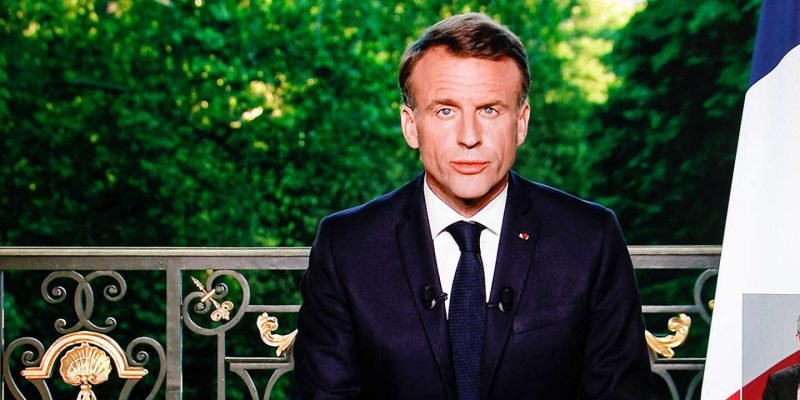
President Abdirahman Mohamed Abdullahi (Irro) has moved decisively to lock in Somaliland’s internal stability at a moment of historic transition. In a high-stakes national consultation, he brought together the senior leadership of all three national parties—WADDANI, KAAH, and KULMIYE—marking a rare show of unity in Somaliland’s modern political history.

This was not routine politics. It was a strategic consolidation of power and purpose following Israel’s formal recognition of Somaliland and the sharp escalation in hostile rhetoric from the Federal Government of Somalia. Irro framed the recognition not as an endpoint, but as the beginning of a new and more demanding phase—one that requires discipline, maturity, and collective responsibility.
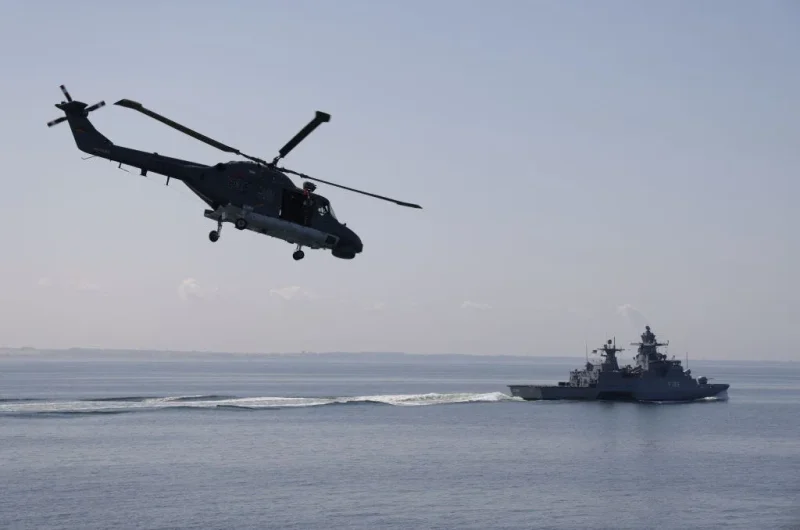
By briefing opposition leaders on the security and diplomatic realities facing the country, the president dismantled any space for internal fragmentation. The message was unambiguous: Somaliland is not seeking confrontation, but its sovereignty is non-negotiable. Any attempt to threaten or invade Somaliland, he warned, will be met with firm resistance—and responsibility for escalation will rest squarely with Mogadishu.

Crucially, Irro called on party leaders to actively shield the nation from internal destabilization, urging them to suppress inflammatory rhetoric and prioritize national cohesion over partisan gain. The response was striking. Leaders from all three parties publicly endorsed the president’s approach, praised his diplomatic achievements, and pledged to stand behind the government during this critical period.

Advertisement

The contrast with Mogadishu could not be sharper. While Somalia’s federal leadership issues decrees it cannot enforce and struggles with internal fractures, Somaliland is demonstrating the core attribute of statehood: unity under pressure.

Irro has effectively shifted the national focus from electoral rivalry to statecraft. In doing so, he has sent a clear signal—to citizens, adversaries, and the international community—that Somaliland enters this new diplomatic era united, confident, and prepared. Israel was the first recognition. The groundwork is now laid for what comes next.

Continue Reading

Most Viewed

error: Content is protected !!