
ASSESSMENTS
Abiy’s Sea Dream Stirs Fear in Eritrea, Egypt, and Somalia

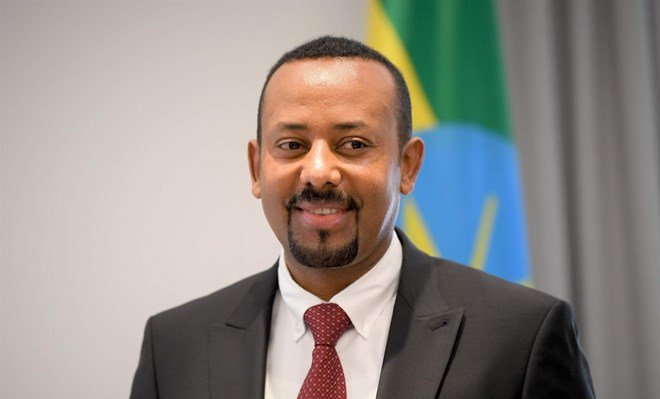
Addis Ababa’s vow to “correct history” rattles Egypt, Eritrea, and Somalia.
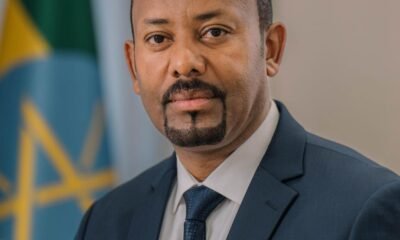
Ethiopian Prime Minister Abiy Ahmed has ignited regional alarm by declaring Ethiopia’s landlocked status “an existential issue” that must be reversed, pledging to reclaim access to the Red Sea. His comments — laced with historical grievance and national destiny — put Addis Ababa on a collision course with neighbors who view the move as a direct threat to sovereignty.
“The mistake made 30 years ago will be corrected tomorrow,” Abiy said in a Sept. 1 state TV interview, referring to Eritrea’s 1993 independence and the loss of ports Assab and Massawa. “Remaining a prisoner of the land is no longer sustainable.”
The timing is volatile. Abiy’s rhetoric comes as Egypt deploys troops into Somalia under the African Union flag, a move Addis Ababa sees as a hostile encirclement linked to the Nile dam dispute. Eritrea has branded Ethiopia’s ambitions a “toxic agenda,” while Mogadishu has rallied behind Cairo, framing Ethiopia’s growing military presence in Somalia as illegitimate.
The Red Sea, one of the world’s most contested maritime corridors, is suddenly at the heart of Ethiopia’s survival narrative. Backed by a rapidly growing population and buoyed by the success of the GERD mega-dam, Abiy is packaging sea access not as a diplomatic aspiration but as a national necessity. “If we built the GERD, what can’t we achieve?” he asked — a question that sounds more like a challenge than reassurance.
Critics warn Abiy is playing with fire. Eritrea still bristles from its bloody border war with Ethiopia, Egypt has tied its military footprint in Somalia to protecting Nile water flows, and Mogadishu is seething after Ethiopia’s January 2024 MoU with Somaliland granting naval access to Berbera. In this calculus, Abiy’s vow to “correct history” reads less like economic planning and more like a roadmap to regional confrontation.
For now, Ethiopia is rebuilding its navy but the message is unmistakable: Addis Ababa is willing to risk war to escape landlocked isolation. In a region already inflamed by terrorism, proxy wars, and great power competition, Ethiopia’s gambit threatens to redraw the map — not through treaties, but through force.















U.S.–Iran Tensions Ripple Through Oil Markets — Top Analyst Says Attack Odds at 75%
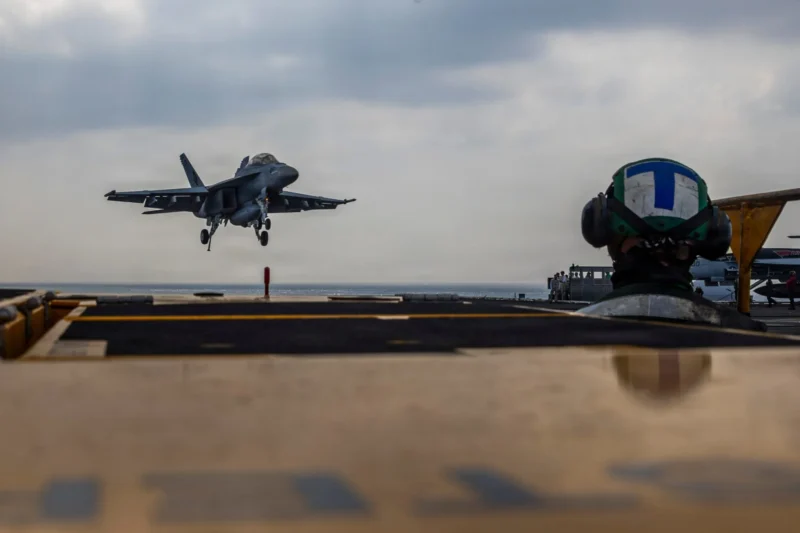
Oil markets are pricing in significant geopolitical risk as fears grow that the United States could launch a military strike on Iran in the coming days or weeks, a top energy expert said, raising the prospect of major disruption to global oil supplies.
Bob McNally, founder of Rapidan Energy Group and a former White House energy adviser, told CNBC that there is a roughly 75 % probability of some form of U.S. military action against Iran soon — a scenario he described as “real” and distinct from past limited strikes.
“Markets are pricing the risk that this time the past will not indicate the future — that we could have a sustained disruption in energy flows,” McNally said, noting that oil futures have already reacted sharply to the growing tension.
Oil Prices Surge on Geopolitical Premium
Brent crude futures have climbed about 14 % since the start of the year, and rose further on expectations of heightened risk, breaking a pattern of declining prices punctuated by brief reversals.
The rise in oil prices is widely attributed to market fears that any U.S. strike could provoke Iranian retaliation — particularly attempts to disrupt shipping through the Strait of Hormuz, the critical chokepoint through which about 20 % of the world’s seaborne oil and liquefied natural gas flows.
Although previous U.S. military action against Iranian nuclear sites last year had only short-lived effects on oil prices, McNally warned that a new strike — under the current volatile political environment — could have more enduring implications if it affects energy infrastructure or prompts broader disruption.
Strait of Hormuz: A Critical Vulnerability
Analysts say one of the most significant risks to global energy markets is the potential for Iran to threaten or block the Strait of Hormuz in retaliation for a U.S. attack. This narrow waterway connects Persian Gulf producers with global markets and handles roughly a fifth of global oil and LNG exports.
Historical analysis demonstrates how sensitive oil markets are to disruptions: during the Iranian Revolution in 1979, reduced oil output triggered a global energy crisis, underscoring how even moderate changes in Middle East supply can reverberate worldwide.
Market Responses and Diplomatic Signals
Despite rising geopolitical premium in oil prices, recent reporting suggests shifts in diplomatic messaging. Iran’s Foreign Minister Abbas Araghchi expressed confidence that talks with the U.S. could still produce diplomatic outcomes, even as Iran’s Supreme Leader warned that any attack could spark a “regional war.”
Meanwhile, oil markets have shown sensitivity to both tensions and recalibrations, with a late-week retreat in prices following indications of serious talks between Washington and Tehran that reduced short-term fears of a supply shock.
What Happens Next?
Traders and analysts alike remain focused on the evolving U.S.–Iran dynamic. The risk of military action, though not certain, drives a geopolitical risk premium into energy markets, while the threat of disruption through strategic chokepoints like the Strait of Hormuz continues to shape oil price expectations globally.
Any escalation could send crude prices sharply higher and ripple through global economies; a sustained supply disruption — even brief — could trigger bidding wars for available oil and LNG, pushing markets into a new phase of volatility.
Trump Shifts Focus to Iran’s Nuclear Program as Intelligence Warns Missiles Could Hit Israeli Cities.
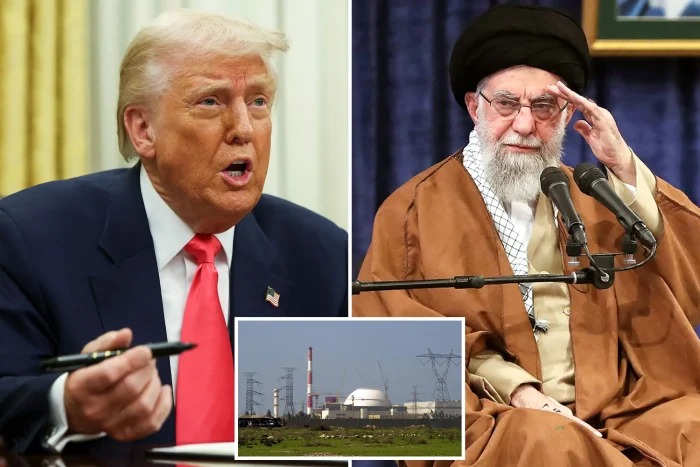
President Donald Trump’s abrupt rhetorical shift on Iran reflects a paradox confronting Washington and Jerusalem at the same time. On one hand, intelligence assessments describe an Iranian regime weakened by protests and economic strain. On the other, Israeli warnings suggest that any renewed confrontation would likely bring missiles down on population centers rather than military sites.
Those two signals pull policy in opposite directions. One invites pressure in the belief that the regime is vulnerable. The other demands restraint because the next exchange could be deadlier for civilians.
The latest intelligence picture explains why Trump moved the conversation away from protesters and back to the nuclear file. Assessments indicate that last year’s strikes damaged Iran’s enrichment infrastructure and stalled progress, but did not eliminate the program. Centrifuges at key facilities were knocked offline, yet the most sensitive stockpiles of enriched uranium appear to have survived and been moved deeper underground.
That creates a narrow window. Iran is not sprinting toward a bomb, and there are no signs of high-level enrichment or a crash weapons program. But Tehran is hardening sites and digging beyond the reach of even the heaviest bunker-busting munitions. If that effort succeeds, future military options become less effective and more dangerous.
From Washington’s perspective, this is the moment when leverage is highest. Damage inflicted last year bought time, perhaps up to a year, before Iran could restore previous capacity. Using that time to force negotiations would be ideal. Waiting too long risks confronting a rebuilt, better-protected program that requires riskier action to disrupt.
The complication is retaliation.
Israeli intelligence now judges that Iran, if struck again, would likely aim at cities. In the previous exchange, most fire was directed at military and infrastructure targets. This time the calculus could change. Interceptors that protected urban areas last year are in shorter supply, and Iranian planners may see population centers as the most effective way to deter follow-on attacks.
That prospect is shaping both countries’ thinking. Even if Israel maintains high interception rates, saturation attacks could still inflict visible damage. A strike that weakens Iran’s program but triggers urban casualties in Israel would test political and public tolerance for escalation.
Against that backdrop, the Pentagon has widened the menu of options beyond airstrikes, including covert or commando actions against specific sites. The goal is to preserve coercive pressure while reducing the chance of a large retaliatory volley. Whether such operations can achieve meaningful delay without provoking the same response remains uncertain.
Intelligence is also clear on what Iran has not done. There is no evidence of new enrichment facilities, no move to weapons-grade material, and no assembly of a warhead. Two known construction sites near major nuclear complexes are active but unfinished. In effect, Tehran is preparing contingencies while staying just short of the line that would justify immediate attack.
This ambiguity is intentional. Iranian leaders appear to believe that overt escalation would be quickly detected and met with force, especially given deep intelligence penetration by Israel and the United States. By staying below the threshold, they complicate the case for preemption while continuing to harden their assets.
Trump’s pivot is therefore less about imminent war than about restoring bargaining power. Publicly insisting on “no nuclear weapons” while warning of consequences signals readiness to act without committing to it. Massive U.S. deployments to the region reinforce deterrence and reassure partners, even as officials leave space for talks.
The strategy aims to hold two truths at once. Iran is weaker internally than it has been in years, which increases the chance that pressure could bring it to the table. But Iran’s remaining capabilities make any misstep costly, especially if retaliation is aimed at civilians.
In practical terms, this pushes policy toward calibrated coercion. Keep the program delayed. Block deeper fortification. Avoid actions that make city-targeted retaliation unavoidable. Use the current pause in enrichment to pursue an agreement that locks in constraints before Iran can rebuild.
Whether that balance holds depends on timing. If Iran accesses buried uranium and restores centrifuge capacity, the decision window narrows and the risks of action rise. If negotiations gain traction first, last year’s damage may become the foundation for a longer pause.
For now, intelligence is neither a green light nor a red light. It is a yellow one.
The Curse of Lasanod: Why Lasanod Has Become the Most Dangerous Stage for Somali Presidents.
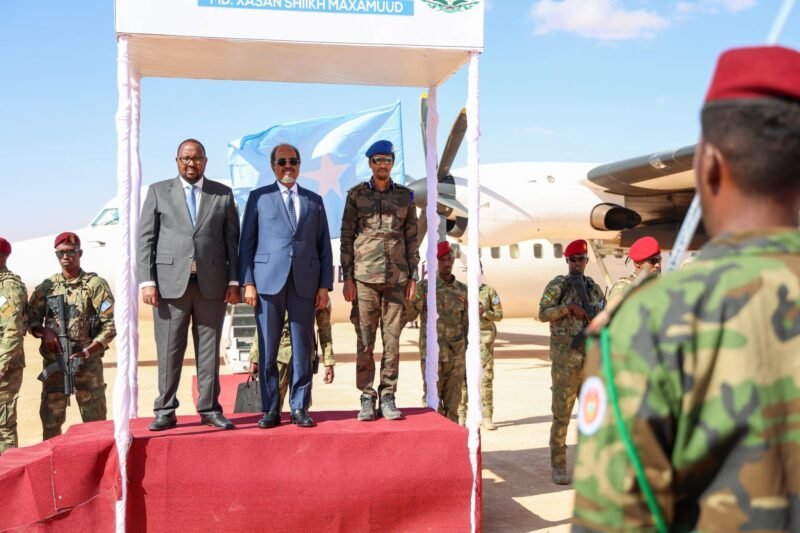
The dust may have settled in Lasanod following the arrival of Somalia’s President Hassan Sheikh Mohamud and his expansive federal delegation, but history suggests calm in this city is never neutral. It is deceptive. Lasanod is not just another regional capital—it is one of the most politically lethal locations in modern Somali history. For presidents, it has never been a venue for symbolism alone. It has been a proving ground where authority is tested, and where failure has carried the highest possible price.
This visit marks only the third time in nearly six decades that a sitting Somali leader has personally entered Lasanod under national authority. That statistic alone should raise alarms. Lasanod has existed for centuries as a political and cultural center, long predating modern state borders, British colonial administration, and the Dervish resistance. Yet in the post-independence Somali state, it has acquired a far darker reputation: the city where a president was assassinated—and where the republic itself began to unravel.
The security environment surrounding the 2026 visit is arguably the most volatile since 1969. Prime Minister Hamse Barre, senior NISA commanders, police chiefs, and layered security units have flooded the area, projecting control. But optics do not equal dominance. Analysts privately describe the visit as an exercise in political bravado at a moment when Somalia’s territorial claims are under unprecedented strain, especially following Israel’s recognition of Somaliland.
Lasanod now sits at the intersection of three destabilizing forces. First, jihadist groups. Al-Shabaab and ISIS cells remain active in and around the Sool region, exploiting governance vacuums and clan fissures. Second, geopolitical escalation. Somaliland’s growing alignment with Israel and the UAE has transformed Sool into a symbolic frontline in a broader Red Sea power shift. Third, internal fragmentation. The presence of Puntland-linked units alongside federal forces introduces overlapping chains of command—one of the most dangerous variables in high-risk presidential security environments.
Security analyst Levy Andersson describes the visit as a “triple-pronged exposure.” He notes that the federal government appears to be underestimating how drastically the balance of power has shifted. Somaliland is no longer diplomatically isolated. It now has powerful backers with intelligence, surveillance, and regional leverage. In this context, any federal attempt to assert authority in Sool is not merely political—it is confrontational.
History reinforces the warning. In October 1969, President Abdirashid Ali Sharmarke arrived in Lasanod on what was meant to be a humanitarian mission to support drought-stricken communities. He was Somalia’s first democratically elected president, symbolizing a fragile but functioning republic. He never left the city alive. A member of his own security detail assassinated him in public. Within six days, the military seized power, ending Somalia’s democratic experiment and ushering in decades of authoritarian rule.
That trauma permanently branded Lasanod. Even Mohamed Siad Barre—who ruled with iron authority—waited fifteen years before setting foot there. When he finally did in 1984, the visit resembled a military occupation more than a presidential tour. Tanks, troops, and choreographed development projects attempted to erase the city’s reputation. Instead, historians now view that moment as part of the chain that led to national collapse.
Today, President Hassan Sheikh Mohamud walks the same streets, but under far more fragile conditions. Unlike his predecessors, he governs a state that does not control its claimed territory, relies on foreign troops for survival, and faces an emboldened Somaliland with international momentum. The attempt to inaugurate a regional administration in Lasanod is therefore not just symbolic—it is incendiary.
In assassination risk terms, the indicators are severe: contested sovereignty, multiple armed actors, ideological militants, regional power competition, and historical precedent. Lasanod is not cursed by myth; it is cursed by unresolved power struggles. Every presidential step there is taken under the weight of unfinished history.
Whether this visit will be remembered as a calculated gamble that paid off—or as the spark for another national trauma—remains uncertain. What is clear is this: Lasanod has never been neutral ground. For Somali presidents, it has always demanded a price.

Somalia’s Dangerous New Alliance: A Pact That Undermines Regional Stability and Vindicates Somaliland’s Path.
MOGADISHU — Somalia’s newly approved five-year defense pact with Pakistan signals more than military cooperation—it represents a dangerous geopolitical gamble that threatens to destabilize the Horn of Africa and undermine fragile regional security.
The agreement, which includes Pakistani assistance in naval modernization, counter-piracy operations, defense technology transfers, and training for Somali officers, has been celebrated in Mogadishu as a step toward “strengthening sovereignty.”
Yet to regional analysts, the move looks more like a calculated surrender of sovereignty—an open invitation for external powers to turn Somalia’s coastline into a proxy battlefield.
The underlying concern is not merely technical aid; it is the strategic encroachment of Pakistan and its close ally Turkey into the Horn’s maritime domain.
Both nations now seek to expand military and intelligence influence across Somalia’s coastal and naval structures, effectively establishing a new arc of control stretching from the Arabian Sea to the Gulf of Aden.
This alignment places Mogadishu squarely in the crosshairs of South Asia’s enduring rivalry between India and Pakistan—a conflict Somalia has no strategic reason to inherit.
For New Delhi, the agreement is more than an irritant—it is a red flag. Indian officials view Pakistan’s naval expansion into the western Indian Ocean as a direct security threat, especially near vital shipping routes and energy corridors.
By opening its ports and defense institutions to Islamabad, Mogadishu risks transforming its fragile state into a theater for great-power competition, echoing Cold War patterns that left Africa divided and dependent.
This reckless militarization also arrives amid Somalia’s ongoing alignment with China in its diplomatic standoff against Taiwan, further exposing a government driven by transactional alliances rather than coherent strategy.
In a nation still struggling to rebuild governance and trust, these external military ties are likely to deepen corruption, fuel factionalism, and erode national unity.
By contrast, Somaliland’s foreign policy stands out as a model of restraint and foresight. While Mogadishu chases short-term military relevance through risky foreign entanglements, Hargeisa continues to pursue stability through economic diplomacy, transparency, and regional integration.
Projects like the Berbera Trade Corridor, supported by the United Kingdom and private partners, illustrate how Somaliland turns geography into opportunity rather than conflict.
Somalia’s new pact exposes a deeper truth: the difference between dependency and sovereignty. Somaliland’s approach—anchored in peaceful partnerships, open trade, and institutional integrity—offers a vision of regional security built on development, not militarization.
As Mogadishu hands its coastline to foreign powers, Somaliland strengthens its case for international recognition—not through slogans, but through performance.
While Somalia invites instability, Somaliland builds stability.
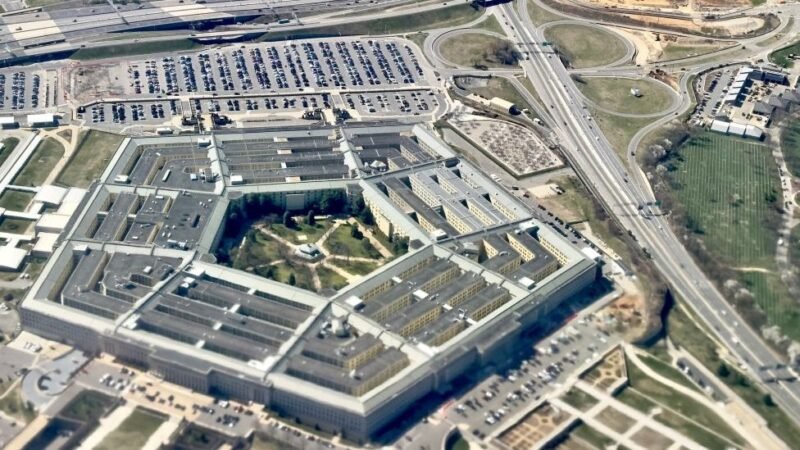
What Mogadishu says publicly and what regional security dynamics reveal privately are now moving in opposite directions, and the gap between the two is no longer theoretical. It is operational. Somalia’s categorical denials of illicit maritime arms trafficking and external security coordination are not statements of fact. They are instruments of pressure management designed to preserve donor confidence, suppress scrutiny, and delay accountability while the strategic environment deteriorates in real time.
This contradiction became impossible to ignore after an Israeli deputy foreign minister publicly confirmed discreet communication with Mogadishu, a disclosure that directly undermined Somalia’s official narrative of isolation and ideological consistency. When a government denies the existence of a threat while quietly seeking assistance from one of the world’s most advanced maritime intelligence states, it is not diplomacy. It is distress signaling. The denial itself becomes evidence.
The Red Sea threat environment has evolved beyond piracy, beyond terrorism, and beyond ideology. It is now a networked system where weapons flows, militant financing, maritime sabotage, and proxy influence reinforce each other. Analysts who continue to treat these as separate files are misreading the battlefield. The Bab el Mandeb is no longer threatened by singular actors but by convergence. Every unmonitored coastline segment becomes a force multiplier for instability. Every permissive port becomes a logistical accelerant.
Somalia’s southern coastline remains structurally incapable of enforcing maritime control at scale. This is not an accusation. It is an observable condition confirmed by the absence of sustained interdictions, prosecutions, or maritime domain awareness outputs. The insistence that no data exists is not credible in an era where satellite tracking, commercial shipping intelligence, and multinational naval patrols generate constant visibility. In intelligence terms, absolute denial in the presence of ambient data is assessed as narrative containment rather than situational awareness.
This matters because global shipping, energy routes, and supply chains do not respond to statements. They respond to risk. As the threat picture in the Gulf of Aden tightens, Washington’s focus has shifted away from symbolism and toward utility. Ports are no longer evaluated by flags but by governance. Coastlines are no longer judged by recognition status but by control. In this recalibration, Somaliland quietly emerges as the region’s most underleveraged strategic asset.
Unlike its southern neighbor, Somaliland administers a coastline with continuity, enforces port governance with relative transparency, and operates without the fragmentation that undermines enforcement elsewhere. For three decades, this stability was framed as a moral argument. Today, it is a security instrument. In Washington, especially within Senate and defense circles, the conversation is no longer whether Somaliland deserves recognition in principle but whether continued avoidance constitutes a liability in practice.
This shift explains the growing interest in Berbera as more than a commercial port. It is being assessed as a redundancy node for maritime security, a logistics alternative in an increasingly congested and surveilled Djibouti environment, and a platform for partnerships that do not require U.S. forces to substitute for local capacity. Stability that does not demand supervision is rare. That rarity has value.
Meanwhile, Mogadishu’s quiet outreach to Israel confirms another reality. Traditional partners have failed to deliver the intelligence penetration and maritime control required to manage the evolving threat. When ideological posture collapses under operational necessity, governments look for capability, not consensus. Israel offers maritime surveillance, signals intelligence, and interdiction experience that Somalia’s existing partners either cannot provide or will not provide without conditions Mogadishu cannot meet.
This dual reality public denial paired with private outreach is unsustainable. It signals a system under strain. It also accelerates external decision making. In intelligence assessment, prolonged narrative divergence precedes forced correction events. Those events typically arrive in the form of exposed supply chains, interdicted shipments with attribution, or incidents affecting international shipping that trigger rapid diplomatic realignment.
For the United States, the implications are increasingly clear. The Horn of Africa cannot be stabilized through rhetoric or aid alone. It requires reliable local partners capable of enforcing order without collapsing under pressure. Somaliland fits this requirement more cleanly than any other actor along the Gulf of Aden. This does not necessitate immediate recognition. It necessitates institutional engagement that reflects reality rather than legacy policy.
Security cooperation, port governance partnerships, intelligence sharing, and formalized commercial engagement are already easier to justify than they were twelve months ago. Congressional language is shifting. The logic of maritime security is compressing timelines. What once appeared politically sensitive is now operationally rational.
The strategic mistake would be to wait for crisis confirmation. By the time a disruption forces action, leverage narrows and costs rise. The more disciplined approach is to act before convergence becomes collapse. Somaliland’s value is not hypothetical. It is measurable in what does not happen along its coast.
The Horn of Africa is entering a phase where denial is no longer a defensive strategy. It is an accelerant. Those who can enforce order will shape outcomes. Those who cannot will be bypassed. The Red Sea does not reward narratives. It rewards control.
For Washington, the choice is approaching clarity. Engage the actors who already secure the corridor or continue outsourcing stability to governments that deny what everyone else can see. The clock is not loud, but it is running.
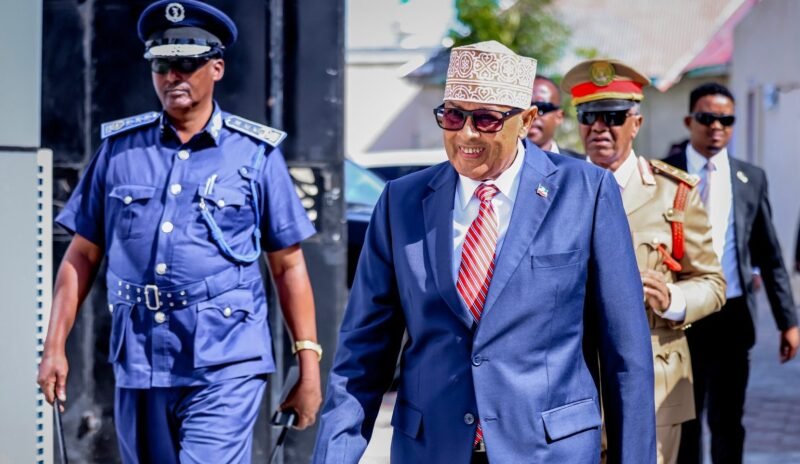
SOMALILAND UNDER ATTACK FROM FOREIGN POWERS AND TRAITORS!
Somaliland finds itself in the midst of a defining struggle for national survival—one that is being waged simultaneously on geopolitical, digital and domestic fronts.
It is a two-front war: one driven by the strategic ambitions of foreign states, and another fueled by internal actors whose allegiance has shifted from national interest to personal gain or external influence. The convergence of these threats has placed the Republic of Somaliland in a precarious but clarifying moment.
At the center of this rising hostility lies Somaliland’s geography. The Port of Berbera, one of the most strategically valuable maritime gateways in the Horn of Africa, has transformed the nation into a pivotal global asset.
With that prominence comes intensified pressure. China, Turkey, and the Federal Government of Somalia each have overlapping reasons to constrain, undermine or directly challenge Somaliland’s sovereignty.
China’s hostility stems from Hargeisa’s diplomatic alignment with Taiwan, a partnership that elevated Somaliland’s international visibility but also placed it firmly within Beijing’s red lines.
The conflict in Las Anod stands as a stark example of the geopolitical stakes. Intelligence assessments from regional actors have long indicated that foreign financing—including Chinese-linked channels—played a role in sustaining armed militias in Sool.
For Somaliland, Las Anod was not simply an internal crisis but part of a broader regional contest in which major powers leveraged local grievances for strategic gain.
Yet the more destabilizing threat may not be external at all. It is the emergence of domestic actors who, willingly or for profit, have become conduits for foreign agendas.
These individuals—many operating from abroad—exploit tribal divisions, distort political debates, and weaponize social media platforms such as TikTok and Facebook to amplify discord.
Their motivations are varied: some are funded by foreign governments seeking to weaken Somaliland’s cohesion, while others are propelled by internal rivalries and a desire for political disruption. Their impact, however, is singular: they erode public trust and weaken national unity.
The Borama incident illustrates how quickly localized disputes can be manipulated into national crises. In this environment, Somaliland’s security institutions must broaden their definition of national defense to include digital and information warfare.
A comprehensive report identifying the key digital agitators, their financial backers, and their foreign connections is no longer optional—it is essential.
Somaliland’s survival will require a coordinated strategy that addresses both fronts of this conflict. The government must bolster cybersecurity, regulate social media manipulation, and work with telecommunications firms to curtail coordinated campaigns designed to provoke unrest.
At the same time, accountability must extend to journalists and media personalities who knowingly advance foreign narratives under the guise of domestic commentary.
For Somalilanders committed to the country’s stability, the moment calls for active engagement. Cooperation with government institutions, security agencies, and traditional leaders is now a civic responsibility.
The threats confronting Somaliland do not come solely from hostile foreign governments—they also come from within, shaped by voices willing to trade national security for visibility, money, or influence. Defending the nation requires confronting both.
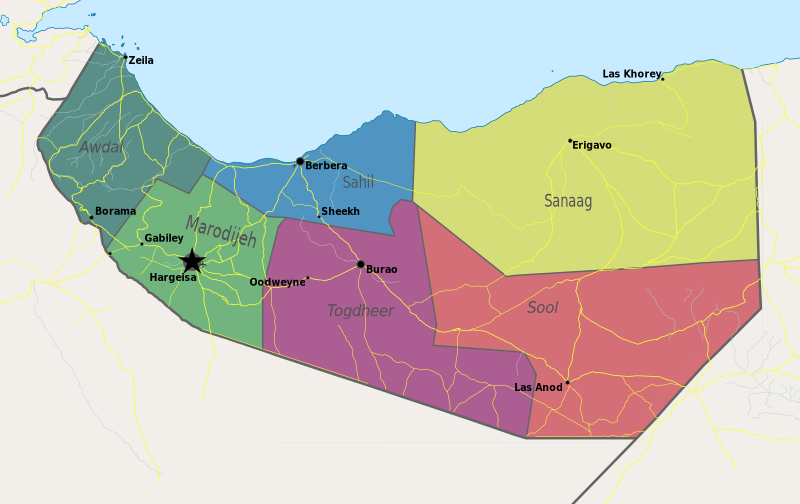
GOVERNMENT WARNS: UNITY IS OUR SHIELD AGAINST EXTERNAL MANIPULATION.
The security incident in Borama has quickly evolved from a localized disturbance into a moment of strategic reckoning for Somaliland’s leadership.
What initially appeared to be a contained episode of unrest is now driving a deeper reassessment within Hargeisa, where policy officials increasingly view domestic instability through a geopolitical lens rather than an internal one.
Internal government assessments reviewed by WARYATV describe a sobering shift: Somaliland is no longer insulated from the broader regional contest unfolding across the Horn of Africa and the Red Sea corridor.
The Borama incident, senior officials argue, is a stark demonstration that even minor internal disruptions carry the potential to be exploited by external actors seeking to reshape influence in one of the world’s most strategically contested regions.
This conclusion marks a departure from earlier decades, when internal rifts were largely resolved through traditional, community-led structures with minimal fear of foreign manipulation.
The regional environment has since transformed.
The devastation in Sudan and the chronic fragility of Somalia have become cautionary examples of how local conflicts can metastasize once regional or international players intervene—intentionally or otherwise.
In this context, the directive emerging from Hargeisa is decisively twofold. Externally, the government is preparing to engage key diplomatic partners with a unified narrative: that the unrest in Borama was swiftly contained and does not signal national fragility.
Officials say preventing geopolitical rivals from reframing the episode as a sign of systemic weakness is crucial. The government intends to emphasize resilience, institutional maturity, and a demonstrated capacity to manage crises without international intervention.
Internally, the focus is turning toward fortifying national unity through traditional leadership. Senior policymakers stress that the historical and demographic weight of Awdal and Salel requires an approach grounded in dignity, respect, and reconciliation.
This includes activating traditional mediation networks and creating depoliticized communication channels capable of preventing escalation before regional actors can exploit emerging tensions.
The prevailing sentiment—echoed both in government circles and across Awdal—is that Somaliland’s greatest defense lies not only in its armed forces but in the coherence of its social fabric.
In a region where external actors consistently seek leverage in local fragilities, unity becomes a strategic asset.
The Borama incident has reinforced this reality: Somaliland’s long-term stability will depend as much on the wisdom of its people as on the security capabilities of the state.

A classified intelligence assessment shared with WARYATV reveals growing alarm within Western and Israeli security circles that Pakistan has quietly become Hamas’s newest operational theater, with senior Hamas envoys now openly conducting propaganda, recruitment, and coordination activities across Pakistani soil — often with the implicit blessing of political and religious elites.
At the center of this disturbing network is Naji Zaheer, Hamas’s “special representative” in Pakistan.
Once a fringe figure, Zaheer has, since the October 7 2023 massacre in Israel, emerged as a fixture on Pakistan’s Islamist circuit — appearing at rallies alongside leaders of Lashkar-e-Taiba and Jaish-e-Muhammad, both U.S.-designated terrorist organizations.
His appearances blur the line between political activism and terror coordination.
According to sources briefed on Western monitoring reports, Zaheer’s movements across Peshawar, Karachi, and Rawalakot follow a deliberate pattern: fusing Hamas’s anti-Israel narrative with Pakistan’s jihadist grievances, particularly over Kashmir.
The February 2025 “Kashmir Solidarity and Al-Aqsa Flood Conference”, which gathered Hamas, Pakistani legislators, and Kashmiri militants under one banner, is now viewed in Washington and London as the symbolic moment Hamas and Pakistan’s jihad ecosystem formally merged.
Even more concerning is the role of Pakistan’s Senate, which in early 2024 hosted Hamas representatives including Khaled Qaddoumi, Hamas’s envoy in Tehran.
Intelligence officials say this level of access “would not have been possible without tacit government consent.” The optics — Pakistani lawmakers applauding a movement the West labels a terrorist organization — have badly damaged Islamabad’s standing with counterterror partners.
“Pakistan is no longer just a sanctuary for the Taliban — it’s fast becoming Hamas’s external incubator,” one senior European counterterrorism official told WARYATV on condition of anonymity. “This is not rogue clerics; this is systemic political cover.”
Western security sources are now assessing whether Hamas’s outreach in Pakistan is being quietly backed by Iran’s Quds Force, using Pakistani territory as a safe communications hub and potential recruitment pipeline.
Analysts warn this could compromise Pakistan’s Major Non-NATO Ally status and trigger sanctions under U.S. counterterrorism laws.
Britain’s intelligence community has reportedly begun examining financial flows between Pakistani religious charities and Hamas-linked organizations in Malaysia and Turkey.
U.S. officials, meanwhile, are evaluating whether Pakistan’s tolerance of Hamas envoys violates the FATF (Financial Action Task Force) anti-terror financing obligations that Islamabad only recently escaped.
This would mark a strategic shift: Hamas, bloodied in Gaza, exporting its ideology eastward to rebuild through South Asian Islamist networks.
For Islamabad, the cost could be immense — diplomatic isolation, suspended aid, and renewed counterterror blacklisting.
For now, the message from Western intelligence is blunt: “If Pakistan wants to remain a partner in the fight against terror, it cannot host its architects.”

The War Feeding Iran’s Martyrdom Narrative

Secret 8-Stage War Plan Could Ignite Full-Scale Invasion

The WWII Strategy That Still Haunts Modern Wars


-

 US-Israel war on Iran1 month ago
UK Refuses Iran Strike Access, Trump Fires Back
-
 Russia-Ukraine War1 month ago
Europe’s Spies Challenge Trump’s Ukraine Peace Optimism
-
 Top stories4 weeks ago
War Expands Across Region as Iranian Militias Join Fight
-
 US-Israel war on Iran4 weeks ago
Iran Pledges ‘Never, Ever’ to Hold Bomb-Grade Material
-
 Top stories1 month ago
India Turns to Brazil in Strategic Minerals Push Against China
-
 US-Israel war on Iran1 month ago
Syria Under Fire on Two Fronts
-
 Russia-Ukraine War1 month ago
Estonia Warns NATO Would Strike Deep Inside Russia if Baltics Are Invaded
-
 Terrorism4 weeks ago
Regional Army Moves Against Expanding Armed Groups