The Curse of Lasanod: Why Lasanod Has Become the Most Dangerous Stage for Somali Presidents.
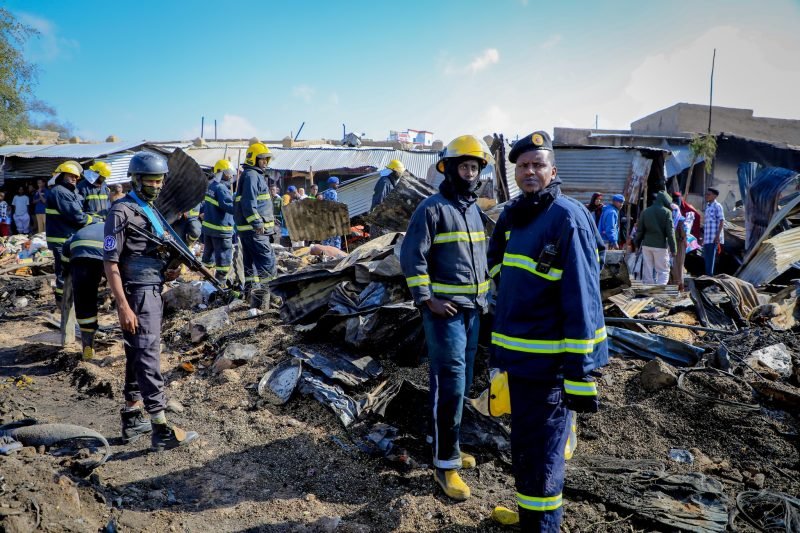
The dust may have settled in Lasanod following the arrival of Somalia’s President Hassan Sheikh Mohamud and his expansive federal delegation, but history suggests calm in this city is never neutral. It is deceptive. Lasanod is not just another regional capital—it is one of the most politically lethal locations in modern Somali history. For presidents, it has never been a venue for symbolism alone. It has been a proving ground where authority is tested, and where failure has carried the highest possible price.
This visit marks only the third time in nearly six decades that a sitting Somali leader has personally entered Lasanod under national authority. That statistic alone should raise alarms. Lasanod has existed for centuries as a political and cultural center, long predating modern state borders, British colonial administration, and the Dervish resistance. Yet in the post-independence Somali state, it has acquired a far darker reputation: the city where a president was assassinated—and where the republic itself began to unravel.
The security environment surrounding the 2026 visit is arguably the most volatile since 1969. Prime Minister Hamse Barre, senior NISA commanders, police chiefs, and layered security units have flooded the area, projecting control. But optics do not equal dominance. Analysts privately describe the visit as an exercise in political bravado at a moment when Somalia’s territorial claims are under unprecedented strain, especially following Israel’s recognition of Somaliland.
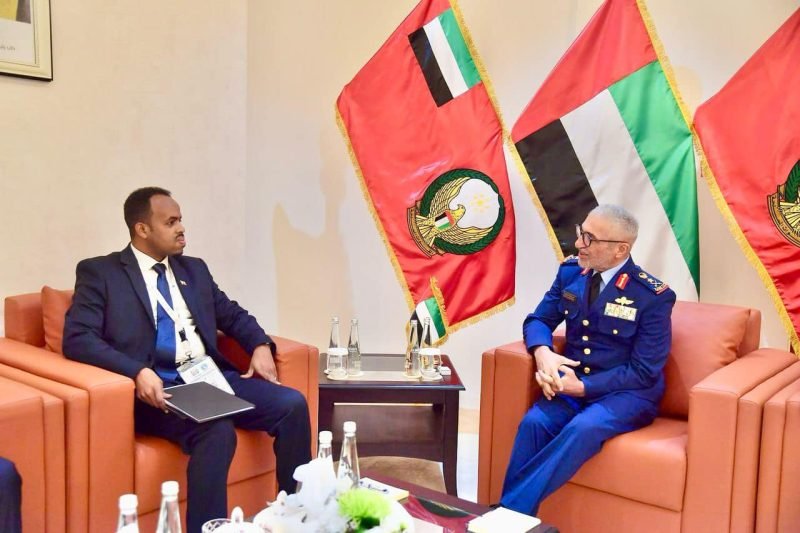
Lasanod now sits at the intersection of three destabilizing forces. First, jihadist groups. Al-Shabaab and ISIS cells remain active in and around the Sool region, exploiting governance vacuums and clan fissures. Second, geopolitical escalation. Somaliland’s growing alignment with Israel and the UAE has transformed Sool into a symbolic frontline in a broader Red Sea power shift. Third, internal fragmentation. The presence of Puntland-linked units alongside federal forces introduces overlapping chains of command—one of the most dangerous variables in high-risk presidential security environments.
Security analyst Levy Andersson describes the visit as a “triple-pronged exposure.” He notes that the federal government appears to be underestimating how drastically the balance of power has shifted. Somaliland is no longer diplomatically isolated. It now has powerful backers with intelligence, surveillance, and regional leverage. In this context, any federal attempt to assert authority in Sool is not merely political—it is confrontational.
History reinforces the warning. In October 1969, President Abdirashid Ali Sharmarke arrived in Lasanod on what was meant to be a humanitarian mission to support drought-stricken communities. He was Somalia’s first democratically elected president, symbolizing a fragile but functioning republic. He never left the city alive. A member of his own security detail assassinated him in public. Within six days, the military seized power, ending Somalia’s democratic experiment and ushering in decades of authoritarian rule.
That trauma permanently branded Lasanod. Even Mohamed Siad Barre—who ruled with iron authority—waited fifteen years before setting foot there. When he finally did in 1984, the visit resembled a military occupation more than a presidential tour. Tanks, troops, and choreographed development projects attempted to erase the city’s reputation. Instead, historians now view that moment as part of the chain that led to national collapse.
Today, President Hassan Sheikh Mohamud walks the same streets, but under far more fragile conditions. Unlike his predecessors, he governs a state that does not control its claimed territory, relies on foreign troops for survival, and faces an emboldened Somaliland with international momentum. The attempt to inaugurate a regional administration in Lasanod is therefore not just symbolic—it is incendiary.
In assassination risk terms, the indicators are severe: contested sovereignty, multiple armed actors, ideological militants, regional power competition, and historical precedent. Lasanod is not cursed by myth; it is cursed by unresolved power struggles. Every presidential step there is taken under the weight of unfinished history.
Whether this visit will be remembered as a calculated gamble that paid off—or as the spark for another national trauma—remains uncertain. What is clear is this: Lasanod has never been neutral ground. For Somali presidents, it has always demanded a price.