
Comment
Exclusive: Egypt Deploys Troops to Somalia—Next War Begins in the Horn


Egypt’s troop deployment under the AU’s new Somalia mission exposes a hidden front in the Nile water war with Ethiopia—WARYATV reveals a brewing proxy war in Mogadishu.
WARYATV has obtained intel suggesting Somalia is about to become the next proxy battlefield in the long-simmering war between Egypt and Ethiopia. Behind the scenes of a seemingly harmless African Union deployment lies a war plan forged in silence. Egypt has just completed the first military training for troops heading to Somalia. Officially, it’s a “peacekeeping mission.” Unofficially, it’s Cairo’s quiet entrance into a Red Sea confrontation with Addis Ababa. The training, financed by Japan and blessed by the UN, is just the smokescreen.
Somalia’s president Hassan Sheikh, who has already been accused of weaponizing drugs to secure a second term, is now playing an even deadlier game—inviting foreign armies to do his bidding. He’s handed Egypt a golden opportunity to establish a military footprint in the Horn, just as Ethiopia seeks access to the same sea through a controversial deal with Somaliland. The port war is real. The Nile water war is ancient. Now they merge, with Mogadishu as ground zero.
In August 2024, Somalia signed a sweeping defense pact with Egypt. That deal included troop deployments and military aid—moves Ethiopia immediately interpreted as hostile. GERD—the Grand Ethiopian Renaissance Dam—has always been a red line for Cairo. If Somalia becomes Egypt’s military staging ground, Ethiopia’s port dreams die. The question is no longer if but when shots will be fired.
WARYATV’s intel suggests the new AU mission is a Trojan Horse. The Egyptian troops entering Somalia aren’t just peacekeepers—they’re tactically trained in counterinsurgency and urban warfare. This is not coincidence. It’s preparation.
Sources say Addis Ababa is considering preemptive action if Egyptian weapons start flowing to Somalia’s federal army. Egypt wants to choke Ethiopia’s access to the sea. Ethiopia wants to dominate the Horn. And Hassan Sheikh? He wants to stay in power by making Somalia the playground of regional giants. A proxy war is no longer theoretical. It’s coming. And when it does, Somalia will burn—not from within, but from outside hands playing a deadly game of empire.

















After a Week of War, Tehran’s Arsenal Appears Crippled — but the Regime Remains Standing.
Iran’s missiles shook the region. Now its military machine may never be the same.
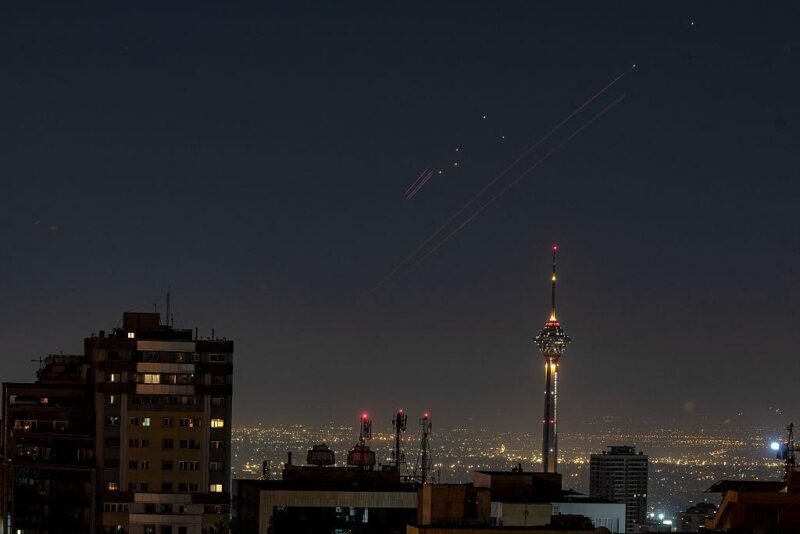
Only a week into the war, the imbalance in military power is already reshaping the strategic map of the Middle East. Iran’s long-built arsenal — once presented as an existential threat to its neighbors — appears severely degraded, even as the regime in Tehran remains intact.
Military assessments circulating in regional capitals suggest that much of Iran’s offensive infrastructure — missile depots, drone facilities, command centers and logistics networks — has been significantly damaged. While Tehran continues to project defiance, the scale and speed of the strikes have exposed the vulnerability of a system that spent decades building deterrence through volume and reach.
The conflict began on February 28, when U.S. and Israeli forces launched coordinated attacks that killed Supreme Leader Ali Khamenei and targeted key military assets. Iran responded with missile and drone barrages across the Gulf, striking more than ten countries. Though officials in Tehran framed the attacks as directed at military targets, several civilian sites — airports, ports and residential areas — were also hit.
For years, Iran’s strategy was clear: accumulate enough destructive capacity to deter intervention and dominate regional calculations, potentially under the shield of a future nuclear deterrent. That calculus now appears disrupted. Analysts increasingly describe the dismantling of Iran’s “weapons empire” as a strategic turning point — one that could neutralize its ability to project overwhelming force for years.
Yet history offers caution. After Iraq’s defeat in Kuwait in 1991, Saddam Hussein’s regime survived another 12 years despite military devastation and sanctions — a scenario often recalled as the “Safwan tent” precedent. A weakened but intact regime can endure, rebuild and recalibrate.
There are few signs that Iran’s governing structure is collapsing from within. The Islamic Revolutionary Guard Corps, or IRGC, remains cohesive. No large-scale defections have emerged. No unified opposition force has demonstrated the capacity to replace the system. While some speculate about transformation from within, meaningful change would likely require fractures inside the security establishment — and those are not yet visible.
A full-scale ground invasion to impose regime change, as occurred in Iraq in 2003, appears unlikely. The political appetite and military resources required would be enormous. That leaves Washington facing a narrower set of options: accept a weakened but functioning system, or attempt to shape whatever leadership emerges from within it.
If current trends continue, Iran’s capacity to threaten its neighbors with overwhelming military force may be sharply reduced by the war’s end. Whether that ushers in a more restrained Iran — or simply a wounded power waiting to rebuild — will define the next chapter.
The arsenal may be collapsing. The regime, for now, is not.

President Nominates Sen. Markwayne Mullin After Mounting Criticism Over Immigration and Disaster Response.
A Cabinet exit amid protests, lawsuits, and GOP backlash — what went wrong at Homeland Security?
President Donald Trump on Thursday fired Homeland Security Secretary Kristi Noem, ending a turbulent tenure marked by controversy over immigration enforcement, department spending, and disaster response.
Trump announced the move on social media, saying he would nominate Oklahoma Republican Sen. Markwayne Mullin as her replacement. He also said Noem would take on a new role as “Special Envoy for The Shield of the Americas,” a security initiative focused on the Western Hemisphere.
Noem’s departure makes her the first Cabinet secretary to leave during Trump’s second term.
Mounting Pressure on Capitol Hill
The dismissal follows days of pointed criticism during congressional hearings, where Noem faced unusually sharp questioning not only from Democrats but also from members of her own party.
Lawmakers scrutinized a $220 million advertising campaign launched by the Department of Homeland Security (DHS) encouraging undocumented immigrants to leave the country voluntarily. Noem told lawmakers Trump had been aware of the campaign in advance. Trump later told Reuters he had not signed off on it.
Her leadership also drew criticism after the department was partially shut down for 20 days, with many employees continuing to work without pay.
Immigration Crackdown Under Fire
Noem had overseen Trump’s hard-line immigration agenda, which triggered protests and legal challenges nationwide. Tensions escalated following the fatal shootings of two protesters in Minneapolis by immigration enforcement officers — incidents that intensified scrutiny of DHS tactics and oversight.
Republican frustration reportedly grew over the department’s execution of enforcement policy and over the pace of disaster funding through the Federal Emergency Management Agency (FEMA). Critics questioned how billions of dollars allocated by Congress had been spent and whether emergency responses had been managed effectively.
What Comes Next
Mullin’s nomination will require Senate confirmation. Under federal vacancy laws, however, he can serve as acting Homeland Security secretary while his nomination is pending.
The shake-up underscores the volatility within Trump’s second-term Cabinet and reflects the political sensitivity surrounding immigration enforcement and federal emergency management.
With immigration central to Trump’s domestic agenda, the transition at DHS signals not a retreat — but a recalibration at a department at the heart of the administration’s most contentious policies.
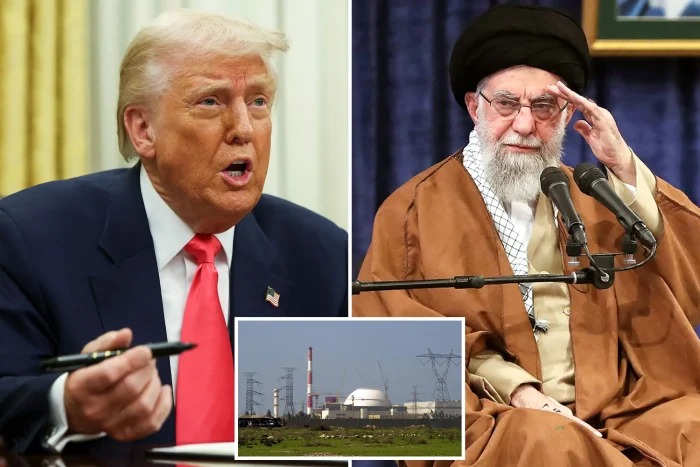
Leadership Council Forms as Tehran Moves Swiftly to Prevent a Power Vacuum After US-Israeli Strike.
Was this a decapitation meant to collapse Iran — or the moment that forces it to consolidate and strike back?
The killing of Iran’s Supreme Leader, Ali Khamenei, in a joint U.S.-Israeli strike has triggered the most consequential leadership transition in the Islamic Republic since 1989. But instead of chaos, Tehran has responded with speed.
Within hours, Iranian authorities confirmed the formation of an interim leadership structure under constitutional provisions designed for precisely this moment. According to international reporting, Alireza Arafi has been appointed as the jurist member of a temporary leadership council tasked with exercising the supreme leader’s authority until the Assembly of Experts selects a successor.
That move matters. It signals continuity — not collapse.
For decades, Iran has operated under sanctions, covert pressure and military threats. Its political architecture was built with redundancy. Succession planning is embedded in its system because siege conditions were never theoretical. The rapid appointment to the interim council suggests the state intends to close any vacuum quickly and limit elite fragmentation.
The broader question now is succession.
Among names frequently discussed is Mojtaba Khamenei, the late leader’s son. His perceived advantage would be network continuity and reassurance to hardline constituencies. But hereditary optics carry risks in a republic born from anti-monarchical revolution.
Another possibility is Hassan Khomeini, grandson of the revolution’s founder. His symbolic legitimacy could unify factions, though symbolism alone may not satisfy security-driven elites in wartime.
Clerical heavyweights such as Sadeq Amoli Larijani or Ahmad Khatami represent institutional continuity. Meanwhile, political operators like Ali Larijani could emerge as power brokers shaping consensus behind the scenes.
Above all stands the Islamic Revolutionary Guard Corps (IRGC). In moments of existential threat, security institutions tend to gain influence. External attempts at “decapitation” often produce the opposite of fragmentation — accelerated consolidation and a harder posture.
Strategically, the strike was widely interpreted as an effort to paralyze decision-making and disrupt succession. Yet early signs suggest Iran’s system remains operational. The leadership council framework indicates the state is prioritizing legibility to itself — keeping chains of command intact even under bombardment.
Regionally, the emotional impact is profound. For Shiite communities beyond Iran’s borders, Khamenei’s death may deepen anti-Israeli sentiment and intensify confrontation with Western allies. Political violence in the Middle East rarely stays contained; it travels through networks of memory, grievance and identity.
The larger geopolitical shift is equally significant. Targeted elimination of a sitting head of state redraws perceived boundaries of sovereignty. Whether this becomes a new precedent — or an isolated rupture — will shape regional calculations for years.
Iran now enters a succession phase under fire. The decisive variable is not whether the system feels shock. It does. The question is whether pressure fractures it — or forces it into a more disciplined, more centralized survival mode.
History suggests states built for siege rarely disintegrate on command.
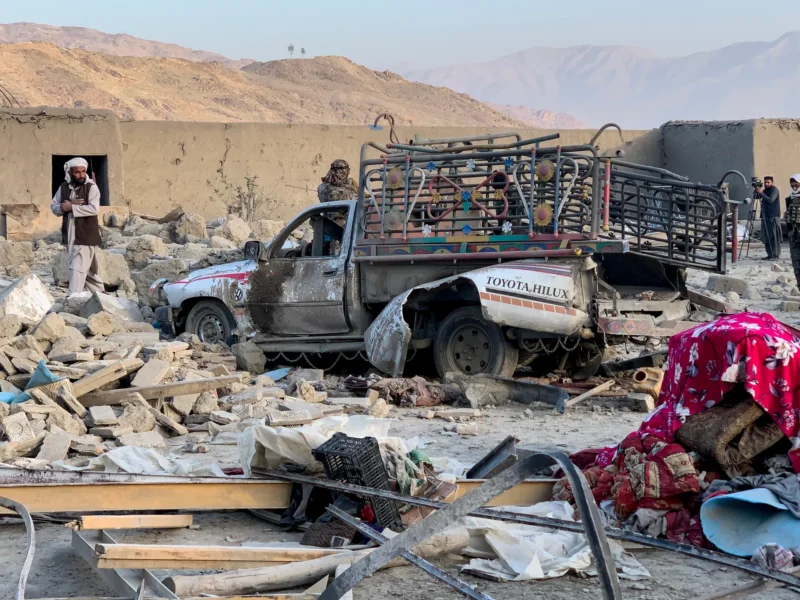
Air strikes on Kabul. Artillery at Torkham. “Open war” declared. How did neighbors turn into battlefield rivals?
Pakistan has launched air strikes on Afghanistan’s capital, Kabul, as well as targets in Paktia and Kandahar, marking one of the most serious escalations between the two countries since the Taliban returned to power in 2021.
Pakistani Defense Minister Khawaja Asif declared that Islamabad’s “cup of patience has overflowed,” describing the confrontation as “open war.” Afghanistan’s Taliban government confirmed the strikes and said it had begun “large-scale offensive operations” along the border in response.
The fighting follows weeks of clashes along the 2,600-kilometer Durand Line, the disputed frontier that Afghanistan has never formally recognized. Gunfire and shelling were reported near the key Torkham crossing, a vital trade and transit route.
Both sides claim heavy casualties. Pakistani officials say dozens of Taliban fighters were killed in air strikes and border battles. Kabul disputes those numbers and claims its forces inflicted significant losses on Pakistani troops. Independent verification remains difficult.
At the core of the conflict lies Pakistan’s long-standing demand that the Afghan Taliban crack down on Tehreek-e-Taliban Pakistan (TTP), a militant group responsible for deadly attacks inside Pakistan. Islamabad accuses Kabul of allowing TTP fighters to operate from Afghan territory — a charge the Taliban deny.
Since 2022, attacks in Pakistan’s Khyber Pakhtunkhwa and Balochistan provinces have surged. Analysts say Islamabad’s frustration has grown as diplomatic efforts and ceasefires repeatedly collapsed.
Another source of tension is the Durand Line itself. Afghanistan considers the British-era border illegitimate, arguing it divided Pashtun communities. Pakistan insists it is the recognized international boundary.
Military imbalance complicates the picture. Pakistan fields a far larger, better-equipped force, including air power — something the Taliban lack. That gives Islamabad the ability to strike deep into Afghan territory without crossing the border. However, experts warn that Afghanistan could respond asymmetrically, potentially through proxy fighters or cross-border attacks.
International reaction has been swift. The United Nations has urged restraint. Iran and Russia have called for dialogue. India condemned Pakistan’s air strikes, accusing Islamabad of exporting its internal instability.
The risk now is miscalculation. What began as cross-border skirmishes could spiral into sustained confrontation. Neither side appears ready to back down — and both face internal pressures that make compromise politically costly.
For two neighbors bound by geography and history, the latest exchange underscores a volatile truth: unfinished disputes and militant safe havens can quickly ignite into open conflict.
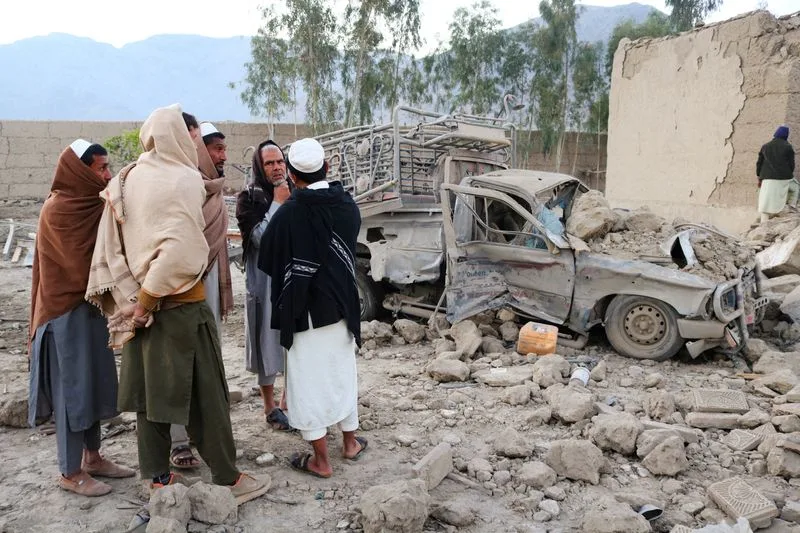
Airstrikes. Border clashes. A fragile ceasefire at risk. What’s really fueling the latest Afghanistan–Pakistan standoff?
Tensions between Afghanistan and Pakistan have surged after Pakistan launched airstrikes on what it described as militant targets inside Afghan territory, threatening a fragile ceasefire that has held since deadly clashes in October.
Pakistani security officials said the strikes killed at least 70 militants. The United Nations reported that at least 13 civilians also died. The Taliban government in Kabul condemned the operation and warned of a response.
At the heart of the dispute is Islamabad’s long-standing accusation that Tehreek-e-Taliban Pakistan (TTP) fighters operate from Afghan soil. Pakistan says TTP leaders and Baloch insurgents use safe havens across the border to stage attacks inside Pakistan. Kabul denies allowing its territory to be used against its neighbor.
The immediate trigger for the latest strikes was a string of recent attacks in Pakistan. Security sources cited multiple incidents since late 2024 that they claim were linked to militants based in Afghanistan. One attack in Bajaur district last week killed 11 security personnel and two civilians. Pakistan says the attacker was an Afghan national; the TTP claimed responsibility.
The TTP, formed in 2007, has carried out attacks on markets, mosques, military bases and schools, including the 2012 shooting of Malala Yousafzai. While Pakistan conducted large-scale operations that reduced violence by 2016, militant activity has steadily increased since 2022, according to conflict monitoring groups.
Relations between Kabul and Islamabad have deteriorated despite Pakistan’s early support for the Taliban’s return to power in 2021. Islamabad expected cooperation against anti-Pakistan militants. Instead, mistrust has deepened, with repeated border closures disrupting trade and movement.
Militarily, the imbalance is stark. Pakistan fields more than 600,000 active personnel and hundreds of combat aircraft. The Taliban’s forces are far smaller and lack a modern air force. Yet analysts warn that the conflict could escalate through asymmetric retaliation, including cross-border raids or proxy attacks.
For now, both sides appear to be calibrating their responses. But with militant violence rising and diplomatic trust thin, the frontier remains one of South Asia’s most volatile fault lines.
Warships in the Gulf. Tariffs on Iran’s trade partners. Quiet talks in Oman. Maximum Pressure is back — but is it leverage or escalation?
The return of “Maximum Pressure” is not just a policy shift. It is a performance of power.
The Trump administration has revived its coercive diplomacy toward Iran with calculated intensity: a reinforced U.S. naval presence in the Gulf, sweeping economic threats, and a parallel diplomatic channel through Oman. The choreography is deliberate. Force is visible. Negotiation is quiet. The message is unmistakable — Washington wants a deal, but on its terms.
At the center of this strategy is economic isolation. A February 6 executive order threatening 25 percent tariffs on countries trading with Iran effectively extends U.S. sanctions outward, pressuring third parties to choose between access to the American market or engagement with Tehran. It is not simply punishment; it is structural coercion. The global trading system becomes an enforcement tool.
The military dimension reinforces that pressure. The deployment of the USS Abraham Lincoln Carrier Strike Group signals readiness without declaring war. President Donald Trump has warned of consequences “far worse” than previous strikes, invoking the June 2025 U.S.–Israeli campaign against Iranian targets. That precedent changed the calculus. Tehran can no longer assume rhetorical threats lack follow-through.
Yet the armada is paired with diplomacy. Indirect contacts mediated by Oman have been described as constructive. Neither side appears to seek full-scale conflict. A major invasion remains improbable in the near term. The more plausible trajectory is continued pressure aimed at extracting concessions — on nuclear enrichment, missile development, regional proxies, and internal repression.
The core obstacle is scope. Iran appears prepared to negotiate within a narrow nuclear framework. Washington demands broader behavioral change. That gap defines the risk.
If talks collapse, targeted strikes on nuclear or missile infrastructure become more likely. Maritime friction in the Gulf — especially between U.S. vessels and the Islamic Revolutionary Guard Corps — raises the possibility of miscalculation. Even a limited exchange could spiral.
But the objective is not regime change. It is strategic realignment. Maximum Pressure is designed to force integration into a U.S.-defined regional order without overt war.
The question now is psychological, not merely military: Does Tehran view this as theater — or as a credible promise? The answer will determine whether Muscat becomes the venue of breakthrough or the prelude to escalation.
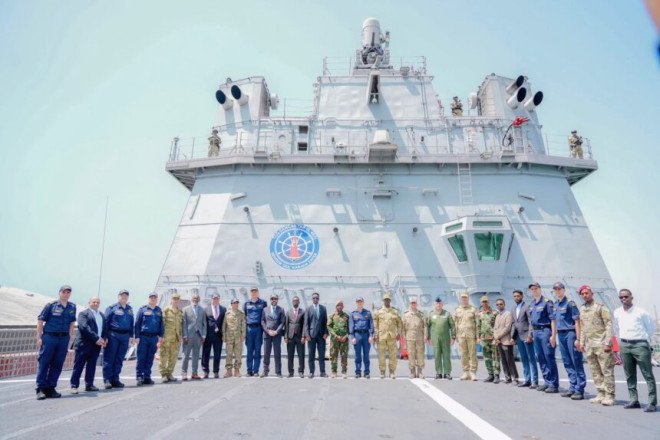
Ankara says “stability.” Somaliland sees risk. The Horn of Africa is entering a new strategic chapter — and the stakes are rising fast.
When Turkish warships docked in Mogadishu, alongside reports of F-16 fighter jet deliveries and offshore drilling plans, the signal was unmistakable: Ankara is deepening its footprint in Somalia. For Somaliland — whose collective memory still carries the trauma of the 1988 bombardment of Hargeisa by the regime of Siad Barre — the optics alone are unsettling. Military expansion in Mogadishu is rarely viewed as defensive. It is viewed through history.
Yet a sober assessment of the Turkey–Somalia defense and economic framework suggests a more complex reality. Turkey is unlikely to launch — or support — an offensive campaign against Somaliland. The strategic costs would be immense.
As a key member of NATO, Ankara positions itself as a regional stabilizer, not a proxy combatant in Somalia’s internal territorial disputes. An unprovoked escalation against a relatively stable and democratic territory with informal ties to the United Kingdom, the UAE and Ethiopia would undermine Turkey’s diplomatic standing at a time when it seeks influence across Africa and the Red Sea corridor.
Economics also act as a restraint. Turkey’s maritime doctrine — often described as the “Blue Homeland” — prioritizes sea lanes, energy access and trade routes. A regional war would jeopardize precisely the offshore prospects and shipping stability Ankara hopes to cultivate. Investors do not drill in active conflict zones.
Ethiopia further complicates any military calculus. Somaliland’s memorandum of understanding with Ethiopia creates a deterrent layer Ankara cannot ignore. Turkey maintains significant economic and defense ties with Addis Ababa; it is unlikely to risk indirect confrontation over Mogadishu’s maximalist claims.
Still, the danger lies less in intent than in imbalance. Advanced aircraft in a fragile security environment introduce new variables. Even if initially deployed against Al-Shabaab, the capability itself alters regional power equations. History in Somalia has shown how quickly state assets can be redirected.
Maritime cooperation carries similar risks. If Turkish-trained Somali naval units patrol waters claimed by Somaliland — particularly near the vital Berbera corridor — even minor incidents could escalate into diplomatic crises.
The most combustible element may be energy exploration. Should Turkish drilling vessels operate in offshore blocks Somaliland considers within its jurisdiction, a commercial venture could morph into a sovereignty dispute with international implications.
Turkey is not preparing an invasion. It is consolidating influence — military, economic and maritime — in a strategically vital region. For Somaliland, the challenge is not alarmism but strategy: direct engagement with Ankara, stronger regional integration with Ethiopia, and early internationalization of maritime boundary concerns.
In the Horn of Africa, power shifts rarely announce themselves loudly. They unfold quietly — until they don’t.
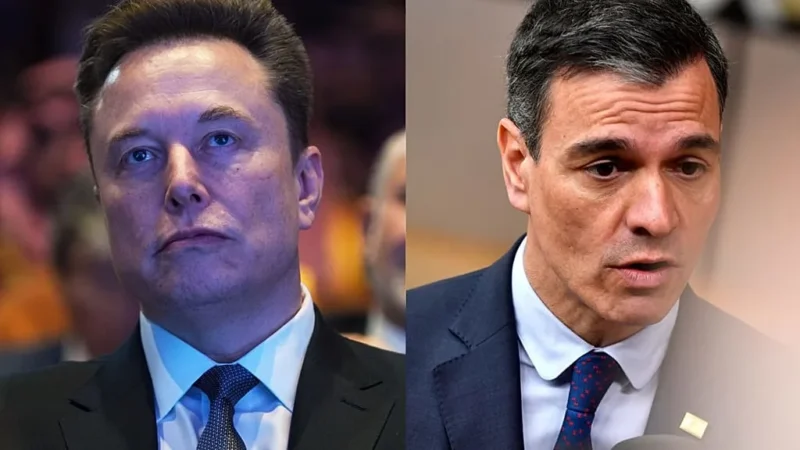
Europe tightens the net on Big Tech — and Musk is furious. Is Spain protecting children… or crossing into digital authoritarianism?
Tech billionaire Elon Musk on Tuesday launched a blistering attack on Spanish Prime Minister Pedro Sánchez, accusing him of authoritarianism after Madrid unveiled plans to sharply tighten regulation of social media platforms—particularly to shield minors from online harm.
The clash was triggered by Sánchez’s announcement of a forthcoming legislative package that would bar children under 16 from accessing social networks and impose meaningful age-verification requirements on platforms operating in Spain. Under the proposal, executives could face legal liability if their companies fail to remove illegal or hateful content, a move the government says is necessary to end what it describes as the digital “Wild West.”
Musk, who owns the social media platform X, responded with characteristic bluntness, labeling Sánchez a “tyrant” and using a derogatory nickname for the Spanish leader. The remarks underline a widening rift between U.S. tech leaders who champion minimal moderation in the name of free speech and European governments pushing for stricter oversight.
Spanish officials argue the measures are long overdue. Sánchez said platforms would no longer be allowed to rely on “easily bypassed checkboxes” to verify users’ ages and warned that failure to comply could have legal consequences for those at the top. The aim, he said, is to curb the spread of hate speech and protect young users from harmful content.
The dispute unfolds as the European Union intensifies scrutiny of major tech firms. Brussels has already fined X for breaching transparency rules, and regulators across the bloc are exploring ways to enforce digital standards more aggressively. On Tuesday, French authorities searched X’s Paris offices as part of an investigation into alleged algorithm manipulation and possible foreign interference—an inquiry that has summoned Musk to testify. X said it was “disappointed but not surprised,” rejecting the allegations and warning that the probe threatens free expression.
For Sánchez, the confrontation with Musk plays into a broader European push to reassert control over online spaces, particularly where children are concerned. For Musk, it reinforces his self-styled role as a global critic of regulation he views as censorship. As Europe presses ahead with tougher digital rules, the standoff highlights a deeper question: who sets the boundaries of speech and responsibility in an increasingly regulated online world?

Four U.S. Crew Dead After Refueling Plane Crash in Iraq

Spain’s Deputy PM Says EU Is ‘Hostage’ to Trump Over Iran War

Blasts Rock Dubai as U.S. Warplane Crashes in Iraq


-
 Somaliland2 months ago
F-35s Over Hargeisa: The Night Somaliland’s Sovereignty Went Supersonic
-
 Terrorism1 month ago
America Pulls Back From Somalia but Doubles Down Next Door
-

 Somalia2 months ago
Aid Destroyed, Trust Shattered: Somalia Loses U.S. Support for Good
-
 Terrorism2 months ago
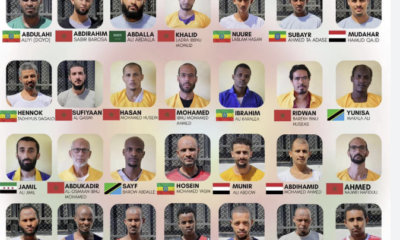
Foreign ISIS Pipeline Exposed: Puntland Captures Dozens of Non-Somali Fighters
-
 Opinion2 months ago
Turkey’s Selective Morality: From the Ruins of Gaza to the Red Sea
-

 Somaliland2 months ago
Somaliland at Davos: The Moment Somaliland Entered the World’s Inner Circle
-
 Diplomacy2 months ago
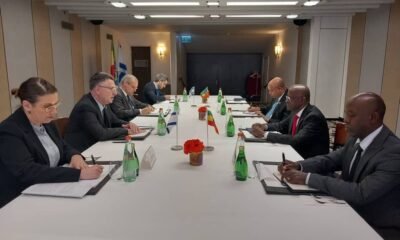
Ethiopia–Israel Axis Strengthens as Regional Stakes Rise
-

 US-Israel war on Iran2 months ago
US War Plans Against Iran Enter Advanced Stage