Djibouti is no longer just a speck on the map of the Horn of Africa. In 2025, it is steadily emerging as a continental force reshaping regional politics, diplomacy, trade, and infrastructure. Long dismissed by observers as a nation overreaching its economic limits, Djibouti is now proving its bold investments were not only justified—but transformative for the Horn of Africa’s future.
From Margin to the Center of Power
Once seen as a logistical hub serving foreign interests, Djibouti now leads Africa’s institutional architecture from the front. With Foreign Minister Mahamoud Ali Youssouf elected as Chair of the African Union Commission, and Djibouti continuing to anchor the Intergovernmental Authority on Development (IGAD), the country is shaping the rules of East African integration.
Djibouti’s Mahamoud Secures Historic AU Commission Chairmanship
This dual leadership gives Djibouti unique leverage over everything from regional security coordination to economic development frameworks.
A FIFA Power Play
Historic Milestone: Djibouti’s Waaberi Joins FIFA’s Executive Committee
In the realm of global sports diplomacy, Djibouti has broken another ceiling. Sulayman Hassan Waaberi’s election to FIFA’s Executive Committee marked the first time an East African held a top role in global football governance. It’s more than symbolic. It means Djibouti now sits at tables where both politics and prestige converge—a strategic position many larger African states still aspire to.
Infrastructure: From Overreach to Regional Engine
[doc id=12923]
Perhaps the most underestimated yet visionary part of Djibouti’s rise lies in its long-term infrastructure investments. For years, critics scoffed at the scale of Djibouti’s spending—on ports, railways, free zones, data hubs—arguing the country was building beyond its domestic needs or financial means. But in 2025, those same projects are now feeding the economic veins of the region.
Djibouti’s ports serve Ethiopia, South Sudan, and even the Central African Republic. Its railway links and telecom infrastructure power trade and digital connectivity far beyond its borders. The country has proven that building for the region—not just for oneself—is a winning bet in a geopolitically contested space like the Red Sea and the Bab el-Mandeb.
The £100 Billion Vision
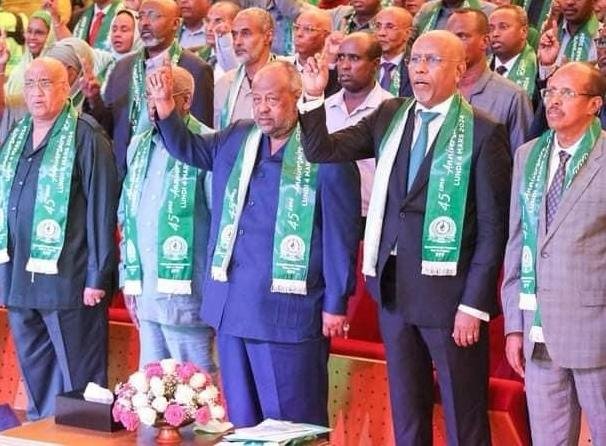
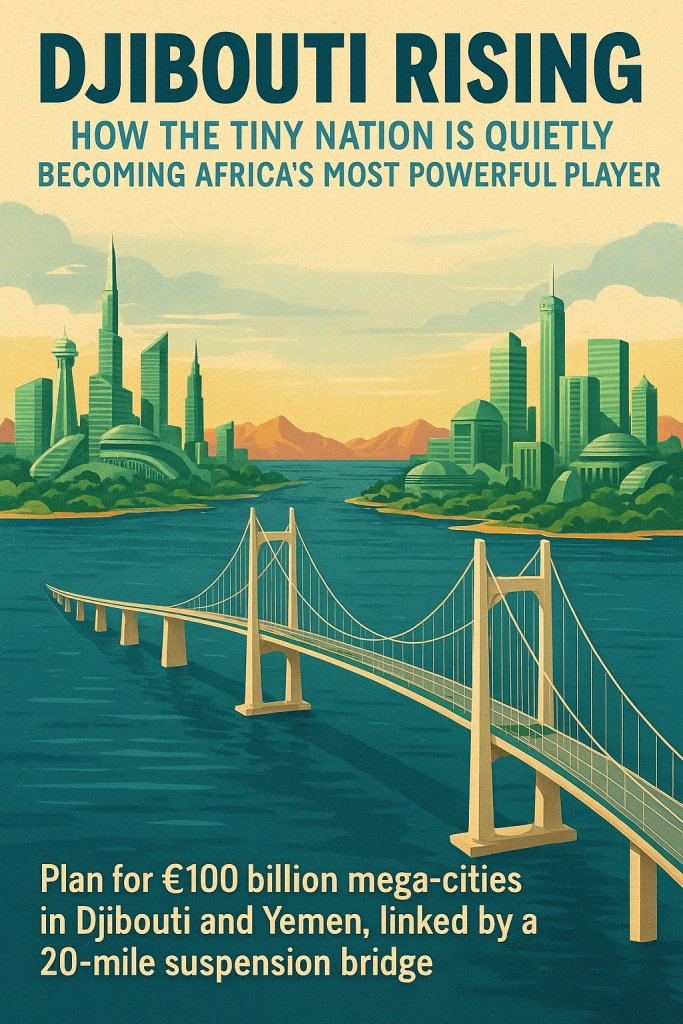
Djibouti’s boldest plan yet—a £100 billion mega-city initiative with Yemen, linked by a 20-mile suspension bridge—is more than a dream. It’s a signal. A signal that Djibouti sees itself as a connector between continents, where Africa and Asia converge, where renewable energy, green cities, and futuristic logistics become the new normal. The project has already captured imaginations globally. Whether or not it fully materializes, Djibouti has already declared its ambition.
The Legacy of Guelleh: What Comes Next?
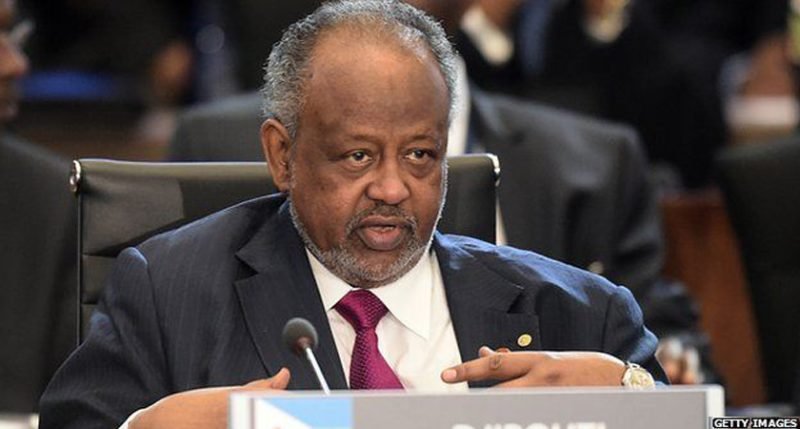
As President Ismaïl Omar Guelleh prepares for what many believe is his final term, the question now turns to succession and consolidation. Will Djibouti’s next generation of leaders have the strategic depth, institutional discipline, and global acumen to carry the legacy forward?
Guelleh’s tenure was defined by placing Djibouti on the global map through audacious deals, stable governance, and elite diplomacy. But legacy requires more than memory—it requires structures that outlive personality. The transition phase will test whether Djibouti’s ascent is a one-man era or a national doctrine.
Conclusion: A Small State with a Continental Shadow
In 2025, Djibouti is no longer a silent facilitator—it is a regional architect. Its leadership of continental institutions, presence in global sports diplomacy, and futuristic infrastructural ambitions position it as a template for African agency. Quietly but forcefully, Djibouti is redrawing the map of influence on the continent—and for once, the smallest player might be the one leading the biggest game.