In the world of high-stakes diplomacy, perception is power—and right now, the U.S. and China are locked in a petty yet telling tug-of-war over a single question: Who made the first move?
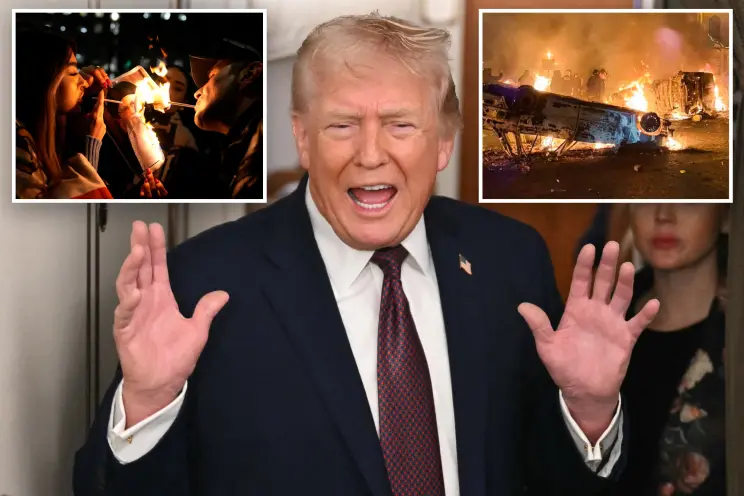
Ahead of this weekend’s much-anticipated U.S.-China trade talks in Switzerland, the two superpowers aren’t just negotiating tariffs. They’re wrestling over narrative control. Beijing claims Washington requested the meeting. President Donald Trump says it was the other way around—and he’s not backing down.
“They said we initiated it? Well, I think they ought to go back and study their files,” Trump shot back on Wednesday, swearing in new U.S. Ambassador to China David Perdue.
This isn’t mere diplomatic drama—it’s a proxy war for leverage. As Craig Singleton of the Foundation for Defense of Democracies explains:
“For Washington, saying Beijing called first reinforces the story that tariffs are working. For China, denying outreach helps save face at home and preserve the illusion of parity.”
China’s Protocol Problem
Former top U.S. diplomat Daniel Russel offers historical clarity:
“In my entire career, I don’t know of a single time a Chinese leader initiated a call with a U.S. president.”
Why? Because in Beijing, the one who dials first is seen as weak. It’s not diplomacy—it’s dominance. And that’s a game Trump knows how to play.
Tariff Tug-of-War
Since Trump’s hike to a staggering 145% on Chinese goods, and Beijing’s 125% retaliation, both economies have been reeling. Yet neither wants to blink first. Trump keeps implying that Chinese President Xi Jinping called him.
“He’s called,” Trump told TIME, offering no date or transcript. “And I don’t think that’s a sign of weakness.”
Beijing fired back: “All is fake news.”
But then, like a slow walk-back, China’s Commerce Ministry admitted the U.S. had “repeatedly conveyed” interest in reopening talks.
So Who Blinked? Both Did. And Neither Will Admit It.
Sun Yun of the Stimson Center explains the confusion:
“Both sides are in regular contact. They just define ‘reaching out’ differently.”
On Chinese social media, the narrative is being cautiously managed to paint the U.S. as the petitioner. In the U.S., Trump is already spinning the deal as a “win” before a single handshake in Switzerland.
By Thursday, Trump had shifted tone:
“We can all play games — who made the first call, who didn’t. Doesn’t matter. What matters is what happens in that room.”
What’s at Stake? Everything.
With global markets jittery and U.S. investors eager for clarity, this is more than a trade meeting—it’s a stage. And the opening act is already setting the tone: distrust, bravado, and silent desperation.
In the end, it may not matter who picked up the phone first. But everyone will remember who walked out of that Swiss meeting in control of the story.