
Analysis
Jordanian Leaders Fear Kingdom Could Be Next To Fall

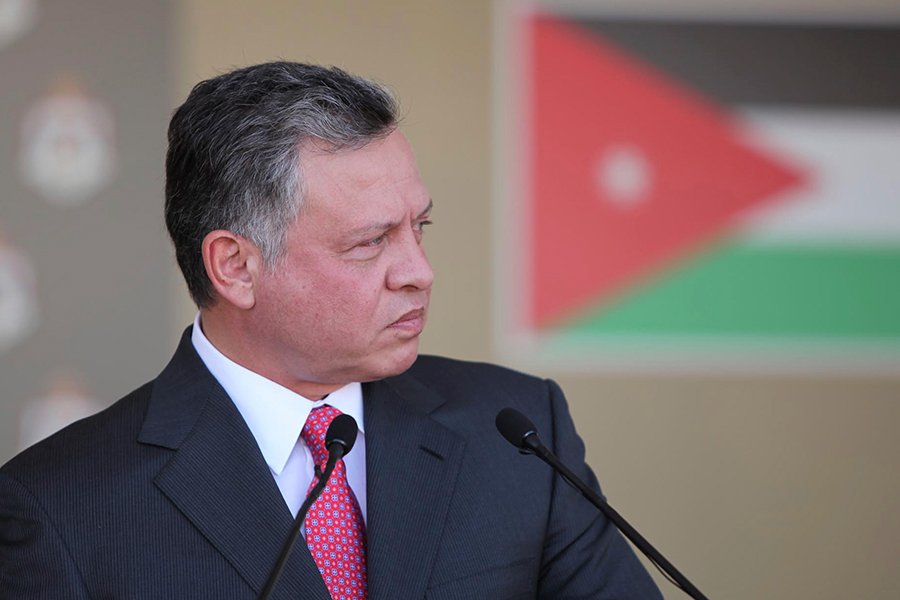
Amman on Edge as Syrian Power Vacuum and Iranian Influence Threaten Kingdom’s Stability
The fall of Bashar al-Assad’s regime in Syria has sent shockwaves through neighboring Jordan, where leaders are grappling with fears of being the next domino in the region’s instability. Already housing 1.3 million Syrian refugees, Jordan’s population—60% of whom are Palestinian—faces rising political and economic pressures, compounded by suspicions of spies among the refugee communities and growing Iranian ambitions.
Relations between Amman and Damascus have long been fraught. Assad’s regime not only withheld critical resources like water and food from Jordan but also taunted the kingdom with veiled threats of facilitating an Iranian takeover. This rhetoric is now backed by action, as Iranian missiles and drones targeting Israel recently landed in Jordanian territory, keeping Jordanian security forces on high alert.
To counter these threats, Jordan has fortified its borders, closing crossings like the Jaber checkpoint near Daraa, and ramping up surveillance on Syrian drug and arms smuggling operations. Maher al-Assad, the brother of the ousted Syrian president, has been implicated in Captagon smuggling networks that exploit Jordan’s porous borders, further destabilizing the kingdom.
Concerns are also mounting over Jordan’s internal dynamics. The Islamic movement, with 16 representatives in parliament, poses a potential challenge, particularly if Syria’s new, yet-undefined government aligns with Jordanian Islamist factions. Turkey’s involvement in Syria, alongside its targeting of Kurdish rebels, adds another layer of complexity to Jordan’s precarious position.
Amid this turmoil, the Jordanian monarchy has found little solace in external alliances. Relations with Israeli Prime Minister Benjamin Netanyahu remain tense, and although U.S. intelligence agencies closely monitor the kingdom’s stability, direct support has been limited. Meanwhile, Iran, sidelined by Syria’s new regime, is likely to double down on its efforts to gain influence in Jordan, with ripple effects threatening the broader Middle East.
As Jordan stands at a crossroads, its leaders are acutely aware that the kingdom’s stability is not guaranteed. The unfolding dynamics in Syria and persistent Iranian interference demand constant vigilance to prevent Jordan from becoming the next flashpoint in the region’s ongoing power struggles.













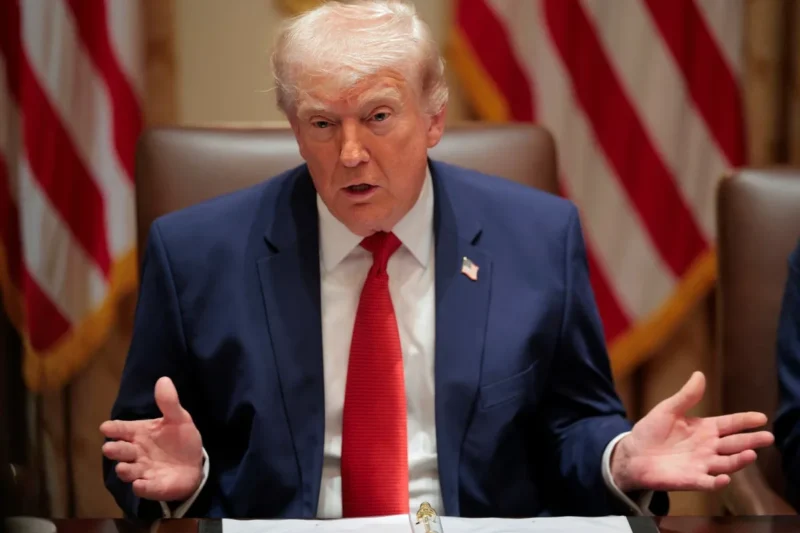
“48 Hours to Hell”—Trump’s Iran Ultimatum Raises Stakes as Rhetoric and Strategy Collide Over Hormuz.
The deadline is blunt. The language, even more so.
Donald Trump has issued a stark warning: reopen the Strait of Hormuz within days—or face overwhelming force. The phrasing, delivered through social media, strips away the traditional diplomatic language that usually surrounds military escalation.
But the message is not just about Iran. It is about how this war is being framed.
By the third layer of analysis, the significance lies less in the threat itself—military escalation has already been underway—and more in the rhetoric shaping it. Trump’s language abandons the calibrated ambiguity that has long defined U.S. war messaging. Instead, it embraces directness, even brutality, projecting strength through confrontation rather than restraint.
That shift has consequences.
Historically, U.S. administrations have relied on carefully constructed language—“operations,” “stabilization,” “deterrence”—to frame military action within legal and political boundaries. Even controversial campaigns were often wrapped in terms that softened their perception.
Now, that linguistic buffer is eroding.
Statements emphasizing destruction, “lethality,” and overwhelming force are not merely stylistic. They signal a broader recalibration—one where the projection of power is itself part of the strategy. In this framework, rhetoric becomes a tool of deterrence, intended to shape adversary behavior through fear and uncertainty.
There are competing interpretations.
Supporters argue that clarity strengthens deterrence. By removing ambiguity, the United States communicates resolve, reducing the risk of miscalculation by adversaries like Iran. In a region where signals are often tested, direct threats may be seen as more credible than nuanced diplomacy.
Critics, however, see a different risk.
Unrestrained language can narrow diplomatic space, making de-escalation more difficult. It can also blur the line between signaling and commitment—raising the stakes of any response. When rhetoric escalates faster than strategy, it can lock decision-makers into paths that are harder to reverse.
There is also a legal and institutional dimension.
The avoidance of formal terms like “war” reflects ongoing tensions between executive authority and congressional oversight in the United States. By framing the conflict through alternative language, the administration maintains operational flexibility—while sidestepping debates that a formal declaration would trigger.
Meanwhile, the strategic environment continues to tighten.
The Strait of Hormuz remains partially restricted, energy markets are volatile, and global supply chains are under pressure. The ultimatum, therefore, is not only military—it is economic, aimed at restoring a critical artery of global trade.
Yet the underlying question remains unresolved.
What is the end state?
The administration has emphasized pressure—reopening shipping lanes, degrading Iran’s capabilities—but has offered limited clarity on what follows. Without a defined political outcome, escalation risks becoming an end in itself rather than a means to a broader objective.
This is where rhetoric and strategy intersect.
Language can project power. It can shape perceptions. But it cannot substitute for a coherent long-term plan.
And as the deadline approaches, the risk is not only that the threat will be carried out—but that it will deepen a conflict whose trajectory is already becoming harder to control.
Because in modern warfare, how leaders speak about war can be as consequential as how they fight it.
The glass didn’t shatter with an explosion. It cracked under falling debris.
On a humid night in Dubai, fragments from an intercepted projectile struck a building linked to Oracle Corporation, sending shards onto the pavement below. There were no casualties. No sirens. Just a brief disruption—almost mundane by wartime standards.
But the location made it something else entirely.
For years, districts like Dubai Internet City symbolized insulation—zones where global capital, cloud infrastructure, and executive decision-making operated far from regional instability. That illusion is now harder to sustain.
By the third layer of this conflict, the significance becomes clear: the battlefield is no longer confined to deserts, coastlines, or military installations. It is expanding into commercial ecosystems once considered neutral. The war that began with strikes on Iran is now testing the resilience of the global digital and financial architecture itself.
The implications extend beyond symbolism.
In the Strait of Hormuz, maritime traffic has become conditional—filtered through political alignment and perceived affiliations. Ships move, but selectively. Insurance costs rise. Delays compound. What was once a high-volume artery of global trade now operates under a logic of risk management rather than efficiency.
Onshore, the atmosphere has shifted in subtler ways.
Across Gulf cities, daily life continues—but with a new undertone. In Bahrain and elsewhere, residents describe the physical sensation of nearby interceptions: vibrations, fragments, the quiet realization that proximity to conflict is no longer abstract. The geography of risk is expanding, even if the scale of incidents remains limited.
Diplomatically, positions are hardening.
Iran’s leadership has issued stark warnings about escalation, particularly around sensitive infrastructure such as nuclear facilities.
In Washington, Donald Trump has maintained a posture of pressure, emphasizing control over maritime routes and strategic dominance. Meanwhile, divisions within the United Nations Security Council have constrained collective action, leaving the conflict to evolve without a unified diplomatic framework.
There are competing interpretations of what this moment represents.
Some view incidents like the Dubai strike as isolated—byproducts of a contained conflict that has not fundamentally altered the region’s commercial viability. Others see them as early signals of a broader shift, where the boundaries between military and economic spaces continue to erode.
For global business, that distinction matters less than the outcome.
Risk is being recalibrated in real time. Data centers, logistics hubs, and financial corridors—once evaluated primarily through efficiency and cost—are now assessed through exposure and resilience. The question is no longer whether operations can be optimized, but whether they can be protected.
There are limits to how far this shift will go.
The Gulf’s infrastructure remains among the most advanced in the world, and its role in global trade is not easily replaced. Markets have a tendency to adapt, to absorb shocks, and to return to equilibrium.
But adaptation does not erase precedent.
What has changed is the perception of distance. The idea that certain spaces—commercial, digital, financial—exist outside the reach of conflict is being challenged.
And once that perception shifts, it rarely returns to its previous state.
The war has not reached every boardroom.
But it no longer needs to.
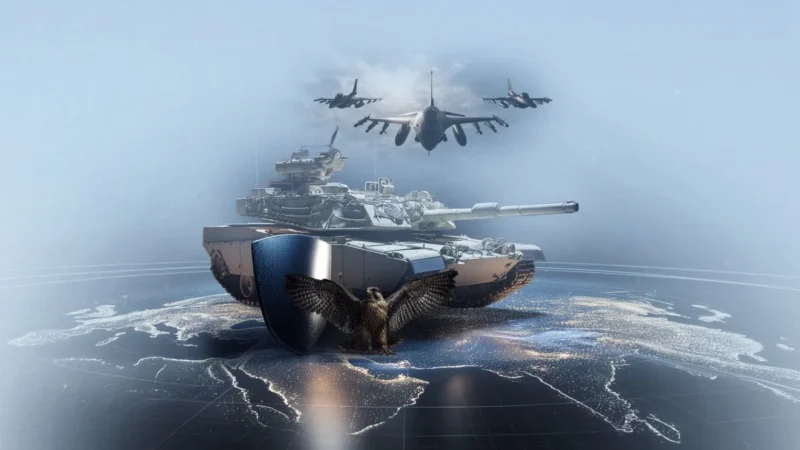
A Force Without Unity—Why an Arab Joint Security Force Remains Unlikely Despite Rising Regional Threats.
In moments of crisis, ideas often move faster than reality. Across the Arab world, renewed calls for a joint security force have surfaced as the war with Iran intensifies and regional vulnerabilities become more visible.
On paper, the concept is straightforward: a unified military framework capable of defending Arab states against external threats. In practice, it remains elusive.
The gap between the idea and its feasibility reveals deeper structural limits within the regional system.
By the third layer of this debate, the most immediate obstacle is strategic alignment. Military alliances are built around a clearly defined threat. During the World War II, disparate powers aligned against a single adversary. NATO later formed around a shared perception of Soviet expansion.
In the Arab context, that clarity does not exist.
Even now, amid direct tensions, there is no consensus on whether Iran constitutes a common enemy. Some states view Tehran as a strategic threat; others maintain pragmatic or even cooperative ties. Without agreement on the nature of the threat, a unified military doctrine becomes difficult to define—let alone execute.
The second constraint lies in state capacity.
Several Arab countries are dealing with internal instability, economic strain, or unresolved conflicts. Military alliances depend not only on intent but on institutional strength—coherent command structures, sustainable funding, and political continuity. By comparison, NATO’s effectiveness is underpinned by stable economies and coordinated defense spending at scale.
In contrast, the regional landscape is uneven. Some states possess advanced capabilities; others struggle to maintain basic security. That imbalance complicates any attempt to build an integrated force.
There is also a third, less visible factor: public sentiment.
Across parts of the region, political narratives and media discourse have shaped perceptions of global conflicts in ways that do not always align with government positions. In some cases, segments of the public express sympathy for actors confronting Western powers, even when those actors are in tension with neighboring states.
That divergence matters.
Governments operating without domestic consensus face limits on how far they can commit to collective military action. External alignment can quickly translate into internal pressure, particularly in times of heightened tension.
There are counterarguments. Advocates of a joint force point to shared geography, cultural ties, and common security challenges as a foundation for cooperation. They argue that fragmented responses leave states vulnerable and that collective defense could enhance deterrence.
But those arguments often assume a level of cohesion that has yet to materialize.
The role of Arab League illustrates the broader pattern. It remains effective as a platform for political coordination and symbolic unity, but it has not evolved into a mechanism for integrated military planning or operations.
That distinction is not incidental—it reflects the limits of the system itself.
The strategic reality is that security in the region continues to be shaped through bilateral partnerships, ad hoc coalitions, and external alliances rather than a unified Arab framework.
For now, the concept of an Arab joint security force functions more as an expression of aspiration than a blueprint for action.
And in a region where alignment remains fluid, capacities uneven, and priorities divided, the challenge is not designing such a force.
It is creating the conditions under which it could realistically exist.
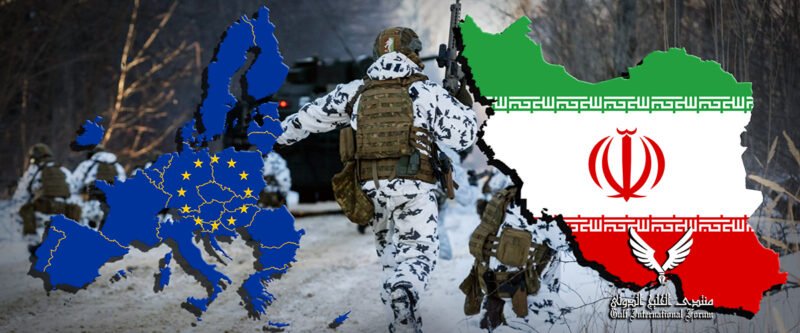
How the Ukraine and Iran Wars Are Merging into a Single Strategic Conflict.
In Kyiv, drones strike Russian oil facilities. In the Gulf, similar drones hit U.S. positions. The distance between these battlefields is vast—but the technology, intelligence, and consequences are increasingly shared.
What once appeared as two separate wars—Russia’s invasion of Ukraine and the U.S.-Israel confrontation with Iran—are beginning to converge into a single strategic system.
The overlap is not theoretical. It is operational.
Russia’s use of Iranian-made drones in Ukraine marked the first link. Now, according to multiple assessments, Moscow is returning the favor—providing intelligence, targeting support, and potentially advanced drone systems to Tehran. That exchange has transformed the relationship from transactional to integrated.
By the third layer of this shift, the implications become global. Battlefield outcomes in one theater are directly shaping the other. When Iran disrupts the Strait of Hormuz, oil prices rise—benefiting Russia and easing pressure on its war economy. When Ukraine strikes Russian energy infrastructure, it attempts to offset that advantage, targeting up to 40% of export capacity in recent weeks.
The wars are now economically linked.
They are also diplomatically entangled. Volodymyr Zelenskyy has leveraged the Middle East conflict to deepen ties with Gulf states, offering drone and counter-drone technology to countries like Saudi Arabia and the United Arab Emirates. Ukraine is no longer just a recipient of aid—it is positioning itself as a security provider.
That evolution complicates traditional alliances.
Meanwhile, the United States faces a strategic dilemma. Officially, Washington treats the wars as separate. In practice, its policies are linking them—easing pressure on Russia’s energy exports while simultaneously confronting Iran. Critics argue this approach risks strengthening Moscow at the very moment it is assisting Tehran.
There are competing interpretations of this convergence.
Some analysts see it as a coordinated axis forming—Russia and Iran aligning against Western influence across multiple fronts. Others caution that the overlap is opportunistic rather than orchestrated, driven by shared interests rather than a unified command.
But even without formal coordination, the effect is the same: escalation in one theater amplifies pressure in another.
There are also second-order consequences. Countries far from both conflicts—particularly in Asia—are turning to Russian energy supplies as Hormuz disruptions tighten markets. European states are increasingly concerned about being drawn into a broader confrontation that stretches from Eastern Europe to the Middle East.
The risks extend beyond conventional warfare. As Fiona Hill has argued, the conflict already operates across cyber, economic, and hybrid domains—blurring the line between localized war and systemic confrontation.
That raises a deeper question: are these still separate wars, or are they becoming different fronts of a single, evolving conflict?
The answer may lie in how they end—or fail to.
If the current trajectory holds, the world is moving toward a model of interconnected conflict, where alliances are fluid, battlefields are dispersed, and outcomes are interdependent. Victory in one arena will not be isolated; it will ripple outward, reshaping balances elsewhere.
For now, the wars remain formally distinct.
But in strategy, economics, and technology, they are already merging.
And once conflicts begin to overlap in that way, separating them again becomes far harder than fighting them.
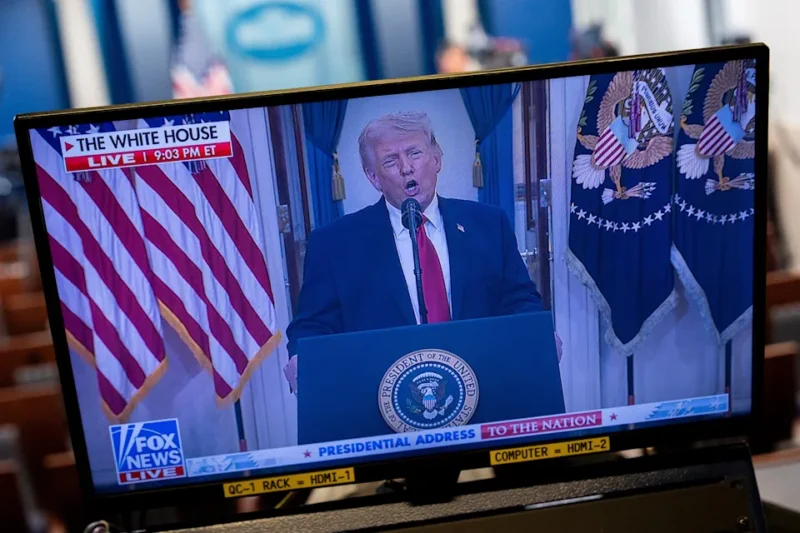
Iran Missile Strikes Continue as Trump Claims Tehran Threat Is Nearly Eliminated.
Explosions echoed across multiple cities just as Donald Trump addressed the American public, declaring that Iran was “no longer a threat.” Minutes later, missiles were already in the air.
On Thursday, Iran launched fresh strikes against Israel and Gulf states, underscoring a stark contradiction between political messaging and battlefield reality. Air defenses activated across the region—from Israel to Bahrain—while reports confirmed continued attacks even as Washington framed the war as nearing its strategic conclusion.
The sequence matters. It reveals a conflict operating on two tracks: narrative control and operational persistence.
By the third layer of this escalation, the gap is widening. Trump insists that U.S. and Israeli strikes have significantly degraded Iran’s capabilities. Tehran, however, signals the opposite—pointing to what it claims are intact stockpiles, hidden facilities, and an ongoing capacity to strike across multiple fronts.
The result is not clarity, but strategic ambiguity.
Iran’s approach appears calibrated. Rather than overwhelming force, it is sustaining pressure—targeting regional adversaries, disrupting shipping, and maintaining a tempo that signals resilience. Its most effective lever may not be missiles alone, but control over the Strait of Hormuz, where shipping traffic has dropped dramatically and energy markets remain under strain.
That economic dimension is now central. Oil prices have surged, supply chains are tightening, and countries far from the conflict are absorbing the cost. Even partial disruption has proven enough to reshape global energy flows, with some producers rerouting exports and others seeking alternatives altogether.
At the same time, the battlefield is expanding. In Lebanon, fighting involving Hezbollah continues alongside Israeli operations, while Gulf states remain exposed to Iranian strikes despite not being direct participants in the war. Casualty figures across multiple fronts continue to rise, reflecting a conflict that is both regional and fragmented.
There are also limits to what military action has achieved so far. Iranian officials argue that key facilities hit by U.S. strikes were “insignificant,” suggesting that core capabilities remain intact. Independent verification remains difficult, but the persistence of attacks reinforces the perception that Iran retains operational depth.
Meanwhile, international efforts to stabilize the situation remain cautious. Dozens of countries are exploring diplomatic pathways to reopen shipping routes, yet no major power has moved to forcibly secure the strait while active conflict continues. The risk of escalation remains too high.
The strategic contradiction is now unavoidable. Washington presents a narrative of nearing success. The battlefield presents a pattern of continued engagement.
That tension defines the current phase of the war.
If Iran can continue to strike while maintaining economic leverage through disrupted trade routes, it preserves influence even under sustained attack. If U.S. and Israeli operations intensify without delivering a decisive outcome, the conflict risks shifting into a prolonged phase of managed escalation.
The question, then, is not whether the threat has been reduced.
It is whether it has simply changed form—less visible, more distributed, and potentially harder to eliminate.
And in that shift, declarations of victory may arrive long before the war itself is ready to end.
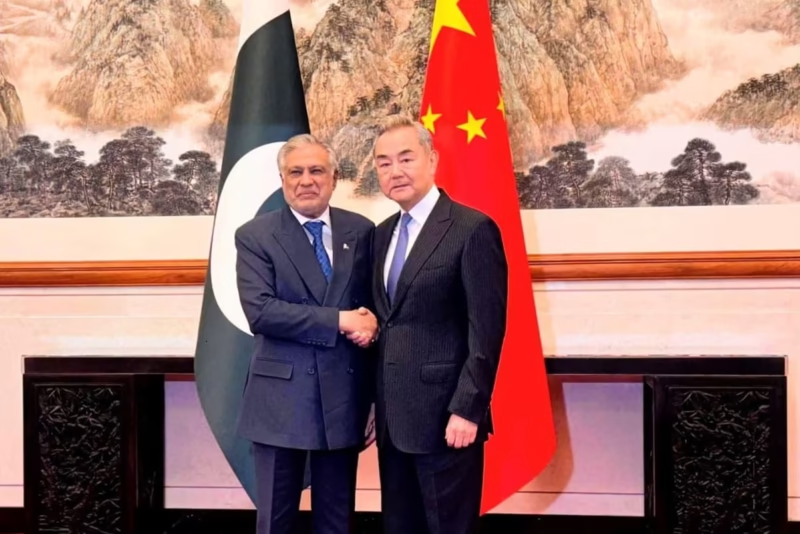

The Longer It Lasts, The More It Breaks—War’s Real Battlefield Is the Economy.
In Amman, the lights are still on. Power flows, fuel arrives, daily life continues. But beneath that surface, the meter is running—quietly, relentlessly.
Each day of prolonged conflict is costing Jordan between 2.5 and 3 million dinars in additional energy expenses, a burden that compounds with time rather than shock.
That number, on its own, does not alarm. Over weeks, it transforms.
A month translates into roughly 90 million dinars. Three months pushes the cost toward 270 million. Stretch it further, and the pressure shifts from manageable strain to structural risk—pressing deficits higher, slowing growth, and narrowing already limited fiscal space.
This is the overlooked dimension of a prolonged war. Not collapse—but accumulation.
By the third layer of this conflict, the question is no longer military. It is financial endurance. Most economic models now converge on a central scenario: a limited but extended escalation lasting two to four months. Not a quick strike, not a total war—but something in between, sustained long enough to reshape economies without fully breaking them.
In that scenario, the damage spreads unevenly. Energy-importing states feel it first. Tourism declines. Investment hesitates. Growth slows. In Jordan’s case, projections suggest expansion could slip toward 2%—or lower—while deficits edge upward and debt ratios climb toward already sensitive thresholds.
There are, however, gradations of risk.
A short conflict remains absorbable. A longer regional escalation—less likely but more dangerous—could push deficits beyond 6% and stall growth near zero. And beyond that lies a scenario policymakers rarely name openly: a prolonged, multi-front war that forces structural economic shifts, not just temporary adjustments.
What makes this phase particularly complex is the policy trade-off governments face. Shield citizens from rising prices, and the state absorbs the cost. Pass the burden through, and inflation spreads, eroding purchasing power and risking social instability.
Most governments, including Jordan’s, have chosen to absorb the shock—for now. It is a stabilizing move in the short term, but one that effectively defers the cost rather than removes it.
That is where the real tension lies.
Wars are often framed in terms of territory and force. But in prolonged conflicts, endurance becomes the decisive variable. Not just military endurance—but fiscal endurance. How long can a government sustain rising costs without altering policy? At what point does protection today become instability tomorrow?
Across the region, similar pressures are building. Energy routes are disrupted. Insurance costs rise. Supply chains tighten. The economic architecture—trade, fuel, logistics—begins to bend under sustained stress.
Yet there is a crucial distinction. This is not an energy crisis in the traditional sense. Supply still exists. What has changed is price—and access. That difference matters. It means economies do not stop, but they strain.
The longer the war continues, the more that strain becomes structural.
And that is the strategic reality often missed in the noise of daily developments: wars that do not end quickly rarely explode economies overnight. They wear them down—day by day, cost by cost—until the question is no longer what the war costs, but whether the system carrying it can still hold.
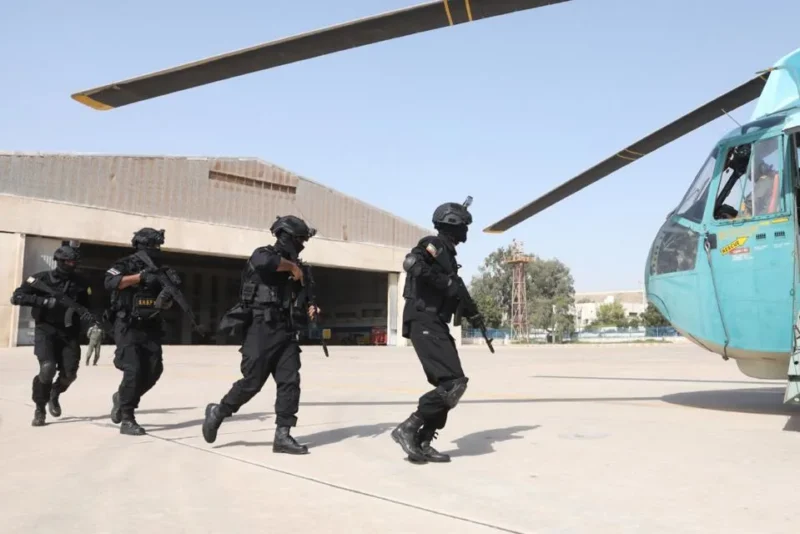

The Mask of Tehran Has Fallen

Ex-Sergeant Admits $37M Military Fraud Scheme

Trump’s Threat Signals Escalation Beyond the Battlefield


-
 TECH2 weeks ago
China Bets on an AI-Powered Military Future
-
 US-Israel war on Iran2 weeks ago
Waves of Mystery Drones Breach U.S. Nuclear Base Airspace
-

 Terrorism6 days ago
Egypt Uncovers Alleged Plan to Down Presidential Plane
-
 US-Israel war on Iran2 weeks ago
Saudi Arabia Warns of Military Action After Iranian Missile Strike
-
 US-Israel war on Iran2 weeks ago
Former CIA Chief Blames White House for Escalating Iran War Crisis
-
 Top stories1 week ago
Saudi Arabia Deepens Defense Ties with Ukraine
-

 US-Israel war on Iran2 weeks ago
Iran’s Guard Leadership Hit Hard in Escalating Strikes
-

 Analysis2 weeks ago
Inside the IRGC’s Quiet Rebuild of Hezbollah