
Russia-Ukraine War
Ukrainian Drone Strikes Escalate in Russia’s Kursk Region

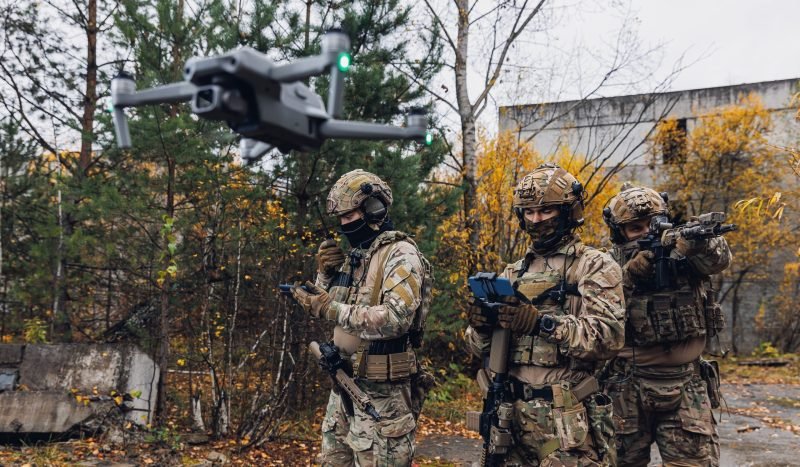
Aerial Drone Warfare Intensifies as Ukraine and Russia Trade Blows Across Border Regions
Russia’s defense ministry announced on Wednesday that it had shot down four Ukrainian aerial drones over the Kursk region. This incident follows Russia’s claim of repelling an attempt by hundreds of Ukrainian soldiers to breach the border.
The Russian defense ministry’s report of heightened aerial activity didn’t stop with Kursk. They also stated that three Ukrainian drones were destroyed over the Belgorod region, two over Voronezh, and another two over Rostov. Belgorod Governor Vyacheslav Gladkov took to Telegram to inform the public that several apartment buildings had been damaged, although fortunately, there were no reported casualties. Similarly, Voronezh officials confirmed that apartment buildings in their region had also sustained damage from the attacks.
On the Ukrainian side, the conflict is equally intense. Governor Vitaliy Kim of Ukraine’s Mykolaiv region reported that Ukrainian air defenses successfully shot down 14 Russian aerial drones, though falling debris caused several fires. The governor of the Dnipropetrovsk region, Serhiy Lysak, added on Telegram that Russian forces attacked with kamikaze drones and heavy artillery, resulting in damage to homes and farm buildings. The Khmelnytskyi and Vinnytsia regions also saw significant drone activity, with Ukrainian air defenses destroying multiple Russian aerial drones.
The exchange of drone strikes marks a new phase in the conflict, one characterized by rapid technological warfare and significant impacts on civilian infrastructure. The Kursk region, in particular, has become a focal point of this aerial battle, highlighting the strategic importance of these border areas.
These latest developments come amid broader tensions and a series of provocations. The mutual destruction of drones and subsequent damages underscore the relentless tit-for-tat strategy both nations are employing. The narrative of repelling border incursions and targeting drones deepens the sense of an escalating war that shows no signs of abating.
The destruction and damage reported on both sides reveal the growing sophistication and frequency of drone warfare. Civilian areas, as evidenced by the damages in Belgorod, Voronezh, Mykolaiv, and Dnipropetrovsk, are increasingly caught in the crossfire, raising international concern about the humanitarian impact of these strikes.
As the world watches, the use of drones has transformed the nature of this conflict, making it more unpredictable and volatile. The drone warfare not only symbolizes a technological shift but also a strategic one, where quick, precise strikes replace traditional ground combat. The implications for civilian safety, regional stability, and international diplomatic efforts are profound.
The escalating drone warfare between Ukraine and Russia signals a troubling trajectory. Each new strike and counter-strike risks drawing both nations deeper into a prolonged and more destructive conflict. The international community’s response and the ongoing efforts to mediate peace will be crucial in the coming weeks. The stakes are high, and the consequences of failure could reverberate far beyond the borders of Ukraine and Russia.
The current situation underscores the urgent need for diplomatic interventions and robust international dialogue to prevent further escalation. As both Ukraine and Russia brace for the next wave of attacks, the world remains on edge, hoping for a resolution to this dangerous standoff.














Ukraine Hits Hard, Russia Gains More? The War Behind the War Is Taking Shape.
Ukraine is striking Russia’s oil. But global forces may be tilting the balance the other way.
KYIV — Ukraine has stepped up long-range drone strikes on Russian oil infrastructure, targeting export hubs and refineries, even as President Volodymyr Zelenskyy warns that the broader geopolitical environment is increasingly working in Moscow’s favor.
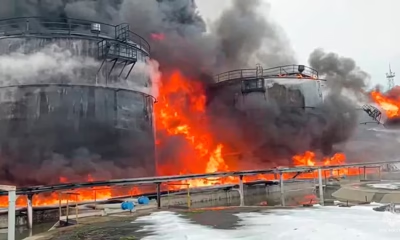
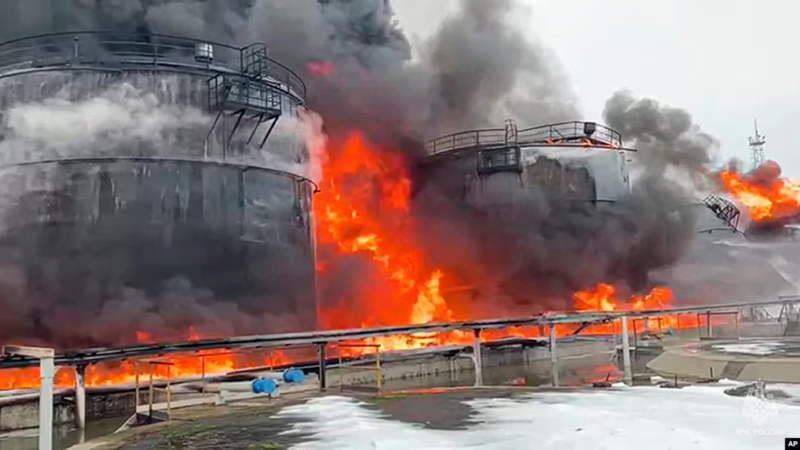
Overnight attacks hit the Sheskharis oil terminal at Novorossiysk, a key Black Sea export point, with video footage showing a large fire at the site. Additional strikes were reported at facilities in Leningrad and Nizhny Novgorod regions, including infrastructure tied to Lukoil operations.
The Institute for the Study of War said Ukraine has intensified its focus on oil export infrastructure in recent weeks, targeting nodes critical to Russia’s ability to sustain revenue flows.
Russian authorities said air defenses intercepted 148 Ukrainian drones in a short time span and confirmed damage in several regions, including casualties in Belgorod and structural damage in Novorossiysk. Military-linked commentators in Russia acknowledged that the strikes are creating mounting repair challenges, noting that sanctions are complicating access to equipment and slowing recovery timelines.
At the same time, Russian forces continued strikes on Ukrainian cities. In Odesa, an attack killed three civilians, including a child, while additional strikes targeted infrastructure across multiple regions. Power outages were reported in both Ukrainian-held and Russian-occupied areas, underscoring the increasingly reciprocal nature of infrastructure warfare.
Zelenskyy, speaking during a visit to Istanbul as part of a Middle East tour, said the war involving Iran is reshaping the strategic context in ways that benefit Russia. Rising oil prices linked to disruptions in the Strait of Hormuz are increasing Moscow’s energy revenues, offsetting some of the economic pressure created by Ukrainian strikes. He also pointed to shifting U.S. priorities, warning that prolonged conflict in the Middle East could reduce Western support for Ukraine, particularly in air defense systems.
Ukraine is attempting to adapt by expanding its external partnerships. Officials have offered drone and maritime security capabilities to Gulf countries facing Iranian threats, while seeking additional defensive support in return.
Kyiv has also positioned itself as a potential contributor to safeguarding global shipping routes, drawing on its experience maintaining maritime corridors in the Black Sea.
The dynamic highlights a growing contradiction. Ukraine is increasing pressure on Russia’s energy sector with more precise and frequent strikes, yet external market forces are reinforcing the very revenue streams those operations are designed to disrupt.
The result is a conflict shaped not only by battlefield developments but by global economic and strategic currents. Ukraine’s operational reach is expanding, but the broader environment in which it is fighting is becoming more complex and, in some respects, less favorable.
Peace talks in Istanbul. Drone strikes across Ukraine and Russia. The war is negotiating—but still escalating.
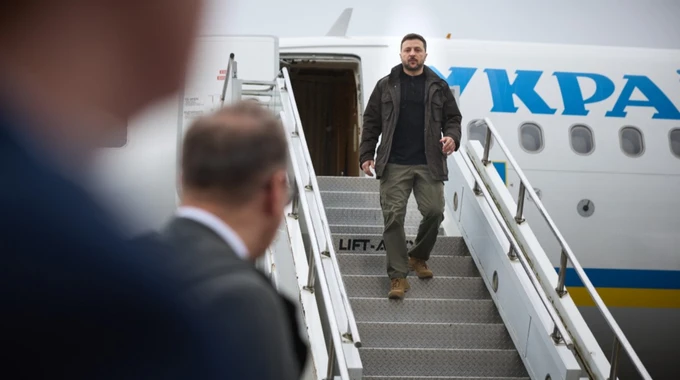
ISTANBUL — As Volodymyr Zelenskyy arrived in Turkey for high-level talks with Recep Tayyip Erdogan, Russia and Ukraine were already sending a different message overnight—through waves of drones, missiles, and mounting casualties.
At least 10 people were killed and dozens injured in strikes across both countries, underscoring a now-familiar dynamic: negotiations resume just as the war intensifies.
Ukraine’s air force said Russia launched 286 drones in one of the largest barrages in recent weeks, with 260 intercepted. Even so, several strikes got through. In the Dnipropetrovsk region, five civilians were killed in Nikopol and 19 wounded. In Sumy, near the Russian border, attacks hit residential areas, injuring 11. A separate strike in Kyiv ignited a fire in a commercial building.
Russia, for its part, reported civilian casualties and infrastructure damage from Ukrainian attacks. In the Rostov region, one person was killed and four injured after a strike triggered fires at a logistics facility and a nearby vessel. Authorities in Samara said another attack damaged residential buildings and injured one person. In the Russian-controlled Luhansk region, officials said a Ukrainian strike killed a family of three, including a child.
Moscow said it intercepted 85 Ukrainian drones across multiple regions, including Crimea and the Black Sea.
Both sides are increasingly targeting infrastructure tied to the war effort. Ukraine’s security service said it struck a metallurgical plant in Alchevsk, a facility linked to Russia’s military supply chain, though the claim could not be independently verified. Russia said its own strikes focused on Ukrainian military-industrial and energy assets.
The escalation comes as Zelenskyy meets Erdogan in Istanbul, where Turkey continues to position itself as a mediator. The Ukrainian leader is also expected to meet Bartholomew I of Constantinople, adding symbolic weight to the visit.
Yet the gap between diplomacy and battlefield reality appears to be widening.
Talks are restarting, but neither side is signaling a willingness to scale back military pressure. Instead, the conflict is evolving into a war of sustained attrition, driven by drone warfare, infrastructure strikes, and incremental gains.
The paradox is stark: negotiations are active, but escalation is accelerating. And for now, the battlefield—not the negotiating table—continues to set the pace.
Medvedev Urges Harder Russian Stance on Ukraine’s EU Bid, Warns of “Military Alliance”.
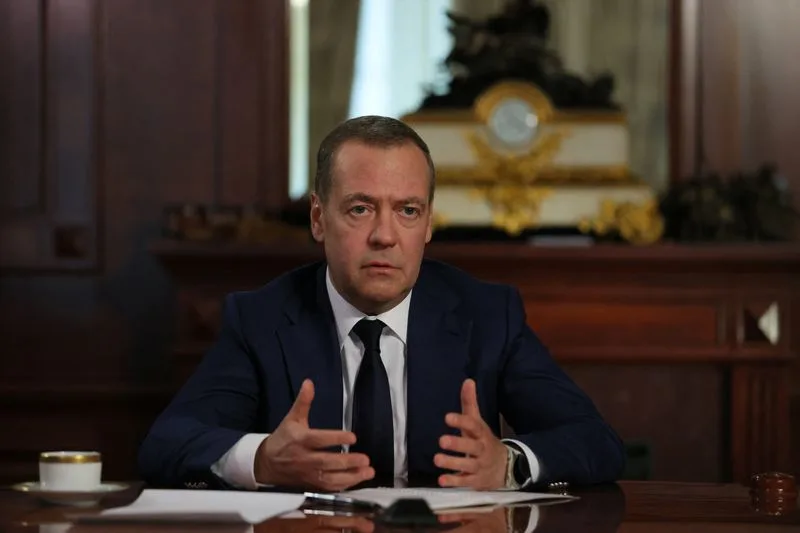
MOSCOW — A senior Russian official has called for a tougher stance against Ukraine’s bid to join the European Union, warning that the bloc is evolving into a military force hostile to Moscow.
Dmitry Medvedev said Friday that Russia should abandon what he described as a “tolerant attitude” toward neighboring countries seeking closer ties with the EU.
“The EU is no longer just an economic union,” Medvedev said. “It can transform, and rather quickly, into a full-blown military alliance … in some ways worse than NATO.”
His remarks reflect growing concern in Moscow that the European Union is deepening its security role alongside the NATO, particularly as the war in Ukraine continues to reshape Europe’s defense posture.
Russia has long opposed Ukraine’s integration into Western institutions, viewing it as a threat to its strategic interests. Medvedev’s comments suggest a shift toward a more explicit policy of resistance as Kyiv pursues closer alignment with European structures.
At the same time, he said he did not expect the United States to withdraw from NATO, though he suggested Washington could make symbolic adjustments, such as reducing troop deployments in Europe.
Medvedev also pointed to internal divisions within NATO, arguing they could accelerate the EU’s transformation beyond an economic bloc into a more comprehensive political and military entity.
The comments come amid continued tensions between Russia and Western countries over Ukraine’s future alignment, with European leaders increasingly linking economic integration with security cooperation.
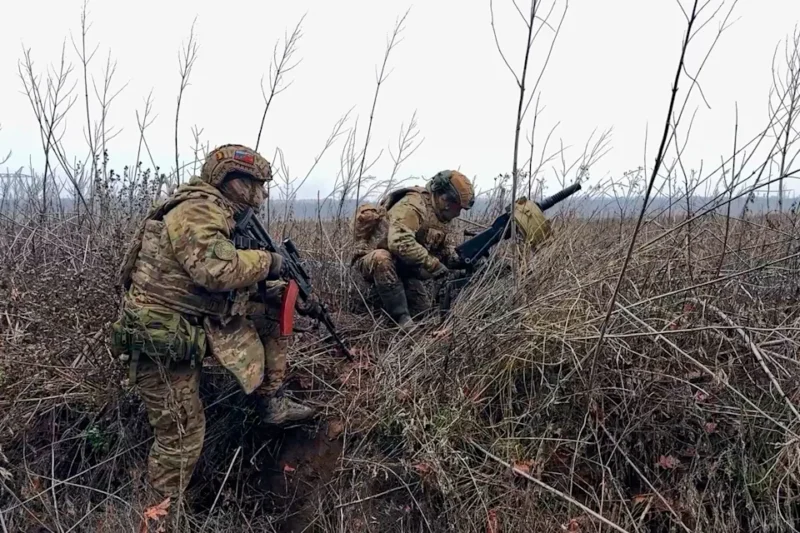
Victory or Narrative? Russia Claims Full Control of Luhansk as Ukraine Disputes Gains Ahead of U.S.-Led Talks.
On the eastern front, the lines have barely shifted—but the claims have.
Russia’s Defense Ministry announced it had secured full control of Ukraine’s Luhansk region, declaring what it called the “completion” of its campaign there. For Moscow, the statement signals a milestone in a war now entering its fifth year.
Kyiv says otherwise.
A Ukrainian military spokesperson, Viktor Trehubov, dismissed the claim, noting that Ukrainian forces still hold limited positions in the region and that there have been no decisive changes on the ground. The discrepancy underscores a familiar pattern in the conflict: battlefield reality and political messaging often move on separate tracks.
By the third layer of this moment, the timing is as important as the claim itself. Volodymyr Zelenskyy is preparing for talks with U.S. envoys, including Steve Witkoff and Jared Kushner, as Washington explores renewed efforts to break a diplomatic deadlock.
In that context, declarations of territorial control serve a strategic purpose. If Russia can frame the outcome as inevitable, it strengthens its negotiating position. Ukraine, by contesting those claims, seeks to preserve leverage and demonstrate that the front remains contested.
The facts on the ground remain difficult to verify independently. Russia annexed Luhansk and three other regions—Donetsk, Kherson, and Zaporizhzhia—in 2022, but has never fully consolidated control. Even Russian President Vladimir Putin acknowledged last year that small portions of Luhansk remained outside Moscow’s grasp.
Meanwhile, the fighting continues.
Ukrainian officials describe the frontline as tense, with Russian forces intensifying their assaults. At the same time, analysts at the Institute for the Study of War suggest Ukrainian tactics are slowing advances by Russia’s larger military, pointing to localized gains in recent months.
Beyond the battlefield, the human cost is mounting. More than 15,000 civilians have been killed since the invasion began, according to the United Nations. Drone attacks continue to strike deep into Ukrainian territory, hitting infrastructure and residential areas, even as Ukraine reports intercepting hundreds of incoming drones in a single night.
There are broader strategic overlaps as well. Ukraine is now leveraging its drone warfare experience to deepen ties with Gulf states facing Iranian threats, signaling how conflicts are increasingly interconnected across regions.
Still, the core issue remains unresolved.
Russia insists that Ukrainian forces must withdraw entirely from the annexed regions as a precondition for peace. Ukraine has rejected that demand outright. That gap—territory versus sovereignty—continues to block meaningful progress in negotiations.
The claim over Luhansk, then, is less a conclusion than a signal.
It reflects a war where perception is part of the strategy, where announcements shape diplomacy, and where control is measured not just in territory held, but in narratives advanced.
As talks resume, the question is not only what is happening on the ground—but which version of reality will carry weight at the negotiating table.
And in a conflict defined by endurance, that distinction may prove as consequential as any battlefield gain.
Drones were supposed to change everything. They did—but not in the way armies expected.
The search for a decisive weapon—one that ends wars quickly and cheaply—has shaped military thinking for centuries. From gunpowder to nuclear arms, each technological leap promised a shortcut to victory.
Yet one month into the war involving Iran, a familiar reality is reasserting itself: new weapons rarely deliver clean endings. Instead, they reshape the battlefield—and often prolong the fight.
Drones are the latest example of this paradox. Their appeal is obvious. They are relatively cheap, widely accessible and capable of delivering both surveillance and precision strikes in real time.
In conflicts like the war in Ukraine, and now across the Middle East, unmanned systems have become central to military operations. They allow weaker actors to punch above their weight, while enabling stronger powers to extend their reach without risking pilots or expensive platforms.
But this “democratization” of firepower carries a cost. Because drones are affordable and easy to produce—even with off-the-shelf components—they lower the threshold for sustained conflict.
A single cruise missile can cost millions; a loitering drone may cost tens of thousands. The result is not decisive victory, but endurance warfare—where both sides can keep fighting longer than expected.
Iran has embraced this logic. Despite heavy airstrikes, it continues to deploy waves of drones across the region, targeting infrastructure and threatening maritime routes like the Strait of Hormuz.
These systems may lack the sophistication of advanced missiles, but they compensate with volume, flexibility and psychological impact. The constant presence of drones—often heard before they are seen—creates a persistent climate of fear among civilian populations.
This psychological dimension is as important as the physical damage. Warfare is no longer confined to front lines; it is experienced in cities, ports and even digital spaces. The line between military and civilian targets becomes increasingly blurred, amplifying both disruption and uncertainty.
Yet drones are not a magic solution. Their rise has exposed a deeper imbalance: defending against cheap weapons is often far more expensive than deploying them. Interceptors, radar systems and advanced defenses strain resources, creating an unsustainable equation.
As former U.S. commander David Petraeus has argued, no military can indefinitely counter low-cost threats with high-cost responses.
The next phase is already taking shape. Militaries are racing to develop cheaper countermeasures—electronic jamming, laser defenses and AI-driven detection systems. But history suggests this cycle will continue: innovation followed by adaptation, advantage followed by erosion.
What emerges is a sobering conclusion. Technology changes how wars are fought, but not the fundamental nature of war itself. There is no single breakthrough that guarantees victory. Instead, each new tool expands the battlefield, deepens the complexity and often extends the conflict.
The age of drones has arrived. But rather than ending wars, it is making them harder to finish—and easier to sustain.
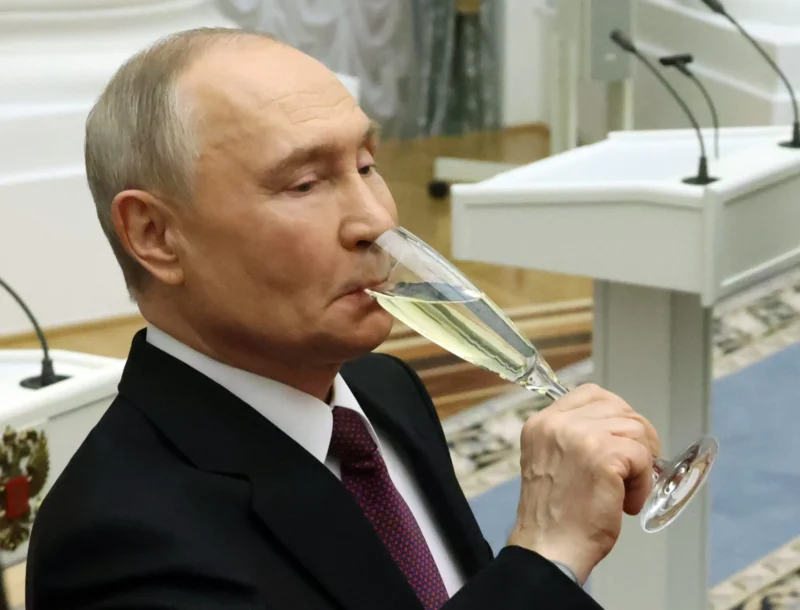
Russia thought the Iran war would save its economy—Ukraine just rewrote the script.
Russia appeared poised for a rare economic lifeline as the war in Iran sent global oil prices surging. Instead, a wave of Ukrainian drone strikes has turned that opportunity into a new vulnerability—exposing how fragile Moscow’s energy lifeline has become.
When Iran disrupted traffic through the Strait of Hormuz, cutting off roughly a fifth of global oil flows, markets reacted instantly. Prices surged. Russian crude, long discounted due to sanctions, suddenly gained value, with Urals oil nearing parity with Brent.
For the Kremlin, it looked like a reversal of fortune.
Before the Iran war, Russia’s oil and gas revenues had reportedly fallen by nearly half, straining its ability to finance the prolonged conflict in Ukraine. The price spike—combined with a temporary easing of U.S. restrictions on Russian crude—offered what some analysts described as a near-term economic rescue.
But the battlefield shifted.
Ukraine launched sustained drone attacks on key Russian export hubs, including ports on both the Baltic and Black Sea. Facilities like Novorossiysk, Primorsk, and Ust-Luga—critical arteries for seaborne crude—were hit repeatedly.
The impact has been severe. Estimates suggest up to 40 percent of Russia’s crude export capacity was temporarily disrupted at the peak of the strikes, marking one of the most significant supply shocks in the country’s modern energy history.
What makes these attacks particularly consequential is their timing.
At the very moment global conditions favored Russia—high prices, constrained supply elsewhere—its ability to export was physically curtailed. In effect, Ukraine has targeted not just infrastructure, but the economic foundation of Russia’s war effort.
The consequences are now rippling inward.
Refinery strikes and logistical disruptions have forced Moscow to consider restricting gasoline exports to stabilize domestic supply. Reports of “unscheduled maintenance” and fires at major terminals suggest deeper structural strain. Inside Russia, inflation remains high, borrowing costs elevated, and consumer demand weakening.
Even before the latest attacks, officials had warned of a potential financial crisis. Now, with export revenues under renewed pressure, those concerns are intensifying.
There is, however, a paradox.
Reduced Russian exports could push global oil prices even higher—partially offsetting Moscow’s losses. And Russia retains access to eastern export routes serving Asian markets. But these alternatives lack the scale and efficiency of its western terminals, limiting their ability to fully compensate.
The broader picture is clear.
The Iran war reshaped global energy markets in Russia’s favor. Ukraine’s drone campaign is reshaping them again—this time against it.
For Moscow, the lesson is stark: in a war defined by sanctions, supply chains, and strategic chokepoints, economic advantage can be fleeting. And in this phase of the conflict, even a windfall can burn.

The Iran war is no longer regional. Ukraine now wants strikes inside Russia. Here’s why.
The war surrounding Iran is beginning to reshape conflicts far beyond the Middle East, with Ukraine now urging a dramatic expansion of the battlefield—into Russia itself.
At a United Nations session, Ukraine’s ambassador Andriy Melnyk argued that Russian drone production facilities should be considered “legitimate targets,” citing Moscow’s growing military cooperation with Tehran. According to Ukrainian officials, Russia has supplied Iran with modernized versions of the Shahed drones—systems originally developed by Iran and widely used by Russian forces in Ukraine since 2022.
The message was clear: the wars are no longer separate.
Melnyk framed the Iran conflict as directly intertwined with Russia’s invasion of Ukraine, describing Moscow as a key enabler of Tehran’s military capabilities. By providing technology, production licenses, and reportedly even attack helicopters, Russia has, in Kyiv’s view, become an active participant in a broader network of conflict stretching from Eastern Europe to the Gulf.
That framing carries significant implications.
If accepted by Western partners, it could justify expanded military support to Ukraine—not only for defensive operations, but for deeper strikes into Russian territory targeting drone factories and supply chains.
Kyiv has already conducted limited strikes on such facilities, but officials argue that more advanced long-range weapons would increase their effectiveness.
The argument is strategic as much as tactical. By disrupting Russia’s drone production, Ukraine believes it can simultaneously weaken Moscow’s war effort at home and reduce the flow of technology that could empower Iran in the Middle East.
There is also an economic dimension.
Rising oil prices, driven in part by instability in the Strait of Hormuz, are providing Russia with a financial boost, offsetting some of the economic strain caused by sanctions. Ukrainian officials warn that the Iran war risks becoming a “lifeline” for Moscow, strengthening its ability to sustain operations in Ukraine.
This convergence of interests is reshaping how the conflict is perceived.
What once appeared as distinct regional crises—Ukraine on one side, the Middle East on the other—is increasingly viewed as a connected strategic environment. Military technologies, economic shocks, and geopolitical alliances are linking these theaters in ways that complicate efforts to contain escalation.
Melnyk’s call for strikes inside Russia reflects that shift. It suggests that Ukraine sees the Iran war not just as a distant conflict, but as part of a broader struggle that directly affects its own security.
Whether Western governments accept that argument remains uncertain. Expanding the scope of military operations into Russian territory carries obvious risks, including further escalation between NATO and Moscow.
But the fact that such proposals are now being openly discussed at the United Nations underscores how quickly the boundaries of the conflict are changing.
The Iran war is no longer confined to the Middle East. It is feeding into a wider geopolitical contest—one where actions in one region are increasingly shaping outcomes in another.
And as those connections deepen, the line between regional war and global confrontation continues to blur.
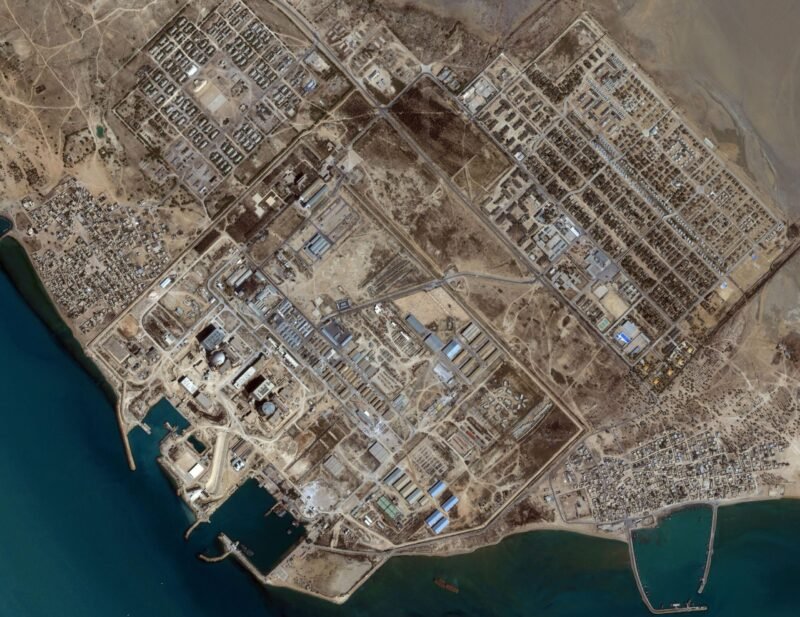
A missile landed near a reactor. Moscow is sounding the alarm.
FSB Chief Orders Protection for Military Officials While Rosatom Warns of “Regional Catastrophe” Risk at Iranian Plant.
Russia will strengthen security for senior military officials, the head of the Federal Security Service said Thursday, as concerns mount over targeted assassinations and rising regional instability linked to the war in Ukraine and escalating tensions in Iran.
Alexander Bortnikov, chief of the FSB, told state-run TASS that enhanced protection measures are being introduced for high-ranking officers. The move follows a series of assassinations of Russian military figures and prominent supporters of the Ukraine war, some of which Ukrainian intelligence has claimed responsibility for.
The announcement came as another senior Russian official warned of the risks surrounding Iran’s Russian-built Bushehr nuclear power plant after a projectile struck near the facility earlier this week.
Alexei Likhachev, head of state nuclear corporation Rosatom, called for the creation of a safety zone around the plant, describing any strike on the site as potentially catastrophic. He said there are 72 tons of fissile material and 210 tons of spent nuclear fuel stored there.
“If an incident were to occur, it would be at least regional in scale and would affect a large number of countries in the Middle East,” Likhachev said, warning that radiation exposure would spare no party in the event of a serious accident.
Iran confirmed that a projectile struck near the Bushehr facility amid ongoing U.S. and Israeli airstrikes. The International Atomic Energy Agency reported that a structure roughly 350 meters from the reactor was damaged but that the reactor itself remained intact and radiation levels were normal.
Bushehr is Iran’s only operational nuclear power plant. Rosatom constructed its first 1-gigawatt unit and is building additional reactors at the site. The company has already evacuated some personnel in recent weeks, with further reductions planned that would leave only a minimal staff presence.
Likhachev appealed to all sides in the conflict to designate the area an “island of safety,” noting that both the United States and Israel are fully aware of the plant’s coordinates.
The twin developments — heightened security in Russia and warnings over Bushehr — underscore how conflicts stretching from Ukraine to the Gulf are increasingly intersecting, raising fears that regional warfare could trigger broader strategic and nuclear risks.

Global Energy Crisis Deepens as Hormuz Blockade Chokes Supply

North Korea Steps Back from Iran, Eyes Washington Reset

Inside the U.S. Rescue Mission That Outsmarted Iran


-
 TECH3 weeks ago
China Bets on an AI-Powered Military Future
-
 US-Israel war on Iran3 weeks ago
Waves of Mystery Drones Breach U.S. Nuclear Base Airspace
-

 Terrorism1 week ago
Egypt Uncovers Alleged Plan to Down Presidential Plane
-
 US-Israel war on Iran3 weeks ago
Saudi Arabia Warns of Military Action After Iranian Missile Strike
-
 Top stories2 weeks ago
Saudi Arabia Deepens Defense Ties with Ukraine
-

 US-Israel war on Iran2 weeks ago
Former CIA Chief Blames White House for Escalating Iran War Crisis
-

 US-Israel war on Iran3 weeks ago
Iran’s Guard Leadership Hit Hard in Escalating Strikes
-

 Analysis2 weeks ago
Inside the IRGC’s Quiet Rebuild of Hezbollah