Trump Says Iran War Is “Effectively Over” as US Maintains Blockade and Qatar Pushes Diplomacy
Trump Signals Pause in Iran War
WASHINGTON — November 10, 2026
President Donald Trump has declared that the war with Iran is “militarily effectively over,” signalling a possible shift away from renewed large-scale US bombardment. But with American forces still deployed, a naval blockade continuing and negotiations unresolved, the announcement falls short of confirming an end to the conflict.
Trump made the remarks on Monday after meeting Qatari Prime Minister Sheikh Mohammed bin Abdulrahman Al Thani at the White House. He said Washington was maintaining the existing military position while pursuing a longer-term agreement to prevent Iran from developing nuclear weapons.
“Iran militarily is effectively over,” Trump told reporters, adding that the United States was keeping the situation at the status quo.
The president described Iran’s military leadership as having been “decapitated” and said there was positive momentum in discussions. However, he also warned that US forces remained ready to resume military action if circumstances changed.
A pause in major strikes, not a formal end to the war
Trump’s statement represents a notable change in tone after months of warnings that the United States could intensify its attacks if Tehran rejected Washington’s demands.
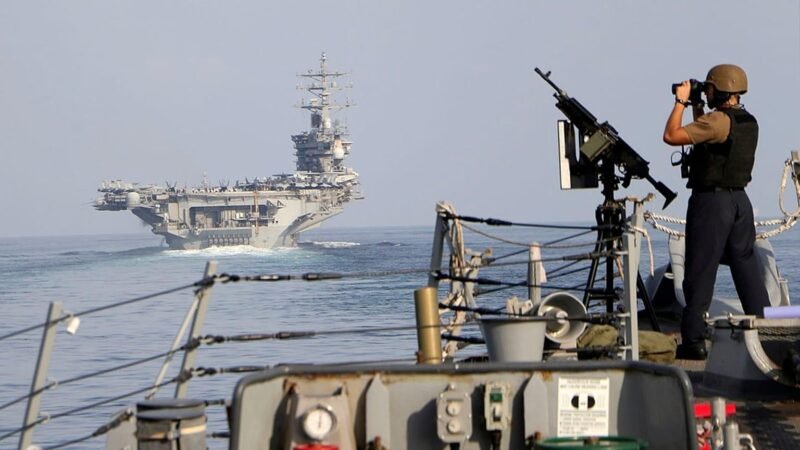
Yet the military posture has not fundamentally changed. Thousands of US personnel remain deployed in the region, and Washington continues its naval blockade of Iranian ports to restrict the movement of Iranian oil.
The US military has also conducted limited strikes against Iranian air-defence positions in recent days. On Saturday, American forces fired on and disabled a commercial vessel that Washington said was attempting to breach the blockade.
Trump has therefore announced a preference for maintaining the current position rather than launching another major bombing campaign. He has not announced a comprehensive withdrawal, a lifting of the blockade or a formal peace agreement.
The distinction is important: a reduction in offensive operations does not necessarily mean the conflict has ended.
Qatar emerges as a central diplomatic intermediary
Qatar is playing a significant role in efforts to bring Washington and Tehran back towards negotiations.
The Qatari prime minister’s meeting with Trump followed diplomatic contacts with Iranian officials. Qatar has reportedly presented proposals addressing Iran’s nuclear programme, while other regional governments have encouraged Washington to pursue a negotiated outcome.
Reuters reported that Iran’s proposal includes ending the US blockade, easing sanctions and stopping attacks in exchange for steps by Tehran to ease restrictions on shipping through the Strait of Hormuz. Nuclear negotiations and other sanctions issues would then be addressed through further talks.
The two sides remain far apart. Iran has also demanded the release of frozen assets, compensation for war damage and an end to hostilities across the region, including Israeli military operations in Lebanon. Washington has rejected key elements of Tehran’s conditions.
The diplomatic challenge is therefore not simply to secure a temporary halt in attacks. It is to establish an arrangement that addresses the nuclear dispute, maritime access, sanctions and regional security.
The nuclear question remains unresolved
Trump has repeatedly argued that US military operations severely damaged Iran’s nuclear infrastructure. But the administration still wants a verifiable arrangement to ensure that Iran cannot rebuild its nuclear capabilities or move sensitive nuclear material beyond international oversight.
That leaves a central problem for negotiators: military damage does not automatically establish what remains of Iran’s nuclear stockpile, equipment or technical capabilities.
International inspectors would need access to relevant facilities and reliable information about nuclear materials before any agreement could be independently assessed.
US Defense Secretary Pete Hegseth said the president could choose to end military operations while monitoring Iran’s nuclear material, but Washington has not publicly demonstrated that it possesses a complete, independently verified picture of the programme.
A durable settlement will depend on verification, not political declarations alone.
Domestic pressure is shaping Washington’s calculations
Trump’s latest remarks also come amid growing political pressure at home.
The war has contributed to higher fuel prices and wider economic uncertainty. The Republican Party suffered losses in both chambers of Congress in the November midterm elections, with dissatisfaction over the conflict among the issues facing the administration.
The war’s legality has also become a subject of congressional dispute. Critics argue that the administration launched and conducted military operations without sufficient congressional authorisation. Republican Representative Thomas Massie has moved to force a vote on impeaching Defense Secretary Pete Hegseth over his handling of the conflict.
The domestic political environment adds pressure for the White House to demonstrate that military operations can give way to a negotiated outcome. But political pressure does not remove the strategic obstacles separating Washington and Tehran.
From Hormuz to Berbera: Why the Horn of Africa remains exposed
For the Horn of Africa, the most immediate concern is the future of maritime traffic and energy supplies.
The Strait of Hormuz is a critical route for global oil and gas shipments. Any renewed confrontation around the waterway could increase energy prices, shipping insurance premiums and transport costs. Even a prolonged blockade or uncertainty over commercial navigation can disrupt supply chains.
The effects would extend beyond the Gulf. The Red Sea and Gulf of Aden connect major international trade routes, while Berbera serves as an important maritime gateway for Somaliland and Ethiopia.
Higher fuel costs could affect transport, electricity generation, food distribution and humanitarian operations across the region. Countries and territories dependent on imported fuel and food are particularly exposed to disruptions in international shipping.
For Somaliland, the lesson is practical: diplomatic developments in Washington and Tehran can have direct consequences for the cost and reliability of essential imports. Berbera’s strategic importance does not insulate the economy from instability elsewhere along the maritime corridor.
What happens next?
Three developments will determine whether Trump’s declaration becomes the beginning of a lasting settlement or merely another pause in a prolonged confrontation:
A negotiated framework: Whether Qatar and other mediators can bridge the gap between Washington’s nuclear demands and Tehran’s conditions for ending hostilities.
Maritime de-escalation: Whether the US blockade and Iran’s restrictions on shipping can be resolved through an enforceable arrangement.
Nuclear verification: Whether international inspectors regain meaningful access to facilities and materials necessary to assess Iran’s nuclear programme.
Strategic assessment
Trump’s statement signals that Washington is, for now, placing greater emphasis on maintaining military pressure while pursuing diplomacy rather than immediately resuming large-scale attacks.
But the conditions that produced the conflict remain unresolved. The blockade continues, Iran’s nuclear programme remains a central concern, and both sides retain the capacity to escalate.
The distinction between a military pause and a political settlement will determine the next phase of the crisis.
For the Gulf, the Red Sea and the Horn of Africa, the priority is not simply whether American aircraft resume bombing. It is whether shipping routes reopen reliably, energy markets stabilise and a verifiable diplomatic arrangement replaces the present confrontation.
The war may be entering a different phase. Whether it is actually ending will depend on what Washington and Tehran agree to do next — and what independent inspectors can verify.