The Gulf is questioning an old assumption: can American military power alone keep the region stable? Oman wants Saudi Arabia, Iran, Iraq and the other Gulf states inside a permanent security dialogue. The next Gulf order may be built not around alliances against Iran — but rules that force Iran and its neighbors to keep talking.
The Gulf Wants to Stop Outsourcing Its Security
MUSCAT — After months of war, missile attacks and disruption around the Strait of Hormuz, Gulf governments are confronting an uncomfortable conclusion: military strength and powerful foreign allies can manage crises, but they have not produced a stable regional order.
Former British Defence Secretary Geoffrey Hoon argues in Modern Diplomacy that the answer may be a permanent Gulf diplomatic process centered in Oman, bringing together all eight Gulf littoral states — the six GCC members, Iran and Iraq.
The proposal echoes an idea advanced by Omani Foreign Minister Sayyid Badr Albusaidi: decades of trying to contain Iran have not delivered lasting security, while Gulf states must take greater responsibility for shaping their own regional environment. )
That is the important shift.
The Gulf is beginning to ask not who will protect it, but what political system could prevent the next war.
Oman Wants a Process, Not Another Alliance
The proposed model draws inspiration from the Cold War-era Helsinki process.
The idea is not that Saudi Arabia, Iran, the UAE, Qatar and their neighbors suddenly trust one another. They clearly do not.
Instead, permanent channels could begin with narrower areas where interests overlap: maritime safety, crisis communications, protection of critical infrastructure, disaster response and economic connectivity. Larger security agreements could emerge later if confidence grows.
Oman is well positioned for such a role because its diplomacy has traditionally relied on maintaining relationships across rival camps rather than joining every regional confrontation. Hoon argues that Muscat’s value lies precisely in credibility, patience and continuity.
The War Has Made the Argument Stronger
Events on the ground explain why the proposal is gaining relevance.
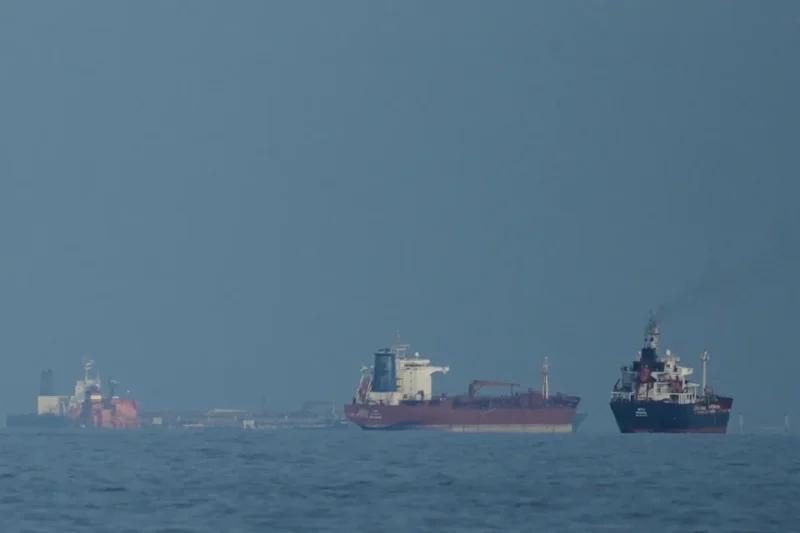
The Gulf remains deeply unstable. Iran’s attacks on vessels near Hormuz and renewed Houthi pressure against Saudi Arabia have helped push Brent crude above $100. Roughly one-third of normal Gulf oil exports remains missing despite tankers increasingly making so-called “dark crossings” with tracking systems disabled.
The UAE is already expanding pipelines, ports and trade routes designed to reduce dependence on Hormuz. Emirati presidential adviser Anwar Gargash has also argued that relying on the United States alone is insufficient and that Gulf states need stronger national capabilities.
That does not mean Washington is leaving.
It means Gulf states increasingly want American protection without American dependency.
The Hard Part Is Iran
A genuinely regional system cannot simply organize Arab states against Tehran.
Iran is too large, too close and too central to Gulf geography.
But including Iran creates the system’s greatest difficulty. Tehran and its neighbors disagree over missiles, proxies, maritime boundaries, U.S. bases and the basic balance of power.
A Muscat process therefore would not eliminate deterrence.
It would have to operate alongside it.
That is why Hoon’s strongest point is that the Gulf does not need to choose between dialogue and military preparedness. A workable order probably requires both.
WARYATV Assessment
The idea is strategically sound, but expectations should remain modest.
The Gulf is unlikely to become a cooperative security community anytime soon. The current Iran conflict has deepened mistrust, not removed it.
Yet permanent crisis-management mechanisms could still matter enormously.
Hormuz demonstrates why. When missiles, tankers, energy markets and competing military forces operate inside such a confined space, miscalculation can become as dangerous as deliberate aggression.
A regional process would therefore be valuable even if it merely created reliable communications before the next confrontation.
WARYATV Bottom Line
The old Gulf model rested heavily on a simple formula:
American military power would deter the major threats.
The Iran war has exposed the limits of that assumption.
The emerging alternative is not a Gulf without America. It is a Gulf in which regional states attempt to build their own rules, communication channels and institutions while maintaining outside partnerships.
Oman’s proposal is therefore less dramatic than a new military alliance — but potentially more durable.
A stable Gulf may not begin with everyone becoming friends. It may begin with adversaries agreeing on how not to stumble into the next war.