Irro’s Tel Aviv Remark Signals a Fundamental Shift in Somaliland’s Foreign Policy
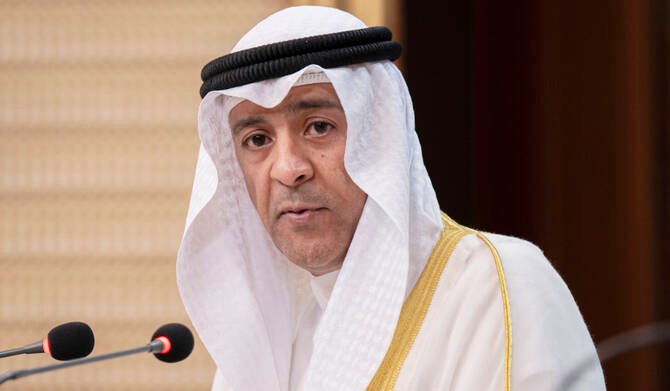
President Abdirahman Mohamed Abdullahi Irro has delivered one of his clearest signals yet that Somaliland’s diplomatic strategy is moving away from the old regional order.
Speaking to The Economist, according to reporting based on the interview, Irro suggested that if talks between Somaliland and Somalia resume, Tel Aviv could become the venue.
The remark was delivered partly as a joke.
Strategically, however, it was anything but trivial.
Previous Somaliland-Somalia negotiations were repeatedly hosted or facilitated by Turkey, including rounds in Ankara and Istanbul. But Ankara is one of Mogadishu’s closest military and political partners, while its relationship with Israel has deteriorated sharply.
Irro’s comment therefore carries a message: Somaliland no longer accepts that the diplomatic architecture surrounding its future must be designed by states closely aligned with Somalia.
That represents a major change.
Israel recognized Somaliland in December 2025, and Irro subsequently made a historic visit to Israel in June. Israeli military personnel are already providing training to Somaliland security forces, although Somaliland’s defense minister told Reuters that there were no negotiations at that stage for an Israeli military base.
The relationship has consequently moved rapidly from recognition toward security, investment and strategic cooperation.
Irro is now positioning Somaliland even more aggressively.
According to reporting on his Economist interview, he accused Djibouti of attempting to destabilize Somaliland and claimed Somalia was preparing forces along Somaliland’s southern frontier. Those are serious allegations, and public evidence substantiating them remains limited.
Somaliland officials have separately accused Somalia, Djibouti and Turkey of interference in unrest in western Somaliland; those governments have not publicly accepted those allegations.
What matters politically is that Hargeisa increasingly sees its security environment through a regional rather than purely domestic lens.
Somaliland is no longer simply asking foreign governments to recognize the political reality created in 1991.
It is offering geography.
Irro has openly discussed using Somaliland’s Gulf of Aden coastline to attract foreign military facilities, comparing the potential model with neighboring Djibouti and emphasizing Berbera’s importance to Red Sea and Horn of Africa trade.
That strategy creates both opportunity and danger.
Berbera lies near Bab el-Mandeb, within reach of one of the most militarized maritime corridors on earth. Israel wants stronger strategic depth opposite Yemen. Washington wants reliable maritime partners around the Red Sea and Gulf of Aden. Somaliland officials have also recently held defense discussions with US Africa Command on maritime security and military cooperation.
This dramatically increases Somaliland’s geopolitical value.
But strategic value comes with exposure.
The Houthis have threatened Israeli interests connected to Somaliland. Any permanent Israeli or American military installation would potentially place Somaliland more directly inside conflicts stretching from Yemen and Iran to the wider Red Sea.
That is why Irro’s reported statement that “there is nothing free in the world” may ultimately be the most revealing line of the interview.
Recognition has a price.
Strategic partnerships have a price.
Military access has a price.
And moving Somaliland from diplomatic isolation into the center of Red Sea geopolitics inevitably means accepting risks that Hargeisa previously avoided.
WARYATV ASSESSMENT
Irro appears to have reached a strategic conclusion that previous Somaliland governments often approached more cautiously:
neutrality alone will not deliver recognition.
For three decades, Somaliland built its international argument around democracy, relative stability and peaceful self-government.
Those achievements created credibility.
They did not create recognition.
Irro is now adding something different—strategic usefulness.
Berbera.
The Gulf of Aden.
Red Sea security.
Israel.
Potential US defense cooperation.
And a willingness to challenge the diplomatic monopoly previously exercised by Mogadishu’s regional partners.
That is why the Tel Aviv remark matters.
Moving future Somaliland-Somalia negotiations from Ankara to Tel Aviv would not simply change the conference room.
It would symbolize a change in who holds diplomatic leverage.
Turkey helped construct the previous framework.
Israel could represent the emerging one.
The danger for Somaliland is becoming too deeply entangled in conflicts much larger than itself.
The opportunity is equally obvious.
For perhaps the first time, major powers are examining Somaliland not simply as an unresolved African territorial question, but as a strategically located state capable of contributing to Red Sea security.
Irro appears prepared to gamble that this transformation is worth the risk.
His message is essentially this:
Somaliland spent 35 years proving it could survive alone. The next phase is proving that the world has something to gain by bringing it inside.