US-Israel Energy Strike Plan Could Push the Iran War Beyond Control.
The United States is considering a major new wave of attacks against Iranian power plants, refineries and other energy infrastructure, potentially marking the most dangerous escalation of the war so far.
CBS News reported that American and Israeli forces were coordinating over possible strikes during the weekend, although President Donald Trump had not issued a final order. An Israeli official denied that Israel had been asked to participate or informed of a decision to resume full military operations.
Separate reporting indicated Trump had authorized new American strikes, but that diplomatic progress could still cause him to cancel or delay them.
The conflicting accounts suggest that Washington may be deliberately maintaining uncertainty. Trump wants Tehran to believe that devastating attacks are imminent while preserving the option to step back if negotiations produce concessions.
His strategy is increasingly based on economic coercion rather than limited military degradation.
Attacking refineries and electricity networks would aim to weaken Iran’s ability to finance military operations, sustain government services and maintain domestic stability.
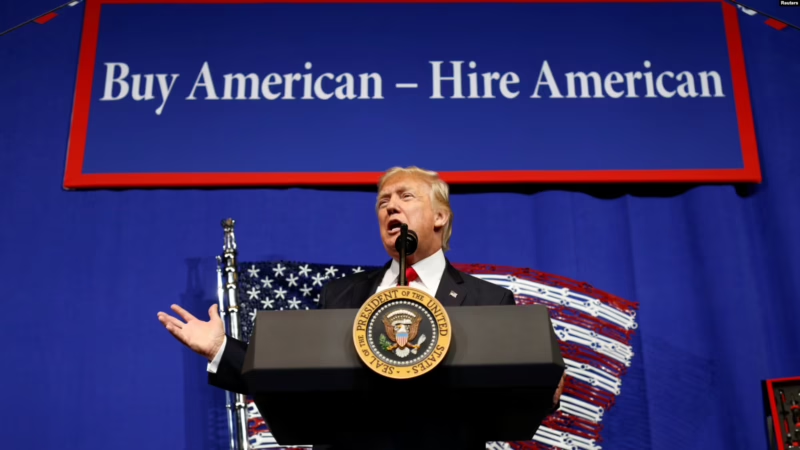
Trump made the threat explicit at Camp David, saying the United States would hit Iran “very hard” until Tehran concluded that it could no longer absorb the pressure.
But energy infrastructure is not a conventional military target. Major damage could produce blackouts, fuel shortages, industrial disruption and severe civilian hardship. It could also transform the conflict from a campaign against Iran’s nuclear and military capabilities into a broader attempt to break the Iranian state economically.
Tehran has already warned that retaliation would extend beyond the battlefield. A senior Iranian security official said Iran had prepared a comprehensive response involving Israeli infrastructure and American-linked energy assets across the region.
That creates a dangerous cycle.
American attacks on Iranian refineries could trigger strikes on Gulf oil facilities, US bases, Israeli infrastructure or commercial shipping. Iran could also tighten pressure on the Strait of Hormuz, causing immediate consequences for global oil prices, inflation and maritime insurance.
The reported plan therefore carries a fundamental contradiction: Washington may seek to force Iran into negotiations by attacking its economic lifeline, but those same attacks could destroy the diplomatic space required for any agreement.
WARYATV ASSESSMENT
The proposed campaign represents a shift from military punishment to strategic strangulation.
Trump appears to believe Iran can be forced to surrender through overwhelming economic pain. Tehran appears prepared to answer by exporting that pain across Israel, the Gulf and global energy markets.
The United States can destroy Iran’s power plants and refineries.
It cannot guarantee that the resulting fire will remain inside Iran.
The final decision will reveal whether Trump still views military escalation as leverage for diplomacy—or whether Washington has decided that diplomacy has already failed.