President Irro has delivered one of the strongest foreign policy speeches in Somaliland’s history, arguing that recognition—not ideology—must guide the nation’s diplomacy.
“I Was Not Elected to Serve Palestine” — President Irro Defends Historic Israel Decision.
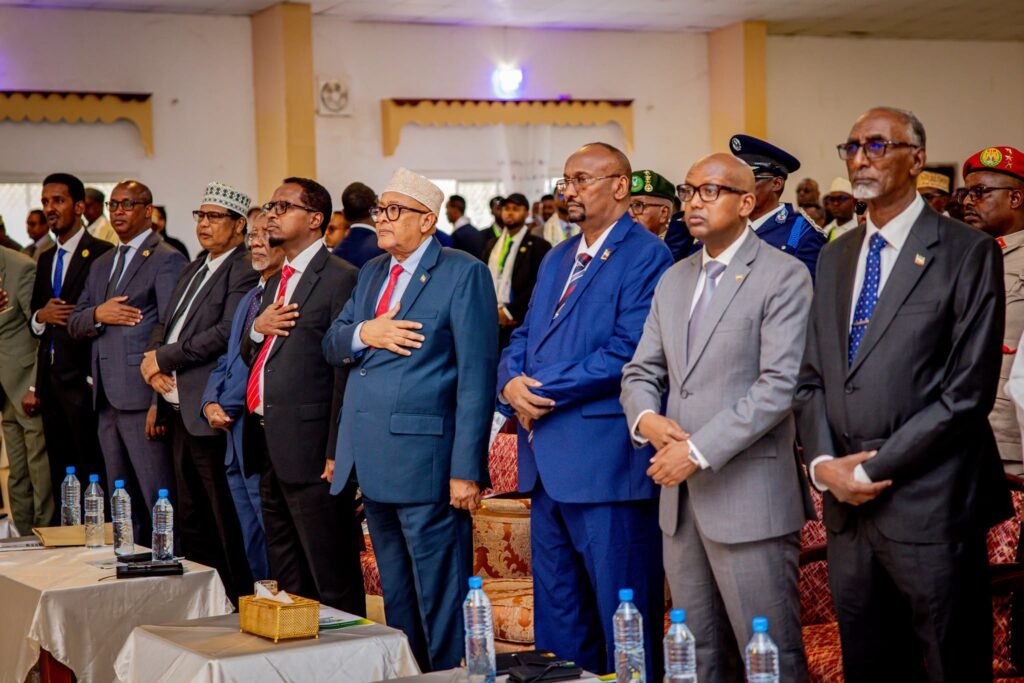
Somaliland President Abdirahman Mohamed Abdullahi Irro has firmly defended his government’s decision to establish full diplomatic relations with Israel and open a Somaliland embassy in West Jerusalem, declaring that his constitutional responsibility is to protect Somaliland’s national interests—not to conduct the foreign policy of other nations.
Speaking in Hargeisa on Tuesday, President Irro dismissed criticism from some Islamic countries and Somaliland’s opposition KAAH party, arguing that the decision reflects a foreign policy based on reciprocity, sovereignty, and the pursuit of international recognition.
“I was not elected to work for Palestine, but I was elected to work for the interests of Somaliland,” the president said.
Irro emphasized that the embassy was opened in West Jerusalem, an area recognized by a number of countries as part of Israel. He also stressed that Somaliland’s decision does not represent hostility toward the Palestinian people.
“We have not harmed Palestine,” he said, reaffirming Somaliland’s support for the Palestinian people’s right to determine their own future.
The president argued that Somaliland has spent the past 35 years seeking diplomatic recognition from the international community, including many Muslim-majority countries, without achieving its principal objective.
“Somaliland is a Muslim society with brotherly relations with the Islamic world,” Irro said. “But those countries have not recognized Somaliland.”
He noted that Israel became the first country to formally recognize Somaliland, describing the subsequent establishment of diplomatic relations as a natural application of international reciprocity.
“We are friends with the country that recognized us,” Irro said. “Diplomacy is based on reciprocity. When Israel recognized us, we recognized it.”
Addressing governments that have criticized Somaliland’s decision, Irro delivered a direct message.
“We say, brothers, we need you. You are our brothers—see us. If you do not see us, at least leave us alone.”
His remarks came after the opposition KAAH party criticized the government’s decision to locate the embassy in Jerusalem.
While KAAH welcomed diplomatic relations with Israel and praised Israel’s recognition of Somaliland, the party argued that establishing the embassy in Jerusalem rather than another Israeli city could conflict with Somaliland’s Constitution, international law, and the United Nations Charter.
The debate reflects a broader discussion over how Somaliland should balance its long-standing pursuit of international recognition with regional diplomacy.
For President Irro, however, the central principle remains unchanged: Somaliland’s foreign policy will be guided by national interests and by relationships with countries willing to recognize its sovereignty.