Connect with us

Comment

China Tightens Grip as Wang Yi Meets Abiy, Heads to Mogadishu

Published

on

Abiy Hosts China’s Wang Yi as Beijing Deepens Horn of Africa Diplomacy, Eyes Somalia Visit.

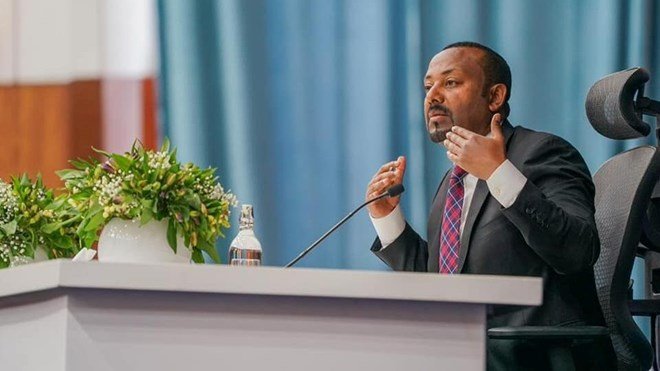
Ethiopian Prime Minister Abiy Ahmed on Wednesday hosted China’s Foreign Minister Wang Yi at the National Palace, marking the latest signal of Beijing’s intensifying diplomatic engagement in the Horn of Africa.

The high-level meeting, held as part of Wang’s two-day official visit to Ethiopia, focused on strengthening bilateral cooperation and exchanging views on regional and international issues, according to Ethiopian officials. Wang Yi, who also serves as a member of the Political Bureau of the Communist Party of China’s Central Committee, is among Beijing’s most senior and influential diplomats, underscoring the political weight of the visit.

Advertisement

The talks reflect the long-standing partnership between Addis Ababa and Beijing, which has expanded over two decades to include infrastructure development, trade, investment, and security cooperation. China remains one of Ethiopia’s largest trading partners and a major financier of railways, industrial parks and energy projects, even as Addis Ababa seeks to rebalance its external relationships amid economic strain and regional instability.

Wang’s stop in Ethiopia is part of a broader African tour that also includes Tanzania, Lesotho — and notably Somalia. China’s Foreign Ministry announced Wednesday that the foreign minister will travel to Mogadishu in the coming days, a visit that carries significant geopolitical overtones.

The Somalia leg of the trip comes at a sensitive moment in the Horn of Africa, as Mogadishu works aggressively to rally international opposition to Israel’s recent recognition of Somaliland as an independent state. Beijing has already rejected the move, aligning itself with Somalia’s federal government and the African Union.

Advertisement

Analysts say China’s stance is consistent with its broader foreign policy doctrine, which places sovereignty and non-recognition of Somaliland at the center of international order — a principle Beijing applies not only in Africa, but also in cases closer to home, including Taiwan, Tibet and Xinjiang.

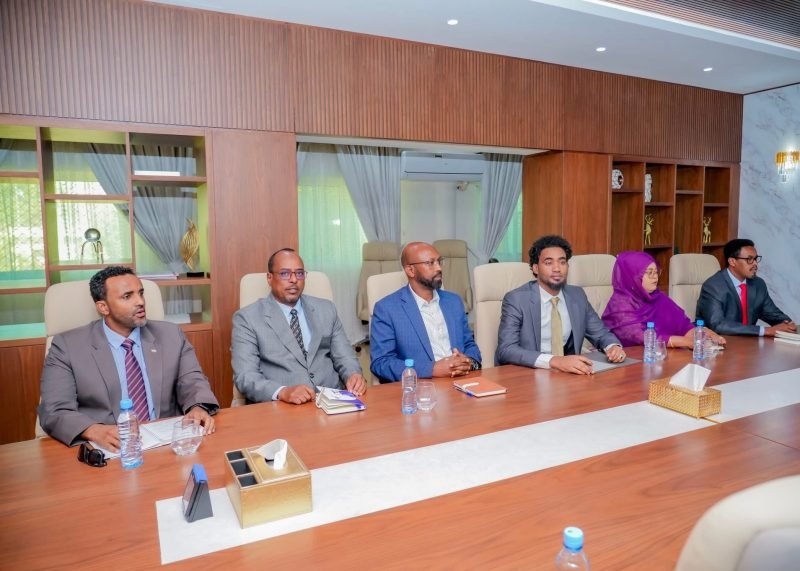
While details of Wang’s planned meetings in Somalia have not been made public, officials familiar with the agenda say discussions are expected to cover bilateral cooperation, regional security, and the future of China–Africa relations. Somalia has become an increasingly important node in Beijing’s Red Sea and Indian Ocean calculus, particularly as global competition intensifies over trade routes, ports and political influence in the region.

Taken together, Wang Yi’s visits to Addis Ababa and Mogadishu highlight China’s methodical approach in the Horn of Africa: strengthening ties with established regional powers like Ethiopia, while simultaneously reinforcing the sovereignty-based international framework that favors Mogadishu — and constrains Somaliland’s push for broader recognition.

Advertisement

As geopolitical fault lines harden across the Horn, China intends not merely to observe, but to shape the diplomatic terrain.


Comment

The Brutal Logic Behind the Turkey-Somaliland Clash

Published

on

Hargeisa Draws the Line: Somaliland Rejects Ankara’s Patronage Politics.

Somaliland’s response to recent remarks by Turkish Foreign Minister Hakan Fidan marks more than a diplomatic spat. It signals a strategic shift — one that places Hargeisa firmly in control of its narrative, its alliances, and its future.

When Fidan attempted to frame Somaliland’s foreign relations as a “religious disaster,” the reaction from Hargeisa was swift and calculated. Rather than engaging in emotional rebuttal, Somaliland’s Minister of the Presidency, Khadar Hussein Abdi, delivered a precise message: Mogadishu has neither the authority nor the capacity to decide Somaliland’s affairs — including who sets foot on its soil.

Advertisement

That statement crystallized what can now be described as the Hargeisa Doctrine: sovereignty is not requested, negotiated, or deferred. It is exercised.

For decades, Somaliland played defense — seeking validation, patiently arguing its case, and tolerating external actors who treated its stability as useful but its sovereignty as inconvenient. This moment represents a clean break from that posture. Abdi’s response did not ask Turkey to understand Somaliland’s position; it asserted it.

Ankara’s appeal to religious solidarity was not lost on Hargeisa. Somaliland’s leadership recognized it as a political tool — one designed to maintain Turkey’s entrenched interests in Mogadishu while sidelining a functioning, democratic polity that has governed itself peacefully for over 35 years. By rejecting that framing, Somaliland exposed the gap between rhetoric and reality.

Advertisement

What makes this episode significant is not confrontation, but confidence. Somaliland is no longer explaining why it deserves partnerships — it is choosing them. Engagements with Israel, the UAE, and other pragmatic actors reflect a foreign policy anchored in maritime security, trade integration, and long-term economic resilience, not ideological loyalty tests.

By calling out Turkey’s decades-long absence from Somaliland’s development while attempting to assert influence today, Hargeisa delivered an uncomfortable truth: strategic importance cannot be invoked selectively. Respect follows consistency.

This is modern sovereignty in action. Somaliland is positioning itself not as a “territory awaiting recognition,” but as a capable authority already delivering governance, security, and growth in one of the world’s most sensitive corridors — the Gulf of Aden and Red Sea basin.

Advertisement

The so-called “anger” noted in international coverage is better understood as discipline. A disciplined refusal to be spoken for. A disciplined insistence that the land belongs to those who govern it, protect it, and build its future.

In that sense, Somaliland’s message to Ankara was not defiance. It was doctrine.

Advertisement
Continue Reading

Comment

Aid Freeze, Trust Collapse: Somalia–US Ties Enter Dangerous Territory

Published

on

Somalia–US Relations Hit Low Point as Washington Pauses Aid Over WFP Warehouse Dispute.

Relations between Somalia and the United States have sunk to one of their lowest points in years after Washington announced it was pausing government-benefiting assistance to Mogadishu, citing allegations of aid misuse linked to a demolished World Food Programme (WFP) warehouse.

The trigger was a blunt statement from the U.S. State Department’s under secretary for foreign assistance, who accused Somali officials of destroying a U.S.-funded WFP warehouse and illegally seizing donor-funded food meant for vulnerable Somalis. The administration said the move reflected its “zero-tolerance” approach to waste, diversion and theft of humanitarian aid.

Advertisement

Somali authorities pushed back quickly. The Ministry of Foreign Affairs denied that aid had been stolen, insisting the food remained under WFP custody and that the warehouse demolition was part of port redevelopment works that did not affect humanitarian operations. Documents seen by Reuters appear to confirm that 75 metric tons of nutritional supplies were transferred to another warehouse and formally handed back to WFP, pending lab tests to confirm the food’s safety.

WFP itself struck a careful tone, acknowledging that the warehouse had been demolished but saying it was working with Somali authorities to secure alternative storage. The agency stressed that the food — designed for malnourished pregnant women, nursing mothers and young children — is critical at a time when roughly 4.4 million Somalis face crisis-level hunger or worse.

Still, Washington remains unconvinced. U.S. officials said investigations into possible diversion and misuse are ongoing and made clear that any resumption of aid would depend on Somali authorities taking accountability and corrective steps.

Advertisement

The dispute lands amid a broader chill in relations. Under President Donald Trump’s second term, the U.S. has hardened its stance toward Somalia, tightening immigration restrictions, auditing citizenship cases involving Somali-Americans, and repeatedly highlighting fraud cases linked to nonprofit groups in Minnesota’s Somali community. At the same time, the administration has sharply cut foreign aid globally, pivoting U.S. policy in Africa away from assistance and toward trade.

For Mogadishu, the aid pause is more than a bureaucratic dispute. It exposes how fragile Somalia’s international standing remains — and how quickly humanitarian issues can spill into strategic fallout at a moment when the government is already under pressure from security challenges, diplomatic setbacks, and declining Western patience.

Advertisement
Continue Reading

Comment

Why Maduro’s Fall Is Haunting Iran’s Ruling Clerics

Published

on

CARACAS TO TEHRAN: As Venezuela Buckles Under Trump, Iran Sees an Unsettling Mirror of Its Own Future.

As protests ripple across Iran and the economy sinks deeper into crisis, Tehran is confronting a nightmare scenario it has long warned its people about — and one that now feels uncomfortably real.

Over the weekend, Iranian leaders watched U.S. forces land in Caracas and seize Venezuelan President Nicolás Maduro in a swift nighttime operation, dragging a longtime American adversary from power and flying him to the United States. For Tehran, the message was unmistakable: regime change is no longer theoretical.

Advertisement

President Donald Trump reinforced that message days later, issuing a direct warning to Iran as demonstrations spread across the country. “If they start killing people like they have in the past,” Trump said aboard Air Force One, “they’re going to get hit very hard by the United States.”

The warning landed as Iran struggles to contain the largest wave of unrest since the 2022 Mahsa Amini uprising. What began as localized protests over the collapsing rial quickly spread nationwide. According to Human Rights Activists News Agency, demonstrations have erupted in 88 cities across 27 provinces. At least 29 protesters have been killed and nearly 1,200 arrested as security forces — including the Basij paramilitary — moved to crush dissent.

The regime’s response has been predictable and brutal. Security forces have raided hospitals to arrest wounded demonstrators, while officials brand protesters as “rioters” and foreign agents. Supreme Leader Ayatollah Ali Khamenei drew a hard line this week, insisting that unrest must be put down, not negotiated.

Advertisement

Yet the shadow looming over Tehran is no longer just domestic unrest. It is Venezuela.

For years, Iran and Venezuela were ideological twins — sanctioned, oil-rich states bound together by hostility toward Washington. When Caracas buckled under U.S. pressure, Tehran stepped in, shipping oil, repairing refineries and deepening military ties. Now, Venezuela’s collapse is being studied in Tehran less as a tragedy and more as a warning.

“The American message is maximalist,” said Vali Nasr of Johns Hopkins University. “From Tehran’s perspective, Venezuela shows how far Washington is now willing to go.”

Advertisement

Iran’s leaders insist their country is different — and in key ways, it is. Iran has spent decades preparing for confrontation, building missile forces, drone capabilities and a regional network of armed proxies. Officials have openly warned that any U.S. strike would trigger retaliation across the Middle East.

But the parallels are still unnerving. Both regimes sit atop massive energy reserves. Both face crushing sanctions and collapsing economies. Both have endured waves of public anger — and both are led by aging, isolated rulers.

Sanam Vakil of Chatham House describes Iran’s predicament as a “triple crisis”: economic collapse, political legitimacy erosion, and escalating external pressure from the U.S. and Israel. Israeli Prime Minister Benjamin Netanyahu’s public support for Iranian protesters has only intensified paranoia inside Tehran.

Advertisement

For Iran’s leadership, the lesson of Venezuela is stark. Removing the man at the top may not immediately change the system — but it can shatter the illusion of permanence. And once that illusion breaks, power becomes fragile.

Tehran has long told its people that negotiation with Washington is a trap. Maduro’s fate is now being used as proof.

The question haunting Iran’s rulers is no longer if pressure will increase — but whether the system they built is strong enough to survive it.

Advertisement
Continue Reading

Comment

Trump Says Cuba Is Ready to Fall After U.S. Capture of Venezuela’s Maduro

Published

on

DOMINOES FALLING: Trump Says Cuba Is Next After Maduro’s Capture.

President Donald Trump has declared that Cuba’s communist government is now “ready to fall,” arguing that the U.S.-led capture of Venezuelan strongman Nicolás Maduro has shattered Havana’s last strategic lifeline.

Speaking to reporters aboard Air Force One late Sunday, Trump said Cuba can no longer depend on Venezuela for oil, money, or security. “I think it’s just going to fall,” he said. “I don’t think we need any action. Looks like it’s going down. It’s going down for the count.”

Advertisement

The remarks come less than 48 hours after U.S. forces captured Maduro and his wife in a high-risk operation that has already reshaped political calculations across Latin America. For decades, Venezuela under Hugo Chávez and later Maduro functioned as Cuba’s economic oxygen tank, providing subsidized oil and financial support that helped keep the island’s system afloat.

U.S. officials now say that relationship ran even deeper. Secretary of State Marco Rubio revealed that Cuban operatives were effectively embedded at the heart of Maduro’s security apparatus. “It was Cubans that guarded Maduro,” Rubio said. “He was not guarded by Venezuelan bodyguards. He had Cuban bodyguards.”

Havana has confirmed that 32 Cuban military and police personnel were killed during the U.S. operation in Venezuela, marking an extraordinary admission and underscoring how exposed Cuba had become in propping up the Caracas regime. Cuban state media announced two days of national mourning.

Advertisement

Trump confirmed Cuban casualties bluntly. “A lot of Cubans were killed yesterday,” he said. “There was a lot of death on the other side. No death on our side.”

The president framed Maduro’s capture as a strategic shockwave designed to break authoritarian alliances across the hemisphere. In Trump’s view, once Venezuela fell, Cuba was left isolated, weakened, and vulnerable.

Trump also widened his fire, accusing Colombia’s leadership of enabling cocaine flows into the United States and warning that Washington is prepared to escalate its campaign against narco-trafficking networks by land and sea.

Advertisement

Taken together, the message was unmistakable: the era of mutual protection among anti-U.S. regimes in the Americas is over. Trump cast the operation against Maduro as a modern application of the Monroe Doctrine — a signal that hostile governments can no longer rely on each other for survival.

With Maduro set to appear in federal court in New York, attention now turns to Havana. Whether Cuba “falls” as Trump predicts remains uncertain. But one thing is clear: the removal of Venezuela’s strongman has cracked the foundation of the last remaining Cold War axis in the Western Hemisphere.

Advertisement
Continue Reading

Comment

How Cocaine, Cartels, and Corruption Led to the U.S. Indictment of Venezuela’s Maduro

Published

on

NARCO-STATE EXPOSED: Inside the Drug Empire That Finally Brought Down Maduro.

For years, U.S. prosecutors described Nicolás Maduro as more than an authoritarian ruler. Now, with the Venezuelan president in U.S. custody, they are laying out a far more damning portrait: the alleged head of a state-run drug enterprise that funneled thousands of tons of cocaine into the United States.

A newly unsealed Justice Department indictment accuses Maduro of leading a “corrupt, illegitimate government” sustained by narco-terrorism, cartel alliances, and systematic violence. His dramatic capture in a U.S. military-backed operation early Saturday has turned a long-running legal case into one of the most consequential prosecutions of a foreign leader in modern American history.

Advertisement

Attorney General Pam Bondi said Maduro and his wife, Cilia Flores, will now face justice “on American soil, in American courts.” The charges are sweeping. Maduro is indicted on narco-terrorism conspiracy, cocaine importation conspiracy, and multiple weapons offenses involving machine guns and destructive devices. Flores, along with Maduro’s son and close associates, is also named in the case.

At the core of the indictment is the allegation that Venezuela became a protected transit hub for global drug networks. Prosecutors say Maduro partnered with violent groups including the Sinaloa Cartel and the Tren de Aragua gang, providing state protection, intelligence cover, and logistical support. By 2020, authorities allege, as much as 250 tons of cocaine were moving through Venezuela each year — by sea, air, and clandestine jungle airstrips.

The indictment goes further, accusing Maduro and his inner circle of ordering kidnappings, beatings, and murders to enforce drug debts and eliminate rivals. One alleged killing involved a local Caracas drug boss who had fallen out of favor with the regime’s trafficking network.

Advertisement

Flores, according to prosecutors, played a direct role. She is accused of accepting bribes to arrange meetings between major traffickers and Venezuela’s anti-drug officials — effectively selling state protection to criminal networks. In one case, a trafficker allegedly agreed to pay monthly bribes and $100,000 per cocaine flight to ensure safe passage, with some funds flowing to the presidential family.

Perhaps most damaging are recordings involving Flores’s nephews, who were caught in 2015 discussing multi-hundred-kilogram cocaine shipments departing from Maduro’s own presidential hangar. They reportedly framed their operation as being “at war” with the United States. Both men were convicted in 2017 before being released in a 2022 prisoner swap.

U.S. officials insist the raid that captured Maduro was not an act of war but a law enforcement operation. Secretary of State Marco Rubio said the mission was carried out at the Justice Department’s request, with the military supporting federal arrest warrants. Maduro, Rubio noted, was already a fugitive facing a $50 million U.S. reward.

Advertisement

Now the battle moves from Caracas to a Manhattan courtroom. For U.S. prosecutors, the case is about proving that Venezuela’s collapse was not just the result of mismanagement or sanctions, but the deliberate construction of a narco-state at the highest level of power. For Maduro, the era of impunity appears to be over.

Continue Reading

Comment

Report Claims Iran’s Khamenei Has Moscow Escape Plan as Protests Intensify

Published

on

PLAN B TO MOSCOW: Is Iran’s Supreme Leader Preparing to Run as the Streets Boil?

As protests spread across Iran and security forces struggle to contain mounting public anger, a striking claim has emerged from London: Supreme Leader Ayatollah Ali Khamenei, now 86, allegedly has a contingency plan to flee the country if the regime begins to collapse.

According to a report by The Times of London, the plan — dubbed “Plan B” — would see Khamenei and a tightly controlled inner circle of roughly 20 people, including family members and senior aides, evacuate to Russia. Intelligence sources cited by the paper say the arrangement would also include mechanisms to transfer control of Khamenei’s vast financial empire, estimated at around $95 billion.

Advertisement

That wealth, much of it opaque and shielded from scrutiny, is reportedly tied to Setad, a powerful conglomerate originally created to manage confiscated property after the 1979 revolution, as well as a web of semi-state religious foundations. These entities have long functioned as the economic backbone of the supreme leader’s authority — and, potentially, his insurance policy.

The scenario echoes a recent and ominous precedent. When Syria’s Bashar al-Assad fled Damascus in late 2024 as his regime collapsed, Moscow provided sanctuary. Assad, according to Western reporting, is now living quietly in Russia under Kremlin protection. Former Israeli intelligence official Beni Sabti told The Times that Russia may be Khamenei’s only realistic destination if power slips from his grasp. “There is no other place for him,” Sabti reportedly said.

The report suggests Khamenei’s affinity for Russia is not merely tactical. He has repeatedly praised President Vladimir Putin and, according to those familiar with his thinking, views Russia as culturally closer to Iran than the West — and far more reliable in moments of existential crisis.

Advertisement

The timing of the report is significant. Iran is facing its most serious unrest since the 2022 protests sparked by the death of Mahsa Amini, with demonstrations now fueled by economic collapse, currency freefall, and growing defiance across multiple provinces. While the regime retains formidable coercive tools, including the Islamic Revolutionary Guard Corps, the persistence and geographic spread of the protests have rattled elites.

Adding to the pressure is an unusually blunt signal from Washington. Following the dramatic U.S. operation that captured Venezuela’s Nicolás Maduro, the Trump administration has leaned into a posture of intimidation toward Tehran. On Sunday, the U.S. State Department’s Farsi-language account posted a stark message alongside an image of President Trump: “President Trump is a man of action. If you didn’t know, now you know.”

Trump himself reinforced the warning, telling reporters aboard Air Force One that if Iranian authorities respond to protests with mass killings, “they will be hit hard by the United States.”

Advertisement

For now, there is no public confirmation from Tehran of any escape plan, and the regime continues to project confidence. But history suggests that authoritarian systems often prepare exit options long before admitting vulnerability.

If the report is accurate, “Plan B” is more than a logistical contingency. It is a quiet acknowledgment of a possibility the Islamic Republic has always denied: that even the supreme leader may not be immune to the force of sustained public revolt.

Whether Khamenei ever boards a plane for Moscow is uncertain. What is clear is that the mere circulation of such a plan reflects a regime increasingly aware that the ground beneath it is no longer as solid as it once was.

Advertisement
Continue Reading

Comment

Why Greenland Now Feels Closer to Trump’s Crosshairs

Published

on

FROM CARACAS TO THE ARCTIC: After Venezuela Strike, Fears Grow That Trump’s Expansionist Impulse Could Turn Toward Greenland. 

The U.S. military operation that seized Venezuela’s president has sent shockwaves far beyond Latin America. In Europe’s north, it has revived an anxiety many in Copenhagen and Nuuk had hoped belonged to campaign bravado rather than governing doctrine: that Donald Trump’s willingness to redraw borders by force may not stop at the Caribbean.

The trigger was not a formal policy announcement, but a symbol. Hours after U.S. forces captured Nicolás Maduro, a prominent MAGA-aligned commentator posted a map of Greenland draped in the American flag with a single word: “SOON.” The message ricocheted through Danish political circles, not because it was official, but because it now felt plausible.

Advertisement

Denmark’s ambassador to Washington responded swiftly, issuing what he called a “friendly reminder” that the United States and Denmark are NATO allies bound by shared defense commitments in the Arctic. He pointed to Denmark’s recent $13.7 billion boost in defense spending and stressed that Greenland’s security is inseparable from America’s own. The subtext was unmistakable: allies do not seize allied territory.

Yet the concern did not arise in a vacuum. Trump has repeatedly refused to rule out taking Greenland by force, describing it as essential to U.S. “international security.” He has appointed a special envoy who openly framed his role as helping make Greenland “part of the U.S.” His vice president has visited the American base at Pituffik, underscoring Washington’s already deep military footprint on the island.

What changed after Venezuela is credibility. For years, analysts dismissed Trump’s Greenland rhetoric as leverage, theater, or a negotiating ploy. The capture of Maduro has altered that calculus. The United States has now demonstrated a willingness to remove a foreign leader, occupy strategic space, and openly declare it will “run” another country during a transition. That precedent matters.

Advertisement

Greenland sits at the center of a rapidly militarizing Arctic, coveted for its location, rare earth minerals, and proximity to emerging shipping routes. It is sparsely populated, lightly defended, and already hosts U.S. forces. From a purely military standpoint, analysts note, a rapid American takeover would face little immediate resistance. The real barrier is political, not operational.

That reality has unsettled European capitals. Denmark’s intelligence services have taken the extraordinary step of labeling the United States a potential security risk, a once-unthinkable shift in transatlantic relations. Greenlandic leaders, while pursuing eventual independence from Denmark, have been equally clear: independence is not a pathway to American annexation.

The deeper fear is not that Greenland will be seized tomorrow, but that Venezuela marks a turning point. If Washington can justify intervention there on security grounds, critics ask, what prevents similar logic from being applied in the Arctic?

Advertisement

The lesson many allies are drawing is stark. When borders become negotiable by force, even the most stable alliances begin to feel provisional.

Continue Reading

Comment

Mossad Breaks Silence, Trump Draws Red Lines as Iran Faces Pressure at Home and Abroad

Published

on

Mossad Signals Support for Iranian Protesters as War Clock Ticks.

Israel has taken the psychological battlefield straight into Tehran. In an unprecedented move, Israel’s Mossad publicly urged Iranians to intensify protests, declaring in Farsi: “The time has come. We are with you — not just in words, but on the ground.”

The message was not symbolic. It landed amid widening demonstrations driven by Iran’s collapsing economy, a plunging rial, and anger spilling from Tehran’s bazaars into universities and provincial cities. The timing is surgical: days after Prime Minister Benjamin Netanyahu’s high-stakes talks with U.S. President Donald Trump, and as Washington hardens its posture toward Iran’s missile and nuclear ambitions.

Advertisement

Trump’s language was unusually blunt. Iran, he warned, will be struck again if it rebuilds its nuclear program — immediately — and its ballistic missile arsenal — without hesitation. For Israel, this was the green light it had been waiting for. U.S. officials now privately acknowledge that Iran’s missile program, not its nuclear file, is the most urgent threat.

Tehran understands this. Ali Shamkhani, a senior adviser to Supreme Leader Ali Khamenei, fired back with a clear warning: Iran will respond before threats materialize. Translation: Iran reserves the right to strike first.

This is the strategic hinge. Israel has learned the cost of waiting. Iranian missile drills earlier this month triggered elevated alert levels in Israel, fueled by fears that a “training exercise” could instantly morph into a live barrage. In modern missile warfare, whoever fires first often dictates the outcome.

Advertisement

Yet while the streets burn, the regime is not collapsing. History suggests protests alone rarely topple Tehran’s power structure. The Islamic Revolutionary Guard Corps remains ideologically committed and financially invested in regime survival. Any real shift would need to fracture the military — a scenario not yet visible.

Still, the convergence is dangerous. Mossad’s message emboldens dissent. Trump’s warnings box Tehran in. Israel’s military doctrine, reinforced this week by IDF Chief of Staff Lt. Gen. Eyal Zamir saying act on capabilities, not intentions.

Iran now faces pressure from three directions at once — internal unrest, external deterrence, and an adversary openly signaling readiness. The question shaping the next phase is stark and unforgiving:

Advertisement

Does Israel strike first to neutralize Iran’s missiles — or does Iran gamble on firing the opening shot that could ignite a wider war?

Either way, the countdown has begun.

Advertisement
Continue Reading

Most Viewed

error: Content is protected !!