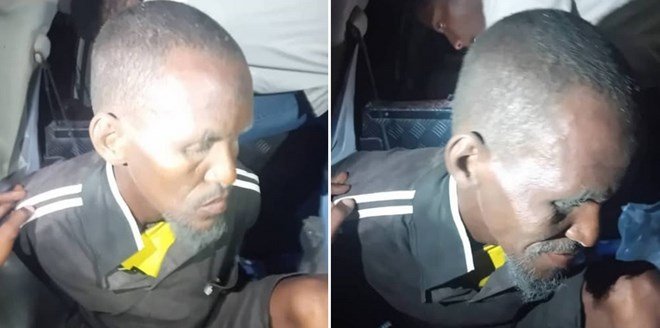
Iranian authorities have arrested Nobel Peace Prize laureate and prominent human rights activist Narges Mohammadi, reigniting international outrage and underscoring Tehran’s escalating war against civil society.
According to the Paris-based Narges Foundation, Mohammadi was violently detained on Friday by Iranian security forces during a memorial ceremony in the city of Mashhad, Iran’s second-largest city. The ceremony honored Khosrow Alikordi, a lawyer and activist recently found dead in his office under circumstances that have raised quiet alarm among dissidents. Mohammadi’s brother, Mehdi, confirmed the arrest.
The detention immediately drew condemnation from the Norwegian Nobel Committee, which called the move a “brutal arrest” and demanded her immediate and unconditional release, urging Iranian authorities to clarify her whereabouts and ensure her safety.
Mohammadi, one of the most recognizable faces of Iran’s human rights movement, won the 2023 Nobel Peace Prize for her long-standing campaign against the death penalty, gender repression, and state violence. Her arrest sends a clear signal: even global recognition offers no protection from a regime increasingly intolerant of dissent.
For nearly two decades, Mohammadi has cycled in and out of Tehran’s Evin Prison, a symbol of Iran’s repression. She has been sentenced to a cumulative 36 years in prison on charges including “acting against national security” and “spreading propaganda.” In December 2024, authorities temporarily suspended her sentence to allow her to recover from surgery after doctors discovered a potentially cancerous lesion in her leg. She was expected to return to prison but remained on furlough—until now.
Her renewed detention comes as she has become more outspoken internationally. Just last week, Mohammadi published an article in Time magazine arguing that Iranians cannot experience peace in a state where surveillance, censorship, arbitrary arrest, and violence dominate daily life. In a December 2024 interview with CNN, she declared that whether inside or outside prison walls, her struggle for democracy would not stop.
The arrest also fits a broader pattern. The Narges Foundation reported that several other activists were detained during the same memorial ceremony, suggesting a coordinated crackdown rather than an isolated incident. Iranian authorities have yet to issue a detailed public explanation.
Beyond her activism, Mohammadi has played a crucial role in exposing systemic abuse inside Iran’s prisons, particularly against women. Through letters and interviews, she has described prolonged solitary confinement, sexual violence, and mistreatment by prison authorities and medical staff—claims the Iranian government continues to dismiss as “false” and “baseless,” despite corroboration from multiple investigations by international media and rights groups.
Politically, the timing is significant. Iran is under growing international pressure over its domestic repression, regional militancy, and strained relations with the West. Arresting a Nobel laureate during a memorial ceremony is not merely an internal security action—it is a calculated act of defiance toward the international community, signaling that Tehran views moral authority as a threat to be neutralized.
For Iran’s civil society, Mohammadi’s detention is chilling but clarifying. It confirms that the regime’s red lines are tightening, even as public frustration simmers beneath the surface. For the outside world, it raises a stark question: how long can symbolic condemnation substitute for meaningful pressure?
Mohammadi’s children accepted her Nobel Prize in Oslo on her behalf last year. Today, that image stands in painful contrast to her latest arrest—one that turns the Nobel medal into an indictment of a system that fears ideas more than sanctions.
What Tehran has done is not just imprison a dissident. It has placed itself in direct confrontation with the values the Nobel Prize represents—human dignity, freedom of expression, and the belief that truth, even behind bars, cannot be erased.