The war in Ukraine has entered a dangerous diplomatic spiral. President Volodymyr Zelenskyy, facing the heaviest Russian air assault since last winter, is now fighting on two fronts — against Moscow’s missiles and against Washington’s wavering will.
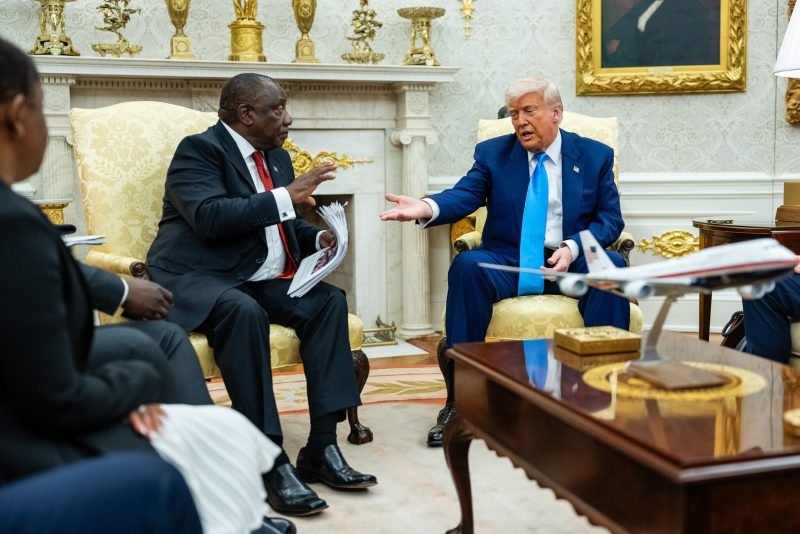
After a turbulent White House meeting that reportedly devolved into shouting, Donald Trump appears to have sided once again with Vladimir Putin, urging Kyiv to accept territorial losses in the Donbas and halting the planned transfer of U.S. Tomahawk cruise missiles.
The move stunned allies and emboldened the Kremlin, which immediately proposed a Budapest peace summit hosted by Hungary’s Viktor Orbán — one of Europe’s most Moscow-friendly leaders.
Speaking in Kyiv, a visibly strained Zelenskyy said Ukraine urgently needs 25 additional U.S. Patriot missile batteries, to be financed through frozen Russian assets in Western banks. Without them, he warned, Ukraine’s energy grid and major cities could collapse under relentless winter bombardment.
“We cannot protect every sky with one hand tied behind our back,” Zelenskyy said.
Trump’s reversal followed a two-hour private call with Putin, which sources describe as a “turning point.” Days later, the U.S. president floated a ceasefire that would “freeze” front lines, effectively rewarding Russia’s territorial aggression.
Trump later told reporters, “It’s cut up right now — let it be cut the way it is.”
European leaders reacted sharply. EU foreign policy chief Kaja Kallas warned that excluding Ukraine from negotiations would destroy faith in the international order.
“If the aggressor gets what he wants, it signals to the world that you can just invade and take,” she said.
Behind the scenes, U.S. Secretary of State Marco Rubio and Russian Foreign Minister Sergei Lavrov are reportedly setting the groundwork for the summit — a meeting critics fear could legitimize Moscow’s war aims.
“Putin doesn’t want to talk about peace — he wants to talk about surrender,” a senior Ukrainian aide told The Kyiv Independent.
Zelenskyy has said he would attend a Budapest summit if invited, but dismissed Orbán’s neutrality: “A man who blocks Ukraine everywhere cannot claim to broker peace.”
With Europe on edge and U.S. policy in flux, the stakes are existential.
Ukraine’s survival may now depend less on its soldiers than on the shifting political winds in Washington — and the world’s willingness to call Trump’s bluff before Putin turns the “peace summit” into his next battlefield victory.