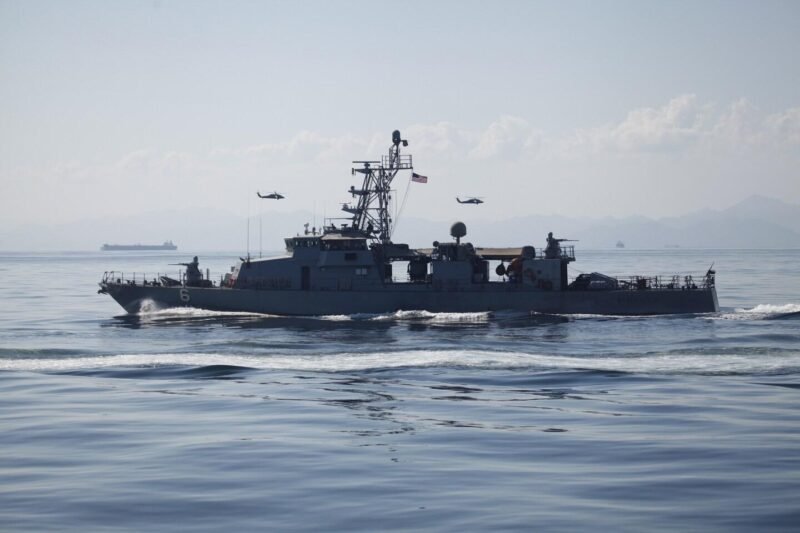
When Russian and Iranian warships slid into the Caspian’s placid waters this Monday for CASAREX 2025, the grandstanding belied a more nuanced message: Moscow still values its partnership with Tehran, even as both find themselves squeezed by larger geopolitical currents.
At face value, joint naval drills—featuring Iran’s sleek destroyers and Russia’s 57‑meter SB738 frigate—reinforce a shared interest in securing their mutual littoral. But look closer, and the timing and location reveal the deeper chessboard at play.
A Test of Solidarity after Israel’s Strike
Just weeks earlier, Israel’s air campaign against Iran had laid bare the limits of Tehran’s alliances. Neither Russia nor China lifted a finger to defend Iran in its moment of greatest vulnerability. By hosting drills on Iran’s northern flank—rather than, say, the Mediterranean—Moscow is signaling that despite that public cold shoulder, it still sees Iran as a partner worth investing in.
For Tehran, the exercise cements its bid to become a Caspian power. President Raisi has staked much on his “North‑South Corridor,” a grand design linking Central Asian railheads to Iranian ports on the Gulf. Safe passage through the Caspian is the linchpin—and these drills reassure domestic and foreign audiences alike that Iran’s navy can protect those ambitions.
Caspian Chessboard: Beyond Iran and Russia
Yet the Caspian is more than a bilateral backyard. Azerbaijan, Kazakhstan, Turkmenistan, and even landlocked Uzbekistan watch closely. By inviting “observers from other Caspian states,” Iran and Russia both advertise inclusivity—and test the waters for future security frameworks that might carve Moscow and Tehran permanent roles in managing the sea’s energy fields and shipping lanes.
Pragmatism over Ideology
Russia’s eagerness to drill alongside a weakened Iran—humiliated by Israeli strikes, left isolated by China, and distracted by Ukraine—speaks to Russian pragmatism. The Kremlin needs Iranian gas to stay off Europe’s markets and wants to keep Tehran tethered to its orbit, however loosely. It cannot afford to cede influence in this energy‑rich maritime basin.
What Comes Next
Watch for two moves in the weeks ahead. First, the Caspian states’ response: will Ashgabat or Astana seek their own bilateral exercises with Russia, or tacitly endorse this Iran‑Russia axis? Second, Tehran’s follow‑through on the North‑South Corridor: if, as promised, Iranian ships begin to ferry Central Asian cargo to Bandar Abbas via the Caspian, these drills will be remembered not as mere posturing but as the opening salvo in a new regional trade order.
For now, CASAREX 2025 is more than war games. It is a subtle rebuke to those who wrote off the Russia‑Iran partnership after Israel’s strikes—and a public rehearsal for the Caspian’s coming power play.