Why Trump and Netanyahu May Never Get a Better Chance Against Iran
Iran is weaker. Netanyahu says regime change is “within reach.” Trump faces a historic choice: give Tehran time to rebuild — or intensify the pressure now. But “finishing the job” requires something bombs cannot guarantee: a credible Iran after the Islamic Republic.
There are moments in geopolitics when years of pressure suddenly create an opening that may not remain open for long. President Donald Trump and Israeli Prime Minister Benjamin Netanyahu increasingly appear to believe Iran has reached precisely such a moment.
The Islamic Republic is under extraordinary military, economic and political strain. Its oil revenues have been squeezed, its military infrastructure repeatedly attacked, its regional network weakened and its leadership forced to confront pressures at home while fighting the United States and Israel abroad.
Netanyahu has now made the objective explicit.
On September 3, he described overthrowing Iran’s regime as Israel’s remaining “central mission,” saying the government in Tehran was weaker than ever and that bringing it down was “within reach.”
For Washington and Jerusalem, the question is therefore changing.
It is no longer simply: How much more of Iran’s military capability can be destroyed?
It is becoming: Has the Islamic Republic become vulnerable enough that sustained pressure could finally break the system itself?
The Window Israel Has Spent Decades Waiting For
For years, Israel’s strategy toward Iran was largely defensive.
Prevent Tehran from obtaining nuclear weapons. Destroy weapons shipments to Hezbollah. Strike Revolutionary Guard infrastructure in Syria. Build missile defenses. Conduct covert operations against nuclear facilities and commanders.
That equation has changed dramatically.
Iran today is facing pressure from almost every direction.
Reuters reported this week that the U.S. blockade and sanctions campaign has pushed Iranian crude exports from roughly 2 million barrels per day to about 240,000, while Tehran confronts mounting inflation, currency weakness and shrinking access to international financial networks.
Washington is tightening the screws further. Treasury Secretary Scott Bessent has signaled additional measures targeting Iranian banks and entities doing business with the Revolutionary Guard, part of an effort to deepen Tehran’s financial isolation.
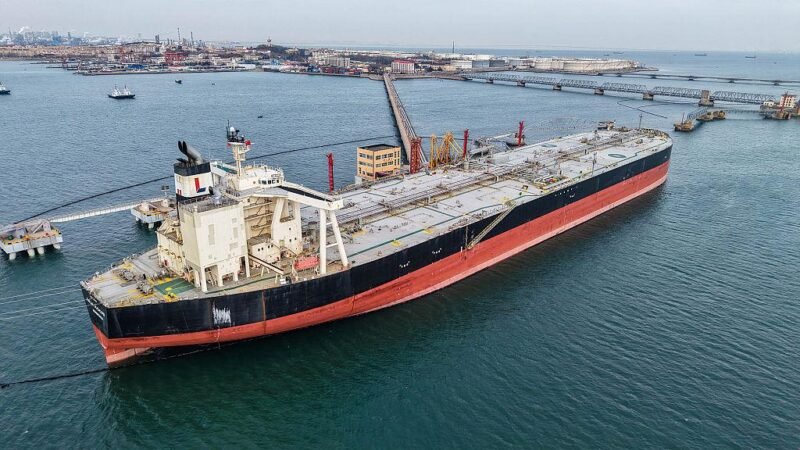
Meanwhile, military exchanges continue. On September 5, U.S. forces struck three Iranian oil tankers after Iranian missile attacks targeting American naval vessels, demonstrating that neither side has yet found a durable exit from the confrontation.
For Netanyahu, this may look like the strategic opportunity he has spent much of his political career anticipating.
Iran has not disappeared as a military threat. But the balance has shifted sufficiently for Israel’s prime minister to move publicly from containment to regime change.
That is an extraordinary transition.
Trump’s Earlier Restraint May Have Served a Purpose
Trump’s intermittent negotiations, pauses in military operations and reluctance to pursue unrestricted escalation have often been interpreted as indecision.
There is another interpretation.
Those pauses allowed Washington to manage energy markets, keep Gulf allies from breaking with the United States, preserve military resources and determine whether economic pressure could force Tehran into concessions without requiring an unlimited war.
Indeed, Reuters reported on September 2 that senior Trump officials have recently favored keeping the conflict comparatively subdued before the November 3 midterms, partly because higher fuel prices and public dissatisfaction with the Iran conflict threaten Republican candidates. Only 31% of Americans approved of the war in the cited polling.
But tactical patience has a danger of its own.
Time does not weaken only Iran.
Time also allows Iran to adapt.
Military facilities can be dispersed. Missile stocks can eventually be replenished. Smuggling networks can change routes. China, Russia or other partners can offer economic lifelines. Security forces can identify opposition networks and eliminate them.
The argument for intensified pressure is therefore straightforward: if Tehran is genuinely approaching a point of structural vulnerability, allowing it a lengthy recovery period could waste an opportunity that may not return.
But “Finish the Job” Needs a Definition
This is where the strategic debate becomes more difficult.
Destroying another nuclear site is measurable.
Destroying missile launchers is measurable.
Reducing Iranian oil revenue is measurable.
Bringing down a political system governing more than 90 million people is not.
And even regime collapse would not answer the next question: who governs Iran afterward?
The Islamic Republic possesses a sprawling security structure, including the Revolutionary Guard, Basij forces, intelligence organizations and powerful economic networks. A collapsing central authority could produce a democratic transition.
It could also generate a military government, competing armed centers of power, ethnic conflict or a struggle over control of strategic weapons and infrastructure.
Iraq remains the obvious warning against assuming that destroying an authoritarian regime automatically produces a stable political order.
Iran is not Iraq. Its state, society, history and political culture are very different.
But the principle remains: military superiority can remove governments much more easily than it can manufacture legitimate successors.
The Reza Pahlavi Question
Supporters of regime change increasingly point to Crown Prince Reza Pahlavi as a possible transitional figure.
Pahlavi is unquestionably one of the world’s most recognizable Iranian opposition personalities. He advocates replacing the Islamic Republic through a secular democratic transition and has developed strong networks among monarchists and sections of the Iranian diaspora.
But treating his leadership as predetermined would go considerably further than available evidence supports.
A detailed Reuters investigation published in July found that while Pahlavi had achieved unprecedented visibility during the conflict, Iran’s opposition remained fragmented and his ability to command broad support inside Iran could not be independently established. His relationships with other opposition movements have also been difficult.
Trump himself expressed uncertainty earlier this year about whether Pahlavi had sufficient support inside Iran to take power.
That does not mean Pahlavi could not become an important transitional leader.
It means Iranians themselves would ultimately have to establish his legitimacy.
A successful American-Israeli strategy should therefore distinguish between helping create political space for Iranians and attempting to choose Iran’s next ruler from Washington or Jerusalem.
That distinction could determine whether a post-Islamic Republic government is viewed as genuinely Iranian or as the product of foreign intervention.
The Greatest Risk Is Stopping Halfway
There is nevertheless a powerful argument behind Netanyahu’s position.
If the Islamic Republic survives the current conflict with its command structure intact, history suggests it will try to regenerate.
Tehran would study every Israeli and American attack. Nuclear infrastructure could be rebuilt deeper underground. Missile production could resume. New proxy structures could replace damaged ones. Domestic repression could intensify to prevent another uprising.
Israel could eventually find itself confronting the same strategic problem five or ten years from now — except against a regime that has learned from this war.
Netanyahu’s calculation is therefore understandable.
Why allow an adversary to recover when it is weaker than at any other point in recent memory?
That logic becomes even stronger if Washington believes economic pressure is approaching a breaking point. Iranian officials themselves are confronting collapsing trade, severe inflation and fears of renewed domestic unrest.
Yet there is an equally serious danger in misreading weakness as imminent collapse.
Authoritarian systems can remain dysfunctional for years. Economic suffering does not automatically generate revolution. And external attack sometimes strengthens nationalism even among citizens who despise their own government.
Tehran has already attempted to exploit precisely that sentiment, shifting propaganda toward Iranian nationalism as it tries to rally citizens around resistance to foreign attack.
Trump Must Decide What Victory Actually Means
For Trump, this may be the defining strategic choice of the Iran conflict.
One path seeks a negotiated outcome in which Tehran stops threatening Hormuz, accepts severe restrictions on its nuclear and military capabilities and remains contained.
The other concludes that no lasting settlement is possible while the Islamic Republic survives.
Those are fundamentally different objectives.
Recent reporting suggests parts of the administration remain focused on pressure designed to force negotiations rather than outright regime change. Trump officials have simultaneously discussed a post-war regional framework built around containing a weakened Iran, expanding Arab-Israeli normalization and restructuring the Middle Eastern security order.
Netanyahu has moved beyond that position.
He now publicly argues that removing the regime itself is the unfinished mission.
That difference matters because Washington would carry many of the largest costs of a longer campaign — military expenditure, depleted interceptors and precision weapons, higher energy prices and the risk that another regional actor enters the conflict.
American munitions inventories are already under considerable strain, with some advanced systems potentially requiring years to replenish.
There is therefore no cost-free version of “finishing the job.”
WARYATV Assessment
Trump and Netanyahu may indeed be confronting an unusually favorable strategic window.
The Islamic Republic is economically wounded, militarily degraded and increasingly concerned about domestic stability. Allowing Tehran unlimited time to recover would carry serious risks.
But the most dangerous mistake would be confusing Iranian weakness with a ready-made political transition.
The objective should not be an American or Israeli occupation of Iran. Nor should Washington attempt to dictate Iran’s future government.
If sustained pressure ultimately creates space for political transformation, Iranians must decide what follows — whether that means Pahlavi, a republican coalition, a transitional council or another political arrangement emerging from inside the country.
That is the difference between regime destruction and national liberation.
A durable strategy would therefore combine continued pressure on the Revolutionary Guard and strategic military infrastructure with economic isolation, access to communications for Iranian citizens, political support for pluralistic opposition movements and preparation for the enormous instability that could follow a sudden collapse.
Because there are two ways this historic opportunity could be lost.
Trump and Netanyahu could stop too early and allow the Islamic Republic to rebuild.
Or they could push forward without a credible political endgame and discover that destroying the old order was easier than controlling what came next.
History may indeed have opened a rare window.
The challenge is not simply to finish the war.
It is to know what “finished” actually means.
WARYATV Bottom Line
Iran appears weaker than it has been in decades, and Netanyahu has explicitly made regime collapse an Israeli objective. That gives the argument for sustained pressure strategic weight.
But the ultimate victory cannot be measured by how many Iranian facilities are destroyed.
It would be measured by whether Iran emerges from this confrontation more stable, more representative and less threatening to its own citizens and its neighbors.
If millions of Iranians eventually fill the streets after the fall of the Islamic Republic, the most important flags and photographs will not be American or Israeli.
They will be Iranian.
Because outsiders may help create the opening.
Only Iranians can determine what comes after it.