The recent suspension of USAID funds highlights the urgent need for African nations to reassess their reliance on external support and confront internal challenges of governance and corruption.
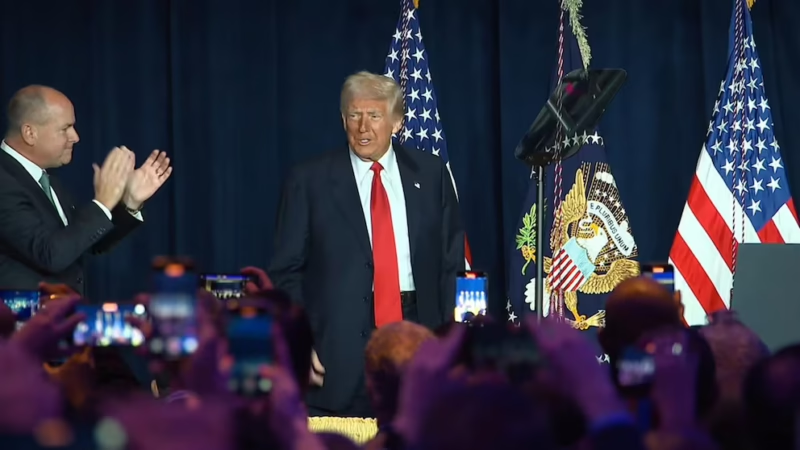
President Donald Trump’s recent decision to implement a 90-day suspension of foreign aid has sent ripples across the globe, significantly impacting nations dependent on USAID funds. This bold move has triggered a considerable alarm, particularly in Africa, where the suspension threatens critical health and welfare programs supported by American funds.
In 2023 alone, USAID allocated $12.1 billion to sub-Saharan Africa, aimed at improving healthcare, delivering food assistance, and bolstering security. A notable portion of this aid supports the U.S. President’s Emergency Plan for AIDS Relief (PEPFAR), a pivotal program in the global fight against AIDS. The sudden halt in funding has cast a shadow over the future of millions reliant on these essential services, underscoring a precarious dependency that could have severe repercussions.
The reaction in South Africa, a major beneficiary of PEPFAR, illustrates the potential consequences of this dependency. South Africa’s Health Minister Aaron Motsoaledi has highlighted that PEPFAR constitutes a significant fraction of the nation’s HIV/AIDS funding. The current freeze jeopardizes not only the healthcare infrastructure but also the livelihoods of thousands of healthcare workers financed through this initiative. This scenario reveals the fragility of relying heavily on foreign aid, particularly when such support becomes a substantial component of a country’s health budget.
The dependency on external aid is symptomatic of broader governance issues within African nations. South Africa, despite being one of Africa’s most advanced economies, loses billions annually to corruption and mismanagement. Similar patterns of financial misappropriation are evident in public institutions like the Tembisa Provincial Tertiary Hospital, where corruption has led to a loss of essential resources and compromised healthcare services.
This situation is not unique to South Africa. In Kenya, corruption siphons off a significant portion of the GDP annually, undermining efforts to self-fund critical services like those provided to HIV-positive orphans at Nyumbani Children’s Home in Nairobi. The reliance on foreign aid to sustain such vital services highlights a governance vacuum and a lack of accountability that extends beyond the healthcare sector.
The narrative is similar in Nigeria, where despite substantial economic potential, endemic corruption and inefficiency have fostered an over-reliance on foreign aid. The country’s dependence on USAID for more than a fifth of its health budget underscores a critical need for reform. Systemic corruption detracts significantly from Nigeria’s GDP, a stark reminder of the urgent need for robust governance reforms.
The current aid suspension serves as a crucial wake-up call for African nations, pressing them to reconsider their reliance on Western aid. It exposes the vulnerabilities of an aid-dependent model and underscores the importance of good governance and self-sufficiency. African countries must prioritize internal reforms, tackle corruption head-on, and develop sustainable funding models for their public health systems.
In conclusion, while the USAID freeze presents immediate challenges, it also offers a pivotal opportunity for African nations to strengthen their governance structures, enhance accountability, and reduce dependency on external aid. By doing so, they can ensure that the well-being of their citizens is secured through domestic resources and capabilities, marking a significant step towards true independence and self-sufficiency.