
US-Israel war on Iran
Tehran Signals Openness While Flexing Power in Hormuz

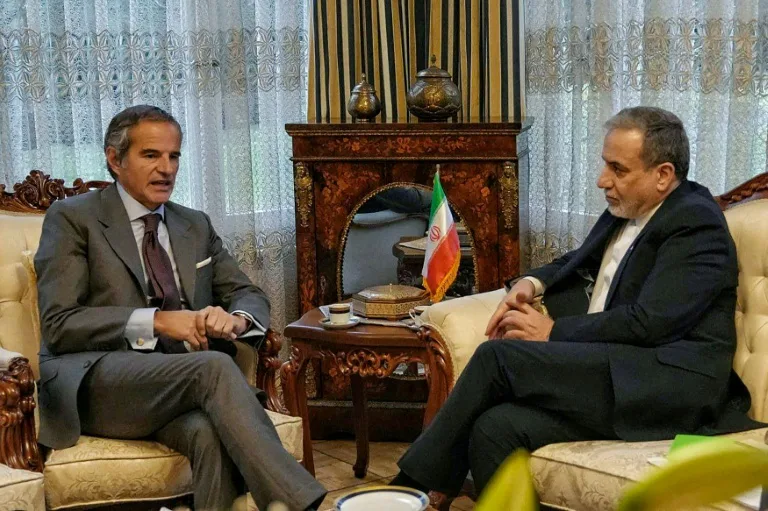
Diplomats in Geneva. Warships in Hormuz. Is a nuclear deal closer — or is this brinkmanship?
Iran said Monday that the United States has adopted a “more realistic” position on its nuclear program, as both sides prepare for a second round of indirect negotiations in Geneva — even as Iranian forces launch military drills in the Strait of Hormuz.
Foreign ministry spokesman Esmaeil Baqaei said discussions mediated by Oman had prompted cautious optimism. “The U.S. position on the Iranian nuclear issue has moved towards a more realistic one,” he said, according to state media.
Iran’s foreign minister, Abbas Araghchi, arrived in Switzerland ahead of Tuesday’s talks. He also met with Rafael Grossi, head of the International Atomic Energy Agency, for what both described as in-depth technical discussions.
Washington has confirmed that Middle East envoy Steve Witkoff and Jared Kushner will represent the United States. Secretary of State Marco Rubio said the administration remains hopeful for a deal but acknowledged the difficulty of negotiations.
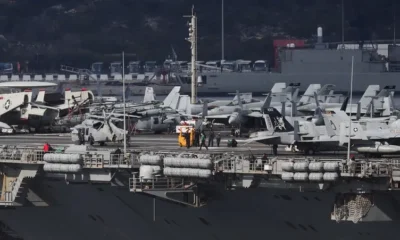
Meanwhile, Iran’s Revolutionary Guards began exercises in the Strait of Hormuz, through which roughly 20 percent of global oil shipments transit. Iranian state television said the drills aim to prepare for “potential security and military threats.”
The military activity underscores the high stakes surrounding the talks. U.S. President Donald Trump has recently increased military deployments to the region and reiterated that regime change would be preferable, while also saying he prefers a negotiated solution.
Western governments remain concerned that Iran’s nuclear program could advance toward weapons capability, an accusation Tehran denies. Israeli Prime Minister Benjamin Netanyahu has insisted any agreement must eliminate Iran’s enriched uranium stockpile and enrichment capacity.
Iranian officials have indicated they could consider limits on uranium stockpiles if sanctions are lifted, but have ruled out “submission before threats.”
With war games in Hormuz and diplomats in Geneva, the coming days will test whether rising military pressure translates into compromise — or further confrontation.












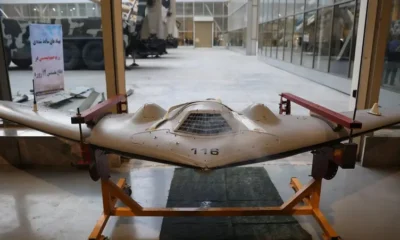

Missiles hit the Gulf—but the response isn’t war. It’s unity. Why are Gulf states pushing back against escalation?
Gulf Arab states are presenting a rare show of unity, calling for an immediate de-escalation of the war as tensions with Iran continue to rise and regional infrastructure comes under sustained attack.
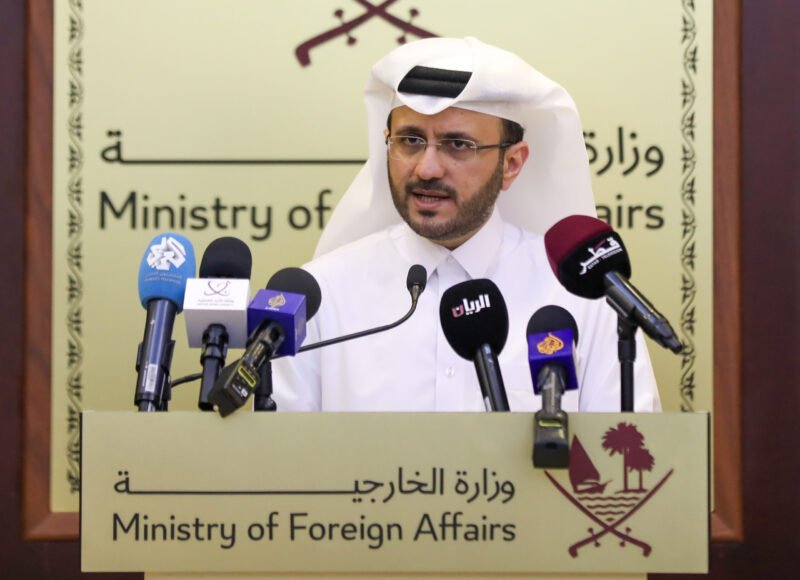
Speaking in Doha, a spokesperson for Qatar said Gulf nations share a “very unified position” on the need to end the conflict, even as Iranian missile and drone strikes have targeted energy facilities across the region over the past month.
The attacks are part of Tehran’s response to ongoing US and Israeli military operations, which began in late February and have since expanded across multiple fronts.
The pressure point remains the Strait of Hormuz, a critical global shipping lane through which roughly one-fifth of the world’s oil typically flows. Iran’s effective closure of the strait has disrupted energy markets and triggered alarm among both regional governments and global powers.
Iranian lawmakers have gone further, signaling potential escalation by proposing tolls on vessels transiting the strait and a complete ban on ships linked to the United States and Israel.
While Qatari officials described the closure as a consequence of ongoing military operations, they emphasized that the strait’s future must be determined collectively by regional states and international partners.
The emerging Gulf consensus reflects a shift in strategic thinking. Rather than responding militarily to Iranian strikes, countries in the region appear focused on containing the conflict and preventing it from spiraling into a broader war that could destabilize global energy supplies and regional economies.
At the same time, there are signs that unity does not necessarily mean uniformity in long-term objectives. The United Arab Emirates has indicated that a simple ceasefire may not be sufficient.
Its ambassador in Washington argued that any resolution must address the full spectrum of Iranian capabilities, including its missile program, drone operations, proxy networks, and maritime disruption tactics.
That position suggests a dual-track approach emerging in the Gulf: immediate de-escalation to stabilize the region, coupled with longer-term pressure to constrain Iran’s strategic reach.
For now, however, the priority is clear. With energy infrastructure under threat and shipping lanes disrupted, Gulf states are signaling that the cost of continued escalation is too high—not just for the region, but for the global economy.

A NATO ally just said no to US war flights. Is the Western alliance starting to crack?
Italy has quietly refused to allow the United States to use a key air base in Sicily for operations linked to the widening Middle East war, signaling growing unease inside Europe over deeper military involvement.
According to a source familiar with the matter, Rome denied permission for US military aircraft to land at the Naval Air Station Sigonella before continuing onward to the conflict zone. The reported request, first revealed by Corriere della Sera, involved American bombers seeking logistical access to the strategically positioned base in eastern Sicily.
The refusal appears to hinge less on outright opposition to Washington and more on procedural and political concerns. Italian authorities were reportedly not formally consulted in advance, a requirement under bilateral agreements governing the use of US military facilities on Italian soil. Without that authorization, the request could not proceed.
The decision comes at a sensitive moment for Italy and its leadership under Giorgia Meloni. While Rome remains a committed NATO ally, domestic political pressure is mounting. Opposition parties have warned against allowing Italian territory to be used in a conflict that risks spiraling into a broader regional war, urging the government to maintain distance from direct military engagement.
Meloni’s government has signaled caution, stating that any future requests involving operational use of Italian bases would require parliamentary approval. That position reflects a balancing act between alliance commitments and domestic political realities, particularly as the war involving Iran continues to expand across multiple fronts.
The implications extend beyond a single airbase. Sigonella has long served as a critical logistical hub for US and NATO operations across the Mediterranean, North Africa, and the Middle East. Restricting access, even temporarily, underscores emerging fractures in how Western allies are approaching the conflict.
At the same time, developments on the battlefield continue to intensify. Israel confirmed additional troop losses in southern Lebanon, with 10 soldiers killed since the start of its ground operations and hundreds more wounded.
The expanding scope of fighting—from Iran to Lebanon and the Red Sea—has heightened concerns that the war is moving toward a prolonged, multi-front confrontation.
Italy’s decision, though procedural on the surface, reflects a deeper strategic hesitation now visible across parts of Europe. As the conflict grows more complex and costly, even close allies are beginning to draw quiet lines around how far they are willing to go.
Schools, hospitals, mosques—turned into military sites. What does this mean for civilians caught in the war?
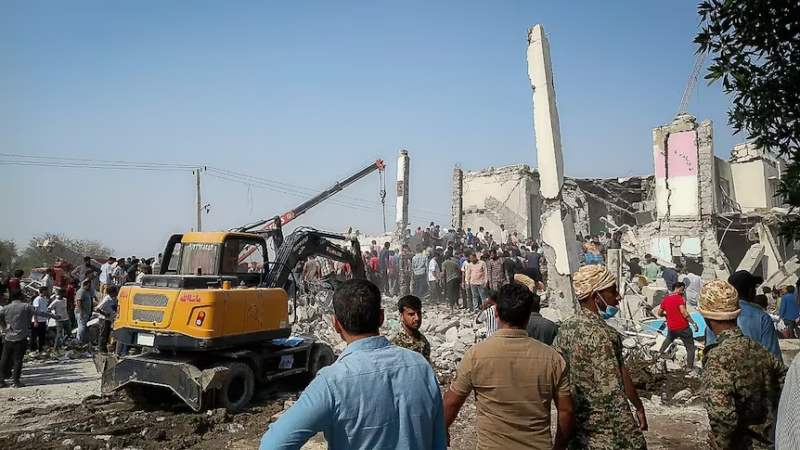
Iranian military and security forces have reportedly deployed personnel, weapons, and equipment across a wide network of civilian sites during the ongoing conflict with the United States and Israel, according to investigative findings covering early March 2026.
The reported activity spans at least 70 locations across 17 provinces, including 28 cities and two villages, indicating a coordinated and geographically dispersed pattern rather than isolated incidents.
Nearly half of these sites—34 in total—were identified as primary or secondary schools, with additional deployments documented in hospitals, mosques, universities, stadiums, parks, and government facilities.
The timing of these movements coincided with sustained airstrikes and a near-total domestic internet shutdown, which limited the flow of verifiable imagery and communication.
Despite these constraints, visual evidence from multiple locations was successfully geolocated, reinforcing the credibility of at least part of the reporting. Eyewitness accounts describe military vehicles positioned within school courtyards, weapons transported under concealment, and units relocating into civilian infrastructure following strikes on known military installations.
The operational logic appears consistent with dispersal and concealment strategies typically employed under conditions of sustained aerial pressure. By embedding assets within populated environments, Iranian forces may be attempting to complicate adversary targeting, reduce the effectiveness of precision strikes, and increase the political and humanitarian cost of attacks.
This approach aligns with broader asymmetric warfare tactics observed in previous regional conflicts, where state and non-state actors leverage civilian proximity as both shield and deterrent.
The legal implications are significant. Under international humanitarian law, civilian infrastructure retains protected status unless it is used for military purposes. Once such use occurs, those sites may become legitimate military targets, though attacking forces remain obligated to adhere to principles of distinction, proportionality, and precaution.
The reported deployments therefore risk transforming protected civilian zones into contested military objectives while simultaneously increasing the likelihood of civilian harm.
Hospitals and religious sites carry additional legal sensitivities. Reports indicating military presence near or within medical facilities and mosques raise concerns about the erosion of enhanced protections typically afforded to such locations.
Even when protection is lost due to military use, international law requires clear warnings and strict limitations on the use of force, creating operational constraints for any responding military action.
Iranian authorities have rejected allegations of using civilian spaces for military purposes and have instead accused opposing forces of deliberately targeting civilian infrastructure.
In contrast, U.S. and Israeli officials have publicly warned that Iranian deployments within civilian areas place noncombatants at heightened risk and may alter the legal status of those sites in the context of ongoing operations.
The broader strategic effect is a compression of the battlefield into civilian life. Urban and public spaces are increasingly integrated into military operations, reducing the distinction between combat and non-combat environments.
This dynamic complicates targeting decisions, amplifies humanitarian risk, and reinforces a cycle in which military necessity and civilian vulnerability become deeply intertwined.
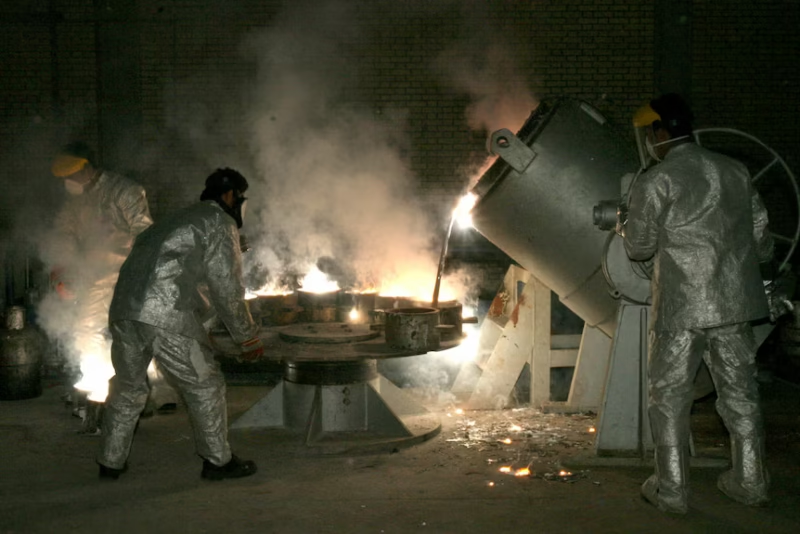
Not airstrikes. Not sanctions. A ground mission to take Iran’s uranium—this could change everything.
A high-risk U.S. plan to seize Iran’s enriched uranium is emerging as one of the most consequential—and dangerous—options under consideration in the escalating war with Iran.
According to officials familiar with internal discussions, President Donald Trump is weighing a targeted military operation to extract nearly 1,000 pounds of highly enriched uranium from Iranian territory. The objective is clear: eliminate any remaining pathway for Tehran to develop nuclear weapons.
Israeli officials have framed the stakes bluntly. Ending the war without neutralizing Iran’s enriched uranium stockpile, one senior source said, would amount to “complete failure.” That position reflects a broader strategic divide—Israel seeking total dismantlement, while Washington balances military risk against political timelines.
Where the uranium is believed to be
According to International Atomic Energy Agency Director General Rafael Grossi, the material is likely concentrated in two key facilities:
- Isfahan nuclear complex (including underground tunnels)
- Natanz nuclear facility
Before recent strikes, Iran was estimated to possess hundreds of kilograms of uranium enriched up to 60%—material that could be further refined to weapons-grade levels.
The operation: precise—but perilous
Unlike conventional strikes, this mission would require boots on the ground.
U.S. forces would need to penetrate heavily defended zones, secure the sites, and deploy specialized teams trained in handling radioactive material. The uranium itself is believed to be stored in dozens of sealed cylinders, requiring careful extraction and transport in reinforced containers.
Military experts describe a complex sequence:
- Air insertion into contested airspace
- Securing perimeters under threat of drones and missiles
- Clearing debris, mines, and booby traps
- Extracting and transporting nuclear material via aircraft or temporary airstrips
Retired commanders warn the timeline alone challenges political assumptions. Even under ideal conditions, the mission could take several days—or longer.
“This is not a quick in-and-out operation,” one former U.S. commander cautioned.
The strategic dilemma
The appeal of such a mission lies in its potential impact.
Unlike airstrikes, which degrade infrastructure but leave material intact, physically removing uranium would deliver a decisive blow to Iran’s nuclear capability. It would also offer a clear endpoint—allowing Washington to claim a strategic victory without prolonged occupation.
But the risks are equally profound.
Any ground incursion could trigger direct retaliation from Iran, potentially expanding the war across the region. It would expose U.S. forces to sustained attack and could derail ongoing diplomatic efforts mediated by countries including Pakistan and Turkey.
There is also a political calculation.
Public support for escalation remains uncertain, and a failed or prolonged mission could carry significant domestic consequences.
A narrow window
U.S. officials are simultaneously pursuing a diplomatic alternative: pressuring Iran to hand over its uranium stockpile as part of a negotiated settlement. Similar operations have occurred before, including the removal of nuclear material from Kazakhstan in the 1990s.
But Tehran has so far rejected key proposals as “unrealistic.”
That leaves Washington at a crossroads.
A negotiated transfer would end the crisis with minimal risk. A forced seizure could end it decisively—but at the cost of entering the most dangerous phase of the war.
The choice now is not just military.
It is strategic, political—and irreversible.
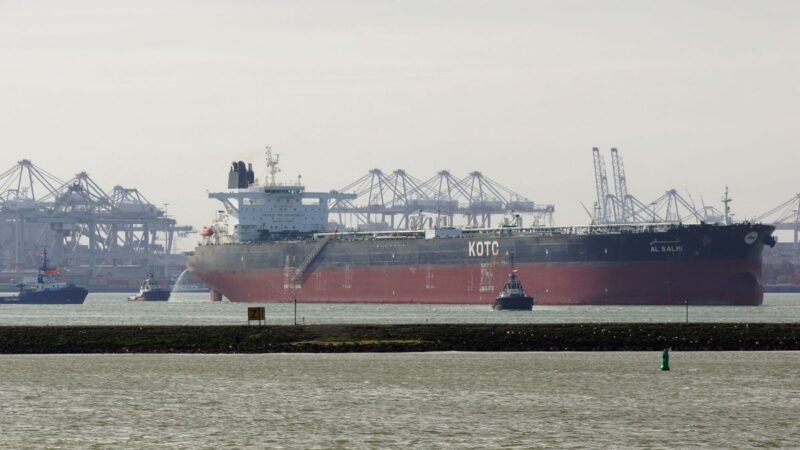
One tanker hit. One chokepoint burning. The global economy just moved closer to the edge.
A massive oil tanker carrying millions of barrels of crude was set ablaze off the coast of Dubai early Tuesday, marking one of the most dangerous escalations yet in the widening war involving Iran.
The Kuwait-flagged vessel, identified as Al-Salmi, was struck in what officials described as a drone attack, igniting a fire and damaging the hull. Authorities later confirmed the blaze was brought under control with no casualties or oil spill reported—a narrow escape given the ship’s cargo, estimated at roughly 2 million barrels of crude.
The attack comes days after Donald Trump warned that the United States could “obliterate” Iran’s oil infrastructure if Tehran refuses to reopen the Strait of Hormuz.
That threat—and Iran’s apparent willingness to target maritime assets—has pushed the conflict into a more volatile phase, where commercial shipping is now firmly in the crosshairs.
Markets reacted immediately.
Oil prices spiked again following the strike, extending a surge that has already seen Brent crude jump more than 50 percent this month. The attack reinforced fears that energy flows through the Gulf—already reduced to a fraction of normal levels—could face further disruption.
The broader implications are stark.
The Gulf and Hormuz corridor handle a significant share of global energy supply. Even limited attacks on tankers raise insurance costs, slow shipping traffic, and amplify volatility across global markets. For import-dependent economies, particularly in Asia, the risks are immediate and severe.
Meanwhile, the war continues to expand geographically.
Iran-aligned Houthi forces have entered the conflict, launching missiles toward Israel, while Israeli strikes on targets inside Iran have intensified. Explosions were reported across parts of Tehran, and infrastructure damage—including power outages—has added to the pressure inside the country.
On the military front, the United States is increasing its footprint.
Thousands of troops from the 82nd Airborne Division have begun deploying to the region, adding to a growing buildup that could support a range of scenarios—from securing shipping lanes to limited ground operations. Officials maintain that no final decision has been made, even as options expand.
Diplomatic efforts, however, remain uncertain.
Iran has acknowledged receiving U.S. proposals through intermediaries but dismissed them as “unrealistic,” while Washington insists talks are progressing behind the scenes. The gap between public statements and private signals continues to complicate efforts to de-escalate.
At the center of it all lies a strategic paradox.
The more pressure applied to reopen the Strait of Hormuz, the more Tehran appears willing to demonstrate its ability to disrupt it. Each new strike—whether on infrastructure or shipping—reinforces that leverage.
For now, the fire on a single tanker has been contained.
But the fire in the Gulf is spreading—and with it, the risk that a regional war becomes a global economic crisis.
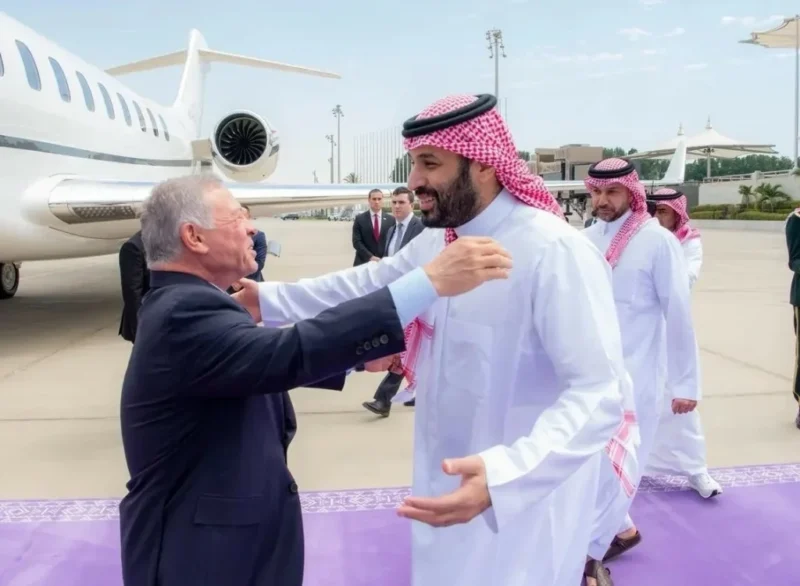
Jordan’s King Abdullah II Arrives in Jeddah for Talks with Saudi Crown Prince. At a moment of war and uncertainty, Riyadh and Amman are moving closer—fast.
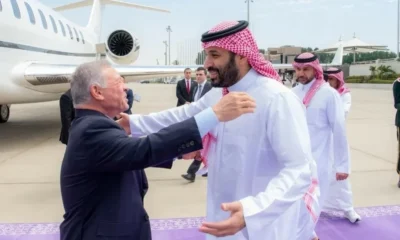
King Abdullah II arrived in Jeddah on Monday, where he was received at King Abdulaziz International Airport by Mohammed bin Salman, signaling a high-level meeting at a moment of deep regional uncertainty.
The visit underscores longstanding ties between the Jordan and Saudi Arabia, two states that have historically positioned themselves as anchors of stability in the Middle East. Officials framed the meeting as part of ongoing coordination between leaderships, reflecting what both sides describe as a shared strategic outlook.
But the timing is what gives the visit its weight.
With the region facing escalating tensions—from the ongoing Iran war to mounting pressure on energy routes and security alliances—consultations between Riyadh and Amman take on broader geopolitical significance.
Both countries have consistently aligned on core regional priorities, including support for a political resolution to the Palestinian issue, counterterrorism cooperation, and safeguarding regional stability amid external pressures.
The meeting also carries diplomatic implications beyond the region.
By presenting a unified front, Saudi Arabia and Jordan aim to reinforce the role of coordinated Arab diplomacy in shaping international responses to crises. In an environment where global powers are increasingly divided, such alignment offers a counterweight—projecting cohesion at a time of fragmentation.
Economic considerations are also expected to feature prominently.
Saudi Arabia’s Vision 2030 reform agenda, led by Crown Prince Mohammed bin Salman, has opened new avenues for regional partnerships. Jordan, navigating its own economic modernization efforts, stands to benefit from expanded cooperation in sectors such as infrastructure, renewable energy, and technology.
Existing frameworks, including bilateral coordination councils, provide a mechanism to translate political alignment into tangible investment and development.
The optics of the personal by the Crown Prince at the airport—were deliberate.
They conveyed not only diplomatic courtesy but also the depth of the relationship, reinforcing a pattern of close engagement between the two leaderships. Such gestures, while symbolic, often reflect deeper strategic coordination behind closed doors.
As the Middle East enters a period of heightened volatility, this visit is less about ceremony and more about positioning.
For Riyadh and Amman, the message is clear: coordination is no longer optional—it is essential.
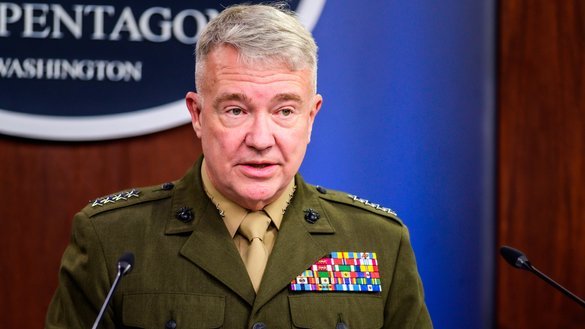
Years of planning. Weeks of war. One question: Will US troops enter Iran?
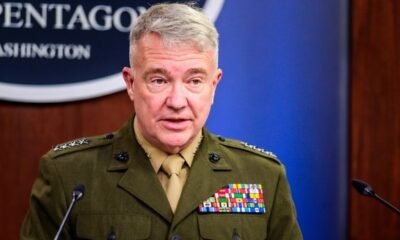
Retired Gen. Frank McKenzie, the former head of United States Central Command, has revealed that the U.S. military has spent years preparing for potential ground operations inside Iran—offering a rare glimpse into contingency plans now resurfacing as the war intensifies.
Speaking in a televised interview, McKenzie said American strategy has long centered on rapid, limited incursions rather than full-scale invasion. The focus: Iran’s southern coastline and strategically vital islands in the Gulf.
These operations, he explained, would be designed for speed and precision—“pre-planned withdrawal” missions aimed at seizing key positions, disrupting capabilities, and exiting before becoming entangled in prolonged conflict.
At the center of such thinking is Kharg Island, the country’s primary oil export terminal. McKenzie suggested that controlling the island—even temporarily—could effectively paralyze Iran’s oil economy without requiring widespread destruction of infrastructure.
The remarks come as the Pentagon weighs options that, according to recent reports, include weeks-long ground operations involving special forces and conventional infantry. While officials stress no final decision has been made, the military buildup tells its own story.
A U.S. amphibious strike group led by the USS Tripoli has already arrived in the region, carrying roughly 3,500 Marines and sailors, along with aircraft and tactical assault capabilities. The deployment underscores how quickly planning could shift into execution if political approval is given.
Yet McKenzie’s message was not purely hawkish.
He argued that U.S. objectives—keeping the Strait of Hormuz open and constraining Iran’s missile capabilities—may still be achievable without a major ground campaign. The implication: military pressure alone could force Tehran toward concessions.
That calculation, however, is far from certain.
Iranian officials have signaled readiness for a ground confrontation, while the conflict continues to expand across multiple fronts. At the same time, domestic pressure is building inside the United States. Recent polling suggests a clear majority of Americans oppose entering a full-scale war with Iran, raising political risks for any escalation.
The strategic dilemma is stark.
Limited operations promise high-impact results with lower long-term commitment. But even targeted incursions—especially around critical energy infrastructure—carry the risk of triggering wider retaliation across the region.
For now, the plans remain theoretical.
But as military assets accumulate and rhetoric hardens, the line between preparation and action is becoming increasingly thin.

Gulf Unity Emerges: Stop the War Before It Spreads

Italy Blocks US Use of Sicily Air Base

Inside Iran’s War Tactic: Turning Civilian Spaces into Battle Zones


-

 US-Israel war on Iran1 month ago
UK Refuses Iran Strike Access, Trump Fires Back
-
 Russia-Ukraine War1 month ago
Europe’s Spies Challenge Trump’s Ukraine Peace Optimism
-
 Top stories4 weeks ago
War Expands Across Region as Iranian Militias Join Fight
-
 US-Israel war on Iran1 month ago
Iran Pledges ‘Never, Ever’ to Hold Bomb-Grade Material
-
 Top stories1 month ago
India Turns to Brazil in Strategic Minerals Push Against China
-
 US-Israel war on Iran1 month ago
Syria Under Fire on Two Fronts
-
 Russia-Ukraine War1 month ago
Estonia Warns NATO Would Strike Deep Inside Russia if Baltics Are Invaded
-
 Terrorism4 weeks ago
Regional Army Moves Against Expanding Armed Groups