
Epstein Dossier
Epstein Fallout Triggers Resignations, Probes Across Global Elite

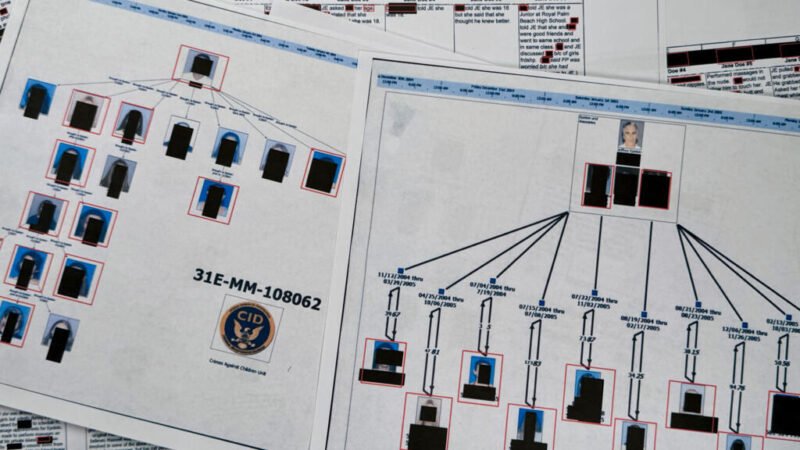
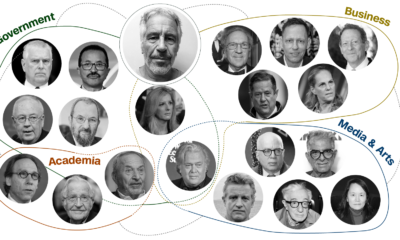
The release of new files linked to the late financier Jeffrey Epstein has reignited scrutiny of a global network of politicians, business leaders, academics and cultural figures whose associations with him have led to resignations, suspensions and investigations.
Epstein, convicted in 2008 of soliciting a minor and who died in jail in 2019 while awaiting trial on sex-trafficking charges, cultivated ties across elite circles. While the appearance of a name in the U.S. Justice Department’s files does not imply criminal wrongdoing, the reputational damage has been swift for several figures.
The World Economic Forum has ordered an independent review into contacts between its president, Borge Brende, and Epstein after Brende acknowledged attending dinners with him in New York in 2018 and 2019. Brende said he was unaware of Epstein’s crimes.
In Norway, former prime minister Thorbjorn Jagland is under police investigation on suspicion of aggravated corruption linked to extensive email exchanges with Epstein. Separately, diplomat Mona Juul has been suspended while authorities probe her ties to Epstein, who left $10 million in his will to her children.
In the United States, inventor Dean Kamen took leave from the board of the robotics nonprofit FIRST after photos and emails linking him to Epstein and Ghislaine Maxwell surfaced. Prominent attorney Brad Karp stepped down as chairman of Paul Weiss following emails describing social engagements with Epstein.
Political fallout has also spread in Europe. Slovakia’s national security adviser Miroslav Lajcak resigned after messages referencing women emerged. In France, film producer Caroline Lang quit her leadership role in a producers’ group after revelations of business discussions with Epstein.
In Northern Ireland, George Mitchell saw Queen’s University Belfast remove his name from a peace institute over his past association with Epstein. The sports world has also been touched: NFL co-owner Steve Tisch faces league review, while Olympic organizer Casey Wasserman has faced calls to resign over past correspondence with Maxwell.
Together, the developments underscore how Epstein’s long shadow continues to reshape institutions worldwide, years after his death, as organizations reassess links once dismissed as social or professional.













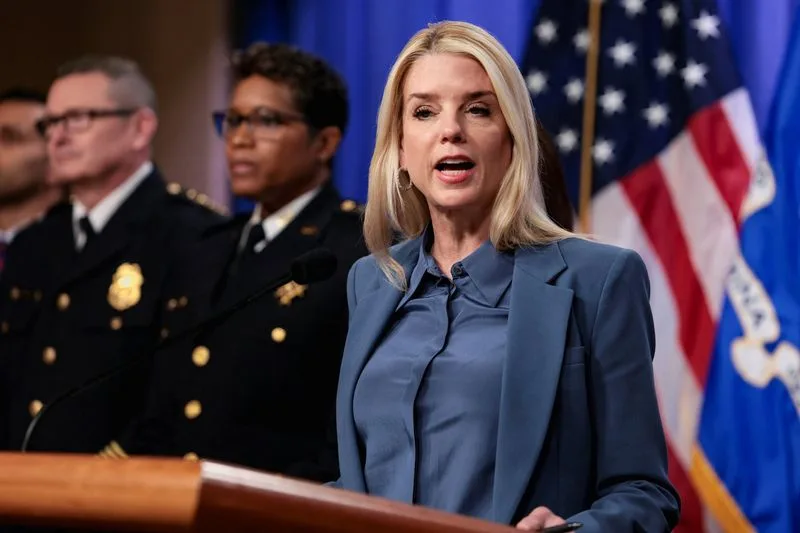
A subpoena ignored, a contempt threat rising—Washington is heading toward a legal and political collision.
A rare bipartisan confrontation is unfolding in Washington, as lawmakers move closer to holding former Attorney General Pam Bondi in contempt over her refusal to testify in the ongoing probe into the Jeffrey Epstein files.
The dispute centers on a subpoena issued by the House Oversight Committee, demanding Bondi appear for a deposition scheduled for April 14. The Justice Department has intervened, arguing that because Bondi is no longer in office, she is not obligated to testify in an official capacity.
Lawmakers on both sides are rejecting that claim.
Representative Nancy Mace, who led the push for the subpoena, has warned that refusal to comply could trigger contempt proceedings. Her position has drawn support not only from fellow Republicans but also from Democrats on the committee—an unusual alignment in a deeply polarized Congress.
The committee’s top Democrat, Robert Garcia, reinforced that stance, stating that the subpoena applies to Bondi as an individual, regardless of her current status. Lawmakers point to precedent, noting that former officials—including Bill Barr—have previously testified after leaving office.
At stake is more than a single deposition. The case tests the limits of congressional oversight and executive branch resistance. If Bondi continues to refuse, the committee could move to hold her in contempt—a step that would require approval by the full House and could ultimately lead to a criminal referral.
But even that path is uncertain. Enforcement would fall to the Justice Department, now operating under Donald Trump—raising questions about whether charges would ever be pursued.
What makes the moment significant is the convergence of interests. Republicans are pressing accountability over the Epstein investigation, while Democrats see an opportunity to reinforce congressional authority. Together, they are testing how far Congress can go when a former top official refuses to cooperate.
The outcome may shape not only this investigation, but future battles over subpoenas, executive power, and the reach of congressional oversight.
For now, the message from Capitol Hill is clear: the standoff is escalating—and neither side appears ready to back down.
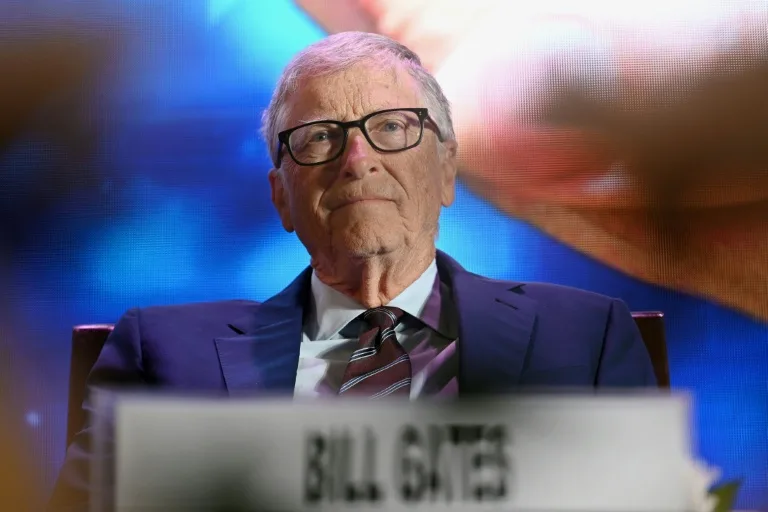
Affairs admitted. Epstein ties regretted. But Gates insists: “I did nothing illicit.”
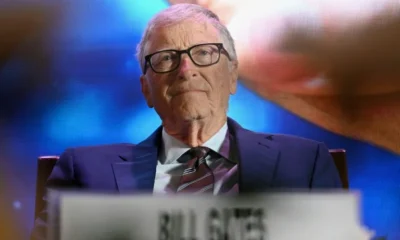
Bill Gates has acknowledged that his association with Jeffrey Epstein was a “huge mistake,” admitting to extramarital affairs but denying any involvement in the convicted financier’s criminal conduct.
Speaking during a town hall with staff at the Gates Foundation, a recording of which was reviewed by The Wall Street Journal, the Microsoft co-founder apologized for meeting Epstein and for introducing foundation executives to him.
“It was a huge mistake to spend time with Epstein,” Gates said, adding that he regretted drawing others into what he described as a poor personal decision.
Gates confirmed having had two affairs — one with a Russian bridge player and another with a Russian nuclear physicist he met through business activities. However, he firmly rejected any suggestion of wrongdoing related to Epstein’s sex trafficking case.
“I did nothing illicit. I saw nothing illicit,” Gates told staff.
The comments follow the release of documents by the U.S. Justice Department detailing Epstein’s connections with prominent figures. In one draft email cited in the documents, Epstein alleged Gates engaged in extramarital relationships and claimed to have assisted him in personal matters. Gates’ remarks at the town hall appear to directly address those claims.
Epstein, who died in a New York jail in 2019 while awaiting trial on federal sex trafficking charges, had pleaded guilty in 2008 to soliciting a minor for prostitution. Gates said his interactions with Epstein began in 2011 and continued for at least a year after concerns were raised by his then-wife, Melinda.
“Knowing what I know now makes it a hundred times worse,” Gates said, acknowledging that his continued contact with Epstein after initial warnings was a serious error in judgment.
The Gates Foundation said in a statement that the discussion took place during its regular twice-yearly town hall and that Gates “spoke candidly” and took responsibility for his actions.
While the episode adds renewed scrutiny to Gates’ past associations, he maintains that his conduct did not involve or enable Epstein’s crimes.
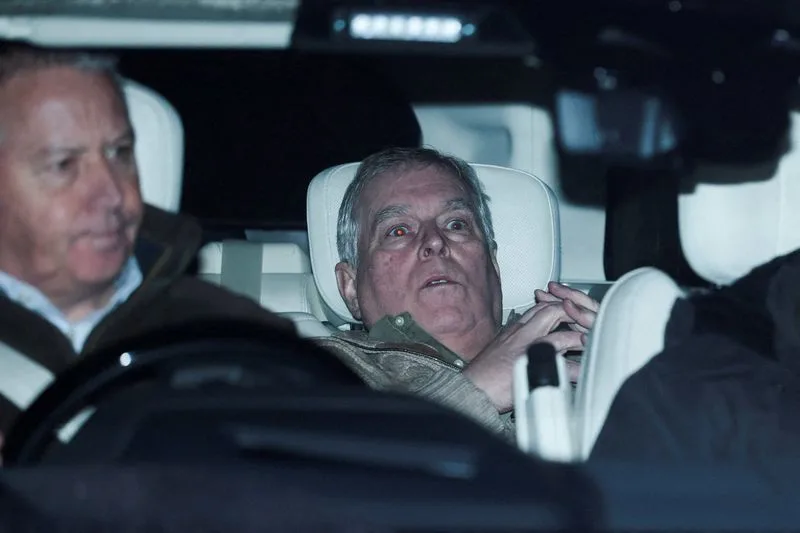
Arrested on his birthday. Released under investigation. The Epstein shadow still hangs over Britain’s monarchy.
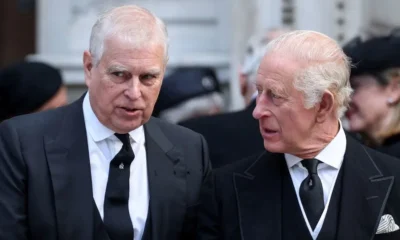
Andrew Mountbatten-Windsor, younger brother of King Charles III, was released from police custody Thursday evening after being arrested on suspicion of misconduct in public office linked to his past association with Jeffrey Epstein.
The 66-year-old royal was questioned throughout the day by detectives from Thames Valley Police before being released “under investigation,” a status that allows inquiries to continue without formal charges. A Reuters witness saw him leaving a police station in Aylsham, eastern England, shortly after 7 p.m. local time. Photographs showed him seated in a car, appearing visibly shaken.
The arrest — unprecedented for a senior modern royal — relates to allegations that, while serving as the UK’s Special Representative for Trade and Investment between 2001 and 2011, Andrew shared confidential government reports with Epstein, the convicted sex offender who died in custody in 2019.
Earlier this month, police confirmed they were assessing newly released U.S. documents suggesting Andrew forwarded official trip briefings — including reports on visits to Vietnam and Singapore — to Epstein in 2010. Following what authorities described as a “thorough assessment,” a formal investigation into possible misconduct in public office was opened.
In a statement, King Charles expressed “deepest concern” over the matter and said the authorities would have the royal family’s “full and wholehearted support and cooperation.” He emphasized: “Let me state clearly: the law must take its course.”
Buckingham Palace said it had not been informed in advance of the arrest.
Andrew has consistently denied wrongdoing in relation to Epstein and previously said he regrets their friendship. His office did not respond to requests for comment.
Misconduct in public office is a common law offence in the UK and, if proven in serious cases, can carry a maximum sentence of life imprisonment. Police stressed that arrest does not imply guilt.
The investigation is separate from the 2022 civil lawsuit brought by Virginia Giuffre, which Andrew settled without admitting liability. It is also distinct from additional allegations under review by police following complaints from anti-monarchy campaigners.
The episode marks another dramatic chapter for the embattled royal, who stepped back from public duties in 2019 and was later stripped of military titles and patronages.
For Britain’s monarchy, the legal process now unfolding underscores a stark reality: even those born into the highest ranks of royalty are not beyond scrutiny.
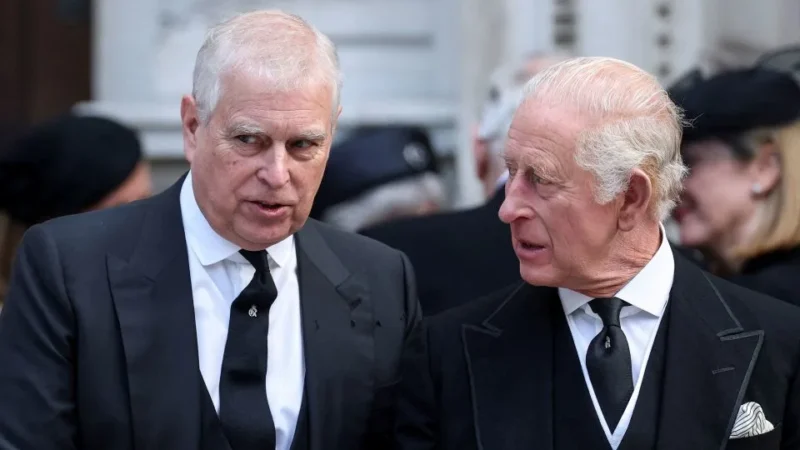
A former prince arrested on his 66th birthday. Police at royal residences. The King breaking his silence. Britain wakes up to an unprecedented royal crisis.
Andrew Mountbatten-Windsor was arrested Thursday morning at his Sandringham residence on suspicion of misconduct in public office, prompting an extraordinary public response from King Charles III, who said he was “deeply concerned” and that “the law must take its course.”
The arrest, carried out by Thames Valley Police, followed recent disclosures tied to the late financier Jeffrey Epstein. Authorities confirmed they were examining allegations that Andrew, during his tenure as a UK trade envoy between 2001 and 2011, shared confidential information with Epstein. Emails released in recent weeks by the U.S. Department of Justice appeared to show communications referencing official visits.
Police vehicles were seen arriving at Wood Farm in Sandringham early Thursday — the same day Andrew turned 66. Officers are also conducting searches at the Royal Lodge in Berkshire, his former residence, with Norfolk Police assisting in the inquiry.
In a statement issued shortly after the arrest, King Charles said police would have the royal family’s “full and wholehearted support and co-operation.” He added that it would not be appropriate for him to comment further, emphasizing his commitment to public duty.
Andrew has consistently denied wrongdoing in relation to Epstein. No formal charges have been announced.
The arrest marks an unprecedented moment for the monarchy, placing a senior royal under active criminal investigation. Political figures swiftly reacted. Scotland’s SNP Westminster leader Stephen Flynn described the development as “very serious,” while Wales’ First Minister Eluned Morgan said she was “shocked.”
Public appearances by members of the royal family continued as scheduled. King Charles opened London Fashion Week in central London but did not respond to shouted questions about his brother. Princess Anne proceeded with a planned visit to HMP Leeds.
The investigation remains ongoing. For the first time in modern royal history, the scrutiny surrounding Epstein’s global scandal has moved directly into the heart of Britain’s monarchy — and the legal process is now unfolding in full public view.
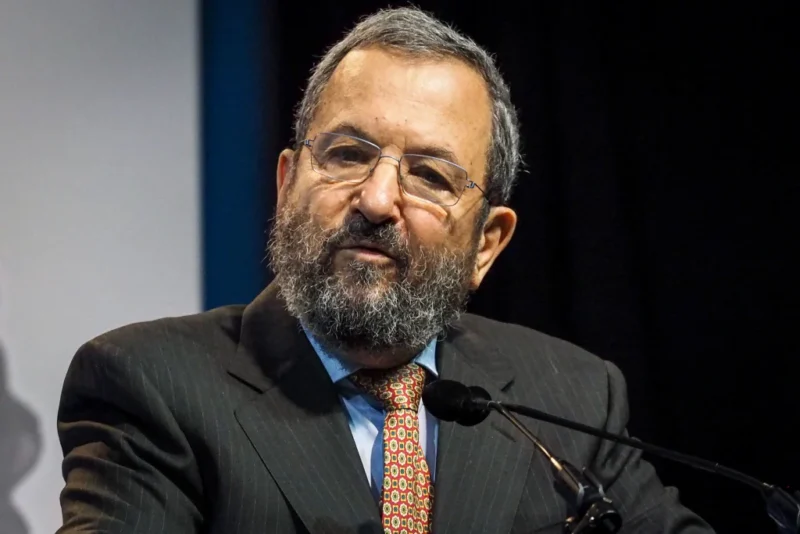
“I regret ever knowing him.” Israel’s former prime minister responds as newly released files outline his long association with Jeffrey Epstein.
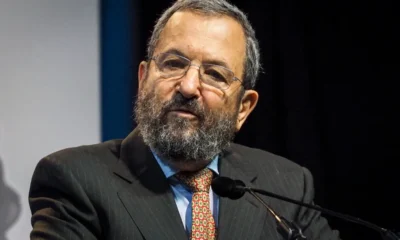
Former Israeli Prime Minister Ehud Barak said he regrets his yearslong association with convicted sex offender Jeffrey Epstein, following the release of new U.S. Justice Department documents detailing their extensive contact.
In an interview with Israel’s Channel 12, Barak apologized to those “who feel deeply uncomfortable” about the relationship and acknowledged that his judgment in maintaining ties with Epstein deserved scrutiny. “I am responsible for all my actions and decisions,” he said, adding that there may have been room for “more in-depth judgment” on his part.
Barak has not been accused of participating in or witnessing Epstein’s sexual abuse of underage girls and faces no allegations of criminal wrongdoing. He said he never observed inappropriate behavior during visits to Epstein’s Manhattan residence or a three-hour trip to his private island in the U.S. Virgin Islands, which he attended with his wife and security personnel.
Although aware of Epstein’s 2008 conviction in Florida for soliciting prostitution from a minor, Barak said he assumed Epstein had “paid his debt to society.” He said he cut off contact in 2019 when renewed investigations revealed the scale of Epstein’s alleged crimes.
Millions of pages of court and investigative documents released by U.S. authorities show Barak and his wife, Nili, maintained regular correspondence with Epstein for years, including after his earlier conviction. The documents reference multiple visits, meetings and logistical exchanges, as well as discussions linking Barak to political strategist Steve Bannon, though Bannon has not been accused of wrongdoing.
Epstein, who had pleaded guilty in 2008, was arrested again in 2019 on federal sex trafficking charges and later died by suicide in a Manhattan jail while awaiting trial.
Barak, who served as prime minister from 1999 to 2001 and later as defense minister, said more information may emerge but insisted that no illegal conduct on his part would be found. “I promise you that nothing will be discovered, because there is nothing,” he said.
The revelations add Barak to a list of global political and business figures whose past associations with Epstein have come under renewed scrutiny.
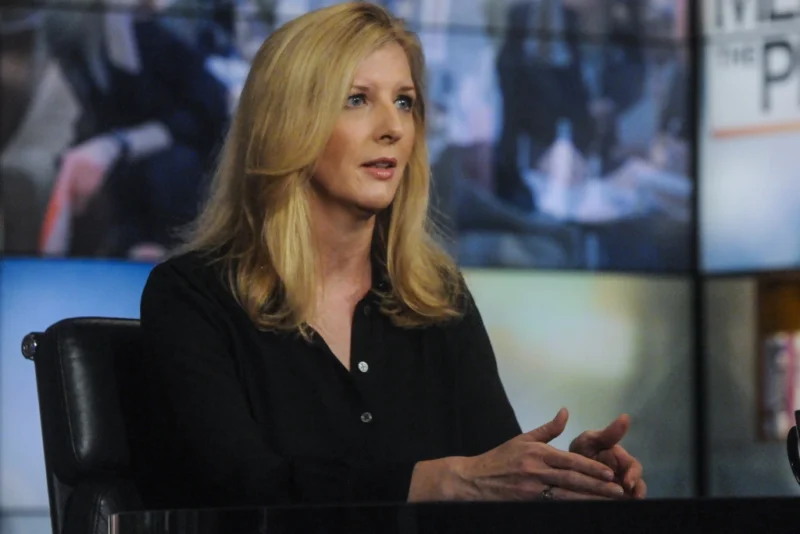
Once a trusted legal gatekeeper at Goldman Sachs — now stepping aside after scrutiny over past ties to Jeffrey Epstein.
Kathy Ruemmler, the chief legal officer of Goldman Sachs and former White House counsel to Barack Obama, announced Thursday that she will step down from her role following renewed scrutiny over her past relationship with convicted sex offender Jeffrey Epstein.
Ruemmler said she would resign as chief legal officer and general counsel effective June 30, 2026. Her decision follows the emergence of emails in which she described Epstein as an “older brother,” referred to him as “Uncle Jeffrey,” and expressed affection toward him years after his 2008 conviction for sex crimes.
In more recent public statements, Ruemmler has called Epstein a “monster,” and a Goldman Sachs spokesperson previously said she “regrets ever knowing him.” But the tone of earlier correspondence — including a 2018 message thanking him for luxury gifts — drew criticism. According to reports, Epstein gave Ruemmler expensive handbags and a fur coat during her time in private practice after leaving the White House in 2014.
Wall Street firms typically enforce strict policies governing gifts between clients and employees to avoid conflicts of interest and potential violations of anti-bribery laws. Goldman’s internal code of conduct requires preapproval for such exchanges.
Ruemmler, who has served as Goldman’s top lawyer since 2020, had previously indicated she did not intend to resign. In her statement Thursday, she said her priority had always been to protect the firm’s legal and reputational interests and to uphold its “core value of integrity.”
Goldman Chief Executive David Solomon accepted her resignation, praising her as “one of the most accomplished professionals in her field” and acknowledging her mentorship within the firm.
Epstein, who was arrested again in 2019 on federal sex trafficking charges, died by suicide in a Manhattan jail while awaiting trial.
Ruemmler’s departure marks a significant shift at one of Wall Street’s most prominent institutions, underscoring how past associations with Epstein continue to reverberate years after his death.
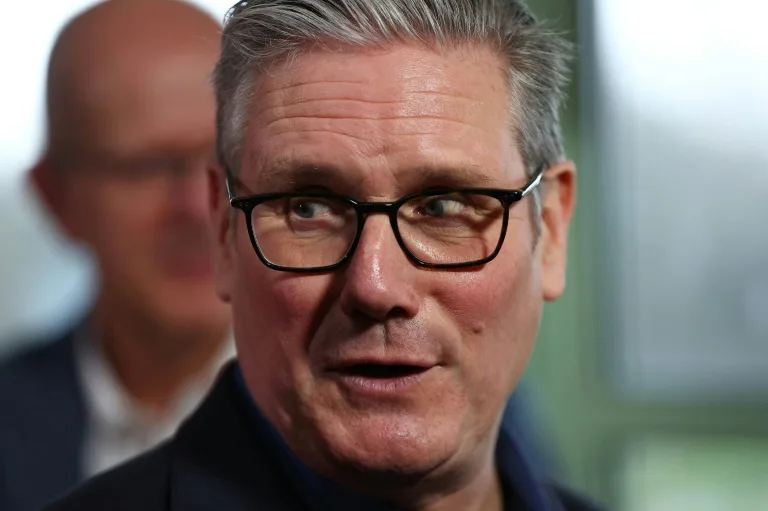
Pressure mounted on Keir Starmer on Monday as Britain’s prime minister struggled to contain the political fallout from his government’s links to the late sex offender Jeffrey Epstein, a crisis now threatening the stability of his premiership.
Starmer is facing mounting anger in parliament over his decision to appoint Peter Mandelson as the UK’s ambassador to the United States, despite Mandelson’s documented past association with Epstein. Opposition figures and some Labour lawmakers have demanded Starmer take responsibility, with calls for his resignation growing louder.
The controversy deepened after Starmer’s chief of staff and longtime confidant, Morgan McSweeney, resigned on Sunday. McSweeney had advised the prime minister on the Mandelson appointment, leaving Starmer without his closest political shield at a critical moment.
Conservative leader Kemi Badenoch said the situation was “untenable,” arguing that while advisers offer guidance, ultimate responsibility lies with the prime minister. “He made a bad decision,” she said, “and he should take responsibility for that.”
The crisis marks the most serious challenge of Starmer’s 18-month tenure. Already weakened by repeated policy reversals since taking office in July 2024, Starmer now faces dire polling numbers, with surveys showing him to be the most unpopular prime minister in modern British history.
The row reignited after the U.S. Justice Department released new Epstein-related documents on January 30, allegedly indicating that Mandelson shared confidential UK government information with Epstein while serving as a minister, including during the 2008 financial crisis. British police are investigating Mandelson for possible misconduct in public office and raided two of his properties last week. He has not been arrested.
Starmer dismissed Mandelson from his post last September, saying he had been misled during the vetting process. He has since apologised publicly to Epstein’s victims, but the damage has spread across his party, with Labour trailing the hard-right Reform UK by double digits in recent polls ahead of key local elections in May.
With no clear successor emerging inside Labour, senior figures have rallied behind Starmer for now. But the Epstein fallout has exposed deep vulnerabilities at the heart of his leadership — and raised new questions about how much longer he can hold on.
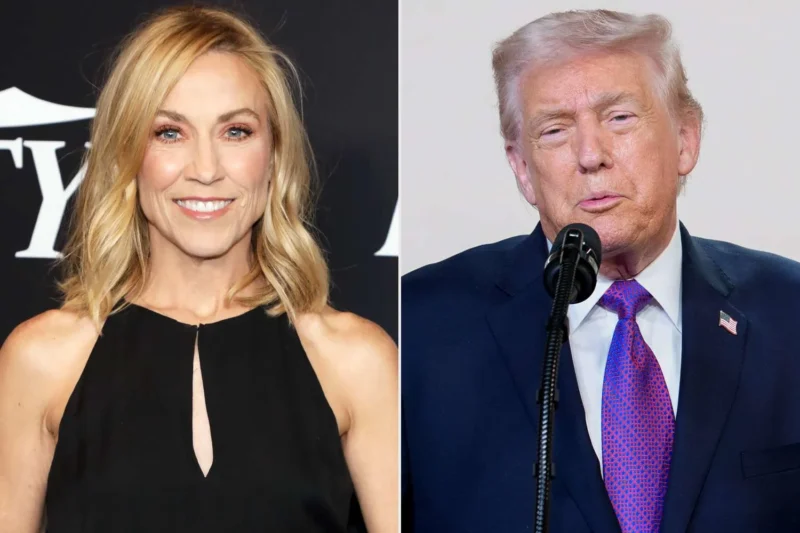
Epstein names fall abroad. Silence in America? Sheryl Crow explodes — and names Trump.
U.S. singer Sheryl Crow has publicly called for the impeachment and imprisonment of Donald Trump, accusing American institutions of failing to hold powerful figures accountable over their links to convicted sex offender Jeffrey Epstein.
In a statement posted to Instagram on Thursday, Crow said that while figures named in Epstein-related files in other countries have faced resignations, prosecutions, or investigations, the United States has largely avoided consequences.
“Those named in the Epstein files in other countries are going down hard for it. Not in America,” Crow wrote. “Who are we if we do not stand up for children?”
She argued that Trump, along with anyone — “Democrat, Republican, American, or foreign” — who knew about Epstein’s crimes and failed to act should face legal consequences.
The comments followed the Justice Department’s release last month of millions of documents tied to the Epstein investigation. Media reviews found thousands of references to Trump, though none showed direct criminal wrongdoing. Trump has repeatedly denied any involvement, saying he cut ties with Epstein in the early 2000s and expelled him from his Mar-a-Lago club.
The White House has not publicly responded to Crow’s remarks.
The Epstein case continues to reverberate internationally. In recent months, several prominent figures abroad have resigned or been placed under investigation following document releases, fueling criticism that accountability has been uneven — particularly in the United States.
Crow’s comments add to growing public pressure from cultural figures demanding renewed scrutiny of Epstein’s network and justice for victims, as debates intensify over political accountability and institutional trust.

Most Americans Think Iran Ceasefire Won’t Last

Ukraine and Russia Edge Toward Possible Peace Deal

Iran Says US Failed to Build Trust in Islamabad Talks


-
 Red Sea6 days ago
Houthis Threaten to Shut Red Sea if War Widens
-
 Terrorism2 weeks ago
Egypt Uncovers Alleged Plan to Down Presidential Plane
-
 Top stories5 days ago
Kremlin Claims EU Is Working Against Orbán
-

 Top stories1 week ago
IRGC Moves to Control Iran’s Future
-
 Top stories2 weeks ago
Saudi Arabia Deepens Defense Ties with Ukraine
-
 US-Israel war on Iran4 days ago
Israel’s War Goals Unmet as U.S.-Iran Ceasefire Shifts Conflict Dynamics
-

 Top stories2 weeks ago
France Leads Talks With 35 Nations to Secure Strait of Hormuz
-
 US-Israel war on Iran1 week ago
Iran Warns UN Against Hormuz Resolution