Connect with us

Top stories

Inside Trump’s Plan to Invoke Military Rule in Minneapolis

Published

on

The streets of Minneapolis have become the front line of a high-stakes constitutional showdown as President Trump threatens to invoke the Insurrection Act, a move that would effectively place the Minnesota state capital under martial law.

After a night of escalating violence that saw federal vehicles torched and properties looted, the President took to Truth Social to issue a chilling ultimatum: if state officials fail to suppress what he labeled “professional rioters and insurgents,” the United States military will do it for them. The threat follows a chaotic incident on Wednesday in the Hawthorne neighborhood, where a federal trooper opened fire during a confrontation with three Venezuelan nationals.

According to the Department of Homeland Security, the violence was sparked by a car chase involving Julio Cesar Sosa-Celis, a Venezuelan national with a prior conviction.

The agency reports that after the chase, Sosa-Celis and two other men—identified as Alfredo Alejandro Ajorna and Gabriel Alejandro Hernandez-Ledezma—ambushed the officer with a snowplow and a broom. In what Homeland Security Secretary Kristi Noem described as an “attempted assassination,” the trooper fired in self-defense, wounding Sosa-Celis. The fallout was instantaneous.

Protesters clashed with police late into the night, pelting officers with fireworks and ice, while the FBI has now issued a $100,000 reward for the recovery of government property stolen during the mayhem.

Advertisement

The tension in the city has been simmering since the fatal shooting of 37-year-old Renee Nicole Good by a federal trooper last week, but the introduction of the 1807 Insurrection Act has pushed the crisis into uncharted territory.

This 19th-century law grants the President the power to deploy federal troops domestically to enforce laws, bypassing local authorities entirely. Minnesota Representative Mahmoud Ahmed Noor warned that such a move would represent a complete overhaul of the American system, potentially allowing the military to operate under its own laws just as the country nears a critical election cycle. “It would have a huge impact,” Noor stated, “not just in the state, but across the entire country.”

With nearly 3,000 federal troops already stationed in Minnesota, the political divide has reached a breaking point. Governor Tim Walz, a Democrat, sent a direct appeal to the White House on Thursday to “turn the heat down,” while Minneapolis Mayor Jacob Frey—who has repeatedly demanded that ICE leave his city—described the current atmosphere as “not livable.” Despite these pleas, the administration remains undeterred.

After a federal judge denied Minnesota prosecutors a restraining order to suspend ICE operations, President Trump signaled that federal enforcement will only intensify, setting the stage for a historic confrontation between state sovereignty and federal military power.


Advertisement

Top stories

Ethiopia Warns Eritrea: Withdraw Troops or Face Escalation

Published

on

Ethiopia has formally warned Eritrea to withdraw its troops from what Addis Ababa says is Ethiopian territory, accusing Asmara of violating its sovereignty and backing armed groups along the border, while offering dialogue if the troops pull back.

In a letter sent on January 30, Ethiopian Foreign Minister Gideon Timothy told his Eritrean counterpart Osman Salah that Eritrean forces have occupied Ethiopia’s northeastern territory “for a long time,” undermining Ethiopia’s territorial integrity. The letter, confirmed by Foreign Ministry spokesperson Ambassador Nebiat Getachew, calls the actions a “complete invasion” and a breach of international law.

Ethiopia accused Eritrea of providing direct support to unnamed armed groups operating along the border, allegations that in the past have included links to the TPLF and Fano militias. It also warned that recent military movements show Eritrea has chosen “a path of destruction,” including joint operations with rebel groups on Ethiopia’s northwest frontier.

Addis Ababa said it is ready to enter sincere negotiations — including talks on maritime services and access to the port of Assab — if Eritrea immediately withdraws its troops and ends cooperation with rebel forces. The letter stressed that while Ethiopia is committed to peaceful dialogue after decades of conflict, Eritrea’s current actions are “unacceptable under any circumstances.”

So far, Eritrea has not officially responded. Ethiopia has also raised the issue with the United Nations, warning that Eritrean troop deployments along the border continue to fuel instability and serious human rights concerns.

Advertisement
Continue Reading

Top stories

President Embraces Ownership as Polls Show Public Skepticism

Published

on

U.S. President Donald Trump said the American economy now belongs to him, declaring he is “very proud of it,” as he seeks to take full ownership of economic performance ahead of the November midterm elections.

Speaking in an interview with NBC Nightly News anchor Tom Llamas that aired Sunday during the Super Bowl, Trump said the transition from the Biden-era economy is complete. Asked when the country entered the “Trump economy,” he replied: “I’d say we’re there now.”

Trump’s comments come despite widespread public dissatisfaction. An NPR/Marist/PBS News poll released last week found that just 36% of Americans approve of Trump’s handling of the economy, while 59% disapprove. Democrats have capitalized on economic anxiety, particularly around affordability, in recent off-year election victories in states including Virginia, New Jersey and New York.

In the Oval Office interview, recorded Wednesday, Trump argued that Democrats have quietly dropped their affordability message because of recent economic performance. He blamed former President Joe Biden for high prices, saying he inherited “a mess in every way.”

“In the last four days, the Democrats have not uttered the word ‘affordability,’” Trump said, without offering evidence.

Advertisement

Trump claimed the economy has grown by 5.6% since he took office, a figure not supported by official government data. According to the Labor Department, the economy grew at an annualized rate of 4.4% in the third quarter of 2025 and has not exceeded 5% growth in any quarter since 2021.

Economic output also contracted in the first quarter of 2025, partly due to uncertainty surrounding trade and tariff policies later announced by the administration. Fourth-quarter data has not yet been released because of a government shutdown.

A White House official said Trump was referencing projections from the Atlanta Federal Reserve, which at times estimated growth as high as 5.4%.

Trump also claimed that $18 trillion is being invested in the United States, citing new factories, plants and businesses. However, the White House’s own website lists $9.6 trillion in announced investments, and independent reviews have said even that figure is likely inflated.

Asked whether those projects would materialize before his term ends in January 2029, Trump said many would open within the next year or two.

Advertisement

In a previous NBC interview in May, Trump had drawn a sharper line, saying the economy’s “good parts” were his, while the “bad parts” belonged to Biden.

Continue Reading

Top stories

US and Russia Compete for Influence in Mali, Niger, and Burkina Faso

Published

on

The Sahel is becoming a new geopolitical battleground — and Africa now has options.

The United States is recalibrating its policy toward Mali, Niger, and Burkina Faso as Russia expands its military and political footprint across the Sahel through its Africa Corps.

Mali’s Foreign Minister Abdoulaye Diop on Monday hosted a senior U.S. official, US State Department Africa bureau chief Nick Checker, in talks aimed at setting a “new course” in relations between Washington and the junta-led state. Checker reaffirmed U.S. respect for Mali’s sovereignty and signaled interest in broader engagement with Burkina Faso and Niger on shared security and economic priorities.

The outreach follows a wave of military coups between 2020 and 2023 that toppled elected governments in all three countries. Under the Biden administration, the U.S. sharply curtailed military cooperation. Under President Donald Trump, officials have adopted a more pragmatic approach, downplaying democracy as a prerequisite for engagement.

The shift comes as Mali, Niger, and Burkina Faso have severed or downgraded ties with France and the EU, withdrawn from ECOWAS, and formed the Alliance of Sahel States (AES). All three have deepened security cooperation with Russia, which now deploys forces from its Africa Corps and provides training and combat support.

Advertisement

Russia has highlighted joint operations in Niger, including the repulsion of a January attack on Niamey’s airport claimed by ISWAP, and has pledged continued assistance to regional armed forces. Meanwhile, jihadist violence persists, with recent attacks in both Mali and Niger underscoring the fragility of security gains.

U.S. diplomats say Washington is seeking to correct “past policy missteps” and explore conditions under which it could re-engage in counterterrorism efforts. Analysts note that the Sahel states’ vast mineral wealth — including gold, uranium, and lithium — adds another layer to the strategic competition.

As Europe struggles to coordinate a unified Sahel strategy, influence in the region is increasingly shaped by rivalry between global powers, leaving Mali, Niger, and Burkina Faso with greater leverage — and more choices — than before.

Continue Reading

Top stories

Museveni Awards Son Muhoozi Uganda’s Second-Highest Military Medal

Published

on

Family, power, and the army — Museveni decorates his son with one of Uganda’s top military honours.

Ugandan President Yoweri Kaguta Museveni has awarded his son, Chief of Defence Forces Muhoozi Kainerugaba, the Kabalega Star Medal, Uganda’s second-highest military decoration, citing his leadership in regional security operations.

The award was conferred on Friday during the 45th Tarehe Sita anniversary celebrations held in Kabale District. The Kabalega Star recognises exceptional gallantry and service and ranks just below the Order of Katonga, Uganda’s highest military honour.

In the official citation, Gen. Muhoozi was praised for his strategic leadership, courage, and role in modernising the Uganda People’s Defence Forces. He was credited with spearheading human resource reforms, strengthening elite units, and contributing to regional peace operations in Somalia, the Democratic Republic of Congo, and South Sudan.

Muhoozi, a Sandhurst-trained officer, rose through the ranks after early service in the Presidential Protection Unit, which later evolved into the Special Forces Command. He has led operations against the Allied Democratic Forces and participated in regional missions under AMISOM and ATMIS in Somalia.

Advertisement

The ceremony also honoured several senior officers for distinguished service, including Lt. Gen. Kayanja Muhanga and Lt. Gen. Charles Okidi, alongside other military, police, and prison service personnel. A posthumous award was presented to a resistance-era officer, received by his daughter.

President Museveni congratulated all recipients and urged them to wear their medals with pride, noting that full citations would be released publicly in due course.

Continue Reading

Top stories

U.S. Senator Warns Somalia Crisis Poses Direct Security Risks to America

Published

on

Washington is losing patience. Somalia’s instability is no longer seen as a distant problem — U.S. lawmakers say it’s a direct threat.

A senior U.S. senator has warned that instability in Somalia poses real and growing security risks to the United States, urging that all American counterterrorism and humanitarian assistance be strictly aligned with U.S. interests.

Speaking amid renewed debate in Washington over aid to Somalia, Jim Risch, a member of the U.S. Senate, said preventing corruption and financial abuse must be the top priority in any engagement with Mogadishu.

“The United States faces real security threats from the crisis in Somalia, and it is imperative that efforts related to counterterrorism and humanitarian assistance serve the interests of the United States first,” Risch said. He stressed that American funds must be managed transparently to ensure they do not end up benefiting armed groups, corrupt officials, or criminal networks.

Risch’s remarks come as U.S. policymakers reassess decades of assistance to Somalia, amid concerns that aid has, at times, fueled instability rather than reduced it. Washington recently suspended portions of its assistance after allegations of corruption, including the diversion of food aid from humanitarian warehouses. Aid was later partially restored after the Somali government returned the stolen supplies.

Advertisement

The comments also reflect the broader posture of the Trump administration, which has tightened scrutiny of foreign aid and severed ties with several international agencies. Officials have said future funding must demonstrate clear benefits to U.S. national security and foreign policy objectives.

President Donald Trump has repeatedly criticized how aid to Somalia has been managed, arguing that weak oversight risks empowering extremist groups and undermining U.S. interests in the Horn of Africa.

Risch’s statement underscores a hardening stance in Washington: Somalia is no longer viewed solely as a humanitarian concern, but as a potential source of direct threats if U.S. engagement is not tightly controlled and accountable.

Continue Reading

Top stories

Germans Grow More Anxious About Social Inequality

Published

on

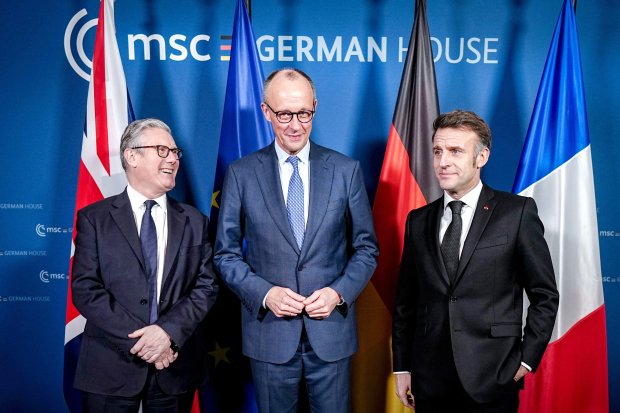
Public concern over social inequality in Germany is rising, according to a new nationwide opinion poll, as Chancellor Friedrich Merz’s conservative bloc loses ground amid heated debate over welfare reforms.

The ARD-Deutschlandtrend survey, conducted by infratest-dimap between February 2 and 4 among roughly 1,300 voters, shows slight losses for Merz’s CDU/CSU alliance and modest gains for their coalition partners, the Social Democratic Party (SPD). The findings come after weeks of controversy over proposals to restructure Germany’s welfare state.

At the start of February, the CDU/CSU stood at 26% support, down slightly from January. The SPD gained two points, a rare upward shift, while the far-right Alternative for Germany (AfD) slipped marginally but remains the second-largest force at 24%. The Greens and the Left Party held steady at 12% and 10% respectively.

A clear majority of respondents expressed concern about growing inequality. Sixty-two percent said social injustice is increasing, up two points from July last year, and most believe the gap between rich and poor is widening. Thirteen percent more than a year ago now say taxes and social security contributions are unfairly distributed.

Among all parties, the SPD was seen as most capable of promoting social justice, with 24% of respondents placing their trust in the center-left party. Only 9% said they believe foreigners or asylum-seekers receive preferential treatment over Germans, a decline from previous surveys.

Advertisement

Pollsters attribute the SPD’s gains partly to Finance Minister Lars Klingbeil, whose popularity rose five points after he adopted a tougher tone toward U.S. President Donald Trump. Defense Minister Boris Pistorius remains Germany’s most respected politician, followed by Foreign Minister Johann Wadephul, while Chancellor Merz trails with an approval rating of 25%.

Merz has drawn criticism for recent remarks questioning Germans’ work-life balance and sick leave, as well as proposals from CDU-linked groups to curb part-time work and social benefits. While there is broad agreement that Germany’s welfare system needs reform, the poll suggests voters are increasingly wary of changes they see as deepening inequality.

Continue Reading

Top stories

Jubaland President Meets U.S. AFRICOM Special Operations Officers

Published

on

The President of Jubaland, Ahmed Mohamed Islam, held a meeting with U.S. Special Operations officers serving under the United States Africa Command mission in Jubaland, praising their role in recent security operations across the region.

According to Jubaland officials, the president thanked the officers for their continued cooperation in training and joint operations targeting the militant group commonly referred to locally as the Khawarij, a term used for Al-Shabab. He credited the partnership with contributing to recent military successes against the group in several parts of Jubaland.

President Ahmed Mohamed Islam commended the officers for what he described as their professionalism, courage, and operational support, noting that the collaboration has strengthened local security capabilities.

During the meeting, the Jubaland leader formally awarded the Special Operations officers Medals of Honor and Certificates of Appreciation in recognition of their contribution to regional stability and counterterrorism efforts.

The engagement underscores ongoing security cooperation between Jubaland authorities and U.S. forces as part of broader efforts to combat militant activity in southern Somalia.

Advertisement
Continue Reading

Top stories

Trump’s Curbs on CEO Pay and Dividends Rattle Defense Stock Investors

Published

on

Bigger defense budgets, smaller rewards. Is Washington fixing procurement failures — or breaking the incentives that power the arms industry?

Investors in U.S. defense contractors are growing uneasy after President Donald Trump imposed new restrictions on executive pay, dividends, and stock buybacks, injecting fresh uncertainty into a sector already navigating rising geopolitical demand and government oversight.

Under an executive order signed January 7, defense firms are barred from paying dividends or repurchasing shares until they can deliver weapons “on time and on budget.” Trump has also proposed capping CEO compensation at $5 million annually. The moves come even as the administration signals a major increase in overall defense spending.

Market participants say the combination sends mixed signals. While higher military budgets promise stronger long-term demand, investors fear the White House is micromanaging capital allocation in ways that could depress shareholder returns and weaken the industry’s ability to attract top executives.

Portfolio managers argue that dividends and buybacks are not the cause of production delays or weapons shortages. Instead, they point to inconsistent Pentagon ordering and procurement bottlenecks. Many contractors already generate enough cash to expand capacity, they say, but lack firm long-term orders to justify large capital investments.

Advertisement

Defense executives have sought to reassure markets. Some companies have pledged to maintain dividends while balancing investment needs, while others have paused buybacks pending clarity on policy enforcement. Still, analysts warn the restrictions may hit mature, dividend-paying firms hardest, potentially shifting investor interest toward newer defense technology players that rely less on shareholder payouts.

Historically, even during wartime, U.S. defense firms have paid dividends. Critics of the new policy argue that limiting payouts risks distorting investment flows rather than fixing procurement inefficiencies. Supporters counter that contractors must prioritize delivery to the military over executive pay and shareholder rewards.

For now, the sector faces a paradox: rising global demand for weapons, paired with tighter political control over profits. How long investors tolerate that tension may shape the future structure of America’s defense industry.

Continue Reading

Most Viewed

error: Content is protected !!