Trump Claims Maduro Captured After U.S. Strike, Shaking Venezuela and the Western Hemisphere.
The geopolitical ground in the Western Hemisphere shifted violently early Saturday after U.S. President Donald Trump announced that Venezuelan President Nicolás Maduro had been captured following what he described as a “large-scale U.S. strike” on Venezuela.
In a dramatic overnight post, Trump said Maduro and his wife, Cilia Flores, were taken into custody and flown out of the country after a coordinated U.S. military and law-enforcement operation. He hailed the mission as “brilliant,” praising American troops and intelligence planners, and announced a major news conference at Mar-a-Lago.
Hours later, U.S. Attorney General Pam Bondi confirmed indictments against Maduro and Flores in the Southern District of New York, charging them with narco-terrorism conspiracy, cocaine trafficking, and weapons offenses involving machine guns and destructive devices. Bondi said the pair would soon face trial “on American soil, in American courts.”
Explosions rocked Caracas before dawn. Residents reported low-flying aircraft, power outages, and at least seven blasts across the capital. Smoke rose from military installations as Venezuela’s government accused Washington of an “imperialist attack” and urged supporters into the streets. Yet images from the ground showed largely empty roads and scattered militia patrols rather than mass mobilization.
Vice President Delcy Rodríguez, constitutionally next in line, demanded “proof of life” for Maduro, saying she did not know his whereabouts. No confirmation has been given on who is currently exercising executive authority inside Venezuela.
U.S. officials framed the operation as a law-enforcement action backed by military force to protect personnel executing an arrest warrant. Senator Mike Lee said Secretary of State Marco Rubio told him no further U.S. action in Venezuela was anticipated now that Maduro is in custody.
Supporters of the move called it historic. Rep. Carlos Gimenez compared the moment to “the fall of the Berlin Wall,” saying it marked the end of narco-authoritarianism in the hemisphere. Critics in Congress, however, warned of constitutional questions, noting the absence of a formal authorization for the use of military force.
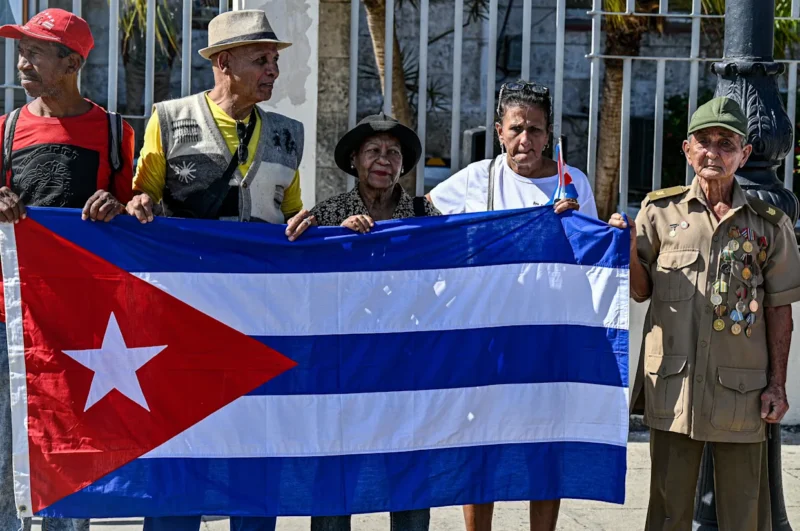
International reaction was swift and polarized. Cuba and Iran condemned the strikes. Argentina’s President Javier Milei praised Trump’s move as a victory for freedom. The FAA immediately closed Venezuelan airspace to U.S. flights amid “ongoing military activity.”
If confirmed, Maduro’s capture would represent the most aggressive U.S. action against a sitting Latin American leader in decades — a gamble that could either trigger regime collapse or plunge Venezuela into deeper chaos.
One thing is certain: the era of stalemate is over. The Maduro chapter may be closing — but what comes next for Venezuela, and for the region, has only just begun.