
Russia-Ukraine War
CIA Says Ukraine Never Tried to Kill Russian President


U.S. Intelligence Says Ukraine Did Not Target Putin in Alleged Drone Strike.
U.S. intelligence has concluded that Ukraine did not attempt to assassinate Russian President Vladimir Putin in a supposed drone strike near his country residence, directly contradicting claims made by the Kremlin.
According to a source familiar with the assessment, the CIA determined that Ukrainian forces were targeting a legitimate military objective in the same region—not Putin’s personal residence near Lake Valdai in northern Russia. Moscow has provided no evidence to support its allegation.
CIA Director John Ratcliffe briefed President Donald Trump on the findings earlier this week. Shortly after, Trump publicly amplified skepticism of the Russian narrative by sharing a New York Post editorial accusing Moscow of manufacturing excuses to derail peace talks.
The revelation comes at a sensitive diplomatic moment. Trump recently met Ukrainian President Volodymyr Zelenskyy at Mar-a-Lago, where both leaders said they were “very close” to a deal to end the war—an assessment the Kremlin itself initially echoed, despite continuing to press maximalist territorial demands.
Zelenskyy forcefully rejected Russia’s accusation, calling it a “complete fabrication” designed to justify further Russian attacks and sabotage diplomacy. “Typical Russian lies,” he wrote, accusing Moscow of deliberately undermining negotiations with Washington.
The intelligence finding reinforces growing Western suspicion that the Kremlin is weaponizing disinformation to stall peace while escalating military pressure. As talks inch forward, the episode underscores a familiar pattern: when diplomacy gains momentum, Moscow changes the story.












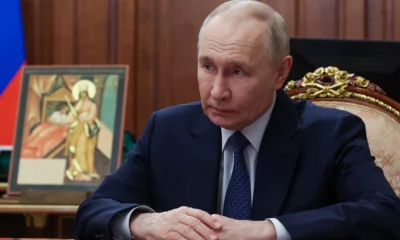

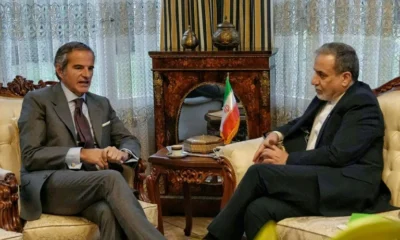


Washington says a deal is “reasonably close.” Europe’s top spies say Moscow isn’t serious. Who’s reading the Kremlin right?
Senior European intelligence officials are casting doubt on the prospects of a Ukraine peace agreement this year, warning that Moscow has little interest in ending the war quickly — despite President Donald Trump’s claim that US-brokered diplomacy has brought a deal “reasonably close.”
The heads of five European spy agencies, speaking anonymously to Reuters, said Russia appears to be using ongoing talks with Washington as leverage to pursue sanctions relief and economic concessions rather than a genuine settlement. One intelligence chief described the latest Geneva round as “negotiation theater.”
Their assessments expose a widening gap between European capitals and the White House. Trump has expressed confidence that Russian President Vladimir Putin wants a deal, and Kyiv says Washington hopes to secure an agreement by June, ahead of US mid-term elections in November.
But European intelligence leaders see no shift in Moscow’s core objectives. “Russia is not seeking a peace agreement. They are seeking their strategic goals, and those have not changed,” one official said, pointing to demands that Ukraine abandon its Western alignment and remove President Volodymyr Zelenskyy from power.
Russia currently occupies large portions of eastern Ukraine, including most of the Donetsk region. Moscow has demanded that Kyiv withdraw from the remaining 20 percent of Donetsk still under Ukrainian control — a condition Kyiv has firmly rejected.
Even if Ukraine conceded territory, some European officials warn that such a move would likely trigger new Russian demands rather than end the conflict. One spy chief said there is a “misplaced belief” in some quarters that territorial concessions would rapidly unlock peace.
Another concern raised by European intelligence centers on parallel negotiations. Two officials said Moscow is attempting to split talks into separate tracks: one focused on ending the war and another centered on potential US-Russia economic cooperation, including relief from sanctions.
Ukrainian officials have alleged that discussions include proposals for large-scale bilateral deals worth trillions of dollars — claims the European intelligence chiefs declined to detail.
While Russia’s economy faces pressure from sanctions, high interest rates and shrinking fiscal reserves, European analysts describe it as resilient enough to sustain prolonged conflict. The country’s central bank rate remains elevated, and access to global capital markets is restricted, but Moscow has adapted to wartime conditions.
The White House dismissed the anonymous criticism, with a spokesperson saying President Trump and his team have done more than anyone to bring both sides together.
For now, diplomacy continues. But across Europe’s intelligence community, skepticism runs deep: without a fundamental shift in Moscow’s objectives, they see little chance that 2026 will deliver the breakthrough Washington is seeking.
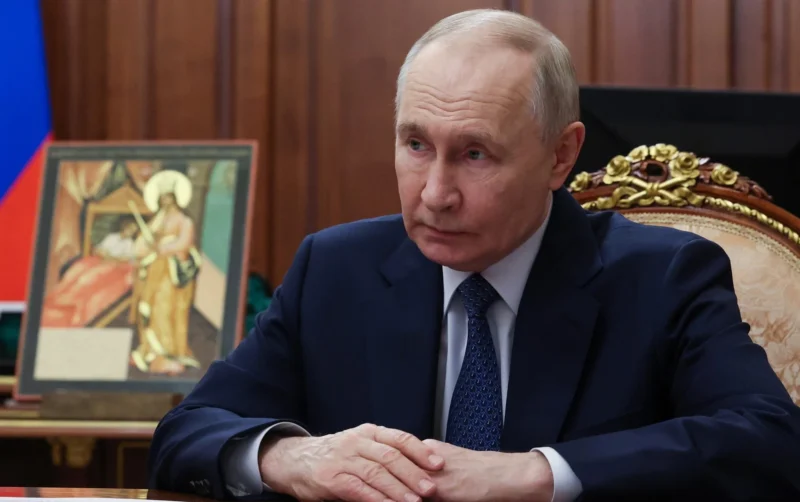
If Moscow moves on the Baltics, Estonia says the fight won’t stop at the border — it will go deep into Russia.
NATO would launch strikes “very far into Russia” if Moscow dares to invade the Baltic states, Estonia’s foreign minister has warned, dismissing fears that the Kremlin could quickly seize territory in Eastern Europe.
Speaking on the sidelines of the Munich Security Conference, Estonian Foreign Minister Margus Tsahkna said Estonia, Latvia and Lithuania would not wait passively for reinforcements if Russian forces crossed their borders.
“We’ll bring the war to Russia,” Tsahkna said, arguing that Baltic defense planning has shifted from relying solely on NATO’s eventual victory to immediate counteraction. “We cannot let Russia into the Baltic States and then fight back.”
His remarks come amid growing concern that President Vladimir Putin could test NATO’s resolve after the war in Ukraine, potentially by targeting one of the alliance’s smaller eastern members. Estonia, Latvia and Lithuania — all NATO members — border Russia and are viewed as particularly exposed.
Recent war-game simulations have fueled anxiety. One high-profile scenario envisioned Russia rapidly invading Lithuania and securing key objectives within days, including control of the strategically vital Suwalki Gap — the narrow corridor linking the Baltics to the rest of NATO territory. Another potential flashpoint often cited is Narva, an Estonian border town with a large Russian-speaking population.
But Tsahkna rejected such scenarios as outdated and overly pessimistic, arguing that Baltic defense capabilities have been significantly strengthened. He pointed to a surge in military spending across the region, with Baltic governments committing up to 5 percent of GDP to defense — well above NATO’s 2 percent benchmark.
The message from Tallinn reflects a broader shift in NATO’s eastern flank strategy. Rather than planning to reclaim territory after an invasion, Baltic leaders now emphasize forward defense and immediate retaliation to deter aggression in the first place.
While NATO’s collective defense clause — Article 5 — remains the alliance’s cornerstone, debate continues over how quickly and decisively members would respond in a real crisis. For Estonia, the answer, at least rhetorically, is clear: any invasion would trigger not just defense, but deep strikes inside Russia itself.
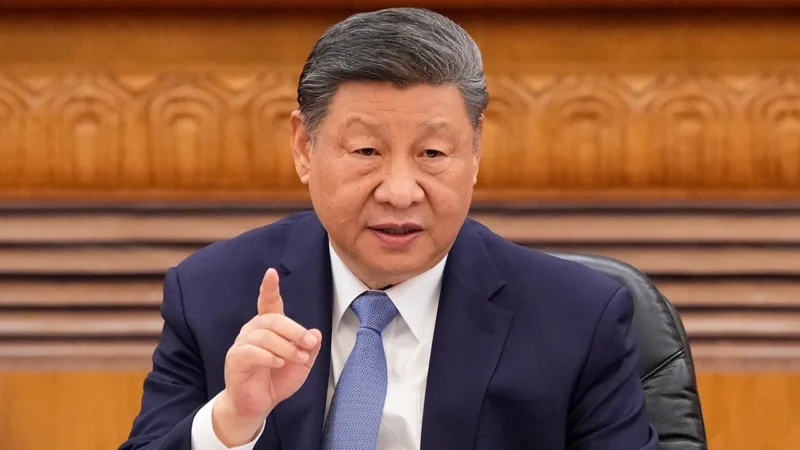
Beijing offers energy support to Ukraine — but buys record volumes of Russian oil. Diplomacy or double game?
China has pledged new humanitarian energy assistance to Ukraine, even as U.S. officials publicly accused Beijing of enabling Russia’s war effort.
Chinese Foreign Minister Wang Yi met Ukrainian Foreign Minister Andrii Sybiha on the sidelines of the Munich Security Conference, where he offered support to help Ukraine repair energy infrastructure repeatedly targeted by Russian missile and drone strikes. Kyiv welcomed the additional assistance, though China has not disclosed the size or scope of the package.
At the same conference, U.S. Ambassador to NATO Matthew Whitaker delivered a pointed rebuke. He said China has the leverage to end the conflict by cutting off “dual-use technologies” supplied to Moscow and halting purchases of Russian oil and gas.
“This war is being completely enabled by China,” Whitaker said.
Beijing denies supplying lethal military aid to Russia and maintains it is not a party to the conflict. Chinese officials say they support dialogue and a political settlement. Yet Western governments increasingly view China as Russia’s most important external economic partner.
Trade between Beijing and Moscow has expanded sharply since the 2022 invasion. China is again the largest buyer of Russian crude, with tracking data showing approximately 1.65 million barrels per day delivered to Chinese ports in January — near post-invasion highs. Those purchases provide critical revenue for the Kremlin as Western sanctions attempt to restrict Moscow’s war financing.
The juxtaposition is striking: China offering humanitarian energy aid to Ukraine while deepening commercial ties with Russia. For European governments considering additional measures against Chinese firms accused of supplying dual-use components, Beijing’s outreach to Kyiv complicates the diplomatic landscape.
For Washington, the message in Munich was clear. China’s economic and technological weight gives it the power to influence Russia’s trajectory — and U.S. officials argue that Beijing has chosen not to use that leverage.
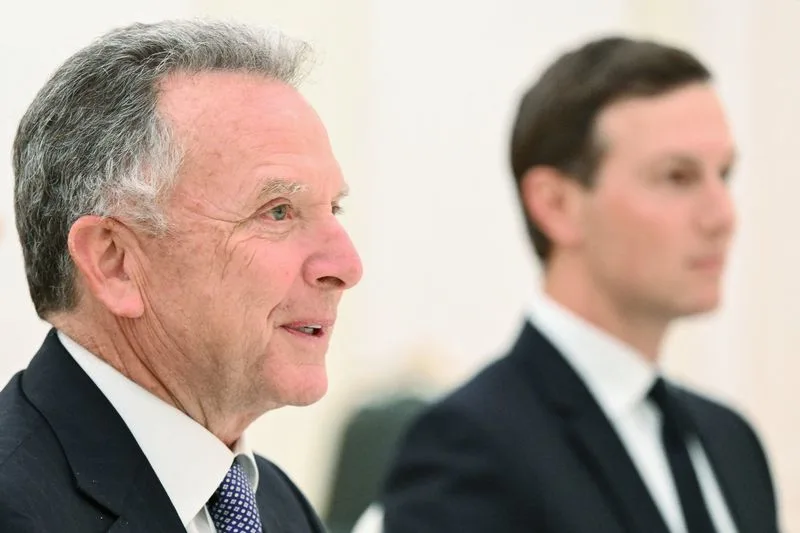
One city. Two crises. U.S. envoys head to Geneva for high-stakes talks on Iran and the Ukraine war.
Two separate rounds of high-level diplomacy — focused on Iran and the war in Ukraine — are scheduled to take place Tuesday in Geneva, according to a source briefed on the matter.
A U.S. delegation that includes special envoys Steve Witkoff and Jared Kushner is expected to meet Iranian representatives in the morning session. Officials from Oman will mediate the discussions, continuing Muscat’s role as an intermediary between Washington and Tehran.
The talks come as President Donald Trump intensifies pressure on Iran following its crackdown on domestic protests and amid an expanded U.S. naval presence in the region.
Later in the day, Witkoff and Kushner are scheduled to join trilateral negotiations involving representatives from Russia and Ukraine. The discussions are part of ongoing efforts to explore potential pathways toward ending Russia’s four-year invasion of Ukraine.
While the two diplomatic tracks are separate, their convergence in Geneva underscores the breadth of U.S. foreign policy engagement at a moment of heightened global tension.
Neither the White House nor the governments involved have publicly detailed the scope or expected outcomes of the meetings. However, the simultaneous talks highlight Washington’s attempt to manage two major geopolitical crises through parallel diplomatic channels.
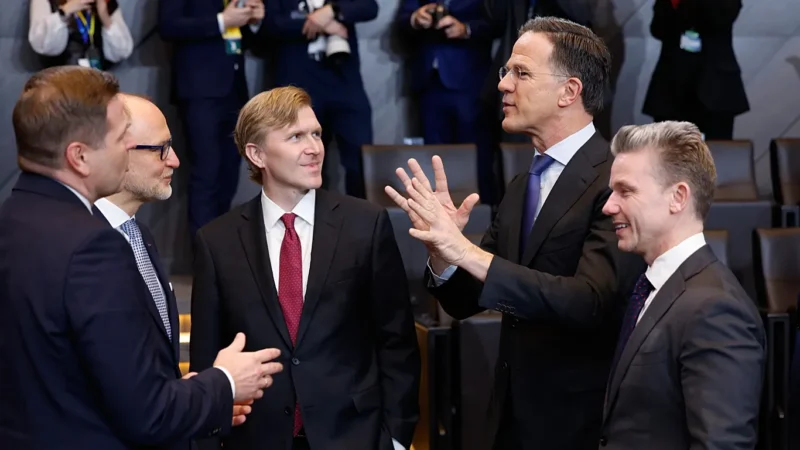
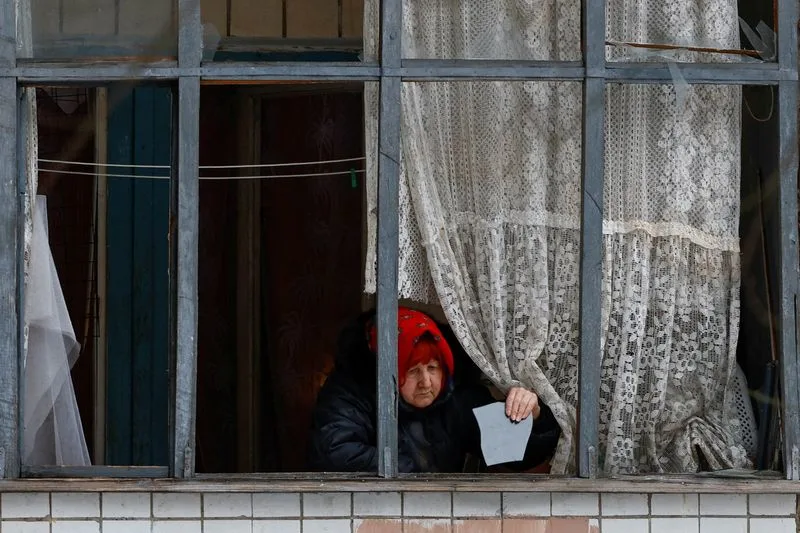
Missiles by night. Freezing apartments by morning. Ukraine’s cities face another winter blackout as diplomacy stalls.
Russia launched a sweeping overnight assault of drones and ballistic missiles on Ukraine early Thursday, knocking out power, heating and water supplies to tens of thousands of civilians in Kyiv and other major cities, Ukrainian officials said.
The barrage, which included 24 ballistic missiles, one cruise missile and 219 drones, marked the latest escalation in Moscow’s winter campaign against Ukraine’s energy grid. Ukraine’s air force said its defenses intercepted or neutralized 16 missiles and 197 drones, but significant damage was still reported.
In Kyiv, Mayor Vitali Klitschko said about 3,500 apartment buildings were without heating, including nearly 2,600 high-rises newly affected by the strike. More than 100,000 families lost electricity, according to private energy provider DTEK, which said one of its thermal power plants had been targeted. Two people were injured in the capital, and a residential building sustained damage.
The southern port city of Odesa also suffered heavy disruption. Deputy Prime Minister Oleksiy Kuleba said nearly 300,000 residents were left without water after electricity supplies were cut. Close to 200 buildings were without heating. Regional officials reported damage to an apartment block and a market fire that injured at least one person.
In Dnipro, a combined missile and drone strike wounded four people, including a baby and a four-year-old child, according to regional authorities. Elsewhere, prosecutors said two people were killed and six injured in an attack on Lozova, a railway hub in the northeastern Kharkiv region.
Moscow has repeatedly denied deliberately targeting civilians, despite widespread destruction of residential infrastructure since its full-scale invasion in 2022. Kyiv acknowledges striking targets inside Russia and Russian-occupied areas, though at a far smaller scale.
Ukraine’s Foreign Minister, Andrii Sybiha, condemned the latest assault as a setback to diplomatic efforts aimed at ending the nearly four-year war. U.S.-backed talks have yet to bridge core disagreements, even as Russian forces press offensives on the battlefield.
President Volodymyr Zelenskyy said this week that stronger international pressure on Moscow would be essential if hopes for a summer ceasefire are to materialize.
For many Ukrainians, however, diplomacy feels distant. As temperatures plunge, survival once again hinges on generators, blankets and the fragile resilience of a battered power grid.
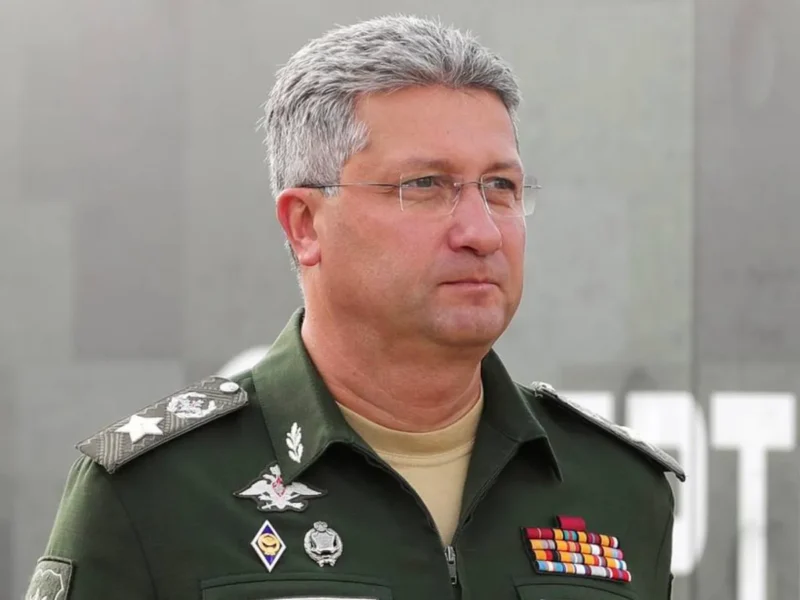
MOSCOW — A senior Russian military intelligence official was hospitalized Friday after being shot outside an apartment building in Moscow, authorities said.
Russia’s Investigative Committee said Vladimir Alekseyev, deputy chief of Russia’s military intelligence agency (GRU), was targeted when an unidentified assailant fired several shots at him. The incident occurred near his residence, according to a statement by committee spokesperson Svetlana Petrenko.
Officials did not immediately disclose Alekseyev’s medical condition or provide details on the suspect or motive. An investigation is under way.
Alekseyev has served as deputy head of Russian military intelligence since 2011 and previously oversaw intelligence operations during Russia’s intervention in the Syrian civil war.
The shooting adds to a series of attacks on senior Russian military figures since the start of the war in Ukraine. In December, Lieutenant General Fanil Sarvarov was killed by a bomb planted under his car. In April 2025, Lt. Gen. Yaroslav Moskalik died in a car bombing near his apartment outside Moscow.
Russian authorities have frequently blamed Ukraine for such attacks. In some cases, Ukrainian military intelligence has publicly claimed responsibility, including the December 2024 killing of Igor Kirillov, head of the Russian army’s chemical weapons division, who was killed by a bomb hidden on an electric scooter outside his home.
Friday’s attack is likely to intensify security concerns within Russia’s military and intelligence leadership as the conflict with Ukraine continues.
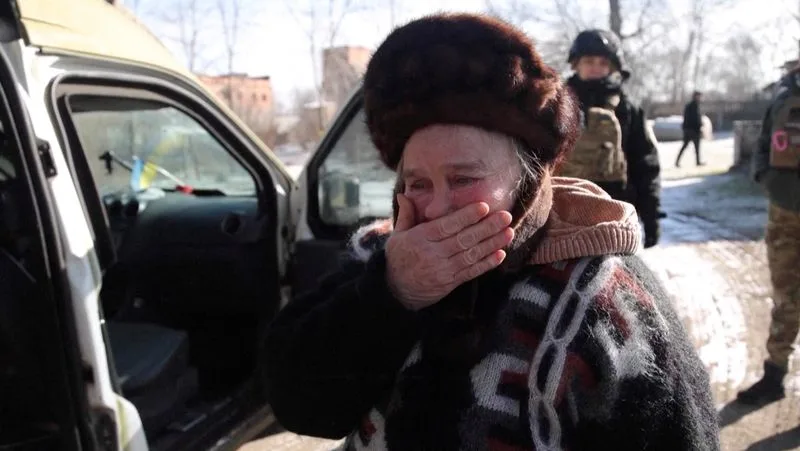
Buses stop running. Villages fall silent. As Russia inches closer, families in southeast Ukraine are leaving everything behind to survive.
TAVRIÍSKE, Ukraine — In recent weeks, buses have stopped running from the village of Tavriiske to the regional hub of Zaporizhzhia, about 50 kilometers away. As fighting creeps closer, the village is steadily emptying, its remaining residents forced to confront a stark choice: stay and risk death, or flee with little more than what they can carry.
Maryna Vyshnevska, 35, gathered her five children and a handful of belongings before boarding a police evacuation bus — one of the last lifelines out. “We thought they would be driven back and all this would stop,” she said, referring to Russian forces. “But when we realised it would only get worse and worse, it was better to leave.”
Her departure comes as Russia and Ukraine begin a new round of U.S.-brokered peace talks in Abu Dhabi. On the ground, however, Russia’s military momentum continues. Over recent months, Russian troops have ground forward along multiple sections of the 1,200-kilometer front line, tightening pressure on Ukraine’s southeastern regions.
While Moscow’s forces push toward the heavily fortified cities of the eastern Donetsk region, they are also advancing toward Zaporizhzhia — the capital of one of four Ukrainian regions Russia has unilaterally claimed, despite only partially occupying the territory.
Ukrainian military officials say fighting has intensified in recent weeks, particularly around the town of Huliaipole, roughly 40 kilometers east of Tavriiske. The villages in this area sit in a dangerous frontline bulge, with Russian forces positioned on three sides.
Residents who spoke to Reuters during a recent visit described living under constant threat from drones, artillery and air-dropped bombs. Anti-drone netting now shrouds the main regional road as police teams and volunteers patrol the area, evacuating civilians under fire. Local authorities say almost no families remain in the villages surrounding Tavriiske.
“Every day, every week, we see more destruction and a greater risk of entering towns like these,” said Vlad Makhovskyi, 51, a volunteer wearing tactical gear as he helped evacuate residents. At one stop, two men carried an elderly woman from her damaged home using a bright pink bedsheet as an improvised stretcher.
For those leaving, the emotional toll is heavy. Nataliia Fedorenko, 66, broke down in tears as she described the fear of remaining behind as fighting worsened. “It’s scary. Nobody wants to die,” she said quietly before evacuating. “I know I don’t have much time left, but this kind of death…?”
As Russia presses forward and diplomacy struggles to keep pace with events on the battlefield, villages like Tavriiske are becoming ghost towns — stark symbols of a war that continues to consume civilian life in its path.

Norway Pulls Back Soldiers From Middle East Hotspots

Kremlin Declares Japan Relations ‘Reduced to Zero’

Prince Andrew Released Under Investigation After Arrest


-
 Minnesota2 months ago
Fraud Allegations Close In on Somalia’s Top Diplomats
-
 Middle East2 months ago
Turkey’s Syria Radar Plan Triggers Israeli Red Lines
-

 Editor's Pick2 months ago
Why India Is Poised to Become the Next Major Power to Recognize Somaliland
-
 ASSESSMENTS2 months ago
Somalia’s Risky Pact with Pakistan Sparks Regional Alarm
-
 Analysis2 months ago
Turkey’s Expanding Footprint in Somalia Draws Parliamentary Scrutiny
-

 Analysis2 months ago
RED SEA SHOCKER: TURKEY’S PROXY STATE RISES—AND ISRAEL IS WATCHING
-
 Somaliland1 month ago
F-35s Over Hargeisa: The Night Somaliland’s Sovereignty Went Supersonic
-

 Somalia2 months ago
Is Somalia’s Oil the Price of Loyalty to Turkey? MP Blows Whistle on Explosive Oil Deal