
Top stories
Al-Shabaab Operative Planned 9/11-Style Plane Attack on Atlanta


He trained as a pilot. He studied targets. He was ready to die. U.S. prosecutors say the plot was real—and chilling.
A Kenyan national has been sentenced to life in prison for plotting a 9/11-style terrorist attack targeting Atlanta’s tallest building on behalf of the Somalia-based extremist group Harakat al-Shabaab al-Mujahideen, U.S. prosecutors said.
Federal judge sentenced Cholo Abdi Abdullah, 34, to two consecutive life sentences plus lifetime supervised release for conspiring to hijack a commercial airliner and crash it into Bank of America Plaza, a 55-story tower that dominates Atlanta’s skyline.
A Manhattan jury convicted Abdullah in 2024 on six terrorism-related counts, including conspiring to provide material support to a foreign terrorist organization, aircraft piracy, conspiring to murder U.S. nationals abroad, and plotting acts of terrorism transcending national boundaries.
A Plot Years in the Making
According to the U.S. Department of Justice, Abdullah joined al-Shabaab in 2015 and underwent extensive training in explosives, clandestine operations, and counter-surveillance techniques.
Prosecutors said he agreed to participate in an international al-Shabaab plot that mirrored the September 11 attacks—training as a commercial airline pilot with the explicit goal of hijacking a passenger plane and crashing it into a U.S. building.
In 2017, Abdullah relocated to the Philippines, enrolling in a flight school to obtain a commercial pilot’s license. During his training, investigators say he conducted repeated online searches about air marshals, Boeing cockpit security, Delta Air Lines flights, and Atlanta’s tallest buildings.
In January 2019, prosecutors said, Abdullah searched specifically for the “Tallest building in Atlanta,” identifying Bank of America Plaza as his intended target.
By the time of his arrest, Abdullah had completed nearly all requirements for his commercial pilot certification.
Attack Thwarted Before Takeoff
Abdullah was arrested later in 2019 on unrelated local charges before the plot could advance further. He was transferred to U.S. custody the following year and later stood trial in federal court.
U.S. Attorney Jay Clayton described Abdullah as a “highly trained al-Shabaab operative” intent on recreating the horrors of September 11.
“He pursued his commercial pilot license while conducting extensive attack planning,” Clayton said. “As he later admitted to the FBI, he was fully prepared to die in his terrorist attack.”
Abdullah represented himself at trial, declined to deliver an opening statement, and largely abstained from questioning witnesses.
A Persistent Global Threat
The U.S. State Department designated al-Shabaab as a foreign terrorist organization in 2008. The group, an affiliate of al-Qaeda, has carried out deadly attacks across East Africa and continues to plot operations beyond the region, U.S. officials say.
Prosecutors stressed that the sentence reflects both the gravity of the planned attack and the continued risk posed by transnational jihadist networks seeking to exploit global aviation systems.
For U.S. authorities, the case underscores a stark reality: while the September 11 attacks are more than two decades in the past, efforts to replicate them have never stopped.


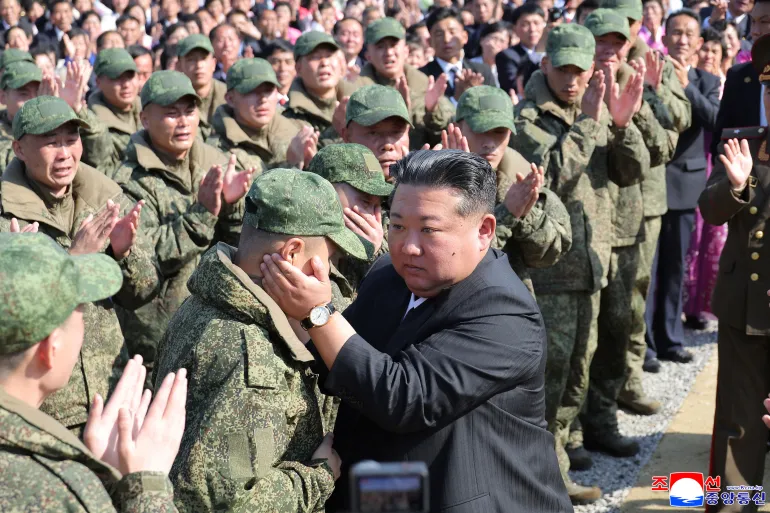
From Pyongyang to Ukraine—North Korea to Hold Funeral Ceremonies for Soldiers Killed Fighting in Ukraine.
In Pyongyang, preparations are nearly complete for a ceremony that extends far beyond national mourning. Rows of monuments are being finalized, exhibitions arranged, and a new museum—dedicated to fallen soldiers—is nearing its opening.
North Korea says it will soon bury troops killed while fighting alongside Russian forces in Ukraine, marking one of the clearest acknowledgments yet of its direct role in the conflict. The ceremonies, scheduled for mid-April, will coincide with what state media describes as the anniversary of operations linked to Russia’s campaign.
Seoul: 2,000 North Korean Troops Dead in Ukraine as Russia’s War Deepens
At the center of the commemorations is Kim Jong Un, who has personally overseen preparations, praising the “heroism” of the soldiers and framing their deaths as part of a broader narrative of national sacrifice and loyalty.
By the third layer of this development, the significance shifts from ceremony to strategy. North Korea’s involvement in the Ukraine war is no longer indirect or deniable. It reflects a deepening military alignment with Russia—one that extends beyond weapons transfers into personnel deployment.
Estimates from South Korea suggest that around 2,000 North Korean soldiers have been killed in the conflict. While those figures cannot be independently verified, the scale points to sustained engagement rather than symbolic support.
The relationship is transactional, but increasingly structured. Analysts note that Pyongyang has received financial assistance, food supplies, military technology, and energy support from Moscow—resources that help offset the pressure of international sanctions tied to its nuclear program.
In that sense, the battlefield in Ukraine has become part of a broader exchange.
There are also domestic dimensions to the ceremonies. The construction of a museum—reported to be nearly complete—signals an effort to institutionalize the narrative. It is not only a memorial, but a tool of political messaging, reinforcing themes of sacrifice, resilience, and alignment with strategic partners.
Images released in recent months have shown Kim in highly personal moments—embracing soldiers, kneeling before portraits of the fallen, and placing medals on coffins draped in the national flag. These scenes are carefully curated, projecting both authority and emotional connection.
Yet the decision to publicly honor these deaths also carries risks. Acknowledging casualties from a foreign war exposes the human cost of a policy that may not resonate uniformly within the country, particularly as economic challenges persist at home.
Still, the leadership appears committed to the narrative. By framing the fallen as heroes and embedding their story in national memory, Pyongyang is linking its domestic legitimacy to its external alliances.
The strategic implications extend beyond North Korea. The deployment of troops underscores how the Ukraine war has evolved into a wider geopolitical contest, drawing in actors far beyond its original boundaries.
What is unfolding is not just a partnership, but a convergence of interests—where military support, economic exchange, and political symbolism reinforce one another.
And as North Korea prepares to bury its dead, it is also signaling something else: its role in the conflict is no longer peripheral.
It is part of the war’s structure—and likely to remain so as long as that structure endures.
Intercepted Calls Expose North Korean Drone Teams Guiding Russian Attacks
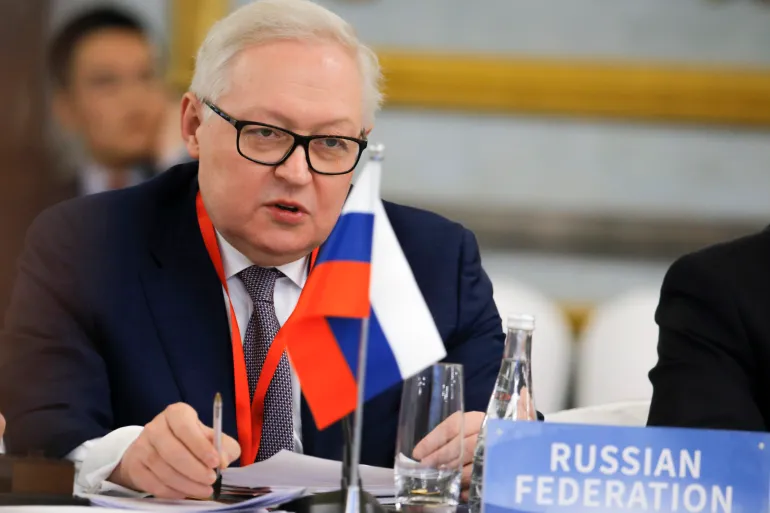
“No Escalation—But No Retreat”: Russia Draws Its Line Across Global Flashpoints.
The statement was brief, but its reach was wide.
Speaking to state media, Sergei Ryabkov outlined a position that extends beyond a single crisis: Russia, he said, will act “to the fullest extent” to protect its security and the interests of its allies—while insisting it is not seeking escalation.
The phrasing is deliberate. It reflects a doctrine that balances restraint with readiness, signaling that Moscow intends to remain active across multiple geopolitical fronts without crossing into open confrontation unless necessary.
Ryabkov’s remarks came in the context of tensions involving the United States, including developments in Cuba. But the message resonates more broadly. It aligns with a pattern already visible in Eastern Europe, the Middle East, and beyond: Russia positioning itself as a counterweight to U.S. influence while carefully managing the risk of direct conflict.
By the third layer of this statement, the strategic intent becomes clearer. This is not a declaration of immediate action, but a framework for flexibility. Russia is signaling that it reserves the right to respond—politically, militarily, or through indirect means—wherever it perceives its interests or allies to be under threat.
That approach allows Moscow to operate across multiple arenas simultaneously. In Ukraine, it continues to press its military campaign. In the Middle East, it deepens coordination with partners while avoiding direct entanglement. In regions like Latin America, references to Cuba evoke historical fault lines that still carry symbolic and strategic weight.
There are, however, limits built into this posture.
Russia faces resource constraints, particularly as its military remains heavily engaged in Ukraine. Its ability to project power globally is therefore selective rather than expansive. That reality reinforces a preference for asymmetric tools—diplomacy, intelligence cooperation, and indirect support—over large-scale deployments.
At the same time, the language of “non-escalation” serves a dual purpose. It reassures domestic and international audiences that Moscow is not seeking a broader war, while preserving room to act if circumstances shift. In practice, it creates a spectrum of responses that stops short of direct confrontation but still exerts pressure.
There are also competing interpretations. Western officials may view such statements as veiled warnings—signals that Russia is prepared to widen its engagement if challenged. Russian officials, by contrast, frame them as defensive, emphasizing sovereignty and the protection of allies.
The ambiguity is intentional.
What emerges is a strategic posture defined by calibration rather than clarity. Russia is not announcing a new conflict. It is defining the terms under which it might respond to existing ones.
And in a global environment where multiple crises are unfolding at once, that posture carries weight. It suggests a world not of singular flashpoints, but of interconnected pressures—where actions in one region echo in another.
The question now is how far that framework can hold.
Because in a system built on “measured response,” the line between restraint and escalation is often visible only after it has been crossed.
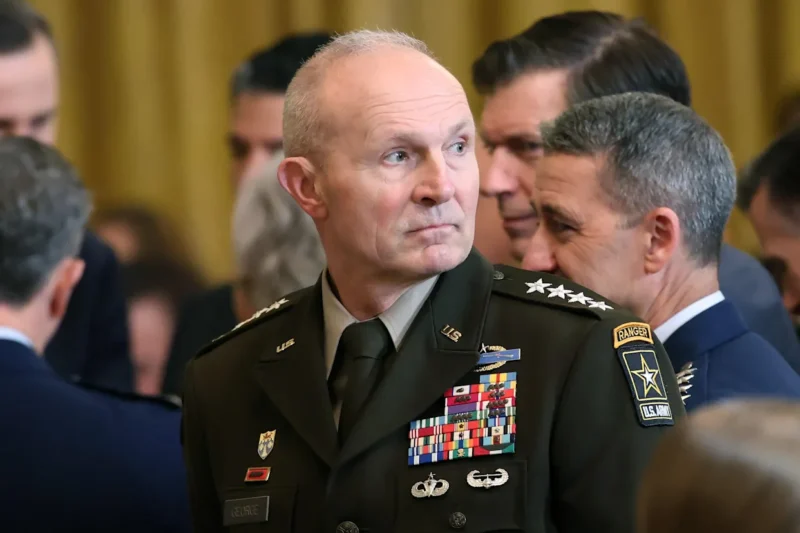
Top General Out—Pentagon Purge Signals New Military Direction.
At the Pentagon, the shift was swift—and unmistakable. Pete Hegseth moved to remove the Army’s top uniformed officer, asking Randy George to step down and retire immediately.
The official language was measured: gratitude for decades of service, best wishes for retirement. The underlying message was not. Leadership, according to officials, needed to align more closely with the administration’s vision.
George, the 41st Chief of Staff of the Army, had been expected to serve until 2027 after his Senate confirmation in 2023. A career infantry officer with deployments spanning the Gulf War, Iraq, and Afghanistan, he represented continuity within an institution built on long-term command stability.
That continuity has now been interrupted.
By the third layer of this decision, the significance moves beyond a single resignation. This is part of a broader recalibration of military leadership under the current administration—one that prioritizes strategic alignment over institutional tenure. More than a dozen senior officers have already been removed, including high-profile figures across multiple branches.
The reshaping is not isolated. Alongside George’s departure, two other senior Army leaders—Gen. David Hodne and Maj. Gen. William Green—were also pushed out, signaling a wider restructuring within the service’s command framework.
In the interim, Christopher LaNeve, the vice chief of staff and a figure closely tied to Hegseth, has been elevated to acting Army chief. Officials describe him as “trusted” to execute the administration’s priorities—language that underscores the central criterion now guiding leadership decisions.
There are competing interpretations of this shift.
Supporters argue that the changes reflect necessary modernization—installing leaders who can rapidly adapt doctrine, training, and force structure to evolving threats. In a period marked by simultaneous global conflicts and technological transformation, they say, alignment at the top is essential.
Critics see a different pattern: the erosion of a long-standing norm that senior military leadership operates with a degree of insulation from political direction. The removal of officers appointed under previous administrations, combined with the pace of turnover, raises concerns about whether continuity—and institutional independence—are being sacrificed.
There are also practical implications. The Army chief of staff plays a central role in shaping readiness, force deployment, and long-term planning. Abrupt leadership changes can disrupt those processes, particularly at a time when U.S. forces are engaged across multiple theaters.
Yet the administration’s approach suggests a different calculation. In a landscape defined by rapid escalation abroad and shifting priorities at home, adaptability may be valued over stability.
The strategic question is what this means for the military’s role going forward.
If leadership becomes more tightly aligned with political direction, decision-making may accelerate—but so may the risks of short-term thinking. If, instead, the changes produce a more cohesive command structure, they could strengthen execution during a period of heightened global tension.
For now, the signal from Washington is clear. The military is not just being asked to respond to new challenges—it is being reshaped to reflect a new way of defining them.
And in that process, even the highest ranks are no longer fixed points, but positions subject to rapid recalibration.

Executed at 18—Iran’s War Turns Inward as Protests Meet the Gallows.
At dawn outside Tehran, in the high-security confines of Ghezel Hesar Prison, an 18-year-old was led to the gallows. His case, rights groups say, reflects not only a judicial decision—but a wider shift in how the Iranian state is managing dissent during wartime.
Authorities executed Amir Hossein Hatami on Thursday after a rapid trial that activists and international organizations described as deeply flawed. He had been arrested during protests earlier this year, sentenced to death within weeks, and executed just 84 days after his detention, according to rights monitors.
Iran’s judiciary said Hatami had acted against national security on behalf of the United States and Israel, accusing him of attacking a military facility during unrest that began as economic protests before expanding into nationwide demonstrations. Officials framed the execution as part of a broader effort to restore order amid escalating external conflict.
But rights groups offer a starkly different account. Amnesty International called the execution “arbitrary,” citing allegations of torture, forced confessions, and a trial process that failed to meet basic legal standards. The Norway-based Iran Human Rights described the proceedings as a “tool of repression,” warning that hundreds more detainees could face similar outcomes in the coming weeks.
By the third layer of this case, the implications extend beyond a single execution. Iran’s leadership is confronting pressure on two fronts: an external war with the United States and Israel, and internal unrest fueled by economic strain and political discontent. The response, analysts say, is increasingly synchronized—military escalation abroad paired with tightened control at home.
Hatami is not alone. He is the fourth person executed in connection with the recent protest wave, which peaked in early January. Earlier this month, three others—including a 19-year-old athlete—were put to death, while additional executions tied to political charges have followed. The pace suggests an acceleration rather than an isolated action.
The legal process itself has drawn scrutiny. The cases were handled by a revolutionary court overseen by Abolqasem Salavati, a figure sanctioned by Washington and widely known among activists for issuing harsh sentences. Defense lawyers have argued that key evidence was contested and that security forces may have played a role in incidents used to justify the charges.
There are, however, competing narratives. Iranian officials maintain that the individuals involved were engaged in violent acts, including attacks on security installations, and that the judiciary is acting within the law to protect national stability.
The truth, as in many such cases, is contested—and difficult to independently verify.
What is clear is the broader trajectory. Executions are rising at a moment when the state faces heightened external threats. That convergence suggests a strategy: deter dissent by demonstrating the cost of opposition, even as the country mobilizes for conflict beyond its borders.
The risk is that such measures, while intended to consolidate control, may deepen underlying tensions. Protests rooted in economic hardship and political grievance rarely disappear under pressure; they recede, reorganize, and return under different conditions.
For now, the message from Tehran is unmistakable. In wartime, the definition of security expands—and so does the scope of enforcement.
The longer the conflict continues, the more those internal measures may shape the country’s future as much as any outcome on the battlefield.
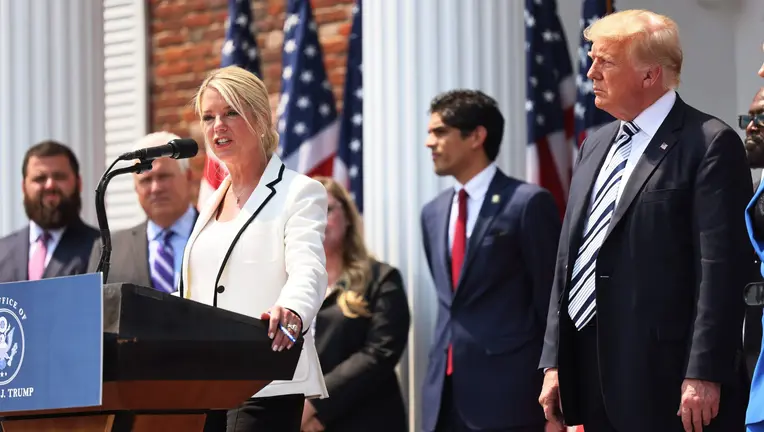
Power, Loyalty, and Fallout—Trump Ousts Attorney General Pam Bondi After Turbulent Tenure at Justice Department.
The announcement came with praise—but little ambiguity. On Thursday, Donald Trump confirmed that Pam Bondi is out as attorney general, closing a turbulent chapter that reshaped the culture and direction of the Justice Department.
Bondi’s exit follows months of mounting pressure, much of it from within Trump’s own political base. The handling of files tied to Jeffrey Epstein—long a flashpoint among conservative supporters—triggered renewed scrutiny, compounded by frustrations over failed efforts to prosecute several of Trump’s political opponents.
Publicly, the tone remained cordial. Trump described Bondi as a “great American patriot” and a loyal ally, signaling continuity even in dismissal. Privately, however, the decision reflects a deeper recalibration—one that has defined much of his approach to leadership across both terms.
By the third layer of this story, the significance extends beyond a personnel change. Bondi’s tenure marked a departure from the Justice Department’s traditional distance from the White House. Under her leadership, the department launched investigations into high-profile figures aligned against Trump, while overseeing sweeping internal changes, including the removal or departure of thousands of career employees.
Supporters framed those moves as necessary corrections—an effort to counter what they viewed as institutional bias under the previous administration. Critics saw something else: the erosion of a long-standing norm separating law enforcement from political influence.
That tension ultimately became unsustainable.
Bondi’s handling of the Epstein files crystallized the challenge. Early claims about a potential “client list” later had to be clarified, fueling distrust among allies and opening her to criticism from both sides. Even figures within Trump’s inner circle, including Chief of Staff Susie Wiles, publicly questioned her performance.
At the same time, legal setbacks weakened the administration’s broader strategy. Cases against prominent figures—including former officials like James Comey and Letitia James—collapsed in court, raising questions about both legal footing and prosecutorial approach.
The immediate transition has already begun. Trump named Todd Blanche as acting attorney general, while continuing to consider a permanent replacement. Among the names discussed is Lee Zeldin, though no final decision has been announced.
There are also institutional consequences. Bondi’s departure continues a pattern of turnover at the Justice Department, where leadership has shifted repeatedly amid conflicts over independence, loyalty, and political direction. Each change has further blurred the boundaries between governance and campaign-style decision-making.
Still, the broader strategy remains consistent. Trump has prioritized alignment—placing a premium on officials who not only execute policy but also reinforce his political narrative. When that alignment falters, even partially, change follows.
The question now is what comes next.
If the next attorney general leans further into political alignment, it could signal a continued transformation of the department’s role. If the choice reflects a recalibration toward institutional stability, it may suggest recognition of the limits of that approach.
Either way, Bondi’s exit underscores a central dynamic of this presidency: power is not just exercised—it is constantly renegotiated.
And in that process, even the most loyal figures can become part of the adjustment.
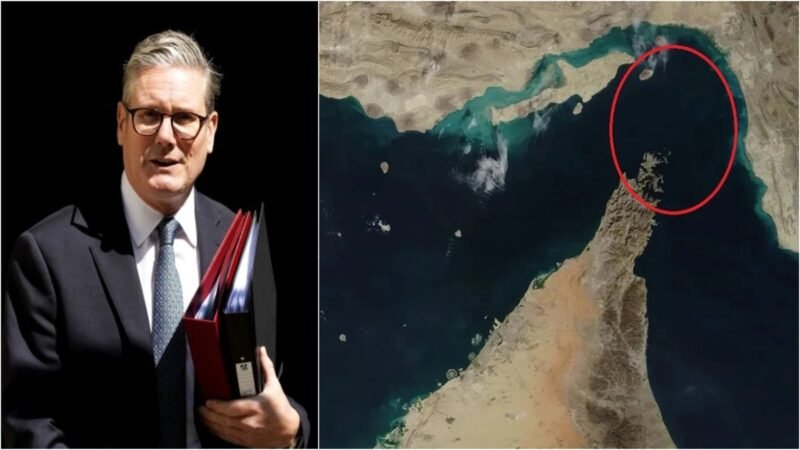
World Without the U.S.—35 Nations Scramble to Break Iran’s Grip on Global Oil Route.
Oil tankers sit idle at the mouth of the Strait of Hormuz, their routes stalled by a war that has turned one of the world’s most critical shipping lanes into a zone of calculated risk. For crews onboard, the threat is immediate. For global markets, the impact is already unfolding.
On Thursday, more than 30 countries—led by the United Kingdom—will convene to map out a response. The goal is straightforward, if not simple: restore the flow of commerce through a passage that carries a significant share of the world’s oil.
Keir Starmer framed the meeting as an effort to align diplomatic and political pressure, while also laying the groundwork for eventual security arrangements. Chaired by Yvette Cooper, the virtual gathering will focus on reopening the strait, protecting trapped vessels, and stabilizing energy flows disrupted by Iranian-linked attacks.
By the third layer of this crisis, the deeper shift becomes clear. This is not only about maritime security—it is about leadership. The absence of the United States from the meeting marks a departure from decades of American dominance in safeguarding global shipping lanes. President Donald Trump has signaled that responsibility now rests with other nations, telling allies to secure their own energy routes.
That decision is forcing a recalibration. Countries including the UK, France, Germany, Italy, Canada, Japan, and the United Arab Emirates have signed onto a joint statement urging Iran to halt its attempts to block the strait and pledging to support efforts to ensure safe passage. The coalition reflects a broad recognition that the economic stakes extend far beyond the region.
Still, the options are constrained. No country appears willing to forcibly reopen the waterway while active conflict continues. Iran retains the capacity to target vessels through missiles, drones, mines, and fast-attack craft—tools that can disrupt shipping without triggering a full-scale naval confrontation.
For now, diplomacy leads. Military planning is being deferred to a later phase, once conditions stabilize. Starmer acknowledged that restoring normal traffic will require both political coordination and eventual security guarantees—likely involving naval deployments and close cooperation with the maritime industry.
There are parallels to earlier coalition-building efforts, including European-led initiatives to support Ukraine’s long-term security. In both cases, the objective is not only operational but symbolic: to demonstrate that Europe and its partners can act collectively in the absence—or retreat—of U.S. leadership.
Yet the risks are immediate. With traffic through Hormuz largely halted, oil prices have surged, and supply chains are tightening. For countries dependent on energy imports, the disruption is not abstract—it translates into higher costs, inflationary pressure, and economic uncertainty.
The emerging coalition faces a narrow path. Move too slowly, and the economic damage deepens. Move too aggressively, and the conflict risks widening.
What is taking shape is a test of whether multilateral coordination can substitute for a single dominant power. If successful, it could mark a shift toward a more distributed model of global security. If not, it may expose the limits of collective action in moments of crisis.
Either way, the stakes extend far beyond the Gulf. The question is no longer just how to reopen a strait—but who, in this new landscape, has both the will and the authority to keep it open.

Inside the White House, the conversations have been quiet—but persistent. In recent days, Donald Trump has privately raised a question that cuts to the core of his administration’s legal strategy: whether to replace his attorney general, Pam Bondi.
The trigger is not a single event, but a convergence of pressure. Fallout from the handling of the Jeffrey Epstein files has reignited frustration within Trump’s political base, while internal dissatisfaction has grown over what some perceive as a lack of aggressive action against political rivals.
According to multiple sources familiar with the discussions, Trump has floated the idea of replacing Bondi with Lee Zeldin, a close ally who has remained in his orbit since his congressional career. The possibility, first raised months ago, has resurfaced as scrutiny intensifies around the Justice Department’s handling of sensitive investigations.
Yet, publicly, the tone remains controlled. Trump described Bondi as “a wonderful person” doing “a good job,” and the Justice Department has pointed to that statement as its official position. Behind the scenes, however, the calculus appears less settled.
By the third layer of this unfolding story, the issue is not simply personnel—it is control. The Justice Department occupies a unique space in American governance, where independence is expected but political pressure is often unavoidable. T
rump’s reported frustration reflects a broader tension between loyalty and autonomy, particularly as legal battles and political narratives increasingly overlap.
Bondi’s position has been complicated by her handling of the Epstein case. A widely noted statement suggesting that a client list was under review later had to be clarified, fueling criticism and confusion. While allies within the administration, including Chief of Staff Susie Wiles, have intervened at times to defend her, the episode has lingered as a point of vulnerability.
There are also practical considerations. Bondi was confirmed with a narrow Senate margin and entered office after Trump’s initial nominee withdrew. Replacing her would reopen confirmation battles and risk further political friction at a time when the administration is already navigating multiple fronts, including an ongoing war abroad.
At the same time, Trump’s willingness to consider change is consistent with a pattern. He recently removed Kristi Noem, marking the first cabinet-level dismissal of his second term. The signal is clear: positions, even at the highest levels, remain conditional.
Still, there are gray areas. Sources emphasize that no final decision has been made, and interactions between Trump and Bondi in recent days have been described as routine. The discussions, while serious, remain exploratory.
The strategic question is what this moment reveals about the administration’s direction. If Trump moves forward with a replacement, it would suggest a shift toward tighter alignment between political objectives and legal leadership. If he holds back, it may indicate recognition of the institutional costs of further disruption.
In either case, the episode underscores a broader reality. The Justice Department is not just a legal body—it is a political signal.
And in an administration defined by rapid recalibration, even the question of change can carry as much weight as the decision itself.
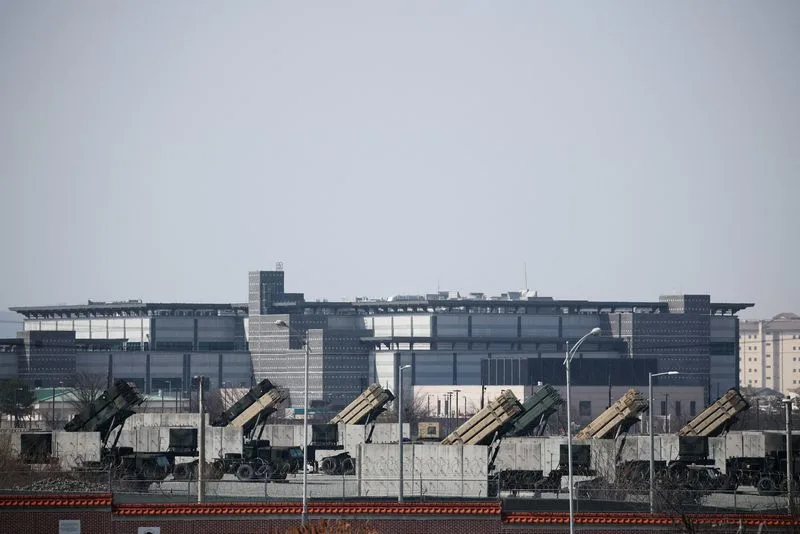
Trust on Hold—Switzerland Signals It Could Walk Away from U.S. Missile Deal.
In a quiet recalibration of defense priorities, officials in Zurich acknowledged this week that a major arms agreement with the United States is no longer guaranteed. Payments for the Patriot missile system have been paused, and for the first time, cancellation is openly on the table.
The issue is not cost or capability. It is certainty.
Swiss authorities say they are withholding further payments until Washington provides binding delivery timelines for the Patriot missile system. Without clear milestones, the procurement process—long seen as a cornerstone of Switzerland’s modern air defense—has entered a phase of negotiation rather than execution.
Defense Minister Martin Pfister struck a measured tone, emphasizing that Bern still intends to acquire the system but is “ruling nothing out.” The government is now exploring all options, including termination, even as it seeks clarity from U.S. counterparts.
By the third layer of this story, the stakes extend beyond a single contract. Switzerland’s hesitation reflects a broader tension in transatlantic defense relations: reliability versus dependence. For smaller, highly strategic states, delays in delivery are not logistical inconveniences—they reshape national security planning, force adjustments in readiness, and raise questions about supplier credibility.
At the same time, Switzerland has moved to safeguard another critical component of its defense modernization. A payment tied to its order of F-35A fighter jets has been advanced to March 2026, signaling that while one pillar of procurement is under review, another must proceed without disruption.
This dual-track approach reveals a careful balancing act. Switzerland is not stepping away from U.S. defense partnerships, but it is asserting leverage—separating timelines, renegotiating terms, and protecting its strategic interests in real time.
There are, however, gray areas. The Patriot system remains one of the most widely deployed and integrated air defense platforms among Western allies. Walking away would carry its own risks, including delays in finding alternatives, compatibility challenges with allied systems, and potential political costs in Washington.
Conversely, proceeding without firm guarantees exposes Switzerland to uncertainty at a moment when European security dynamics remain fluid. The war in Ukraine and rising concerns over missile threats have made timely delivery of defense systems more critical than ever.
The Swiss government has set a clear internal deadline. By the end of June, it will brief the Federal Council on the next steps—whether to proceed, renegotiate, or withdraw.
The decision will not simply determine the future of one weapons system. It will signal how smaller European states intend to navigate an increasingly complex defense market—where partnerships are essential, but predictability is no longer assumed.
In the longer term, this moment may reflect a subtle shift in strategy. Procurement is no longer just about acquiring capability; it is about managing risk across alliances, timelines, and geopolitical uncertainty.
And in that equation, even long-standing partners are now subject to a quieter, more transactional scrutiny.

US F-15E Shot Down Over Iran as Search Underway for Missing Crew

North Korea Honors Fallen Troops in Russia’s War

Russia Vows to Defend Allies Amid Rising Global Tensions


-

 US-Israel war on Iran1 month ago
UK Refuses Iran Strike Access, Trump Fires Back
-
 Russia-Ukraine War1 month ago
Europe’s Spies Challenge Trump’s Ukraine Peace Optimism
-

 Top stories1 month ago
War Expands Across Region as Iranian Militias Join Fight
-
 Top stories1 month ago
India Turns to Brazil in Strategic Minerals Push Against China
-
 US-Israel war on Iran1 month ago
Iran Pledges ‘Never, Ever’ to Hold Bomb-Grade Material
-
 US-Israel war on Iran1 month ago
Syria Under Fire on Two Fronts
-
 Russia-Ukraine War1 month ago
Estonia Warns NATO Would Strike Deep Inside Russia if Baltics Are Invaded
-

 Top stories3 weeks ago
Meloni Breaks Ranks: Italy Warns on Iran War