
Highly Unethical
U.S.-Funded Hepatitis B Trial in Africa Sparks Global Ethics Backlash

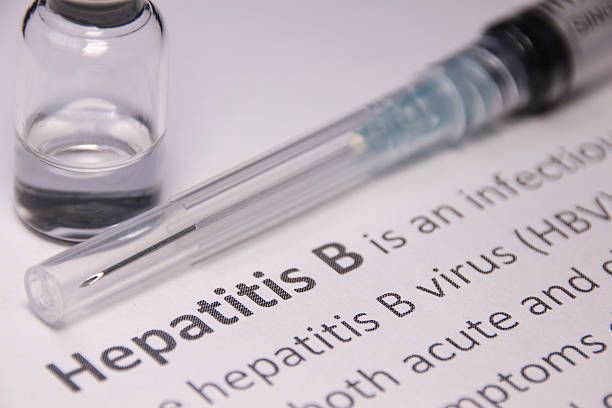
Withholding a proven vaccine from African newborns to test a theory already settled? Global health experts say this crosses a red line.
A proposed U.S.-funded hepatitis B vaccine study in West Africa has ignited fierce criticism from global health experts, who warn it risks children’s lives while reviving deeply uncomfortable echoes of medical exploitation.
The plan, backed by the Trump administration, would spend $1.6 million on a five-year trial in Guinea-Bissau, where nearly one in five adults lives with hepatitis B. The study would randomly assign newborns to either receive—or be denied—the hepatitis B vaccine at birth, despite decades of evidence showing the birth dose is safe, effective, and lifesaving.
Critics say the study is ethically indefensible. The vaccine is already recommended at birth by the World Health Organization, and randomized trials demonstrating its benefit already exist. “It’s highly unethical to choose to give a vaccine to some children but not others,” said Paul Offit, a leading U.S. vaccine specialist.
The controversy follows a quiet but consequential policy shift by the Centers for Disease Control and Prevention, which recently reclassified hepatitis B vaccination at birth as an “individual decision” for U.S. parents—despite no new evidence of harm. That change, experts argue, aligns with the long-held views of Health Secretary Robert F. Kennedy Jr., a prominent vaccine skeptic who has also cut U.S. funding to Gavi, the Vaccine Alliance, an organization credited with saving more than 20 million lives worldwide.
Now, many see the Guinea-Bissau trial as an attempt to retroactively justify those policy moves. “This announcement has set alarm bells ringing,” said Martin McKee, who described the study as “a policy desperately searching for evidence.”
The trial will be conducted by the Bandim Health Project, led by Danish researchers whose earlier vaccine studies have drawn intense scrutiny. A 2018 paper from the group suggested certain childhood vaccines increased mortality among girls—claims later contradicted by the same authors in a 2022 follow-up study. That reversal, critics say, was never publicly acknowledged by Kennedy when he cited the earlier work to justify cutting global vaccine funding.
What troubles experts most is the setting. Guinea-Bissau has one of the highest hepatitis B prevalence rates in the world and a fragile health system. If infected in infancy, a child faces up to a 90% risk of developing chronic liver disease or cancer later in life. “Why on Earth would this study be conducted in a high-endemic country, where the birth dose matters most?” asked Gavin Yamey, who called the approach “neocolonialist.”
The study’s design raises further concerns. It will measure vague “overall health effects” rather than vaccine efficacy, is single-blinded, and gives researchers wide discretion in interpreting outcomes—conditions critics say invite bias and misuse.
To many in global health, the message is deeply unsettling: at a moment when U.S. support for vaccines is shrinking, Washington is still willing to fund experiments that withhold proven protection from African children. “It sends a signal,” said Elizabeth Jacobs, “that some lives are valued less than others.”
For critics, the issue is no longer scientific—it is political. And unless reversed, they warn, the cost will be paid not in debate or ideology, but in preventable infections among the world’s most vulnerable children.









No Pause, No Exit—War Expands as Missiles Fall and Oil Chokes

Dubai Slams “Fake News” of IRGC Tech Strike

Iran Warns UN Against Hormuz Resolution


-

 US-Israel war on Iran1 month ago
UK Refuses Iran Strike Access, Trump Fires Back
-
 Russia-Ukraine War1 month ago
Europe’s Spies Challenge Trump’s Ukraine Peace Optimism
-

 Top stories1 month ago
War Expands Across Region as Iranian Militias Join Fight
-
 Top stories1 month ago
India Turns to Brazil in Strategic Minerals Push Against China
-
 US-Israel war on Iran1 month ago
Iran Pledges ‘Never, Ever’ to Hold Bomb-Grade Material
-
 US-Israel war on Iran1 month ago
Syria Under Fire on Two Fronts
-
 Russia-Ukraine War1 month ago
Estonia Warns NATO Would Strike Deep Inside Russia if Baltics Are Invaded
-

 Top stories3 weeks ago
Meloni Breaks Ranks: Italy Warns on Iran War