Tens of thousands filled Arizona’s State Farm Stadium on Sunday for a sprawling memorial to conservative activist Charlie Kirk, whose killing at a Utah campus event earlier this month shocked the Republican movement he helped build.
The event, part revival and part rally, drew a parade of Trump administration officials, lawmakers, media personalities, and grassroots supporters. They remembered Kirk as a man of faith and a builder of institutions — but also as a symbol of a conservative cause that has only grown more militant in his absence.
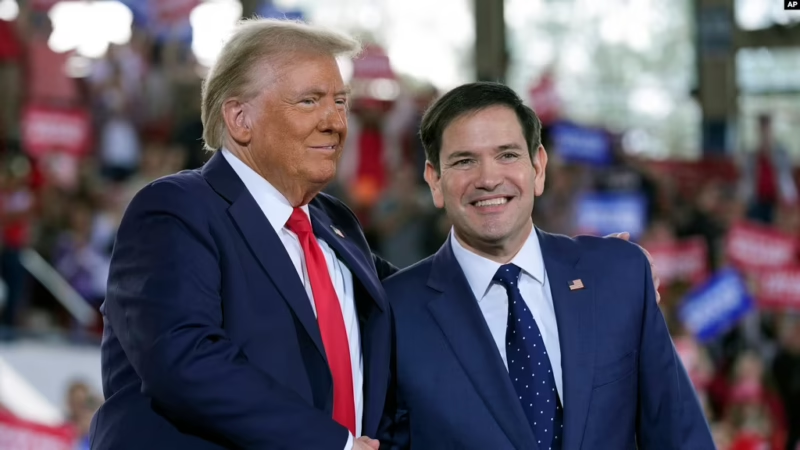
President Donald Trump, the headline speaker, set the tone. “He did not hate his opponents, he wanted the best for them,” Trump told the crowd, before adding pointedly: “That’s where I disagreed with Charlie. I hate my opponents, and I don’t want the best for them.” It was a line that drew laughter, but also underscored how seamlessly the memorial blurred grief and politics.
Trump went on to repeat false claims about the 2020 election, mock Joe Biden, and tout his trade tariffs. At one point, he described Kirk as a “martyr.”
Vice President J.D. Vance, striking a more somber note, warned against celebrating Kirk’s death online and called for resilience in the face of division.
Erika Kirk, the widow who has swiftly emerged as a prominent figure, broke down in tears as she forgave her husband’s killer and vowed to continue his mission through Turning Point USA, the youth-focused organization he founded. The group’s board has already voted to make her its next CEO. “I love you Charlie, baby,” she said. “I will make you proud.”
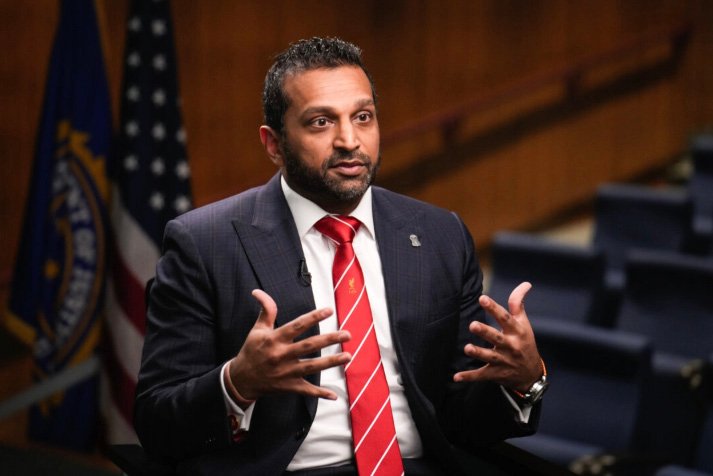
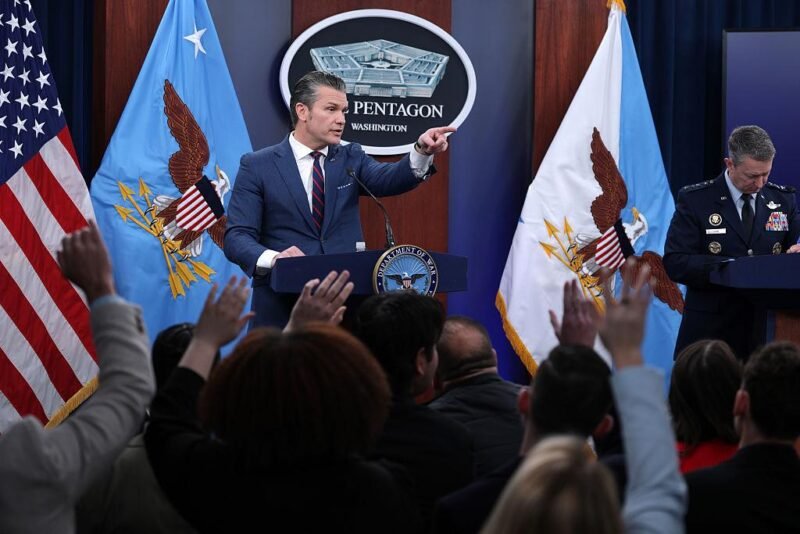
The White House presence was overwhelming. Cabinet secretaries Marco Rubio, Pete Hegseth and Robert F. Kennedy Jr. spoke. Chief of Staff Susie Wiles delivered rare public remarks.
Stephen Miller thundered that Kirk had been “immortalized.” Tulsi Gabbard framed his legacy as proof of the need to defend free speech. Even Elon Musk and UFC president Dana White were spotted in attendance, alongside right-wing influencers Tucker Carlson, Jack Posobiec and Benny Johnson.
Faith suffused the proceedings. Carlson called Kirk a preacher of the gospel. Posobiec urged the crowd to “put on the full armor of God.” Johnson described Trump’s administration as divinely chosen to “wield the sword against evil.” For many, Kirk’s life and violent death became a metaphor for a spiritual war.
What emerged was not simply a farewell, but a rare moment of unity for a movement often fractured by personal rivalries and ideological disputes.
Figures as mainstream as cabinet secretaries and as fringe as conspiracy theorists shared the stage, bound together by grief, loyalty to Trump, and a conviction that Kirk’s death had deepened their mission.
Trump himself recognized the mood. “This is like an old time revival, isn’t it?” he said.