US Ends Temporary Protected Status for Ethiopians, Signaling Harder Turn in Trump’s Immigration Strategy.
The Trump administration has moved to terminate Temporary Protected Status (TPS) for Ethiopian nationals living in the United States, a decision that underscores a broader recalibration of U.S. immigration policy toward restriction rather than protection.
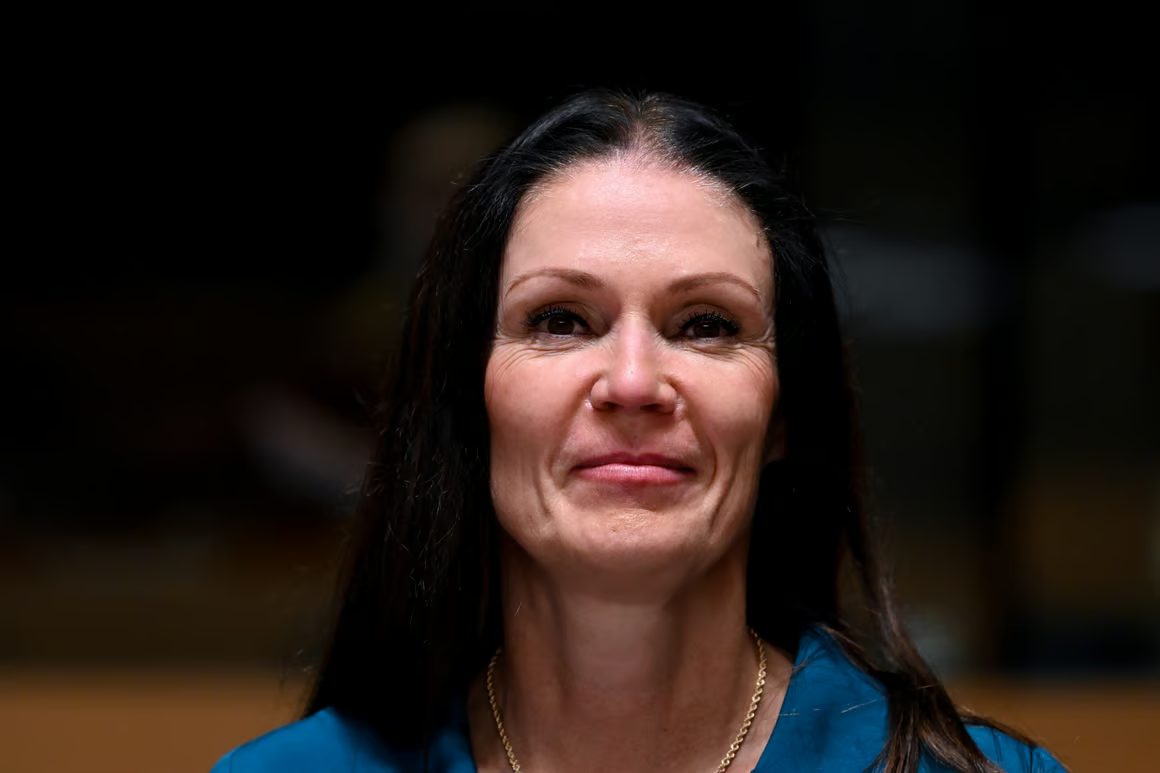
In a notice published Friday in the Federal Register, Homeland Security Secretary Kristi Noem concluded that Ethiopia no longer meets the statutory conditions required for TPS designation, citing a review of country conditions and consultations with other federal agencies.
TPS, created by Congress in 1991, offers temporary legal protection and work authorization to migrants whose home countries are affected by armed conflict, natural disasters, or other extraordinary crises.
For Ethiopians, the designation had provided a crucial legal buffer amid years of political instability, internal conflict, and humanitarian strain. Its termination now places thousands at risk of losing legal status and becoming eligible for removal.
The decision fits squarely within President Trump’s second-term immigration agenda, which has prioritized accelerating deportations and narrowing humanitarian relief pathways. Since returning to office, the administration has rolled back TPS protections for multiple nationalities, including Haitians, Venezuelans, Syrians, South Sudanese, and Myanmar nationals.
In November, the White House also moved to end TPS for Somalis, a decision that drew sharp backlash from diaspora communities in Minnesota and beyond.
Under President Joe Biden, TPS coverage expanded significantly, extending protections to hundreds of thousands of Venezuelans and Haitians. Secretary Noem reversed those extensions earlier this year, arguing that they exceeded the program’s original intent and were no longer justified by current conditions.
The Ethiopian decision continues that rollback, reinforcing the administration’s view that TPS has become a de facto long-term immigration status rather than a temporary humanitarian tool.
Legal challenges are already mounting. Federal courts have repeatedly been asked to weigh the executive branch’s authority to terminate TPS designations, and litigation remains active in several cases.
While a federal judge previously blocked some terminations, the Supreme Court in October allowed the administration to proceed with revoking TPS for Venezuelans while lawsuits continue, a ruling that has emboldened further cancellations.
Beyond TPS, the Department of Homeland Security also announced it would stop processing legacy cases under the Cuban and Haitian family reunification parole programs.
These programs had allowed U.S. citizens and lawful permanent residents to reunite with family members more easily, and their suspension marks another contraction of legal immigration pathways.
For Ethiopian communities in the United States, the implications are immediate and unsettling. Many TPS holders have lived and worked in the country for years, building families, businesses, and local ties.
The administration’s position, however, reflects a broader policy judgment: humanitarian protections must not become permanent fixtures in U.S. immigration law.
As court battles loom and advocacy groups mobilize, the termination of TPS for Ethiopians sends a clear signal. Trump’s immigration strategy is no longer about managing migration flows—it is about enforcing a hard boundary between temporary protection and permanent belonging, regardless of the political or humanitarian fallout.