Internal Information Warfare Now Somaliland’s Greatest National Security Risk.
Somaliland’s greatest threat is not the armed pressure at its borders, but the steady corrosion of its internal cohesion through deliberate, well-financed information warfare. The enemies of the Republic have identified the country’s most sensitive fault line—its clan identity—and turned it into their most effective weapon.
They do not need to invent conflict; they simply energize and amplify what already exists, redirecting political frustrations, identity pride, and community anxieties into a national vulnerability.
By doing so, foreign actors transform a traditional cultural framework into a destabilization tool, injecting division into a population that is already stretched by economic strain and political uncertainty.
The strategy is striking in its simplicity. A single, strategically placed figure—a minor politician craving relevance, a disgruntled activist, a monetized social media personality—can trigger widespread instability by invoking the clan narrative.
These flare-ups are not spontaneous displays of emotion. In many cases, they are funded, curated, and amplified by external state and non-state actors who understand exactly how to weaponize Somaliland’s political psychology.
A local dispute is reframed as a regional insult, a mismanaged administrative issue becomes a tribal conspiracy, and a personal grievance is inflated into a national crisis.
The domestic audience, especially in rural areas with limited access to neutral information, is highly susceptible.
Yet the real accelerant is the diaspora—educated, energetic, and deeply emotional about homeland politics, but detached from the local context that gives nuance to events.
From thousands of miles away, diaspora actors amplify falsehoods as fact, mobilize clan narratives as political truth, and wire cash into conflicts they do not fully understand, turning manufactured tension into combustible reality.
Compounding the threat is the role of Somaliland’s own political elite—particularly the faction often labeled as “failed politicians.” These actors, unable to secure influence through elections, policy, or competence, turn instead to elite capture as their final political weapon.
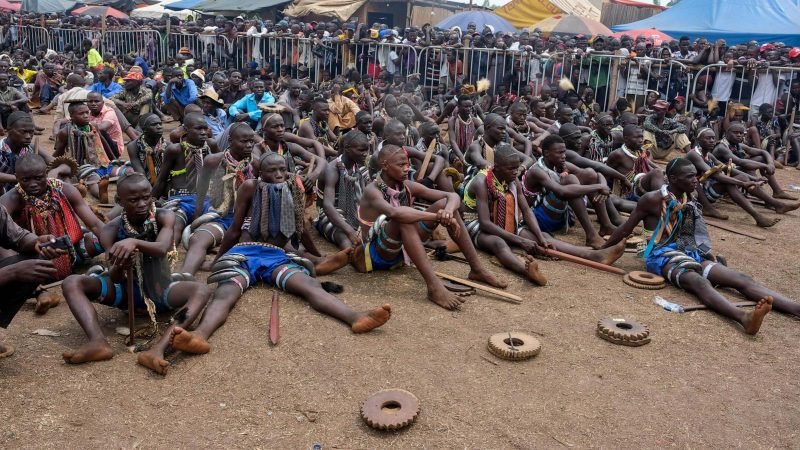
Their method is as corrosive as it is effective: they approach traditional leaders, individuals who carry generational respect and social legitimacy, and offer financial incentives to speak on their behalf. In doing so, they compromise one of Somaliland’s strongest historic assets—the moral authority of elders who once ended wars and built peace.
When these respected voices are manipulated into repeating clan-coded political messages, the entire architecture of Somaliland’s indigenous conflict resolution system is weakened from within.
Foreign adversaries then have proof that the system can be bought, and that the nation’s most trusted figures can be turned into tools of destabilization.
This dynamic creates a dangerous feedback loop. Politicians exploit clan identities for personal gain. Traditional leaders become entangled in political games that erode their neutrality.
The diaspora amplifies disinformation with emotional intensity.
Foreign adversaries fund the entire cycle, using targeted digital warfare to escalate minor tensions into national crises. What emerges is a battlefield not defined by territory, but by perception—one in which the psychological security of citizens is the primary target.
In this environment, border security becomes secondary; the real fight is for narrative control, institutional trust, and public resilience.
The survival of Somaliland now depends on recognizing that wars are no longer fought solely on the ground. They are waged in WhatsApp groups, TikTok livestreams, diaspora forums, and clan councils—spaces where perception can be manipulated faster than facts can be verified.
Until the government, traditional leaders, and civil society treat information warfare as a national security threat equal to any kinetic force, the Republic remains vulnerable to an enemy that never needs to fire a shot.
Somaliland’s future strength will come not from the guns on its borders, but from the institutions that protect its people from weaponized narratives designed to fracture the nation from within.