DHS Secretary Kristi Noem ignited controversy this week after asserting that half of all visas in Minnesota are “fraudulent,” a sweeping claim made without presenting evidence and one that immigration experts say is almost certainly inaccurate.
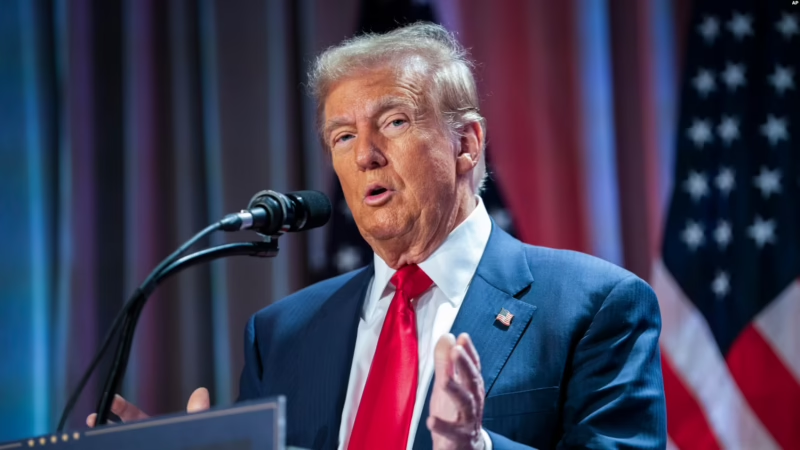
Noem delivered the remarks during President Trump’s final cabinet meeting of the year, citing unnamed sources inside the federal government while attacking Minnesota Gov. Tim Walz, whom she accused of either incompetence or complicity. She offered no supporting data.
The Department of Homeland Security has not responded to repeated requests from CBS Minnesota for documentation or clarification on how such a figure was reached, whether it reflects internal investigations, or what methodology DHS used to evaluate alleged visa fraud in the state.
The absence of such information has intensified skepticism among legal scholars and immigration specialists familiar with federal enforcement trends.
Ana Pottraz Acosta, a visiting professor at the University of Minnesota Law School’s Immigration and Human Rights Clinic and an attorney with more than 20 years of experience, said the number “doesn’t sound plausible” based on any measurable pattern of fraud she has encountered.
Claims of widespread visa manipulation, she noted, would require substantial and verifiable data, particularly given the serious consequences tied to immigration fraud.
Individuals who knowingly submit fraudulent applications face permanent bars from obtaining future immigration benefits, an outcome that discourages such behavior.
Acosta added that marriage-based visas — often cited in public debates about fraud — already undergo some of the government’s most rigorous scrutiny, with applicants required to provide extensive documentation proving the authenticity of their relationship.
Publicly available federal data also appears to contradict Noem’s suggestion of large-scale fraud. In September, U.S. Citizenship and Immigration Services reviewed roughly 1,000 cases flagged for potential problems in the Twin Cities.
The investigation resulted in only 42 referrals to Immigration and Customs Enforcement and just four arrests — a fraud rate of approximately 0.5 percent.
Despite this, Noem extended her accusations to Gov. Walz, implying he may have allowed fraudulent visa programs to flourish. The governor’s office dismissed the claim as baseless, pointing out a simple procedural fact: states do not manage immigration systems or visa approvals.
Those responsibilities rest entirely with federal agencies under the Department of Homeland Security — the department Noem herself oversees.
The dispute reflects growing political tension as Minnesota faces heightened federal scrutiny linked to recent fraud cases involving state-funded programs.
But the dramatic discrepancy between Noem’s explosive “50 percent” claim and federal enforcement data leaves a central question unresolved: whether DHS possesses evidence it has not yet disclosed, or whether the comment represents a political escalation untethered from documented fact.