Kulmiye in Crisis: The Vote One Side Can’t Hold — and the Other Can’t Survive.
The internal confrontation gripping Somaliland’s Kulmiye party has evolved into a defining struggle over who controls the movement’s future — and whether the party can function at all ahead of the 2026 elections.
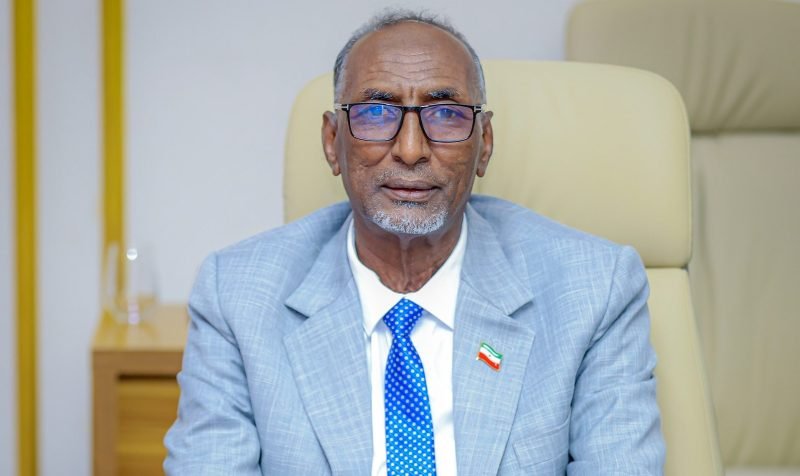
What appears on the surface to be a dispute between Chairman Mohamed Kahin Ahmed and the faction aligned with former President Muse Bihi is, in reality, a deeper conflict between two competing sources of political legitimacy: institutional authority and democratic mandate.
Information circulating within party circles paints a picture of a movement split into two powerful blocs. On one side is Kahin’s faction, which controls the party’s legal machinery.
As the sitting chairman, Kahin holds the administrative levers — the finances, the official stamp, the procedural calendar, and crucially, the authority to convene the party congress.
This gives his group a protective shield. Their strategy rests on slowing or indefinitely delaying the congress, because the moment they call it, they open the door to a vote they are almost certain to lose. Their power is real but defensive, rooted in paperwork rather than enthusiasm on the ground.
On the other side sits the faction backed by the Central Council — the party’s core voting body. This bloc claims the political mandate. They have the numbers, the backing of most delegates, and the legitimacy of representing the party’s majority. Their entire strategy hinges on one act: forcing the congress to take place.
If it is held, their victory is almost guaranteed. But they cannot legally call it themselves. They are trapped in a position where they hold the votes but lack the mechanism to activate them.
That deadlock has created a high-stakes standoff. Kahin’s refusal to convene the congress is not merely obstruction; it is self-preservation. Calling the meeting would almost certainly end his tenure. But the Bihi-aligned faction’s inability to compel that meeting means their majority remains inert.
Neither side can move decisively without inflicting severe damage on the party’s internal legitimacy.
The risk is that the standoff produces a constitutional crisis inside the party. If the majority faction eventually organizes a rival congress without Kahin’s authorization, the result could be two competing chairmen: one legally recognized but lacking political backing, and another politically dominant but procedurally questionable.
Such a split would leave Kulmiye fractured at the very moment its rivals are consolidating ahead of 2026.
The implications extend beyond Kulmiye itself. A opposition party trapped in internal paralysis forfeits valuable political time, leaving Waddani and KAAH to define the national narrative without meaningful resistance.
The spectacle of a former governing party unable to enforce its own rules weakens public trust in Somaliland’s political system, particularly at a time when the country continues to argue for international recognition and institutional maturity.
The stalemate will not resolve itself. With neither side willing to concede and both fearing the political consequences of retreat, the conflict is likely to spill outside formal party structures.
Respected elders, business elites, or national institutions may eventually be asked to intervene — not to decide a winner, but to prevent the ruling party from tearing itself apart.
Until a neutral arbiter forces a path forward, Kulmiye will remain suspended between legality and legitimacy, with its future — and the shape of Somaliland’s next political chapter — hanging on a congress that one side cannot afford to hold and the other cannot afford to live without.