
Top stories
Trump’s Threat to Nigeria Is a Wake-Up Call

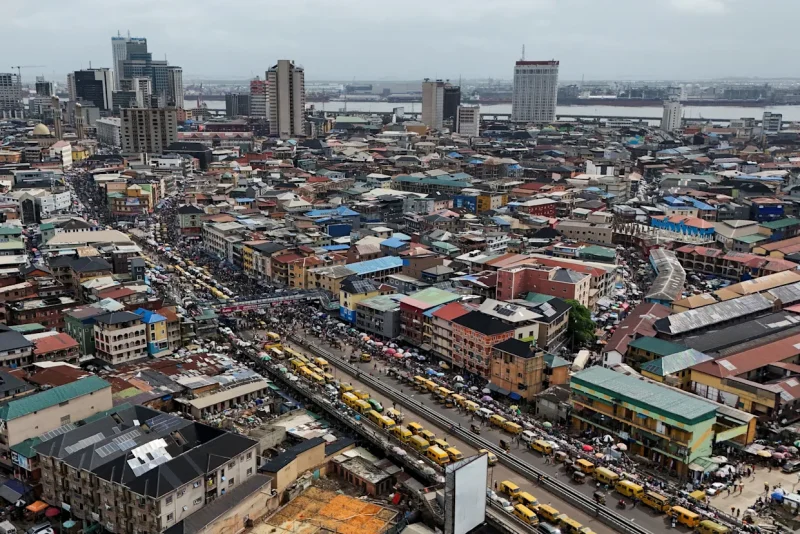
US President Donald Trump’s decision to designate Nigeria as a “Country of Particular Concern” over the persistent killings of Christians — followed by an unusually blunt threat of possible military intervention — has thrust Africa’s most populous nation into an uncomfortable global spotlight.
It also raises a question Nigeria’s leaders have preferred to avoid: What does sovereignty mean when a government cannot protect its own people?
Abuja responded cautiously, insisting that security within its borders remains a strictly sovereign matter. Yet the facts on the ground tell a more difficult story.
For more than a decade, successive Nigerian administrations have struggled — and often failed — to stop Islamist militants from slaughtering civilians across the north.
Boko Haram, its splinter group ISWAP, and armed Fulani militias have killed tens of thousands of Nigerians, Christians and Muslims alike, turning entire communities into internally displaced populations and hollowing out local economies.
Nigeria matters — its size, population of 220 million, and economic weight make it a pillar of Africa’s stability.
But Nigeria also matters because others need it to matter: for energy, minerals, investment, and influence. A strong Nigeria can anchor West Africa; a fractured Nigeria can destabilize the entire region.
Across the past decade, however, Abuja has allowed internal cohesion to erode. The political class has grown increasingly insulated and self-satisfied amid worsening insecurity, deepening poverty, and recurring extremist violence.
The result is a strategic paradox: Nigeria’s global relevance is rising, even as its domestic capacity to protect its citizens is shrinking.
That fragility now carries consequences. Washington’s warning, whatever its political motives, reflects a broader reality — that Nigeria’s internal failures are no longer seen as purely local concerns.
With the Sahel slipping deeper into insurgency, the risk of regional spillover has escalated, and Nigeria’s instability has become a matter of international security.
The deeper danger lies not in Trump’s rhetoric but in what it exposes: a widening gap between Nigeria’s aspirations and its ability to execute the most basic function of a state.
No amount of eurobond issuances, summit diplomacy, or investment roadshows can obscure the constitutional imperative that “the security and welfare of the people shall be the primary purpose of government.”
If Abuja wishes to reaffirm true sovereignty, it must reclaim full control of its territory — not in speeches but in verifiable action.
That means eliminating ungoverned spaces, rolling back insurgent groups, and ensuring that citizens of every religion or none at all can live without fear. In the absence of that, accusations of state failure will only grow louder, and external pressure will intensify.
Trump’s statement may be provocative, even abrasive. But it reflects a truth Nigeria can no longer postpone: Governments must govern. That is not just a political slogan — it is the job description, and Nigeria’s future depends on fulfilling it.

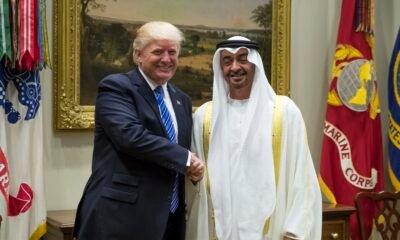
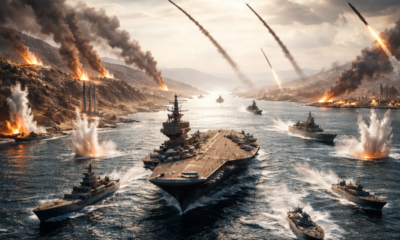










Behind every interception over the Gulf is a new alliance—one built not on politics, but on survival.
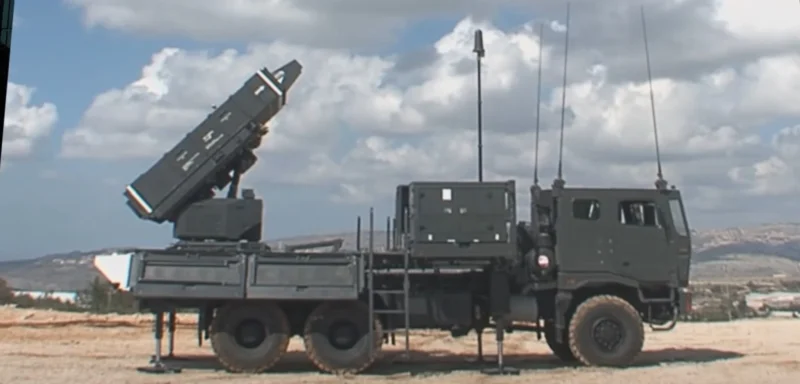
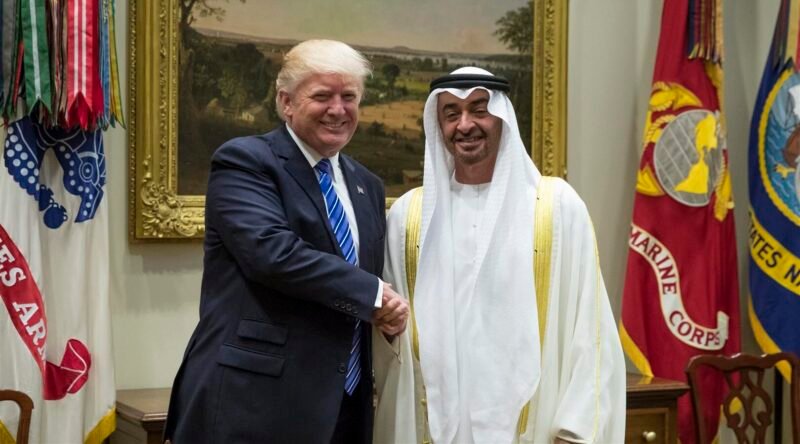
The repeated flash of interceptors over Abu Dhabi and Dubai has become a defining image of the current Middle East war. Less visible, but increasingly consequential, is the system behind those interceptions: a multilayered air-defense network built through cooperation between the United Arab Emirates, Israel and the United States.
What began as a diplomatic opening under the 2020 Abraham Accords has evolved into a practical security arrangement shaped by necessity. As Iranian missiles and drones have targeted Gulf states in large numbers, that arrangement is now being tested in real time.
The UAE has absorbed a substantial share of incoming threats since the conflict began, including hundreds of ballistic missiles and thousands of drones. Its response has relied on a layered architecture designed to address different types of attacks simultaneously.
American-supplied THAAD and Patriot systems form the upper tier, intercepting long-range ballistic threats. Israeli systems such as Barak-8 and SPYDER provide coverage against cruise missiles, aircraft and low-flying drones, filling gaps that heavier systems are less suited to address.
The result is a defense-in-depth model that has, so far, limited the damage from sustained attacks. Interception rates have remained high, generally above 90% across different threat categories, according to official figures. Even so, the system is not impermeable. Some debris has caused fires and localized damage, underscoring the limits of even advanced defenses under persistent pressure.
For policymakers, the effectiveness of this network presents both reassurance and risk. On one hand, it demonstrates that integrated air defense—combining U.S. hardware, Israeli technology and regional coordination—can blunt large-scale missile and drone campaigns.
On the other, it highlights the resource intensity of maintaining such protection. Interceptor stockpiles, system maintenance and operational tempo are emerging as critical variables if the conflict continues.
The partnership also reflects a broader shift in regional security thinking. Gulf states have long relied on U.S. guarantees while attempting to balance relations with regional rivals. The current conflict has narrowed that space. Cooperation with Israel, once politically sensitive, is now framed in more pragmatic terms—focused on shared threats and operational outcomes.
For Israel, the arrangement extends its defensive perimeter and reduces strategic isolation. For the UAE, it strengthens its ability to protect key infrastructure and population centers, though it also reinforces its visibility as a target.
The implications extend beyond the battlefield. The UAE’s role as a global business and transportation hub depends heavily on perceptions of stability. Continued missile activity, even when intercepted, introduces uncertainty that could affect investment, insurance costs and long-term planning.
In that sense, the defense partnership is not only a military development but also an economic safeguard—one that seeks to preserve the conditions that underpin the Gulf’s growth model.
The trajectory of the conflict will determine whether this model proves sustainable. A prolonged campaign could strain even well-integrated systems, while a de-escalation might reinforce the case for deeper regional coordination.
For now, the system is holding. But its performance is being measured not just in interceptions, but in time—how long it can continue to absorb pressure without altering the strategic balance it was designed to protect.
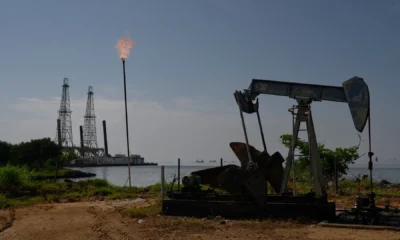
Gulf Energy Hit Indirectly as UAE Halts Borouge After Air Defense Interceptions.
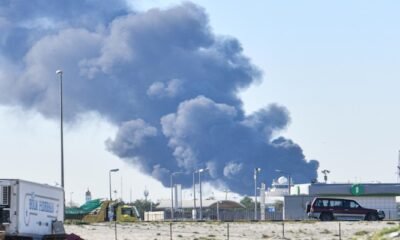
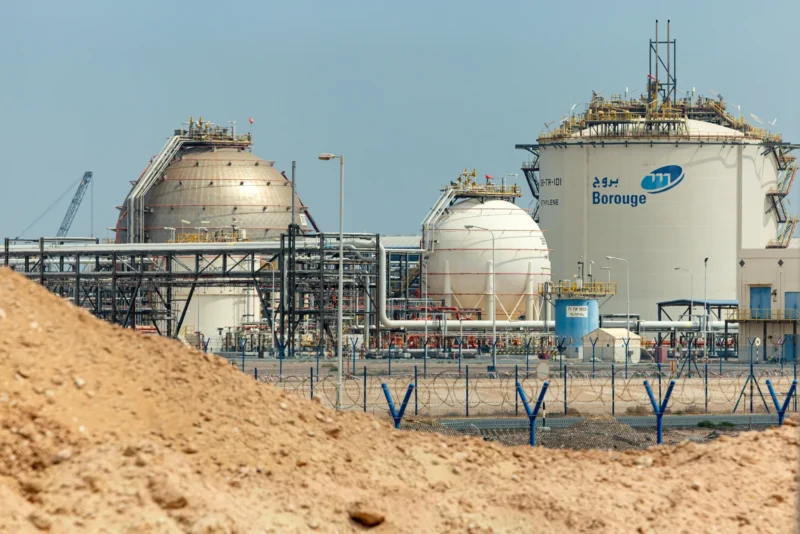
Operations at a major petrochemical facility in the United Arab Emirates were suspended Sunday after falling debris from intercepted missiles and drones sparked fires at the site, authorities said.
Officials in Abu Dhabi confirmed that multiple fires broke out at the Borouge petrochemicals plant following what they described as “successful interceptions” by air defense systems responding to incoming threats.
Emergency teams were deployed to contain the fires, and no injuries were reported.
The UAE’s defense ministry said its air defenses were actively engaging missile and drone attacks launched from Iran, as the regional conflict enters its sixth week and continues to expand beyond direct military targets.
Authorities said operations at the Borouge facility have been halted while damage assessments are carried out. The plant is a key part of the UAE’s petrochemical sector, producing materials used across global manufacturing supply chains.
The incident highlights a growing pattern across the Gulf, where infrastructure has been affected not only by direct strikes but also by debris from intercepted projectiles.
Across the region, governments have reported similar incidents involving damage to energy facilities and industrial sites as air defense systems respond to incoming attacks.
The latest developments come amid heightened tensions tied to the ongoing U.S.-Israel war with Iran, which has disrupted shipping routes, increased pressure on energy markets and drawn Gulf states further into the conflict.
Officials have not indicated how long operations at the Borouge plant will remain suspended.
Kuwait Under Fire—Iranian Drones Strike Oil and Power Heart.
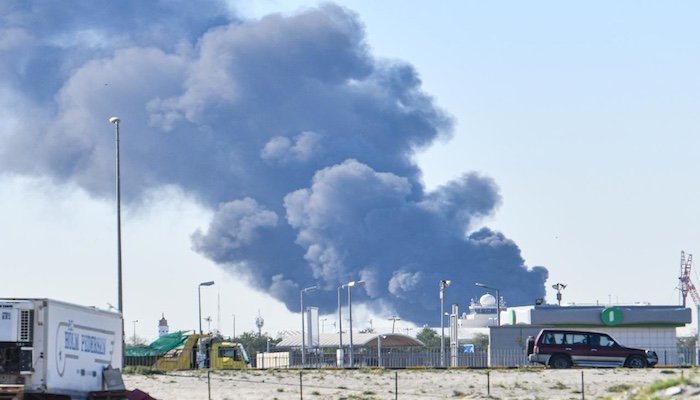
The first signs were smoke rising over Shuwaikh, where one of Kuwait’s most critical energy hubs sits at the edge of the capital.
By dawn, officials confirmed what many feared: Iranian drones had struck the Shuwaikh oil sector complex, triggering a fire inside facilities that house both the oil ministry and the state-run Kuwait Petroleum Corporation. Within hours, additional strikes hit government buildings and key power infrastructure, widening the scope of the attack.
No casualties were reported. But the damage ran deeper than the absence of injuries might suggest.
According to Kuwaiti authorities, two power generation units were forced out of service after drones targeted electricity and desalination plants—facilities essential not only for energy supply but also for water security in a country where freshwater is largely produced through desalination.
By the third layer of impact, the significance becomes clear: this was not a symbolic strike. It was a calculated hit on the systems that sustain daily life.
The attacks come as the war between the United States, Israel, and Iran enters its sixth week, steadily expanding beyond traditional military targets. Increasingly, economic and civilian infrastructure across the Gulf is being drawn into the conflict.
For Kuwait, a state that has publicly maintained it is not a party to the war, the strikes raise urgent questions about vulnerability.
Officials described “significant material damage” to government office complexes, underscoring how administrative and energy systems are now exposed. While air defenses have intercepted many incoming threats across the region, the ability of drones to penetrate and disrupt critical facilities highlights a shifting battlefield—one defined less by frontlines and more by reach.
The pattern is becoming familiar.
Across the Gulf, similar incidents have targeted oil storage sites, petrochemical plants, and power networks. The strategy appears aimed at applying pressure without triggering mass civilian casualties, while still delivering economic and psychological shock.
There has been no immediate response from Tehran.
But the broader message is already resonating: the war is no longer contained to military bases or distant installations. It is moving into the infrastructure that underpins state stability.
For Kuwait and its neighbors, the challenge is no longer just defense—it is continuity.
Keeping the lights on, water flowing, and markets stable has become part of the war effort itself.
And as long as the conflict endures, those systems remain in the crosshairs.
U.S. Rescues Downed Pilot in Iran as War Escalates and Gulf Infrastructure Comes Under Fire.
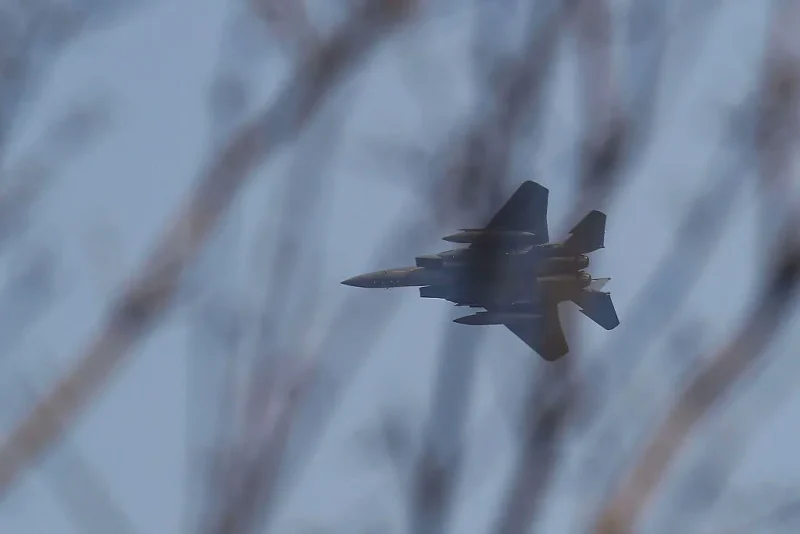
The rescue unfolded in silence, high above the mountains of Iran, where a lone American pilot had spent hours evading capture.
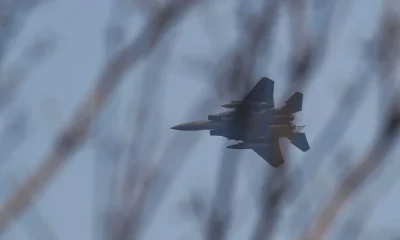
By the time U.S. aircraft closed in, the aviator—downed when an F-15E fighter jet was shot out of the sky—was already injured and being tracked by hostile forces. Within a narrow window, a coordinated operation involving dozens of aircraft extracted him from behind enemy lines, according to President Donald Trump.
The mission, he said, succeeded just as Iranian forces were closing in.
By the third day after the crash, the broader meaning of the rescue had become clear: this war is no longer defined by distant strikes alone. American personnel are now directly exposed inside Iranian territory, raising the stakes of every engagement.
The downing of the jet marked a turning point.
It was the first confirmed U.S. aircraft loss over Iran since the conflict began six weeks ago. A second crew member had been rescued earlier, but another aircraft—an A-10 attack jet—was also reported downed, with the status of its crew unclear.
Despite repeated claims from Washington that Iran’s military capabilities have been significantly degraded, the incident underscores Tehran’s ability to inflict damage and sustain pressure.
That pressure is spreading across the region.
In Kuwait, drone strikes damaged power plants and disrupted a desalination facility, threatening water supplies in a country heavily dependent on energy infrastructure. In Bahrain, a strike ignited a fire at an oil storage site. And in the United Arab Emirates, debris from intercepted drones sparked fires at a major petrochemical complex in Ruwais, halting production.
These are not isolated incidents.
They reflect a widening strategy in which economic infrastructure—energy, water, logistics—has become a central battlefield. For civilians, the impact is immediate: disrupted utilities, rising costs, and growing uncertainty about daily life.
At sea, the stakes are even higher.
The Strait of Hormuz, a critical artery for global oil shipments, remains effectively closed. Trump has renewed his warning that Iran must reopen the waterway or face severe consequences, setting a new deadline that signals potential escalation.
Iranian officials have responded in kind.
Military leaders warned that any further attacks on Iranian infrastructure could trigger retaliation against U.S. assets across the region, while political figures hinted at expanding the conflict to another chokepoint—the Bab el-Mandeb Strait.
Diplomatic efforts continue, but progress is fragile.
Mediators from Pakistan, Turkey and Egypt are working to bring both sides to the table, with proposals centered on a temporary ceasefire to allow negotiations. Iranian Foreign Minister Abbas Araghchi has indicated openness to talks, even as conditions remain contested.
For now, the war shows no sign of slowing.
More than 1,900 people have been killed in Iran, alongside casualties across Israel, Lebanon and the Gulf. Global markets remain volatile, and energy routes—once taken for granted—have become bargaining chips in a high-risk confrontation.
The rescue of one pilot offers a moment of relief.
But it also reveals the deeper reality: this is no longer a conflict contained by borders or battle lines. It is a war where the distance between frontline and homeland is collapsing—and where each escalation brings the region closer to a broader, more unpredictable phase.
Behind Enemy Lines—The High-Risk Race to Save a Downed Pilot
From Regime to Guard State—IRGC Tightens Grip on Iran as War Accelerates Shift Toward Hardline Rule.
In Tehran, the changes are not announced—they are absorbed.
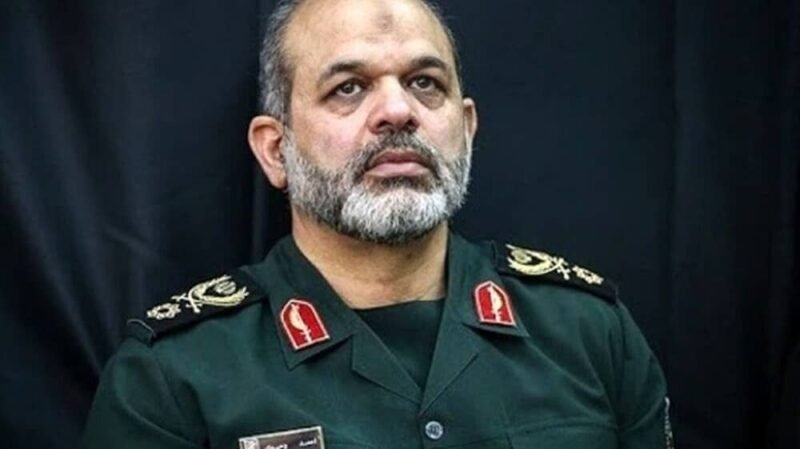
As the war stretches into its second month, the most consequential shift inside Iran is not visible on the battlefield, but within the architecture of power. The Islamic Revolutionary Guard Corps is steadily consolidating control across political, military, and economic institutions, accelerating a transformation years in the making.
What is emerging is not regime collapse, but reconfiguration.
By the third layer of this evolution, the direction becomes clearer: authority is moving away from hybrid governance—where clerical, political, and military actors shared influence—toward a more centralized, security-driven system dominated by the Guard.
The process has been shaped by war.
A series of assassinations and strikes targeting senior figures has disrupted leadership structures. Yet rather than creating instability, these losses have opened pathways for a new generation of commanders—often described as more hardline and less constrained—to move into key positions.
Analysts say this pattern reflects the Guard’s institutional resilience.
“The leadership is being replaced, but not weakened,” said Vali Nasr, noting that figures seen as more pragmatic have been sidelined in favor of those aligned with a more confrontational posture. The replacement of officials such as Ali Larijani with figures like Mohammad Zolghadr illustrates that shift.
There are no clear signs of fragmentation.
Despite sustained external pressure, the IRGC has maintained cohesion through a decentralized network of overlapping command structures. This design—built over decades—allows continuity even as individual leaders are removed.
The Guard’s influence extends far beyond the military.
Veterans of the organization occupy key roles across Iran’s political system and control significant sectors of the economy, including energy, infrastructure, and communications. This integration provides both financial resources and institutional leverage, reinforcing its central position.
The relationship with the clerical establishment is also evolving.
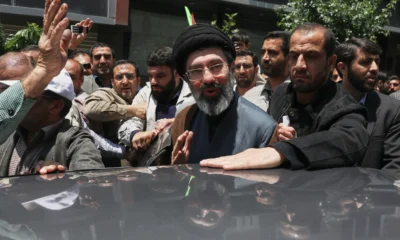
Rather than displacing religious authority, the Guard appears to be aligning more closely with it. Leadership figures, including Mojtaba Khamenei, are widely seen as maintaining strong ties with the IRGC, suggesting a convergence of military and ideological power.
There are competing dynamics within the system.
More pragmatic voices, including President Masoud Pezeshkian, have signaled interest in de-escalation, citing economic strain and internal pressure. But those efforts have faced resistance from Guard-aligned factions, which prioritize strategic resilience over immediate relief.
That tension remains unresolved.
Externally, the implications are significant.
The IRGC controls Iran’s most critical military capabilities, including missile systems and regional proxy networks. As its influence grows, analysts expect a more assertive foreign policy—particularly toward Israel and the United States—paired with efforts to rebuild capabilities weakened by the war.
There are also concerns about longer-term trajectories.
A more consolidated, security-driven leadership may be more inclined to pursue deterrence through unconventional means, including the potential acceleration of a military nuclear capability.
Yet uncertainty remains.
Iran’s internal balance of power is still shifting, and the outcome will depend on how the war evolves—whether it ends in negotiation, prolonged conflict, or partial de-escalation.
What is clear is that the structure of the state is changing.
The IRGC is no longer just a pillar of the system.
It is becoming the system itself.
And if that transition solidifies, the Iran that emerges from this war may be less fragmented—but also more rigid, more insulated, and potentially more confrontational than the one that entered it.
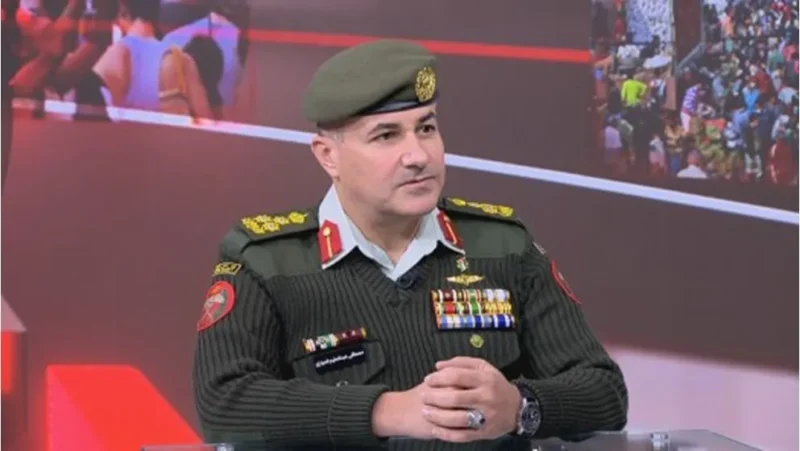
Jordan Says It Intercepted Most of Nearly 300 Iranian Missiles and Drones Since War Began.
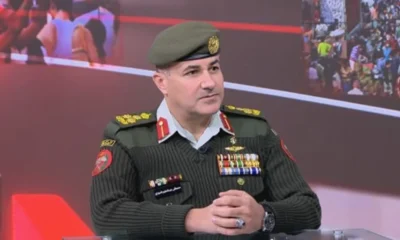
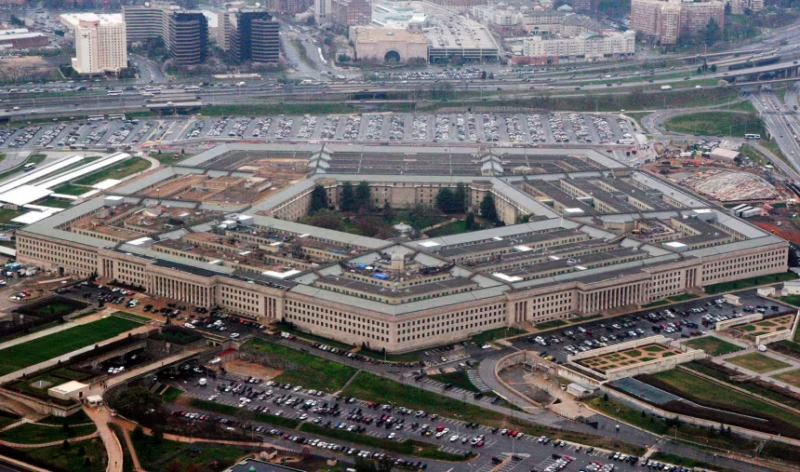
AMMAN — Jordan’s military said Saturday that the country has been targeted by nearly 300 missiles and drones since the start of the war involving Iran, with the majority intercepted by its air defenses.
Colonel Mustafa Al-Hayari, director of military media for the armed forces, said 281 projectiles had entered Jordanian airspace since the conflict began. Of those, 261 were intercepted and destroyed by the Royal Jordanian Air Force and air defense systems.
“Iran and some factions in the region are targeting Jordanian territory directly and without justification,” Al-Hayari said at a press conference.
Jordan has maintained that it is not a party to the conflict and has repeatedly stated that its territory and airspace will not be used to launch attacks against any country.
Government spokesman Mohammad Al-Momani said there are no foreign military bases in Jordan, though the country maintains joint defense agreements with allied nations to support its national security.
Since the war began, Iran has launched missile and drone attacks across the region, targeting Israel and several Arab countries. Some strikes have hit civilian and energy infrastructure, while Tehran says it is aiming at U.S. interests and military-related targets.
Jordanian authorities said 29 people were injured in the attacks, all of whom have since been discharged from hospital. Damage has been reported to 31 vehicles, 59 homes and shops, and 16 public properties.
Officials also warned of threats from armed groups in neighboring countries. Foreign Minister Ayman Safadi said last month that Jordan had been targeted by Iraqi factions and called for the attacks to stop.
The military said it continues to monitor the situation and is prepared to respond to any further threats.

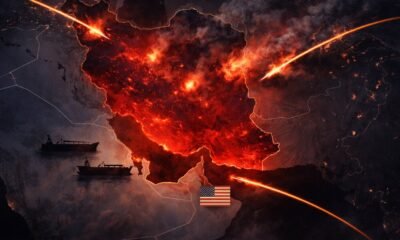
Inside the UAE-Israel Air Defense Shield

How the UAE Became the Frontline of a War It Tried to Avoid

The Hormuz Paradox: Globalization’s Artery as its Executioner


-
 TECH3 weeks ago
China Bets on an AI-Powered Military Future
-
 US-Israel war on Iran2 weeks ago
Waves of Mystery Drones Breach U.S. Nuclear Base Airspace
-
 Terrorism7 days ago
Egypt Uncovers Alleged Plan to Down Presidential Plane
-
 US-Israel war on Iran2 weeks ago
Saudi Arabia Warns of Military Action After Iranian Missile Strike
-
 US-Israel war on Iran2 weeks ago
Former CIA Chief Blames White House for Escalating Iran War Crisis
-
 Top stories1 week ago
Saudi Arabia Deepens Defense Ties with Ukraine
-
 US-Israel war on Iran2 weeks ago
Iran’s Guard Leadership Hit Hard in Escalating Strikes
-
 Analysis2 weeks ago
Inside the IRGC’s Quiet Rebuild of Hezbollah