
Russia-Ukraine War
Europe Tightens Borders After Drone Strikes and Espionage Alarms


EU Tightens Visa Restrictions on Russian Travelers as Security Fears Rise.
The European Union has introduced its toughest travel restrictions on Russian citizens since the start of the Ukraine war, citing a surge in sabotage attempts, drone incursions, and broader security risks tied to Moscow’s sprawling shadow operations across Europe.
Under the new rules announced Friday, Russian nationals will no longer be eligible for multiple-entry Schengen visas, a privilege that previously allowed millions to travel freely across Europe’s borderless zone.
Instead, they must apply for a new visa for every single trip, giving EU governments what officials call “close and frequent scrutiny” of each individual traveler.
The shift marks a major escalation in Europe’s approach to Russian mobility—one that falls short of a total travel ban but represents a profound tightening of the bloc’s internal security posture.
“Travelling to the EU is a privilege, not a given”
EU foreign policy chief Kaja Kallas, a leading voice on Russia policy, framed the move as a necessary response to an increasingly aggressive Kremlin abroad.
“We now face unprecedented drone disruptions and sabotage on our soil,” Kallas said. “Travelling to and freely moving within the EU is a privilege, not a given.”
European officials point to a string of incidents—rail sabotage in Germany, arson attempts near military installations in the Baltics, and suspected Russian-linked drone activity across the Nordics—as the backdrop for the tightening. Intelligence agencies warn that Russia has broadened its toolbox since 2022, using tourists, business travelers and “nontraditional actors” to move people, money and equipment into the EU.
Exceptions for dissidents and families
The new rules carve out exemptions for Russians considered “without doubt” trustworthy:
-
Dissidents fleeing persecution
-
Independent journalists
-
Human rights defenders
-
Close family members of Russians already legally residing in the EU
-
Family members of EU citizens living in Russia
EU officials stress that these categories are essential for maintaining lifelines to civil society figures targeted by the Kremlin.
Moscow lashes out
The Kremlin, already furious at the EU’s sweeping sanctions regime, responded with characteristic sarcasm.
Foreign Ministry spokeswoman Maria Zakharova mocked the move as self-sabotage:
“Why does Western Europe need creditworthy tourists when there are illegal migrants living on benefits and Ukrainian draft dodgers?”
Moscow has long accused European governments of “Russophobia,” while EU officials say the tightening is a matter of basic national security.
A steep decline in Russian travel
Before the Ukraine invasion, Russians were among the most frequent Schengen travelers, receiving more than 4 million visas in 2019. By 2023, that number had collapsed to around 500,000 following the EU’s suspension of its visa facilitation agreement and a clear directive to “deprioritize” Russian applications.
The new rules go further—but still stop short of the Baltic countries’ long-standing calls for a full visa ban on Russian citizens.
Serbian loophole under pressure
The EU also issued a pointed warning to Serbia, a candidate for EU membership, over its practice of granting fast-track citizenship to Russians. The Commission said the policy “poses potential security risks,” since Serbian passport holders can move far more easily across Europe.
A policy shaped by war — and what comes next
Across the continent, governments admit the measures are aimed at Russian espionage networks, not ordinary travelers.
But the political messaging is unmistakable: full restoration of pre-war mobility is impossible while Europe faces Russia’s drone strikes, proxy operations, and cyberattacks.
For now, the EU’s strategy is incremental pressure, steadily shrinking the space in which Russia can operate — while keeping doors open for those fleeing President Vladimir Putin’s tightening domestic repression.














Victory or Narrative? Russia Claims Full Control of Luhansk as Ukraine Disputes Gains Ahead of U.S.-Led Talks.
On the eastern front, the lines have barely shifted—but the claims have.
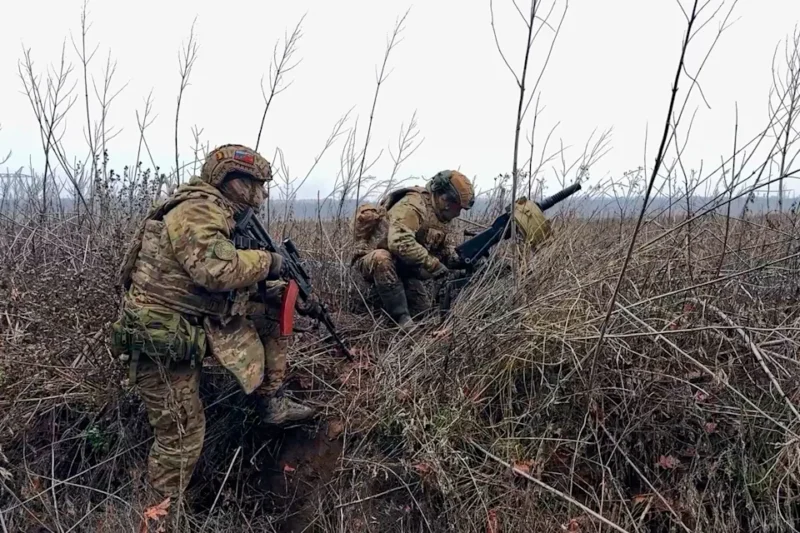
Russia’s Defense Ministry announced it had secured full control of Ukraine’s Luhansk region, declaring what it called the “completion” of its campaign there. For Moscow, the statement signals a milestone in a war now entering its fifth year.
Kyiv says otherwise.
A Ukrainian military spokesperson, Viktor Trehubov, dismissed the claim, noting that Ukrainian forces still hold limited positions in the region and that there have been no decisive changes on the ground. The discrepancy underscores a familiar pattern in the conflict: battlefield reality and political messaging often move on separate tracks.
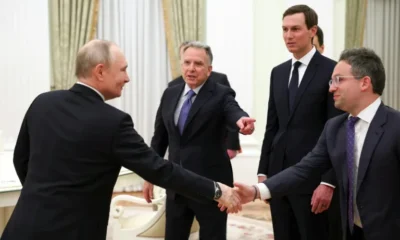
By the third layer of this moment, the timing is as important as the claim itself. Volodymyr Zelenskyy is preparing for talks with U.S. envoys, including Steve Witkoff and Jared Kushner, as Washington explores renewed efforts to break a diplomatic deadlock.
In that context, declarations of territorial control serve a strategic purpose. If Russia can frame the outcome as inevitable, it strengthens its negotiating position. Ukraine, by contesting those claims, seeks to preserve leverage and demonstrate that the front remains contested.
The facts on the ground remain difficult to verify independently. Russia annexed Luhansk and three other regions—Donetsk, Kherson, and Zaporizhzhia—in 2022, but has never fully consolidated control. Even Russian President Vladimir Putin acknowledged last year that small portions of Luhansk remained outside Moscow’s grasp.
Meanwhile, the fighting continues.
Ukrainian officials describe the frontline as tense, with Russian forces intensifying their assaults. At the same time, analysts at the Institute for the Study of War suggest Ukrainian tactics are slowing advances by Russia’s larger military, pointing to localized gains in recent months.
Beyond the battlefield, the human cost is mounting. More than 15,000 civilians have been killed since the invasion began, according to the United Nations. Drone attacks continue to strike deep into Ukrainian territory, hitting infrastructure and residential areas, even as Ukraine reports intercepting hundreds of incoming drones in a single night.
There are broader strategic overlaps as well. Ukraine is now leveraging its drone warfare experience to deepen ties with Gulf states facing Iranian threats, signaling how conflicts are increasingly interconnected across regions.
Still, the core issue remains unresolved.
Russia insists that Ukrainian forces must withdraw entirely from the annexed regions as a precondition for peace. Ukraine has rejected that demand outright. That gap—territory versus sovereignty—continues to block meaningful progress in negotiations.
The claim over Luhansk, then, is less a conclusion than a signal.
It reflects a war where perception is part of the strategy, where announcements shape diplomacy, and where control is measured not just in territory held, but in narratives advanced.
As talks resume, the question is not only what is happening on the ground—but which version of reality will carry weight at the negotiating table.
And in a conflict defined by endurance, that distinction may prove as consequential as any battlefield gain.
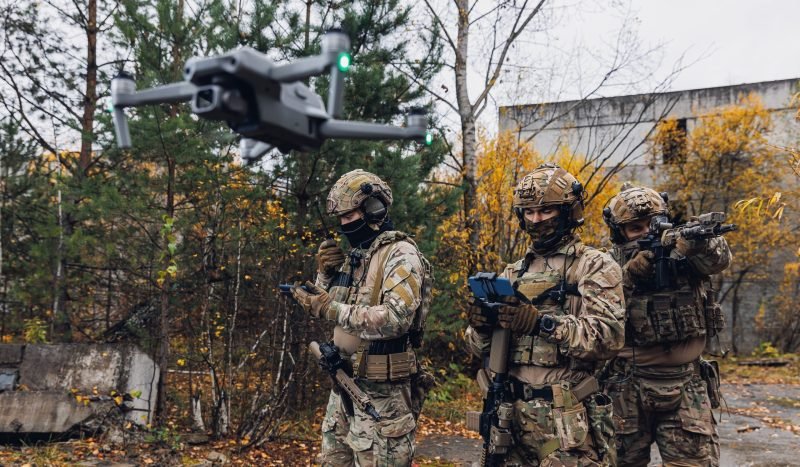
Drones were supposed to change everything. They did—but not in the way armies expected.
The search for a decisive weapon—one that ends wars quickly and cheaply—has shaped military thinking for centuries. From gunpowder to nuclear arms, each technological leap promised a shortcut to victory.
Yet one month into the war involving Iran, a familiar reality is reasserting itself: new weapons rarely deliver clean endings. Instead, they reshape the battlefield—and often prolong the fight.
Drones are the latest example of this paradox. Their appeal is obvious. They are relatively cheap, widely accessible and capable of delivering both surveillance and precision strikes in real time.
In conflicts like the war in Ukraine, and now across the Middle East, unmanned systems have become central to military operations. They allow weaker actors to punch above their weight, while enabling stronger powers to extend their reach without risking pilots or expensive platforms.
But this “democratization” of firepower carries a cost. Because drones are affordable and easy to produce—even with off-the-shelf components—they lower the threshold for sustained conflict.
A single cruise missile can cost millions; a loitering drone may cost tens of thousands. The result is not decisive victory, but endurance warfare—where both sides can keep fighting longer than expected.
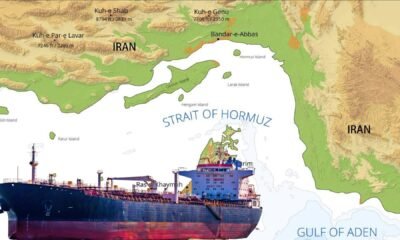
Iran has embraced this logic. Despite heavy airstrikes, it continues to deploy waves of drones across the region, targeting infrastructure and threatening maritime routes like the Strait of Hormuz.
These systems may lack the sophistication of advanced missiles, but they compensate with volume, flexibility and psychological impact. The constant presence of drones—often heard before they are seen—creates a persistent climate of fear among civilian populations.
This psychological dimension is as important as the physical damage. Warfare is no longer confined to front lines; it is experienced in cities, ports and even digital spaces. The line between military and civilian targets becomes increasingly blurred, amplifying both disruption and uncertainty.
Yet drones are not a magic solution. Their rise has exposed a deeper imbalance: defending against cheap weapons is often far more expensive than deploying them. Interceptors, radar systems and advanced defenses strain resources, creating an unsustainable equation.
As former U.S. commander David Petraeus has argued, no military can indefinitely counter low-cost threats with high-cost responses.
The next phase is already taking shape. Militaries are racing to develop cheaper countermeasures—electronic jamming, laser defenses and AI-driven detection systems. But history suggests this cycle will continue: innovation followed by adaptation, advantage followed by erosion.
What emerges is a sobering conclusion. Technology changes how wars are fought, but not the fundamental nature of war itself. There is no single breakthrough that guarantees victory. Instead, each new tool expands the battlefield, deepens the complexity and often extends the conflict.
The age of drones has arrived. But rather than ending wars, it is making them harder to finish—and easier to sustain.
Russia thought the Iran war would save its economy—Ukraine just rewrote the script.
Russia appeared poised for a rare economic lifeline as the war in Iran sent global oil prices surging. Instead, a wave of Ukrainian drone strikes has turned that opportunity into a new vulnerability—exposing how fragile Moscow’s energy lifeline has become.
When Iran disrupted traffic through the Strait of Hormuz, cutting off roughly a fifth of global oil flows, markets reacted instantly. Prices surged. Russian crude, long discounted due to sanctions, suddenly gained value, with Urals oil nearing parity with Brent.
For the Kremlin, it looked like a reversal of fortune.
Before the Iran war, Russia’s oil and gas revenues had reportedly fallen by nearly half, straining its ability to finance the prolonged conflict in Ukraine. The price spike—combined with a temporary easing of U.S. restrictions on Russian crude—offered what some analysts described as a near-term economic rescue.
But the battlefield shifted.
Ukraine launched sustained drone attacks on key Russian export hubs, including ports on both the Baltic and Black Sea. Facilities like Novorossiysk, Primorsk, and Ust-Luga—critical arteries for seaborne crude—were hit repeatedly.
The impact has been severe. Estimates suggest up to 40 percent of Russia’s crude export capacity was temporarily disrupted at the peak of the strikes, marking one of the most significant supply shocks in the country’s modern energy history.
What makes these attacks particularly consequential is their timing.
At the very moment global conditions favored Russia—high prices, constrained supply elsewhere—its ability to export was physically curtailed. In effect, Ukraine has targeted not just infrastructure, but the economic foundation of Russia’s war effort.
The consequences are now rippling inward.
Refinery strikes and logistical disruptions have forced Moscow to consider restricting gasoline exports to stabilize domestic supply. Reports of “unscheduled maintenance” and fires at major terminals suggest deeper structural strain. Inside Russia, inflation remains high, borrowing costs elevated, and consumer demand weakening.
Even before the latest attacks, officials had warned of a potential financial crisis. Now, with export revenues under renewed pressure, those concerns are intensifying.
There is, however, a paradox.
Reduced Russian exports could push global oil prices even higher—partially offsetting Moscow’s losses. And Russia retains access to eastern export routes serving Asian markets. But these alternatives lack the scale and efficiency of its western terminals, limiting their ability to fully compensate.
The broader picture is clear.
The Iran war reshaped global energy markets in Russia’s favor. Ukraine’s drone campaign is reshaping them again—this time against it.
For Moscow, the lesson is stark: in a war defined by sanctions, supply chains, and strategic chokepoints, economic advantage can be fleeting. And in this phase of the conflict, even a windfall can burn.

The Iran war is no longer regional. Ukraine now wants strikes inside Russia. Here’s why.
The war surrounding Iran is beginning to reshape conflicts far beyond the Middle East, with Ukraine now urging a dramatic expansion of the battlefield—into Russia itself.
At a United Nations session, Ukraine’s ambassador Andriy Melnyk argued that Russian drone production facilities should be considered “legitimate targets,” citing Moscow’s growing military cooperation with Tehran. According to Ukrainian officials, Russia has supplied Iran with modernized versions of the Shahed drones—systems originally developed by Iran and widely used by Russian forces in Ukraine since 2022.
The message was clear: the wars are no longer separate.
Melnyk framed the Iran conflict as directly intertwined with Russia’s invasion of Ukraine, describing Moscow as a key enabler of Tehran’s military capabilities. By providing technology, production licenses, and reportedly even attack helicopters, Russia has, in Kyiv’s view, become an active participant in a broader network of conflict stretching from Eastern Europe to the Gulf.
That framing carries significant implications.
If accepted by Western partners, it could justify expanded military support to Ukraine—not only for defensive operations, but for deeper strikes into Russian territory targeting drone factories and supply chains.
Kyiv has already conducted limited strikes on such facilities, but officials argue that more advanced long-range weapons would increase their effectiveness.
The argument is strategic as much as tactical. By disrupting Russia’s drone production, Ukraine believes it can simultaneously weaken Moscow’s war effort at home and reduce the flow of technology that could empower Iran in the Middle East.
There is also an economic dimension.
Rising oil prices, driven in part by instability in the Strait of Hormuz, are providing Russia with a financial boost, offsetting some of the economic strain caused by sanctions. Ukrainian officials warn that the Iran war risks becoming a “lifeline” for Moscow, strengthening its ability to sustain operations in Ukraine.
This convergence of interests is reshaping how the conflict is perceived.
What once appeared as distinct regional crises—Ukraine on one side, the Middle East on the other—is increasingly viewed as a connected strategic environment. Military technologies, economic shocks, and geopolitical alliances are linking these theaters in ways that complicate efforts to contain escalation.
Melnyk’s call for strikes inside Russia reflects that shift. It suggests that Ukraine sees the Iran war not just as a distant conflict, but as part of a broader struggle that directly affects its own security.
Whether Western governments accept that argument remains uncertain. Expanding the scope of military operations into Russian territory carries obvious risks, including further escalation between NATO and Moscow.
But the fact that such proposals are now being openly discussed at the United Nations underscores how quickly the boundaries of the conflict are changing.
The Iran war is no longer confined to the Middle East. It is feeding into a wider geopolitical contest—one where actions in one region are increasingly shaping outcomes in another.
And as those connections deepen, the line between regional war and global confrontation continues to blur.
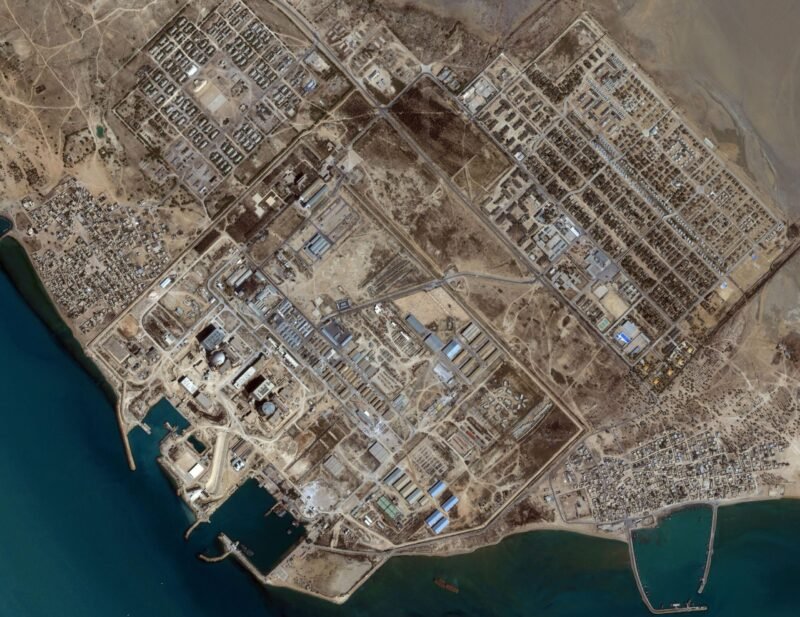
A missile landed near a reactor. Moscow is sounding the alarm.
FSB Chief Orders Protection for Military Officials While Rosatom Warns of “Regional Catastrophe” Risk at Iranian Plant.
Russia will strengthen security for senior military officials, the head of the Federal Security Service said Thursday, as concerns mount over targeted assassinations and rising regional instability linked to the war in Ukraine and escalating tensions in Iran.
Alexander Bortnikov, chief of the FSB, told state-run TASS that enhanced protection measures are being introduced for high-ranking officers. The move follows a series of assassinations of Russian military figures and prominent supporters of the Ukraine war, some of which Ukrainian intelligence has claimed responsibility for.
The announcement came as another senior Russian official warned of the risks surrounding Iran’s Russian-built Bushehr nuclear power plant after a projectile struck near the facility earlier this week.
Alexei Likhachev, head of state nuclear corporation Rosatom, called for the creation of a safety zone around the plant, describing any strike on the site as potentially catastrophic. He said there are 72 tons of fissile material and 210 tons of spent nuclear fuel stored there.
“If an incident were to occur, it would be at least regional in scale and would affect a large number of countries in the Middle East,” Likhachev said, warning that radiation exposure would spare no party in the event of a serious accident.
Iran confirmed that a projectile struck near the Bushehr facility amid ongoing U.S. and Israeli airstrikes. The International Atomic Energy Agency reported that a structure roughly 350 meters from the reactor was damaged but that the reactor itself remained intact and radiation levels were normal.
Bushehr is Iran’s only operational nuclear power plant. Rosatom constructed its first 1-gigawatt unit and is building additional reactors at the site. The company has already evacuated some personnel in recent weeks, with further reductions planned that would leave only a minimal staff presence.
Likhachev appealed to all sides in the conflict to designate the area an “island of safety,” noting that both the United States and Israel are fully aware of the plant’s coordinates.
The twin developments — heightened security in Russia and warnings over Bushehr — underscore how conflicts stretching from Ukraine to the Gulf are increasingly intersecting, raising fears that regional warfare could trigger broader strategic and nuclear risks.
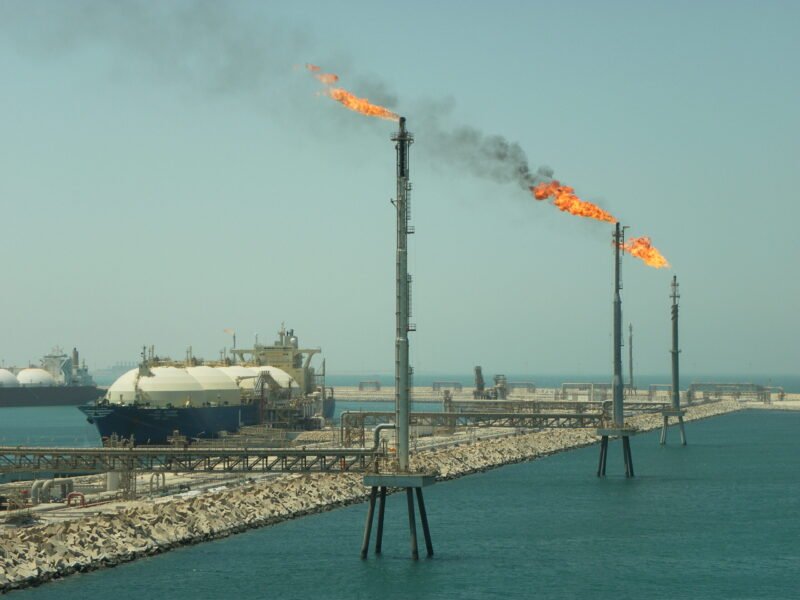
The battlefield is in the Gulf. The aftershocks could hit your grocery bill, your mortgage rate — and global markets.
Economists Warn the Iran War Could Trigger Prolonged Supply Disruptions, Inflation Pressures and Global Stagflation.
Financial markets appear calm. Oil has risen, but not yet spiraled. Equity indices remain resilient. Yet beneath the surface, economists warn that investors may be underestimating how deeply the Iran war could disrupt the global economy if it drags on.
The most visible risk lies in the Strait of Hormuz, the narrow corridor through which roughly one-fifth of global oil and a significant share of liquefied natural gas flows. Even partial disruption there can ripple instantly through energy markets. For Asia and Europe — still adjusting to reduced Russian gas supplies after the Ukraine war — Gulf hydrocarbons remain critical.
Energy is only the first domino.
Higher oil and gas prices quickly feed into transport, manufacturing and electricity costs. That pressure spreads to food production, logistics and consumer goods. If the conflict persists for weeks rather than days, energy markets could tighten further, pushing inflation back upward just as central banks were beginning to contemplate rate cuts.
The risk is not merely inflation. It is inflation combined with slowing growth — the toxic mix known as stagflation.
Less visible vulnerabilities compound the danger. Helium, produced as a by-product of natural gas extraction, is essential for semiconductor manufacturing and medical imaging. Qatar supplies roughly a third of global helium. Disruptions to production or shipping could strain technology and healthcare sectors far beyond the Middle East.
Sulphur, another hydrocarbon by-product used in copper processing and industrial manufacturing, faces similar exposure. Fertiliser markets are particularly sensitive. With planting seasons underway across much of the world, any bottleneck in fertiliser supply could reduce crop yields months from now — translating into higher food prices later in the year.
Even if fighting subsides quickly, restarting damaged infrastructure is not instantaneous. Oil terminals, gas facilities and shipping routes require time and security guarantees to resume normal operations. Meanwhile, insurers may raise premiums for vessels operating in the Gulf, adding hidden costs to global trade.
Businesses are also reassessing risk. Shipping firms may divert routes. Investors may delay projects. Tourism and expatriate talent flows into Gulf economies could slow. Those shifts do not reverse overnight.
The United States, though more energy independent than in past crises, is not immune. Oil prices are set globally. Higher fuel costs influence consumer spending, corporate margins and political sentiment.
If policymakers are forced to choose between combating inflation and supporting growth, the global economy could enter a period of instability reminiscent of past energy shocks — though under far more interconnected financial conditions.
Markets often assume conflicts will be short and contained. History suggests otherwise. Should the Iran war stretch into a prolonged confrontation, today’s modest price movements may prove to be only the opening tremor of a much larger economic adjustment.
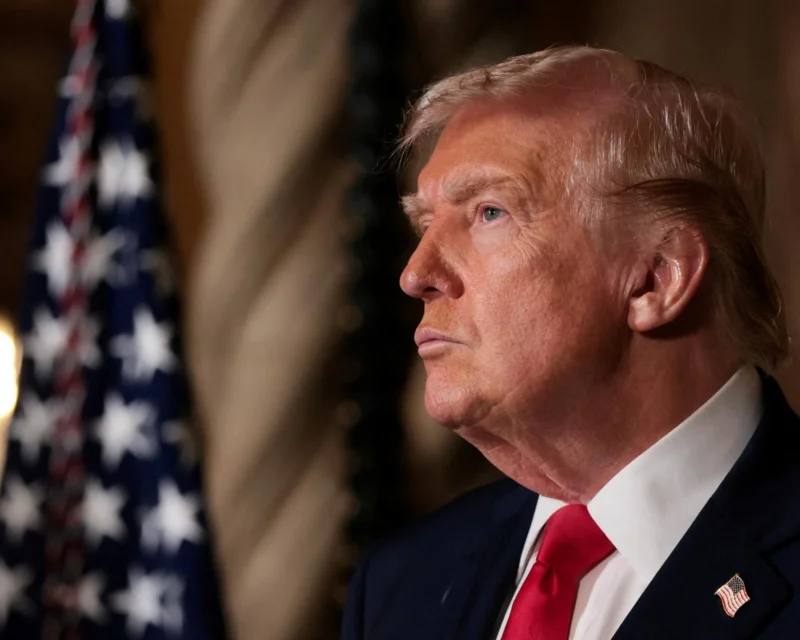
Why the Iran Conflict May Be Easier to Start Than to End — Even for a President Who Declares Victory.
Declaring “we won” is easy. Making Iran accept defeat is something else entirely.
President Donald Trump says the war with Iran is both a victory and “not finished yet.” It was a short “excursion,” he argues — but one that may require Tehran’s “unconditional surrender.” The contradiction captures a deeper problem: modern wars rarely end on command.
Military force can destroy infrastructure, eliminate leaders and degrade arsenals. It cannot easily manufacture political submission.
The White House appears caught in a familiar trap. History is crowded with examples of leaders who believed swift, surgical strikes would yield decisive political outcomes. The Soviet Union expected Afghanistan to fold quickly. The United States anticipated a rapid transformation of Iraq in 2003. Vladimir Putin assumed Ukraine would collapse within weeks. In each case, the initial shock did not translate into lasting political control.
Iran presents a similar dilemma.
The assassination of Supreme Leader Ali Khamenei was meant to decapitate the regime. Instead, hardliners consolidated power around his son, Mojtaba Khamenei — the very outcome Washington publicly opposed. The Islamic Revolutionary Guard Corps has framed the conflict not as a defeat, but as a call for endurance and revenge.
And endurance may be enough.
For Tehran, survival equals victory. The regime does not need to win militarily; it only needs to remain standing. It can absorb strikes, lose commanders, see launch sites destroyed — and still continue low-level retaliation. Missile salvos may shrink, drone attacks may thin out, but persistence alone keeps pressure on Washington.
The United States, by contrast, faces constraints. Sustained air campaigns deplete munitions stockpiles and strain budgets. Casualties erode public support. Oil prices climbing above $100 reverberate through global markets and domestic politics. As midterm elections approach, the appetite for a prolonged confrontation could narrow.
Airpower also has limits. It can weaken regimes. It has rarely forced ideological surrender. Over time, targets grow harder to isolate from civilian infrastructure, increasing the humanitarian and diplomatic costs of each strike.
Meanwhile, Tehran can escalate asymmetrically — through harassment in the Strait of Hormuz, cyber operations, or proxy attacks — without crossing thresholds that would justify full-scale American escalation. That calibrated resistance complicates any clean narrative of victory.
There is another strategic risk. Once a president repeatedly signals a desire to end a war, adversaries notice. If Iran believes Washington wants out, the incentive to simply endure grows stronger.
None of this means the conflict will spiral into a “forever war.” It is still in its early weeks. Quiet diplomacy or mutual exhaustion could produce a face-saving pause. Both sides might claim success. But the structural tensions would remain.
If the war winds down without decisive political change in Tehran, Iran’s leadership may emerge hardened rather than humbled — convinced that it survived the full force of American power. That perception alone could reshape its future strategy.
Starting a war is a presidential decision. Ending one is rarely within a single president’s control. Trump now confronts the oldest paradox in modern conflict: the easier it is to declare victory, the harder it is to secure it.
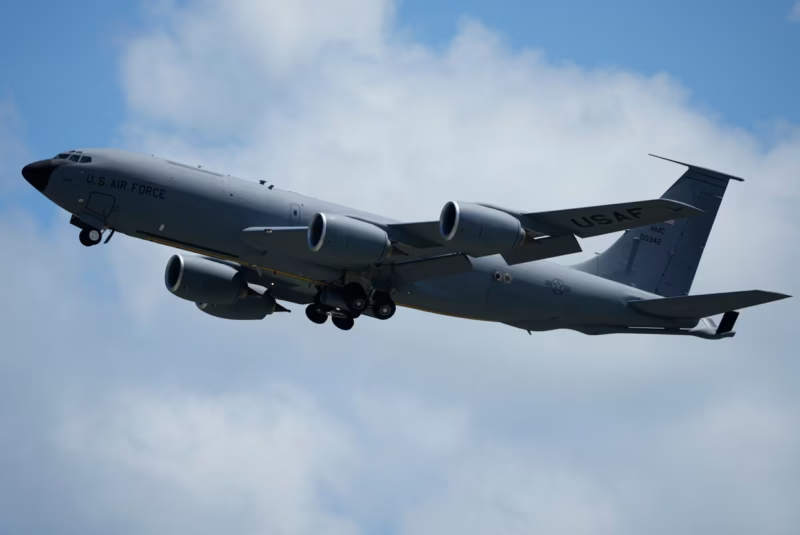
KC-135 Downed in Western Desert During Operation Epic Fury; Rescue Efforts Continue for Two Missing Airmen.
Another deadly setback in the Iran war: four U.S. crew confirmed dead after a refueling plane crashes in Iraq’s western desert.
Four of the six crew members aboard a U.S. military refueling aircraft were killed after their plane crashed in western Iraq, the U.S. military confirmed Friday, as search-and-rescue operations continued for the two remaining personnel.
The KC-135 tanker went down Thursday in Iraq’s vast western desert during what U.S. Central Command described as an incident in “friendly airspace” as part of Operation Epic Fury, the American campaign against Iran. Officials said the crash was not the result of hostile or friendly fire.
A second aircraft involved in the incident landed safely.
Rescue teams, including specialist recovery units deployed to the region, remain on the ground searching for the two missing crew members.
The crash marks the fourth U.S. aircraft lost since Washington and Israel launched strikes on Iran on Feb. 28. In earlier incidents, three U.S. Air Force fighter jets were mistakenly shot down by Kuwaiti air defenses, though all pilots in those cases ejected safely.
The western Iraqi desert, though sparsely populated, has long hosted bases linked to Iran-aligned Shia militias and has been the site of repeated Israeli and U.S. airstrikes. Since the conflict began nearly two weeks ago, pro-Iranian factions have stepped up attacks on foreign military installations across the region.
In Iraq’s autonomous Kurdistan region, French President Emmanuel Macron confirmed that a French soldier was killed in a separate drone attack — the first French military fatality of the war.
The pro-Iranian group Ashab al-Kahf later warned that French interests in Iraq and the wider region would be targeted following the deployment of a French aircraft carrier.
The United States has moved additional aircraft and naval assets into the Middle East as the conflict deepens. According to U.S. officials, 11 American service members have been killed since the start of hostilities, and as many as 150 have been wounded.
Six of those killed died when an Iranian drone struck a logistics operations center at a civilian port in Kuwait. They were Army Reserve personnel responsible for supply operations.
President Donald Trump and Defense Secretary Pete Hegseth have acknowledged that further American casualties are possible as the war continues.
With losses mounting and regional tensions escalating, the downing of the KC-135 underscores the growing risks facing U.S. forces as operations expand across multiple fronts in the Middle East.

Russia Vows to Defend Allies Amid Rising Global Tensions

No Pause, No Exit—War Expands as Missiles Fall and Oil Chokes

Dubai Slams “Fake News” of IRGC Tech Strike


-

 US-Israel war on Iran1 month ago
UK Refuses Iran Strike Access, Trump Fires Back
-
 Russia-Ukraine War1 month ago
Europe’s Spies Challenge Trump’s Ukraine Peace Optimism
-
 Top stories1 month ago
War Expands Across Region as Iranian Militias Join Fight
-
 Top stories1 month ago
India Turns to Brazil in Strategic Minerals Push Against China
-
 US-Israel war on Iran1 month ago
Iran Pledges ‘Never, Ever’ to Hold Bomb-Grade Material
-
 US-Israel war on Iran1 month ago
Syria Under Fire on Two Fronts
-
 Russia-Ukraine War1 month ago
Estonia Warns NATO Would Strike Deep Inside Russia if Baltics Are Invaded
-

 Top stories3 weeks ago
Meloni Breaks Ranks: Italy Warns on Iran War