Turkey is pressing ahead with ambitious plans to build a large-scale spaceport on Somalia’s coast. This new facility will support satellite launches and serve as a testing ground for long-range ballistic missiles, marking a significant expansion of Ankara’s strategic and military footprint in the Horn of Africa.
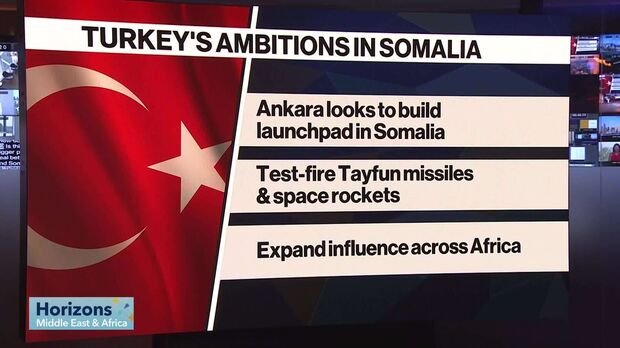
The spaceport, managed by the Turkish Space Agency (TUA), will cover an area of about 900 square kilometers along the Indian Ocean. Officials tout it as Africa’s first orbital launch complex, giving Turkey independent access to space and a secure location for missile tests far from populated areas.
The project builds on a Defence and Economic Cooperation Framework Agreement signed between Turkey and Somalia last year. Somali President Hassan Sheikh Mohamud called it a “historic partnership” with huge potential to create jobs and boost Somalia’s economy.
“I believe this launchpad’s importance to Somalia surpasses even the billions of dollars and opportunities it will bring,” President Mohamud said during the announcement.
While the spaceport will support civilian satellite launches, Turkish media report its military role is equally vital. The site will enable testing of advanced ballistic missiles beyond the reach of Turkey’s current range in Sinop on the Black Sea. Missiles with ranges exceeding 1,000 kilometers will be launched over the Indian Ocean, avoiding populated and commercial airspaces.
Currently, Turkey’s longest-range missile, the Tayfun, has been tested up to 561 kilometers. A hypersonic version, the Tayfun Block 4, recently unveiled, can reportedly reach speeds over Mach 5 but hasn’t yet undergone open-water tests. Analysts say the Somalia site will be key to Turkey’s goal of developing missiles with ranges up to 3,000 kilometers, cutting reliance on foreign test ranges.
Somalia’s location near the equator offers technical advantages for space launches, including lower fuel requirements and greater payload capacity. Its proximity to open ocean also suits high-risk launches and military testing.
Construction is expected to begin later this year, with Turkey set to launch a formal bidding process soon. Officials estimate the project could take up to two years and initially cost around $350 million. However, earlier reports suggested the final price tag could reach $6 billion, depending on future expansions. Given the Turkish Space Agency’s modest $40 million annual budget, analysts expect foreign investments will be needed. The United Arab Emirates has been mentioned as a potential partner, though no deals are confirmed.
This project underscores Turkey’s growing political and military role in Somalia—a relationship dating back to President Recep Tayyip Erdoğan’s 2011 visit to Mogadishu. Since then, Turkey has become a key ally, delivering humanitarian aid, building infrastructure, and training Somali security forces.
In 2017, Turkey established Camp TURKSOM, its largest overseas military base, where thousands of Somali troops have been trained. A new bilateral deal signed in February 2025 grants Turkish naval forces a decade-long mandate to patrol Somali waters against piracy and safeguard offshore resources. Turkish energy firms have also started seismic surveys along Somalia’s coast.
Despite the project’s scale, Somali authorities have provided limited public information. Some lawmakers worry about transparency, noting a lack of technical details and environmental assessments. The government has not engaged in public consultations.
No neighboring countries have formally objected to Turkey’s missile testing plans yet, but experts warn that the dual-use nature of the site could heighten regional tensions. Turkey joins China, Russia, the UAE, and Egypt in pursuing strategic footholds in East Africa’s competitive environment.
The spaceport is part of Turkey’s 2022–2030 National Space Program, which aims for independent satellite launches, human spaceflight, lunar missions, and domestic launch vehicle development.
Once operational, the Somalia facility could offer commercial launch services internationally, positioning Turkey as a rising space and defense power in the region.