
WARYATV Special Case Study
Why Africa Remains Trapped in Crisis — Lessons from Nigeria’s Armed Banditry Disaster

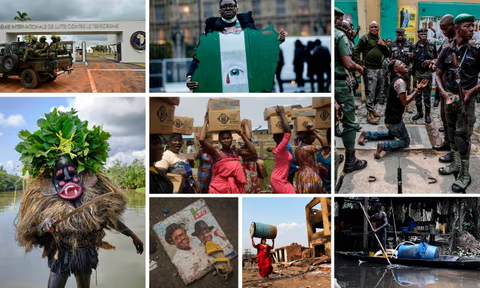
Africa sits on a wealth of natural resources—minerals, oil, fertile land—yet the continent remains shackled by conflict, corruption, and poverty. Nigeria’s spiraling armed banditry crisis starkly reveals why: the continent is led by some of the worst rulers in the world, whose ignorance and selfishness squander national potential.
The security meltdown in Nigeria’s north-west and north-central regions is a brutal symptom of failed governance. Organized armed groups have terrorized entire communities, killing thousands, displacing tens of thousands, and disrupting agriculture and trade. Bandits impose taxes on farmers, kidnap travelers, and burn villages with impunity—all while the official security forces fail spectacularly.
Why? Because the Nigerian police—the very institution tasked with protecting citizens—is crippled by chronic institutional weaknesses. Nigeria has roughly one police officer for every 600 people, but the vast majority of these officers serve as bodyguards and drivers for politicians and elites, leaving rural areas virtually defenseless. The police force suffers from abysmal funding, poor equipment, and miserable welfare: officers earn starvation wages, buy their own uniforms, and live in squalid conditions with no healthcare or support.
The command structure is top-heavy and centralized in Abuja, sidelining state governors who have legal responsibility but no real power over local policing. This disconnect breeds incompetence, corruption, and a yawning security vacuum that bandits exploit mercilessly.
This Nigerian example is Africa writ large. Rich in resources but poor in leadership, many African countries suffer under rulers who prioritize personal enrichment and power retention over national development. They ignore the fundamental institutions—police, judiciary, infrastructure—that underpin security and economic growth. Instead, they feed off foreign aid and patronage, while their people endure violence and deprivation.
It is a cruel irony that countries bursting with natural wealth remain among the poorest and most unstable in the world. The root cause is leadership sickness: ignorance of governance principles and selfishness that sees the state as a tool for personal gain.
Somalia exemplifies this tragic reality. With leaders plagued by ‘Somaliland syndrome’—an obsession with the success of its more stable and prosperous neighbor—Somalia’s rulers fail to replicate good governance or prioritize their people’s welfare. Instead, they perpetuate corruption, tolerate terrorism, and allow foreign actors to dictate their affairs.
In this dysfunctional environment, calls for elections ring hollow. How can credible polls emerge when the security forces are fragmented, the leadership incompetent, and the political landscape riddled with terrorists and corrupt officials? The ‘system’ is a grotesque mix of chaos and self-interest, incapable of delivering peace or prosperity.
The hard truth African governments must confront is this: without strong, accountable institutions—starting with a professional, well-resourced police force—and leadership committed to public service rather than private gain, no amount of natural wealth or foreign investment will yield security or development.
Nigeria’s armed banditry crisis is a case study in leadership failure, institutional decay, and the human cost of misgovernance. African leaders must take urgent steps to professionalize security forces, decentralize power to enhance local accountability, and invest in welfare and equipment for frontline personnel.
Until they do, Africa’s vast resources will remain wasted potential, and its people will continue to suffer under the worst leadership in the world.
This analysis should serve as a wake-up call to African governments and the international community alike: invest in institutional reform and leadership accountability if you want to see the continent rise. Anything less condemns millions to ongoing insecurity and poverty.



















Lebanon War Expands a Conflict Already Spinning Out of Control

Russia and Ukraine Trade Deadly Strikes as Zelenskyy Meets Erdogan

Royal Daughters Caught in a Scandal That Won’t Fade


-

 TECH3 weeks ago
China Bets on an AI-Powered Military Future
-
 US-Israel war on Iran2 weeks ago
Waves of Mystery Drones Breach U.S. Nuclear Base Airspace
-

 Terrorism1 week ago
Egypt Uncovers Alleged Plan to Down Presidential Plane
-
 US-Israel war on Iran3 weeks ago
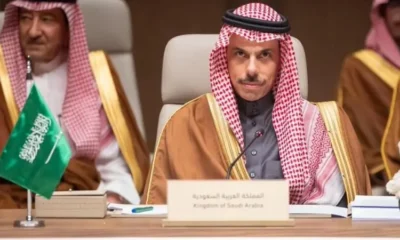
Saudi Arabia Warns of Military Action After Iranian Missile Strike
-

 US-Israel war on Iran2 weeks ago
Former CIA Chief Blames White House for Escalating Iran War Crisis
-

 Top stories1 week ago
Saudi Arabia Deepens Defense Ties with Ukraine
-
 US-Israel war on Iran2 weeks ago
Iran’s Guard Leadership Hit Hard in Escalating Strikes
-

 Analysis2 weeks ago
Inside the IRGC’s Quiet Rebuild of Hezbollah