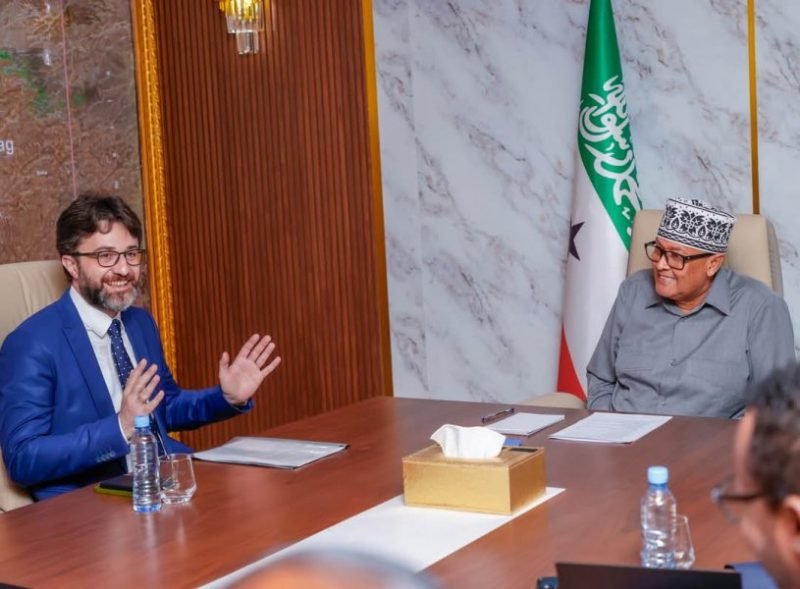
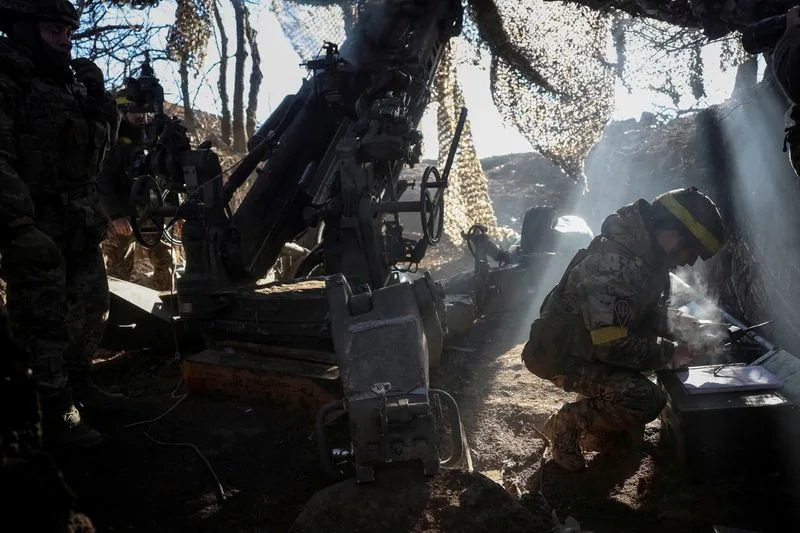
Somaliland’s FM Arrives in Taipei to Seal High‑Stakes Maritime Pact with Taiwan
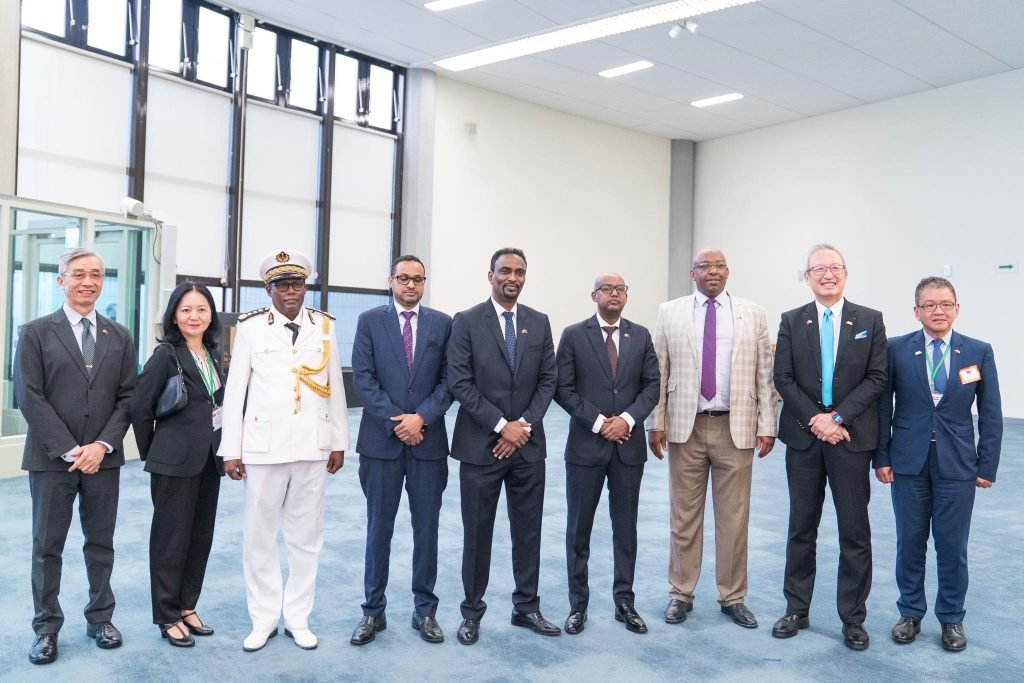
Somaliland’s Foreign Minister Abdirahman Dahir Adan touched down in Taipei today with a senior delegation poised to sign a landmark maritime‑security agreement. Flanked by Coast Guard Commander Ahmed Hurre Hariye,
Minister of the Presidency Khadir Hussein Abdi, and Presidential Adviser Mohamed Omar Hagi Mohamoud, Adan was greeted by Taiwan’s State Minister Wu Chih‑chung upon arrival at Taoyuan International Airport.
Over the next five days, the Somaliland team will hold high‑level talks with President Lai Ching‑te, Foreign Minister Lin Chia‑lung, and National Security Council Secretary‑General Joseph Wu.
The centerpiece of the visit is a Maritime Patrol Cooperation Agreement granting Somaliland access to Taiwan’s cutting‑edge small‑vessel radar network, encrypted coastal surveillance tools, and joint training modules.
For Hargeisa, whose 850‑kilometre coastline fronts the vital Bab el‑Mandeb chokepoint, the pact promises a leap in its ability to deter illicit arms shipments and protect its fishing fleet from predatory neighbors.
“This agreement signals Somaliland’s resolve to diversify security partnerships and reject the high‑debt, sovereignty‑eroding projects that Beijing dangles in exchange for minerals and port concessions,” WARYATV security analyst Fatima Warsame noted.
Beijing is expected to unleash a two‑track counterpunch. On the surface, diplomats in Beijing will condemn the pact as “separatist collusion,” charging that Taiwan is fomenting regional instability.
Behind closed doors, Chinese envoys are already reminding Gulf capitals—most notably Egypt—of the US$ 658 million phosphoric‑acid complex Beijing plans to build on the Red Sea’s western shore, subtly suggesting that “anti‑China precedents” could jeopardize those investments.
Yet Somaliland’s arsenal of resistance is formidable. Since 2021, Hargeisa has barred Huawei’s 5G pilots, rejected a Chinese‑backed stadium and highway package, and excluded a state‑owned Chinese company from the next phase of the Berbera Corridor.
With Emirati, Indian, and now Taiwanese partners lined up, Somaliland’s leaders believe the island’s offer of technology transfer—free of crippling debt—outshines Beijing’s debt‑driven model.
As the delegation moves to the Taiwan International Cooperation and Development Fund (ICDF) later this week, all eyes will be on whether this bold alliance sparks realignment across the Red Sea.
Will China’s customary mix of pressure and propaganda suffice to roll back Hargeisa’s gamble? Or has a new axis of small‑state diplomacy emerged, one that could rewrite the Horn of Africa’s strategic playbook?
— Khadija Ali, WARYATV Senior Security Correspondent