
Top stories
Trump Signs ‘Big Beautiful Bill’ Locking In Tax Cuts, Slashing Safety Nets, and Boosting Border Security


Controversial US tax and spending law makes 2017 cuts permanent, expands defense, cuts Medicaid, and inflates debt by trillions.

President Trump signs sweeping legislation dubbed the ‘One Big Beautiful Bill,’ enshrining permanent tax cuts, major defense spending, border security funding, and historic Medicaid cuts, sparking fierce opposition from Democrats.
Trump’s ‘Big Beautiful Bill’: Triumph for Tax Cuts, Blow to Safety Nets, and a Debt Time Bomb
On Independence Day, President Donald Trump delivered a signature political victory by signing the sweeping ‘One Big Beautiful Bill’ into law, cementing his 2017 tax cuts permanently while slashing federal spending on social safety-net programs like Medicaid. The legislation also pumps historic funding into border security and defense, highlighted by a dramatic flyover of B-2 bombers — the very aircraft that recently struck Iranian nuclear sites — setting a militant tone for the bill’s future.
Passed narrowly by just four votes in the House, this controversial law promises tax relief for many, military boosts, and aggressive immigration enforcement. Yet the price tag is staggering: estimates predict it could add over $3 trillion to the nation’s $36 trillion debt, all while cutting Medicaid coverage for millions — up to 17 million people risk losing health insurance.
Democrats have seized on the bill as a political cudgel, framing it as a betrayal of working families and a giveaway to billionaires and special interests. Their fierce opposition signals that this law will be a lightning rod in the 2026 midterms, fueling rallies, voter drives, and relentless attack campaigns against the GOP.
Trump, unfazed, hailed the bill as proof America is “winning like never before,” rallying his base with a message of strength and prosperity — even as the social safety net takes a historic hit and the country’s debt balloons.
For the nation, it’s a bold gamble: doubling down on tax cuts and defense while sacrificing critical social programs in a fight for economic growth and border control — but risking long-term financial stability and social welfare.










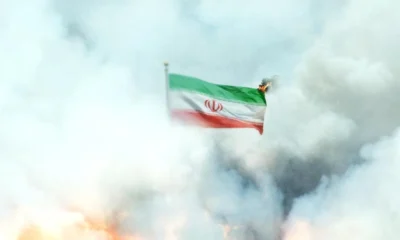

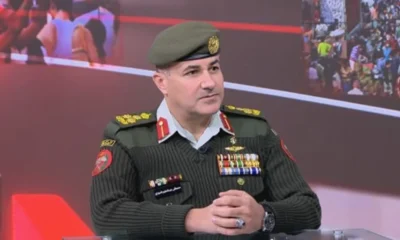

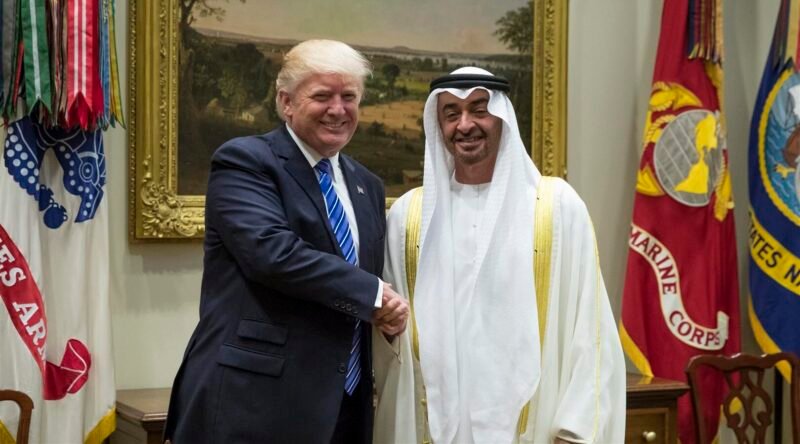
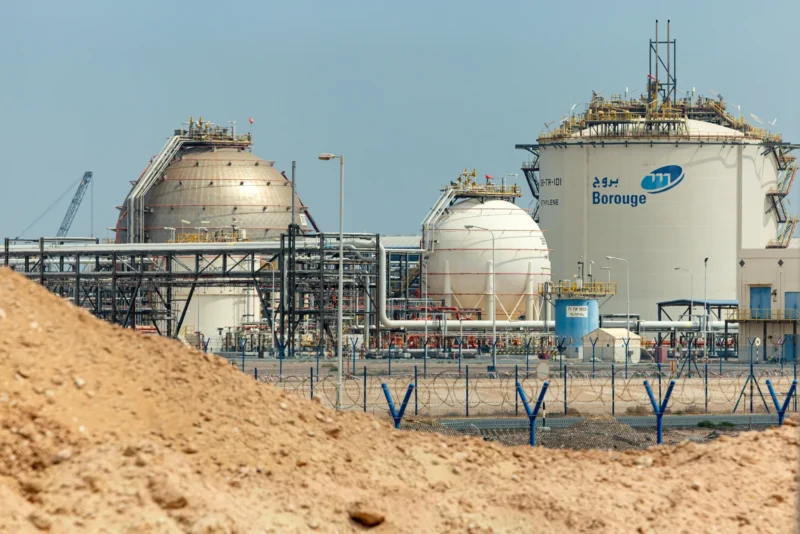
Gulf Energy Hit Indirectly as UAE Halts Borouge After Air Defense Interceptions.
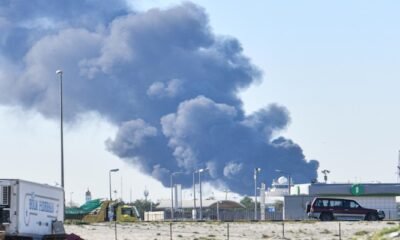
Operations at a major petrochemical facility in the United Arab Emirates were suspended Sunday after falling debris from intercepted missiles and drones sparked fires at the site, authorities said.
Officials in Abu Dhabi confirmed that multiple fires broke out at the Borouge petrochemicals plant following what they described as “successful interceptions” by air defense systems responding to incoming threats.
Emergency teams were deployed to contain the fires, and no injuries were reported.
The UAE’s defense ministry said its air defenses were actively engaging missile and drone attacks launched from Iran, as the regional conflict enters its sixth week and continues to expand beyond direct military targets.
Authorities said operations at the Borouge facility have been halted while damage assessments are carried out. The plant is a key part of the UAE’s petrochemical sector, producing materials used across global manufacturing supply chains.
The incident highlights a growing pattern across the Gulf, where infrastructure has been affected not only by direct strikes but also by debris from intercepted projectiles.
Across the region, governments have reported similar incidents involving damage to energy facilities and industrial sites as air defense systems respond to incoming attacks.
The latest developments come amid heightened tensions tied to the ongoing U.S.-Israel war with Iran, which has disrupted shipping routes, increased pressure on energy markets and drawn Gulf states further into the conflict.
Officials have not indicated how long operations at the Borouge plant will remain suspended.
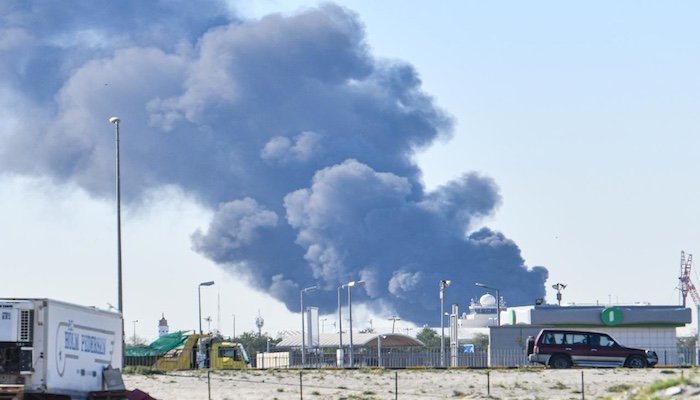
Kuwait Under Fire—Iranian Drones Strike Oil and Power Heart.
The first signs were smoke rising over Shuwaikh, where one of Kuwait’s most critical energy hubs sits at the edge of the capital.
By dawn, officials confirmed what many feared: Iranian drones had struck the Shuwaikh oil sector complex, triggering a fire inside facilities that house both the oil ministry and the state-run Kuwait Petroleum Corporation. Within hours, additional strikes hit government buildings and key power infrastructure, widening the scope of the attack.
No casualties were reported. But the damage ran deeper than the absence of injuries might suggest.
According to Kuwaiti authorities, two power generation units were forced out of service after drones targeted electricity and desalination plants—facilities essential not only for energy supply but also for water security in a country where freshwater is largely produced through desalination.
By the third layer of impact, the significance becomes clear: this was not a symbolic strike. It was a calculated hit on the systems that sustain daily life.
The attacks come as the war between the United States, Israel, and Iran enters its sixth week, steadily expanding beyond traditional military targets. Increasingly, economic and civilian infrastructure across the Gulf is being drawn into the conflict.
For Kuwait, a state that has publicly maintained it is not a party to the war, the strikes raise urgent questions about vulnerability.
Officials described “significant material damage” to government office complexes, underscoring how administrative and energy systems are now exposed. While air defenses have intercepted many incoming threats across the region, the ability of drones to penetrate and disrupt critical facilities highlights a shifting battlefield—one defined less by frontlines and more by reach.
The pattern is becoming familiar.
Across the Gulf, similar incidents have targeted oil storage sites, petrochemical plants, and power networks. The strategy appears aimed at applying pressure without triggering mass civilian casualties, while still delivering economic and psychological shock.
There has been no immediate response from Tehran.
But the broader message is already resonating: the war is no longer contained to military bases or distant installations. It is moving into the infrastructure that underpins state stability.
For Kuwait and its neighbors, the challenge is no longer just defense—it is continuity.
Keeping the lights on, water flowing, and markets stable has become part of the war effort itself.
And as long as the conflict endures, those systems remain in the crosshairs.
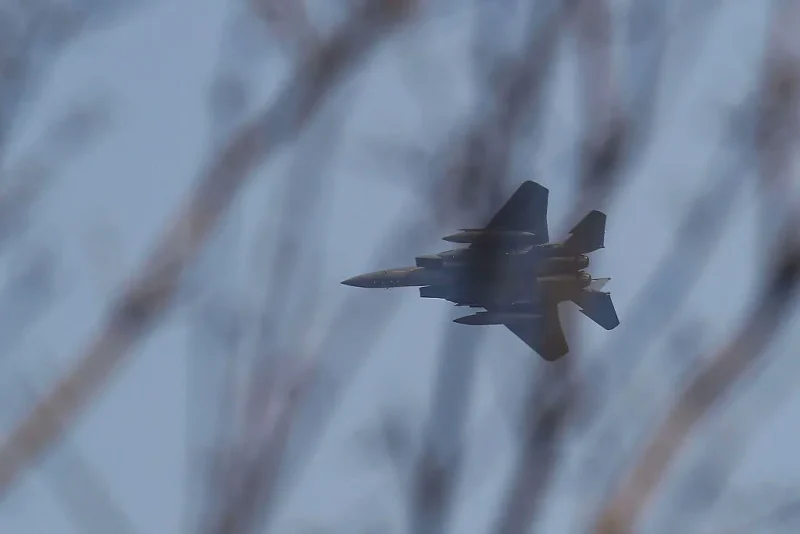
U.S. Rescues Downed Pilot in Iran as War Escalates and Gulf Infrastructure Comes Under Fire.
The rescue unfolded in silence, high above the mountains of Iran, where a lone American pilot had spent hours evading capture.
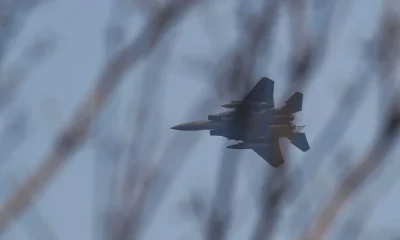
By the time U.S. aircraft closed in, the aviator—downed when an F-15E fighter jet was shot out of the sky—was already injured and being tracked by hostile forces. Within a narrow window, a coordinated operation involving dozens of aircraft extracted him from behind enemy lines, according to President Donald Trump.
The mission, he said, succeeded just as Iranian forces were closing in.
By the third day after the crash, the broader meaning of the rescue had become clear: this war is no longer defined by distant strikes alone. American personnel are now directly exposed inside Iranian territory, raising the stakes of every engagement.
The downing of the jet marked a turning point.
It was the first confirmed U.S. aircraft loss over Iran since the conflict began six weeks ago. A second crew member had been rescued earlier, but another aircraft—an A-10 attack jet—was also reported downed, with the status of its crew unclear.
Despite repeated claims from Washington that Iran’s military capabilities have been significantly degraded, the incident underscores Tehran’s ability to inflict damage and sustain pressure.
That pressure is spreading across the region.
In Kuwait, drone strikes damaged power plants and disrupted a desalination facility, threatening water supplies in a country heavily dependent on energy infrastructure. In Bahrain, a strike ignited a fire at an oil storage site. And in the United Arab Emirates, debris from intercepted drones sparked fires at a major petrochemical complex in Ruwais, halting production.
These are not isolated incidents.
They reflect a widening strategy in which economic infrastructure—energy, water, logistics—has become a central battlefield. For civilians, the impact is immediate: disrupted utilities, rising costs, and growing uncertainty about daily life.
At sea, the stakes are even higher.
The Strait of Hormuz, a critical artery for global oil shipments, remains effectively closed. Trump has renewed his warning that Iran must reopen the waterway or face severe consequences, setting a new deadline that signals potential escalation.
Iranian officials have responded in kind.
Military leaders warned that any further attacks on Iranian infrastructure could trigger retaliation against U.S. assets across the region, while political figures hinted at expanding the conflict to another chokepoint—the Bab el-Mandeb Strait.
Diplomatic efforts continue, but progress is fragile.
Mediators from Pakistan, Turkey and Egypt are working to bring both sides to the table, with proposals centered on a temporary ceasefire to allow negotiations. Iranian Foreign Minister Abbas Araghchi has indicated openness to talks, even as conditions remain contested.
For now, the war shows no sign of slowing.
More than 1,900 people have been killed in Iran, alongside casualties across Israel, Lebanon and the Gulf. Global markets remain volatile, and energy routes—once taken for granted—have become bargaining chips in a high-risk confrontation.
The rescue of one pilot offers a moment of relief.
But it also reveals the deeper reality: this is no longer a conflict contained by borders or battle lines. It is a war where the distance between frontline and homeland is collapsing—and where each escalation brings the region closer to a broader, more unpredictable phase.
Behind Enemy Lines—The High-Risk Race to Save a Downed Pilot
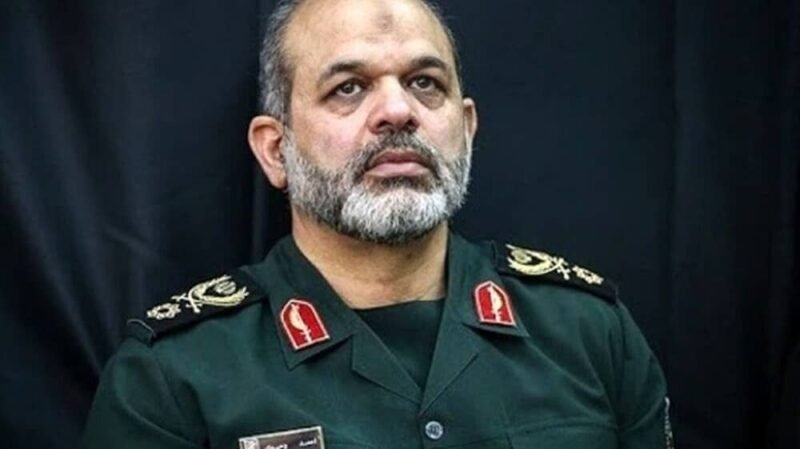
From Regime to Guard State—IRGC Tightens Grip on Iran as War Accelerates Shift Toward Hardline Rule.
In Tehran, the changes are not announced—they are absorbed.
As the war stretches into its second month, the most consequential shift inside Iran is not visible on the battlefield, but within the architecture of power. The Islamic Revolutionary Guard Corps is steadily consolidating control across political, military, and economic institutions, accelerating a transformation years in the making.
What is emerging is not regime collapse, but reconfiguration.
By the third layer of this evolution, the direction becomes clearer: authority is moving away from hybrid governance—where clerical, political, and military actors shared influence—toward a more centralized, security-driven system dominated by the Guard.
The process has been shaped by war.
A series of assassinations and strikes targeting senior figures has disrupted leadership structures. Yet rather than creating instability, these losses have opened pathways for a new generation of commanders—often described as more hardline and less constrained—to move into key positions.
Analysts say this pattern reflects the Guard’s institutional resilience.
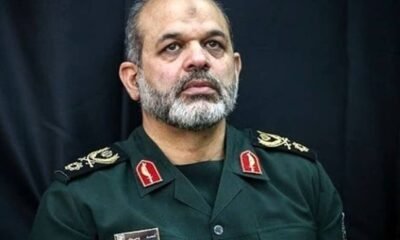
“The leadership is being replaced, but not weakened,” said Vali Nasr, noting that figures seen as more pragmatic have been sidelined in favor of those aligned with a more confrontational posture. The replacement of officials such as Ali Larijani with figures like Mohammad Zolghadr illustrates that shift.
There are no clear signs of fragmentation.
Despite sustained external pressure, the IRGC has maintained cohesion through a decentralized network of overlapping command structures. This design—built over decades—allows continuity even as individual leaders are removed.
The Guard’s influence extends far beyond the military.
Veterans of the organization occupy key roles across Iran’s political system and control significant sectors of the economy, including energy, infrastructure, and communications. This integration provides both financial resources and institutional leverage, reinforcing its central position.
The relationship with the clerical establishment is also evolving.
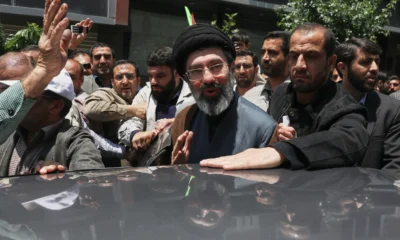
Rather than displacing religious authority, the Guard appears to be aligning more closely with it. Leadership figures, including Mojtaba Khamenei, are widely seen as maintaining strong ties with the IRGC, suggesting a convergence of military and ideological power.
There are competing dynamics within the system.
More pragmatic voices, including President Masoud Pezeshkian, have signaled interest in de-escalation, citing economic strain and internal pressure. But those efforts have faced resistance from Guard-aligned factions, which prioritize strategic resilience over immediate relief.
That tension remains unresolved.
Externally, the implications are significant.
The IRGC controls Iran’s most critical military capabilities, including missile systems and regional proxy networks. As its influence grows, analysts expect a more assertive foreign policy—particularly toward Israel and the United States—paired with efforts to rebuild capabilities weakened by the war.
There are also concerns about longer-term trajectories.
A more consolidated, security-driven leadership may be more inclined to pursue deterrence through unconventional means, including the potential acceleration of a military nuclear capability.
Yet uncertainty remains.
Iran’s internal balance of power is still shifting, and the outcome will depend on how the war evolves—whether it ends in negotiation, prolonged conflict, or partial de-escalation.
What is clear is that the structure of the state is changing.
The IRGC is no longer just a pillar of the system.
It is becoming the system itself.
And if that transition solidifies, the Iran that emerges from this war may be less fragmented—but also more rigid, more insulated, and potentially more confrontational than the one that entered it.
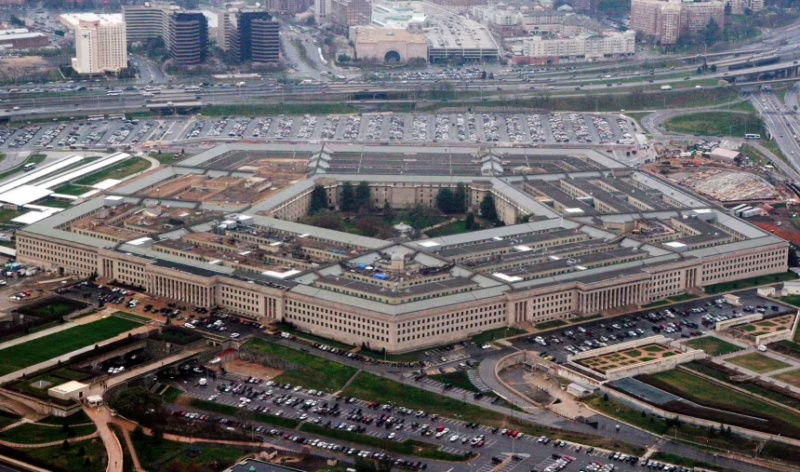
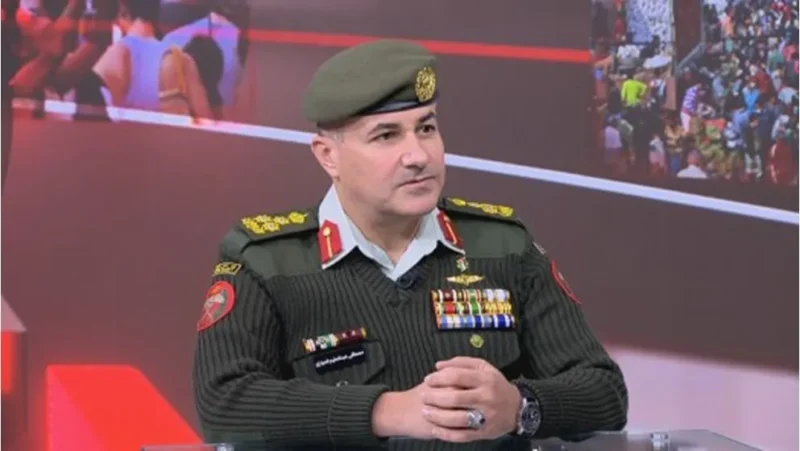
Jordan Says It Intercepted Most of Nearly 300 Iranian Missiles and Drones Since War Began.
AMMAN — Jordan’s military said Saturday that the country has been targeted by nearly 300 missiles and drones since the start of the war involving Iran, with the majority intercepted by its air defenses.
Colonel Mustafa Al-Hayari, director of military media for the armed forces, said 281 projectiles had entered Jordanian airspace since the conflict began. Of those, 261 were intercepted and destroyed by the Royal Jordanian Air Force and air defense systems.
“Iran and some factions in the region are targeting Jordanian territory directly and without justification,” Al-Hayari said at a press conference.
Jordan has maintained that it is not a party to the conflict and has repeatedly stated that its territory and airspace will not be used to launch attacks against any country.
Government spokesman Mohammad Al-Momani said there are no foreign military bases in Jordan, though the country maintains joint defense agreements with allied nations to support its national security.
Since the war began, Iran has launched missile and drone attacks across the region, targeting Israel and several Arab countries. Some strikes have hit civilian and energy infrastructure, while Tehran says it is aiming at U.S. interests and military-related targets.
Jordanian authorities said 29 people were injured in the attacks, all of whom have since been discharged from hospital. Damage has been reported to 31 vehicles, 59 homes and shops, and 16 public properties.
Officials also warned of threats from armed groups in neighboring countries. Foreign Minister Ayman Safadi said last month that Jordan had been targeted by Iraqi factions and called for the attacks to stop.
The military said it continues to monitor the situation and is prepared to respond to any further threats.
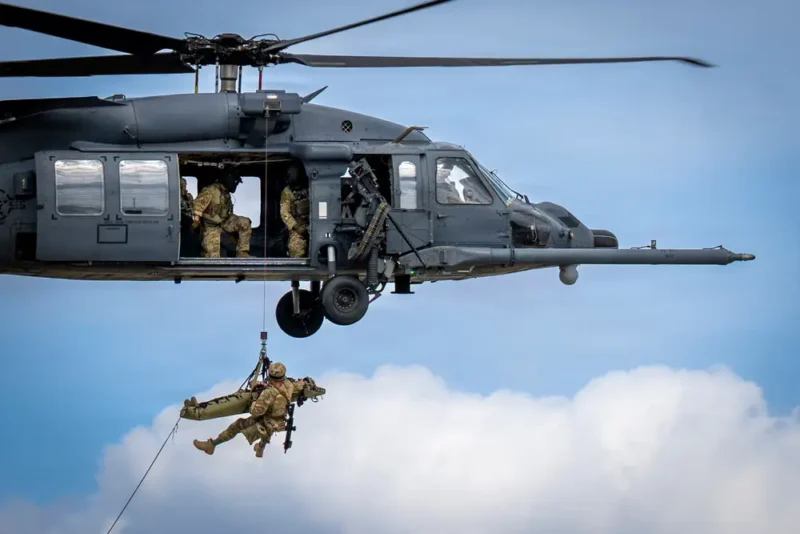
Inside a Combat Search and Rescue Mission: How the U.S. Hunts for Downed Aircrews.
Somewhere over hostile territory, a pilot ejects. Within minutes, a clock starts ticking—one measured not in hours, but in survival.
When a U.S. combat aircraft goes down, the response is immediate and layered. According to retired Air Force Special Operations veteran Wes Bryant, the mission unfolds in two parallel tracks: locate the aircrew and secure the rescue itself.
The first task is intelligence.
Every available asset is activated—satellites, surveillance aircraft, signals intelligence, and, where possible, human sources on the ground. The goal is simple but urgent: pinpoint the exact location of the pilot before enemy forces do. In hostile territory like Iran, that effort becomes exponentially more difficult due to limited local partnerships and restricted access.
The second task is protection.
Rescue forces—often including helicopters such as HH-60 Pave Hawks—must enter contested airspace to extract the crew. These aircraft fly low and slow, making them vulnerable to even basic weapons like rifles or rocket-propelled grenades. Without full air superiority, each movement carries significant risk.
By the third layer of this operation, the challenge becomes strategic.
Unlike past conflicts in places like Afghanistan or Iraq, where U.S. forces had ground presence or allied units to help secure landing zones, missions over Iran lack that support. There are no reliable partner forces to “cordon and secure” the area, meaning rescue teams must operate with minimal backup in hostile territory.
That absence changes everything.
Rescue missions become slower to plan, riskier to execute, and more dependent on precise intelligence. Any delay increases the likelihood that enemy forces—or even civilians incentivized by rewards—could locate the pilot first.
There is also a political dimension.
If a pilot is captured, the situation shifts from military operation to strategic crisis. Prisoners of war carry significant leverage, particularly in conflicts where domestic pressure to recover personnel is high. Bryant notes that such a scenario could quickly alter the broader trajectory of the conflict, forcing negotiations or recalibrations.
Historically, the U.S. military has treated pilot recovery as a top priority—often pausing wider operations to focus resources on extraction. That doctrine reflects both operational necessity and political reality.
But the current conflict is exposing limits.
The downing of an advanced aircraft suggests that Iran retains capable air defenses, challenging assumptions about U.S. control of the skies. That, in turn, raises questions about how future missions will be planned—and whether risk assessments have kept pace with evolving threats.
There are competing pressures.
Continue operations and maintain momentum, or pause and reassess exposure to risk. In practice, commanders must balance both—protecting forces while sustaining strategic objectives.
What remains constant is the urgency.
Combat search and rescue is not just a mission—it is a race against time, terrain, and adversaries. Every decision carries consequences, not only for the individuals involved, but for the broader conflict itself.
Because in modern warfare, the fate of a single pilot can reshape strategy far beyond the battlefield where they fell.

How the UAE Became the Frontline of a War It Tried to Avoid

The Hormuz Paradox: Globalization’s Artery as its Executioner

Oil Shock Deepens as Iran War Disrupts Global Supply


-
 TECH3 weeks ago
China Bets on an AI-Powered Military Future
-
 US-Israel war on Iran2 weeks ago
Waves of Mystery Drones Breach U.S. Nuclear Base Airspace
-
 Terrorism7 days ago
Egypt Uncovers Alleged Plan to Down Presidential Plane
-
 US-Israel war on Iran2 weeks ago
Saudi Arabia Warns of Military Action After Iranian Missile Strike
-

 US-Israel war on Iran2 weeks ago
Former CIA Chief Blames White House for Escalating Iran War Crisis
-
 Top stories1 week ago
Saudi Arabia Deepens Defense Ties with Ukraine
-
 US-Israel war on Iran2 weeks ago
Iran’s Guard Leadership Hit Hard in Escalating Strikes
-
 Analysis2 weeks ago
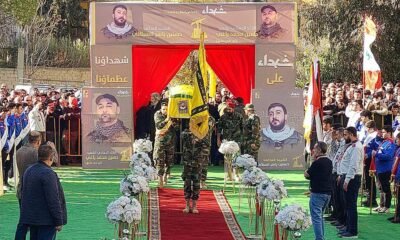
Inside the IRGC’s Quiet Rebuild of Hezbollah