
US-Israel war on Iran
Saudi Arabia Unveils First US THAAD Missile Defense Battery Amid Regional Tensions

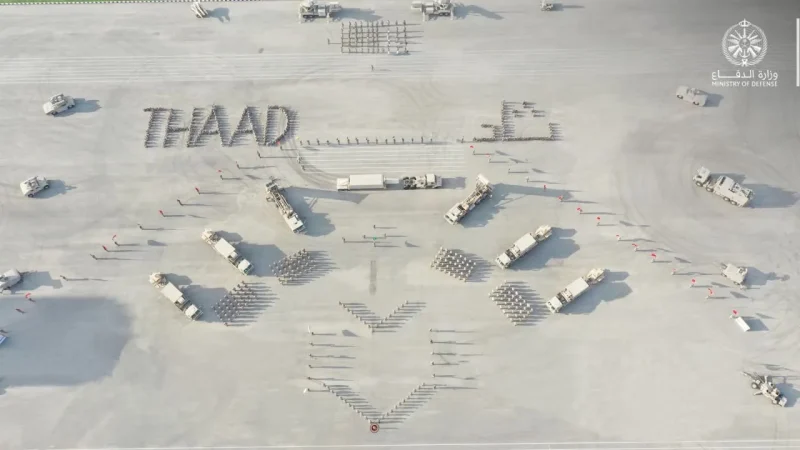
Saudi Arabia inaugurates US-made THAAD system, boosting air defense alongside Israel’s recent deployment amid Iran threat.
Saudi Arabia activates its first US THAAD missile defense battery purchased during Trump’s presidency, joining regional missile defense efforts that include Israel’s recent THAAD deployment to counter Iran’s ballistic missile threats.
Saudi Arabia Joins Missile Shield as US THAAD System Goes Live Amid Iran Threat
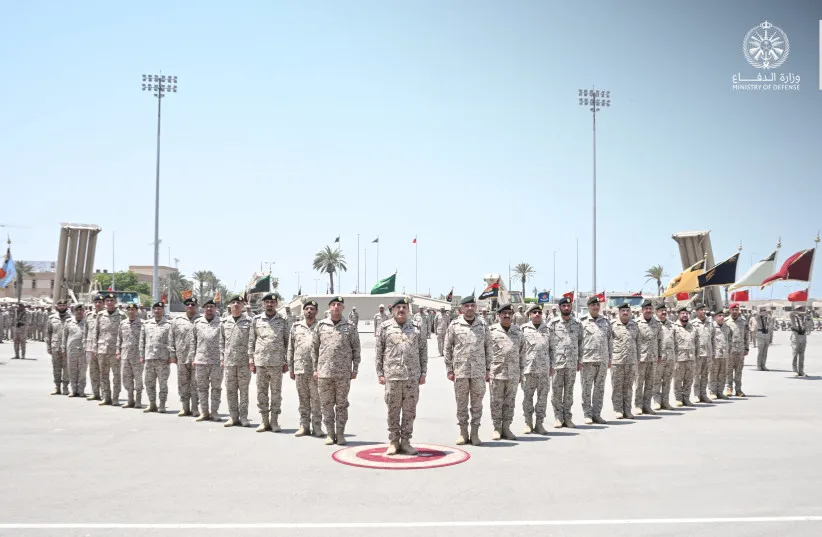
Saudi Arabia’s Air Defense Forces announced the inauguration of its first battery of the THAAD missile defense system (credit: SCREENSHOT/X)
Saudi Arabia has officially inaugurated its first THAAD (Terminal High Altitude Area Defense) missile battery, a critical milestone in the Kingdom’s effort to fortify its air defenses against missile threats — especially from Iran. This system, acquired in a landmark arms deal under President Trump’s administration, marks Riyadh’s entry into the elite club of nations equipped with America’s most advanced missile interception technology.
Built by Lockheed Martin, THAAD is designed to detect, track, and destroy short- and medium-range ballistic missiles at altitudes up to 150 kilometers, using a precision “hit-to-kill” method—colliding with targets to neutralize them without explosives. The battery’s activation follows rigorous testing and training within Saudi territory, demonstrating the Kingdom’s commitment to localizing defense manufacturing as part of its Vision 2030 plan. Significantly, Saudi Arabia has begun producing THAAD components domestically, a move that strengthens both its industrial base and the resilience of the US defense supply chain.
This development parallels a similar US deployment of THAAD to Israel in October 2024 amid escalating tensions with Iran. The Pentagon described that deployment as a clear signal of America’s “ironclad commitment” to protect Israel and American personnel from ballistic missile attacks by Tehran or its proxies. The US simultaneously inked multi-billion-dollar arms deals and expanded military infrastructure in Israel to buttress its regional ally.
Saudi Arabia’s activation of THAAD comes at a pivotal moment as Iran’s missile threats loom large over the Middle East. Riyadh’s enhanced missile defense capability not only safeguards its own airspace but also signals a growing regional alignment against Iranian aggression. With Turkey’s ambitions waning and Iran’s nuclear program under international scrutiny, the Kingdom’s THAAD inauguration is a concrete step in bolstering a collective missile shield—one where Israel and Saudi Arabia increasingly stand as frontline defenders.
In this volatile theater, the United States’ strategic arms partnerships underscore an unmistakable message: Israel and its Gulf allies are gearing up for a long, high-stakes contest with Iran — and the missile defense race is just the opening salvo.











Energy Shockwave—War Sends Oil Surging and Global Economy to the Edge.
The world’s oil market is no longer reacting to the war—it is being reshaped by it.
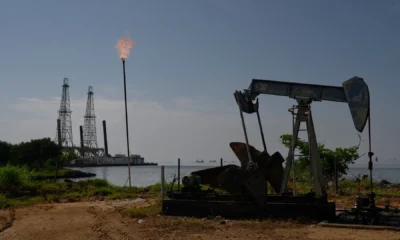
Since strikes began on February 28, the conflict between the United States, Israel, and Iran has triggered what analysts describe as the most severe supply disruption in modern oil market history. At the center of the shock is the effective closure of the Strait of Hormuz, a narrow maritime corridor that normally carries roughly one-fifth of global oil supply.
The impact has been immediate and global.
Shipping traffic through the strait has slowed dramatically, as attacks on vessels, soaring insurance costs, and security risks forced operators to halt or reroute shipments. While Gulf producers have attempted to redirect exports through alternative pipelines, those routes can replace only a fraction of the lost volume—leaving a daily shortfall estimated in the tens of millions of barrels.
Prices have surged accordingly.
Brent crude, which traded around $70 per barrel before the war, has climbed above $100 and at times pushed toward $120, with sharp daily swings driven by military developments and political statements. In extreme trading moments, regional crude benchmarks have spiked even higher, reflecting the uncertainty surrounding supply.
For consumers, the effects are already visible.
Fuel prices have risen sharply across major economies, with gasoline costs climbing by as much as 30 percent in some markets. Higher diesel and jet fuel prices are feeding into transportation and logistics costs, raising the price of goods and tightening household budgets.
The disruption extends beyond oil.
Liquefied natural gas exports from the Gulf have been interrupted, sending prices in Europe and Asia sharply higher. Petrochemical and fertilizer markets are also under strain, creating ripple effects across agriculture and manufacturing sectors worldwide.
The broader economic consequences are beginning to take shape.
Rising energy costs are fueling inflation just as central banks were attempting to stabilize prices. Economies heavily dependent on energy imports—particularly in Asia—face the risk of shortages, rationing, and slower growth. Financial markets have responded with volatility, while energy companies have seen gains tied to higher prices.
For policymakers, the options are limited.
Strategic reserves can provide temporary relief, and increased production outside the Gulf offers some buffer. But neither can fully compensate for prolonged disruption in one of the world’s most critical energy corridors.
The outlook now hinges on the trajectory of the war.
A partial reopening of the Strait of Hormuz could ease prices later this year, though recovery would likely be gradual. A prolonged conflict—or further escalation affecting additional chokepoints—could push prices significantly higher, raising the risk of a broader global slowdown.
Strategic Reflection
The energy shock reveals a deeper shift.
For decades, the global economy operated on the assumption that key energy routes, however vulnerable, would remain open. That assumption no longer holds.
The war has transformed energy flows into strategic leverage—tools of pressure rather than passive channels of trade.
And in doing so, it has exposed a central vulnerability of the global system:
A single chokepoint, once disrupted, can ripple through every economy—faster than diplomacy can contain it.
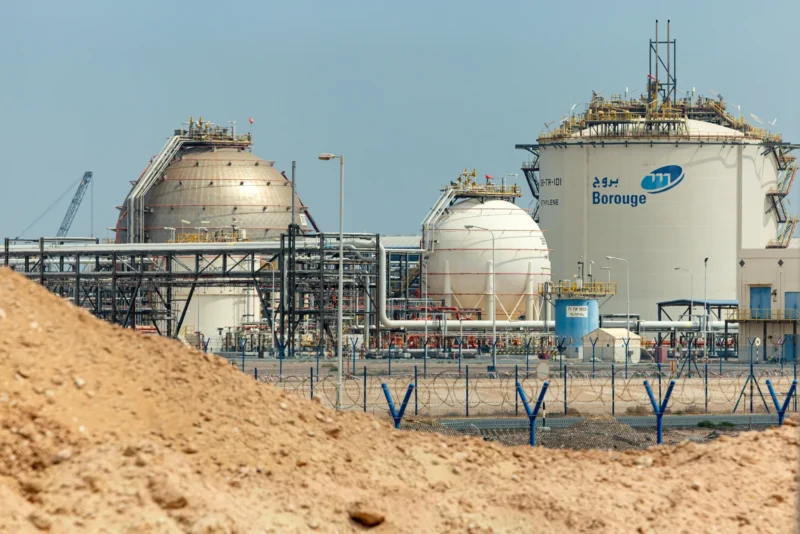
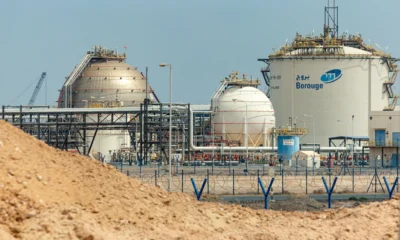
Gulf Energy Hit Indirectly as UAE Halts Borouge After Air Defense Interceptions.
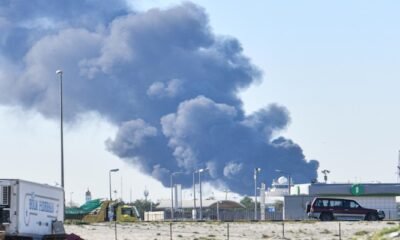
Operations at a major petrochemical facility in the United Arab Emirates were suspended Sunday after falling debris from intercepted missiles and drones sparked fires at the site, authorities said.
Officials in Abu Dhabi confirmed that multiple fires broke out at the Borouge petrochemicals plant following what they described as “successful interceptions” by air defense systems responding to incoming threats.
Emergency teams were deployed to contain the fires, and no injuries were reported.
The UAE’s defense ministry said its air defenses were actively engaging missile and drone attacks launched from Iran, as the regional conflict enters its sixth week and continues to expand beyond direct military targets.
Authorities said operations at the Borouge facility have been halted while damage assessments are carried out. The plant is a key part of the UAE’s petrochemical sector, producing materials used across global manufacturing supply chains.
The incident highlights a growing pattern across the Gulf, where infrastructure has been affected not only by direct strikes but also by debris from intercepted projectiles.
Across the region, governments have reported similar incidents involving damage to energy facilities and industrial sites as air defense systems respond to incoming attacks.
The latest developments come amid heightened tensions tied to the ongoing U.S.-Israel war with Iran, which has disrupted shipping routes, increased pressure on energy markets and drawn Gulf states further into the conflict.
Officials have not indicated how long operations at the Borouge plant will remain suspended.
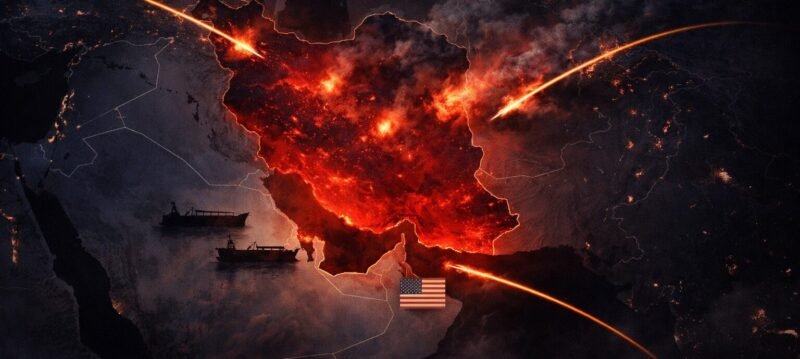
This war was never meant to see the spring of 2026. When the first cruise missiles crossed the Iranian border on February 28, the architects of the offensive spoke of a “decisive window”—a surgical strike to dismantle a regime’s nuclear ambitions and collapse its internal authority within weeks. Tehran, in turn, signaled that a 48-hour disruption of the global energy supply would send the West into a populist retreat.
Both were wrong. What began as a clinical confrontation has devolved into a grinding war of attrition, fueled not by a balance of power, but by a shared, stubborn logic of misperception.
The Nut Graph: The Architecture of Failure
The transition from a “Decisive Victory” to an “Open-Ended War” is the defining strategic failure of the decade. The conflict continues not because either side is nearing a win, but because both Washington and Tehran mistakenly believe that victory remains achievable using the same failed tools.
By misidentifying each other’s points of vulnerability—Washington looking for a domestic collapse that never came, and Tehran seeking an economic leverage that didn’t exist—the two powers have entered a self-sustaining cycle where time, once considered an ally, has become the primary enemy.
The Washington Fallacy: The Myth of the Internal Fracture
The U.S. strategy rested on a classic Western wager: that the Iranian populace, crushed under the combined weight of “obliterated” power plants and hyper-sanctions, would finally turn against the clerical establishment. It was a strategy built on conventional sociology, but it ignored the “survivalist DNA” of the Iranian state.
External threats, historically, do not fracture the Iranian system; they cauterize it. The coercive capacity of the IRGC, combined with an ideological framework that prioritizes regime survival above civilian comfort, has allowed the state to absorb immense pressure. Instead of an internal upheaval, Washington found a “cohesion of crisis,” where the cost of dissent during a hot war became prohibitively high.
The Tehran Paradox: A Weapon That Hit the Wrong Target
Tehran’s counter-strategy was equally flawed. The gamble was that by “making the world bleed” through the closure of the Strait of Hormuz and attacks on Gulf energy infrastructure, the global community would force a U.S. retreat.
However, Tehran overlooked a structural reality of the 2026 global economy: the United States, as a major energy producer protected by geography, is relatively insulated from the shocks it helped create. The true victims of Iran’s “Energy War” were not the decision-makers in Washington, but the industrial engines of China, India, and Europe.
By targeting the energy security of the “host countries” and neutral neighbors, Tehran didn’t pressure its primary adversary; it merely alienated its remaining diplomatic lifelines.
Human Color: The Sound of the Grind
In the streets of Riyadh and the boardrooms of Dubai, the war is felt in the “crystalline rain” of intercepted debris and the fluctuating glow of a strained power grid. In Iran, it is the silence of the shuttered petrochemical plants in Khuzestan.
These are the sensory markers of a war of attrition—a conflict that has moved beyond military objectives to target the very “Professional Domain” that sustains modern society.
The Iranian assumption that missile strikes would exhaust Israeli society similarly failed to account for a decade of civilian hardening. The “Iron Dome” and “David’s Sling” systems did more than intercept metal; they intercepted the psychological impact Tehran was counting on.
The Strategic Reflection: A War Without an Exit
The harsh conclusion of 2026 is that miscalculations do not cancel each other out—they amplify their costs. With every expired 48-hour ultimatum and every retaliatory drone strike, the “Strategic Coherence” of both sides degrades.
We are now witnessing a war that continues simply because both sides are too invested in their initial errors to admit that the shortcut to victory has become a long, dark path to exhaustion.
For the strategists and leaders watching from the Gulf, the lesson is clear: when you misidentify your enemy’s breaking point, you ensure that your own resources will be the first to break.
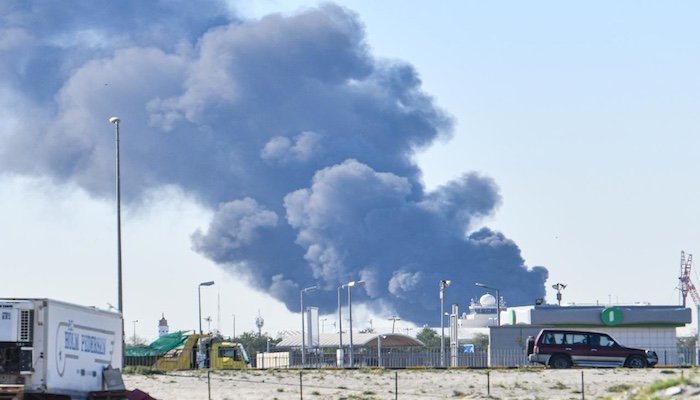
Kuwait Under Fire—Iranian Drones Strike Oil and Power Heart.
The first signs were smoke rising over Shuwaikh, where one of Kuwait’s most critical energy hubs sits at the edge of the capital.
By dawn, officials confirmed what many feared: Iranian drones had struck the Shuwaikh oil sector complex, triggering a fire inside facilities that house both the oil ministry and the state-run Kuwait Petroleum Corporation. Within hours, additional strikes hit government buildings and key power infrastructure, widening the scope of the attack.
No casualties were reported. But the damage ran deeper than the absence of injuries might suggest.
According to Kuwaiti authorities, two power generation units were forced out of service after drones targeted electricity and desalination plants—facilities essential not only for energy supply but also for water security in a country where freshwater is largely produced through desalination.
By the third layer of impact, the significance becomes clear: this was not a symbolic strike. It was a calculated hit on the systems that sustain daily life.
The attacks come as the war between the United States, Israel, and Iran enters its sixth week, steadily expanding beyond traditional military targets. Increasingly, economic and civilian infrastructure across the Gulf is being drawn into the conflict.
For Kuwait, a state that has publicly maintained it is not a party to the war, the strikes raise urgent questions about vulnerability.
Officials described “significant material damage” to government office complexes, underscoring how administrative and energy systems are now exposed. While air defenses have intercepted many incoming threats across the region, the ability of drones to penetrate and disrupt critical facilities highlights a shifting battlefield—one defined less by frontlines and more by reach.
The pattern is becoming familiar.
Across the Gulf, similar incidents have targeted oil storage sites, petrochemical plants, and power networks. The strategy appears aimed at applying pressure without triggering mass civilian casualties, while still delivering economic and psychological shock.
There has been no immediate response from Tehran.
But the broader message is already resonating: the war is no longer contained to military bases or distant installations. It is moving into the infrastructure that underpins state stability.
For Kuwait and its neighbors, the challenge is no longer just defense—it is continuity.
Keeping the lights on, water flowing, and markets stable has become part of the war effort itself.
And as long as the conflict endures, those systems remain in the crosshairs.
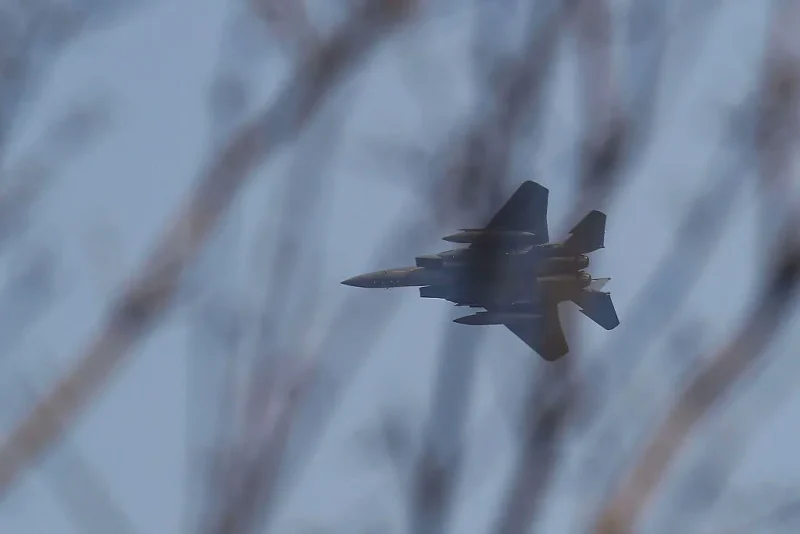
U.S. Rescues Downed Pilot in Iran as War Escalates and Gulf Infrastructure Comes Under Fire.
The rescue unfolded in silence, high above the mountains of Iran, where a lone American pilot had spent hours evading capture.
By the time U.S. aircraft closed in, the aviator—downed when an F-15E fighter jet was shot out of the sky—was already injured and being tracked by hostile forces. Within a narrow window, a coordinated operation involving dozens of aircraft extracted him from behind enemy lines, according to President Donald Trump.
The mission, he said, succeeded just as Iranian forces were closing in.
By the third day after the crash, the broader meaning of the rescue had become clear: this war is no longer defined by distant strikes alone. American personnel are now directly exposed inside Iranian territory, raising the stakes of every engagement.
The downing of the jet marked a turning point.
It was the first confirmed U.S. aircraft loss over Iran since the conflict began six weeks ago. A second crew member had been rescued earlier, but another aircraft—an A-10 attack jet—was also reported downed, with the status of its crew unclear.
Despite repeated claims from Washington that Iran’s military capabilities have been significantly degraded, the incident underscores Tehran’s ability to inflict damage and sustain pressure.
That pressure is spreading across the region.
In Kuwait, drone strikes damaged power plants and disrupted a desalination facility, threatening water supplies in a country heavily dependent on energy infrastructure. In Bahrain, a strike ignited a fire at an oil storage site. And in the United Arab Emirates, debris from intercepted drones sparked fires at a major petrochemical complex in Ruwais, halting production.
These are not isolated incidents.
They reflect a widening strategy in which economic infrastructure—energy, water, logistics—has become a central battlefield. For civilians, the impact is immediate: disrupted utilities, rising costs, and growing uncertainty about daily life.
At sea, the stakes are even higher.
The Strait of Hormuz, a critical artery for global oil shipments, remains effectively closed. Trump has renewed his warning that Iran must reopen the waterway or face severe consequences, setting a new deadline that signals potential escalation.
Iranian officials have responded in kind.
Military leaders warned that any further attacks on Iranian infrastructure could trigger retaliation against U.S. assets across the region, while political figures hinted at expanding the conflict to another chokepoint—the Bab el-Mandeb Strait.
Diplomatic efforts continue, but progress is fragile.
Mediators from Pakistan, Turkey and Egypt are working to bring both sides to the table, with proposals centered on a temporary ceasefire to allow negotiations. Iranian Foreign Minister Abbas Araghchi has indicated openness to talks, even as conditions remain contested.
For now, the war shows no sign of slowing.
More than 1,900 people have been killed in Iran, alongside casualties across Israel, Lebanon and the Gulf. Global markets remain volatile, and energy routes—once taken for granted—have become bargaining chips in a high-risk confrontation.
The rescue of one pilot offers a moment of relief.
But it also reveals the deeper reality: this is no longer a conflict contained by borders or battle lines. It is a war where the distance between frontline and homeland is collapsing—and where each escalation brings the region closer to a broader, more unpredictable phase.
Behind Enemy Lines—The High-Risk Race to Save a Downed Pilot
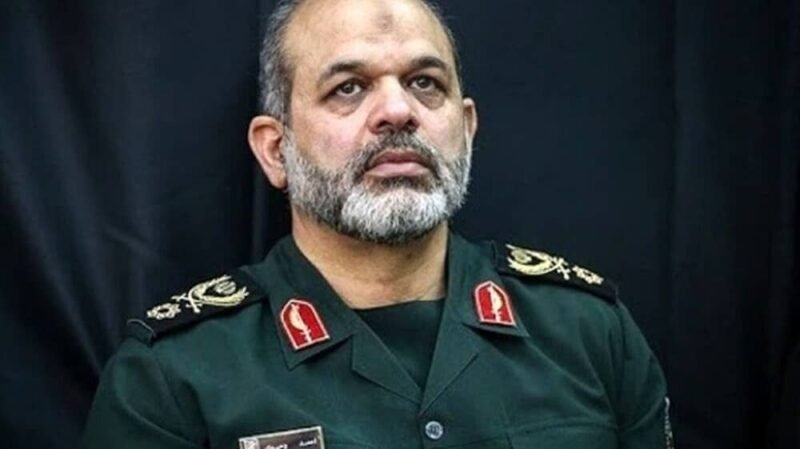
From Regime to Guard State—IRGC Tightens Grip on Iran as War Accelerates Shift Toward Hardline Rule.
In Tehran, the changes are not announced—they are absorbed.
As the war stretches into its second month, the most consequential shift inside Iran is not visible on the battlefield, but within the architecture of power. The Islamic Revolutionary Guard Corps is steadily consolidating control across political, military, and economic institutions, accelerating a transformation years in the making.
What is emerging is not regime collapse, but reconfiguration.
By the third layer of this evolution, the direction becomes clearer: authority is moving away from hybrid governance—where clerical, political, and military actors shared influence—toward a more centralized, security-driven system dominated by the Guard.
The process has been shaped by war.
A series of assassinations and strikes targeting senior figures has disrupted leadership structures. Yet rather than creating instability, these losses have opened pathways for a new generation of commanders—often described as more hardline and less constrained—to move into key positions.
Analysts say this pattern reflects the Guard’s institutional resilience.
“The leadership is being replaced, but not weakened,” said Vali Nasr, noting that figures seen as more pragmatic have been sidelined in favor of those aligned with a more confrontational posture. The replacement of officials such as Ali Larijani with figures like Mohammad Zolghadr illustrates that shift.
There are no clear signs of fragmentation.
Despite sustained external pressure, the IRGC has maintained cohesion through a decentralized network of overlapping command structures. This design—built over decades—allows continuity even as individual leaders are removed.
The Guard’s influence extends far beyond the military.
Veterans of the organization occupy key roles across Iran’s political system and control significant sectors of the economy, including energy, infrastructure, and communications. This integration provides both financial resources and institutional leverage, reinforcing its central position.
The relationship with the clerical establishment is also evolving.
Rather than displacing religious authority, the Guard appears to be aligning more closely with it. Leadership figures, including Mojtaba Khamenei, are widely seen as maintaining strong ties with the IRGC, suggesting a convergence of military and ideological power.
There are competing dynamics within the system.
More pragmatic voices, including President Masoud Pezeshkian, have signaled interest in de-escalation, citing economic strain and internal pressure. But those efforts have faced resistance from Guard-aligned factions, which prioritize strategic resilience over immediate relief.
That tension remains unresolved.
Externally, the implications are significant.
The IRGC controls Iran’s most critical military capabilities, including missile systems and regional proxy networks. As its influence grows, analysts expect a more assertive foreign policy—particularly toward Israel and the United States—paired with efforts to rebuild capabilities weakened by the war.
There are also concerns about longer-term trajectories.
A more consolidated, security-driven leadership may be more inclined to pursue deterrence through unconventional means, including the potential acceleration of a military nuclear capability.
Yet uncertainty remains.
Iran’s internal balance of power is still shifting, and the outcome will depend on how the war evolves—whether it ends in negotiation, prolonged conflict, or partial de-escalation.
What is clear is that the structure of the state is changing.
The IRGC is no longer just a pillar of the system.
It is becoming the system itself.
And if that transition solidifies, the Iran that emerges from this war may be less fragmented—but also more rigid, more insulated, and potentially more confrontational than the one that entered it.
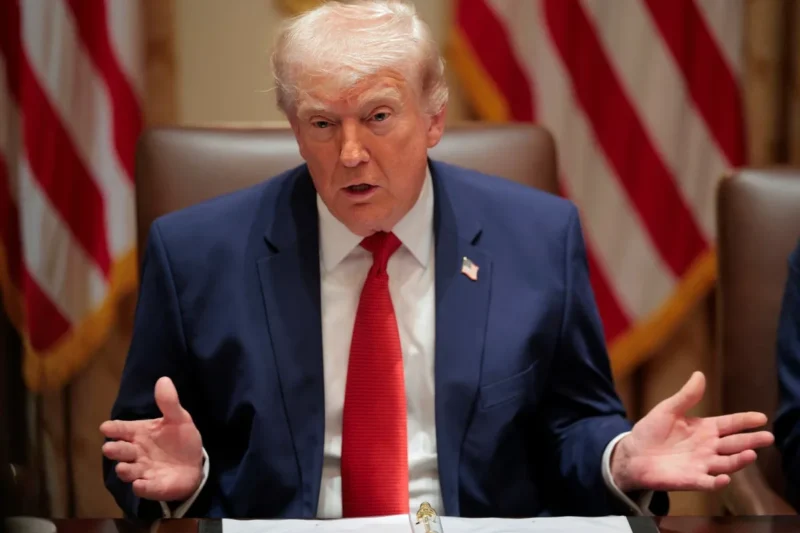
“48 Hours to Hell”—Trump’s Iran Ultimatum Raises Stakes as Rhetoric and Strategy Collide Over Hormuz.
The deadline is blunt. The language, even more so.
Donald Trump has issued a stark warning: reopen the Strait of Hormuz within days—or face overwhelming force. The phrasing, delivered through social media, strips away the traditional diplomatic language that usually surrounds military escalation.
But the message is not just about Iran. It is about how this war is being framed.
By the third layer of analysis, the significance lies less in the threat itself—military escalation has already been underway—and more in the rhetoric shaping it. Trump’s language abandons the calibrated ambiguity that has long defined U.S. war messaging. Instead, it embraces directness, even brutality, projecting strength through confrontation rather than restraint.
That shift has consequences.
Historically, U.S. administrations have relied on carefully constructed language—“operations,” “stabilization,” “deterrence”—to frame military action within legal and political boundaries. Even controversial campaigns were often wrapped in terms that softened their perception.
Now, that linguistic buffer is eroding.
Statements emphasizing destruction, “lethality,” and overwhelming force are not merely stylistic. They signal a broader recalibration—one where the projection of power is itself part of the strategy. In this framework, rhetoric becomes a tool of deterrence, intended to shape adversary behavior through fear and uncertainty.
There are competing interpretations.
Supporters argue that clarity strengthens deterrence. By removing ambiguity, the United States communicates resolve, reducing the risk of miscalculation by adversaries like Iran. In a region where signals are often tested, direct threats may be seen as more credible than nuanced diplomacy.
Critics, however, see a different risk.
Unrestrained language can narrow diplomatic space, making de-escalation more difficult. It can also blur the line between signaling and commitment—raising the stakes of any response. When rhetoric escalates faster than strategy, it can lock decision-makers into paths that are harder to reverse.
There is also a legal and institutional dimension.
The avoidance of formal terms like “war” reflects ongoing tensions between executive authority and congressional oversight in the United States. By framing the conflict through alternative language, the administration maintains operational flexibility—while sidestepping debates that a formal declaration would trigger.
Meanwhile, the strategic environment continues to tighten.
The Strait of Hormuz remains partially restricted, energy markets are volatile, and global supply chains are under pressure. The ultimatum, therefore, is not only military—it is economic, aimed at restoring a critical artery of global trade.
Yet the underlying question remains unresolved.
What is the end state?
The administration has emphasized pressure—reopening shipping lanes, degrading Iran’s capabilities—but has offered limited clarity on what follows. Without a defined political outcome, escalation risks becoming an end in itself rather than a means to a broader objective.
This is where rhetoric and strategy intersect.
Language can project power. It can shape perceptions. But it cannot substitute for a coherent long-term plan.
And as the deadline approaches, the risk is not only that the threat will be carried out—but that it will deepen a conflict whose trajectory is already becoming harder to control.
Because in modern warfare, how leaders speak about war can be as consequential as how they fight it.

How the UAE Became the Frontline of a War It Tried to Avoid

The Hormuz Paradox: Globalization’s Artery as its Executioner

Oil Shock Deepens as Iran War Disrupts Global Supply


-
 TECH3 weeks ago
China Bets on an AI-Powered Military Future
-
 US-Israel war on Iran2 weeks ago
Waves of Mystery Drones Breach U.S. Nuclear Base Airspace
-
 Terrorism7 days ago
Egypt Uncovers Alleged Plan to Down Presidential Plane
-
 US-Israel war on Iran2 weeks ago
Saudi Arabia Warns of Military Action After Iranian Missile Strike
-
 US-Israel war on Iran2 weeks ago
Former CIA Chief Blames White House for Escalating Iran War Crisis
-
 Top stories1 week ago
Saudi Arabia Deepens Defense Ties with Ukraine
-

 US-Israel war on Iran2 weeks ago
Iran’s Guard Leadership Hit Hard in Escalating Strikes
-
 Analysis2 weeks ago
Inside the IRGC’s Quiet Rebuild of Hezbollah