While the West obsesses over China and the Middle East boils with conflict, Russia has been quietly weaving itself into the geopolitical fabric of East Africa. From Port Sudan to Kampala, Moscow is laying down roots—military, economic, and diplomatic—as part of a sweeping strategy to reassert its global clout. And make no mistake: the Kremlin’s new African chapter is not just about influence. It’s about power.
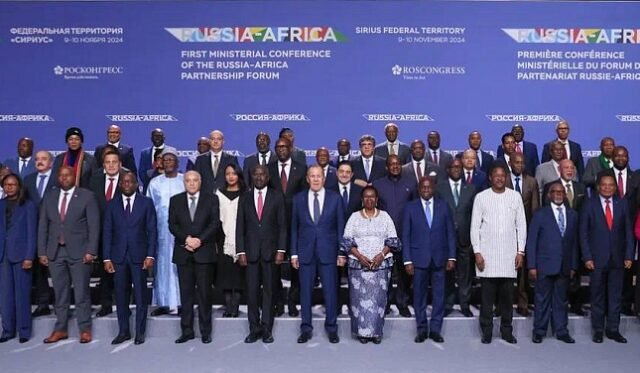
When Russian Foreign Minister Sergei Lavrov addressed the State Duma earlier this year, he made it clear: Africa is no longer an afterthought. It’s a priority. This isn’t nostalgia for Cold War alliances with Ethiopia and Somalia. It’s a modern campaign to outmaneuver both China and the US in a continent increasingly tired of Western hypocrisy.
The flashpoint? Port Sudan. Russia’s long-awaited naval base deal is now official, granting Moscow unprecedented access to the Red Sea—a chokepoint that links the Suez Canal to the Indian Ocean. With this single move, Russia just altered the naval calculus for every global power operating in the region.
But the strategy doesn’t end there. Russian troops are already stationed in Burkina Faso and Mali, propping up military-led regimes that have openly defied French and American influence. Moscow is positioning itself as the preferred partner for Africa’s new strongmen—a relationship built on arms, sovereignty, and mutual disdain for the West’s patronizing tone.
Now, embassies are popping up across the map: South Sudan, Comoros, Togo, Liberia. Lavrov isn’t just cutting ribbons. He’s laying the foundation of a new diplomatic offensive that will rival anything Brussels or Washington can match.
And here’s the kicker: Russia is using African labor to build weapons of war. In Tatarstan, thousands of Ugandan women are assembling Shahed drones for deployment in Ukraine’s killing fields. It’s a deeply controversial program now under Interpol investigation, but it underscores how deep the Kremlin’s roots are growing in African soil.
This is not just about trade, though that too is booming. Russian-African commerce hit $18.6 billion in 2024, led by agricultural exports to Egypt. Russian universities are flooded with African students, particularly in agronomy, as the Kremlin reinvests in soft power tools long neglected.
WARYATV’s assessment: Africa’s center of gravity is shifting. As the West debates sanctions and democracy, Moscow is quietly executing a full-spectrum strategy that combines economic allure, military protection, and diplomatic respect. In East Africa—and perhaps beyond—Russia isn’t just back. It’s planting flags.