Leaked draft sparks outrage as Trump White House plots radical State Department overhaul, Africa programs face existential threat.
A leaked draft suggesting the Trump administration plans to dismantle State Department Africa operations and human rights bureaus draws fierce denials from Marco Rubio and fears of U.S. diplomatic retreat.
The Trump administration appears poised to deliver its most radical foreign policy shift yet—if a leaked executive order draft obtained by The New York Times is to be believed. The document, circulating among diplomats and defense analysts, outlines a sweeping demolition of the State Department as we know it—one that would erase Africa from Washington’s diplomatic map, terminate human rights bureaus, and gut long-standing refugee and democracy programs.
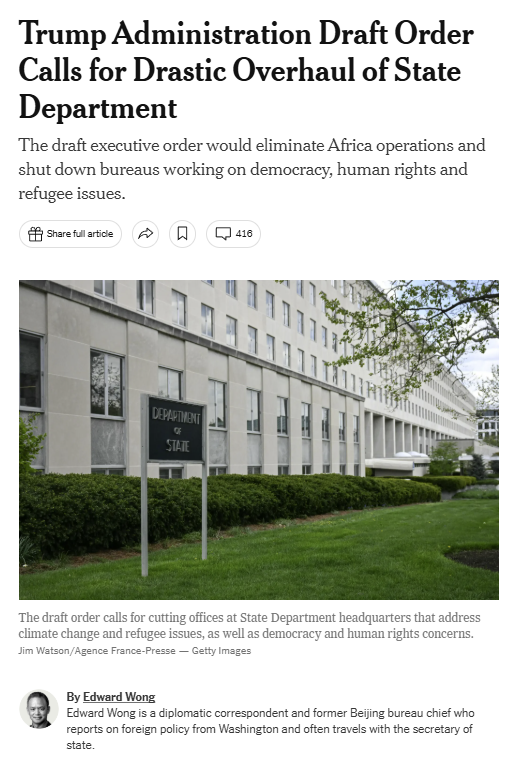
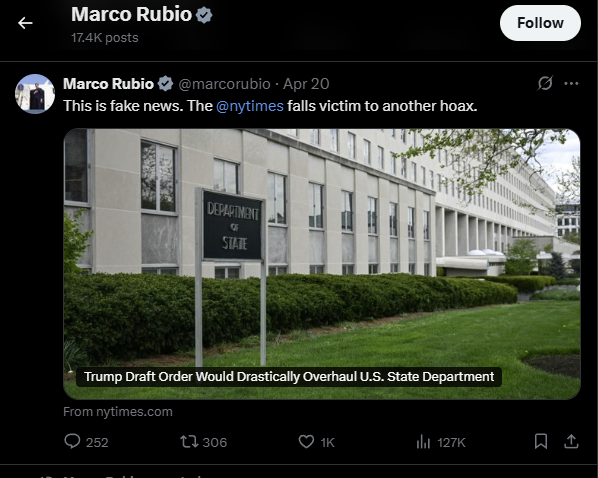
But in a typical 2025 twist, Secretary of State Marco Rubio took to X, dismissing it as “fake news,” accusing The New York Times of falling for another hoax. Yet what’s fueling the fire is not just the leak—it’s the silence from the White House. No clear denial. No press release. Just noise.
If enacted, the order would shut down embassies across sub-Saharan Africa, roll back Fulbright scholarships to only those studying “national security,” and eliminate fellowships designed to bring underrepresented groups into diplomacy. For Somalia, Ethiopia, Sudan, and others—it’s more than abandonment; it’s strategic blindness.
And for Somaliland? The timing couldn’t be clearer. As Hargeisa lobbies to become Washington’s anchor in the Horn, Trump’s pivot away from Africa would leave the region’s fate in the hands of adversaries—Turkey, China, and Russia. Closing American embassies creates power vacuums others are happy to fill.
Rubio’s comment sidesteps the real issue: this isn’t just about budget cuts—it’s about ideology. The leaked order frames the State Department as bloated, slow, and disloyal. It replaces diplomacy with artificial intelligence, seasoned career officers with politically-aligned operatives, and strategic engagement with extractive opportunism—especially on the continent.
Eliminating the Bureau of African Affairs and reducing it to a “special envoy” shows how Trump sees Africa: not as a partner, but as a battlefield for minerals and terrorism—not diplomacy or democracy.
Critics aren’t just reacting—they’re panicking. Foreign policy veterans are calling this a death knell for the U.S.’s global influence. Human rights advocates warn that it will embolden authoritarians. Lawmakers like Rep. Gregory Meeks are already sounding alarms.
What if Rubio’s tweet isn’t a denial—but a distraction?
The truth may be somewhere in between. But one thing is clear: America’s global posture is being rewritten—and Africa is on the chopping block.
U.S.-Africa Relations Under a Trump Return: Insights from Tibor Nagy