Somali Civil Aviation Authority suspends all Mogadishu-bound flights after UN plane crash at Aden Adde Airport; runway closed, global notification issued.
A UN aircraft crash at Mogadishu’s Aden Adde Airport has forced the Somali Civil Aviation Authority to suspend flights and shut down the runway. Emergency response underway as 22 UN staff escape disaster.
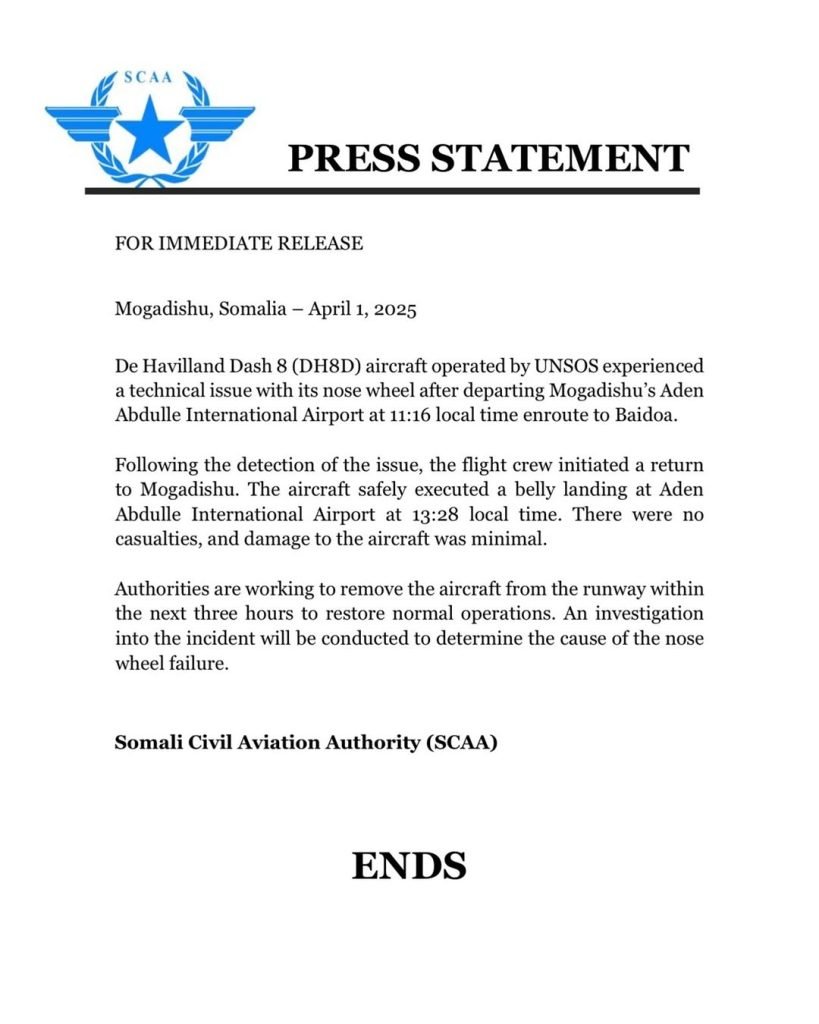
The Somali Civil Aviation Authority has officially suspended all incoming flights to Mogadishu after a United Nations plane carrying 22 passengers crash-landed at Aden Adde International Airport earlier today.
Director Ahmed Macalin Hassan confirmed that the UN aircraft, bound for Baidoa, suffered a catastrophic technical failure shortly after takeoff and was forced to return to the airport. In a high-stakes emergency procedure, the plane released its fuel into the sea to minimize the risk of explosion and managed a harrowing landing—one that sparked a small fire and resulted in the total closure of the capital’s only functioning international runway.
The immediate fallout? A shutdown that reverberated far beyond Somalia’s borders. A notice was sent to 193 countries alerting them of the airport’s closure. Flights en route were diverted or grounded, and the country’s fragile air transport network—already under strain—was brought to a standstill.
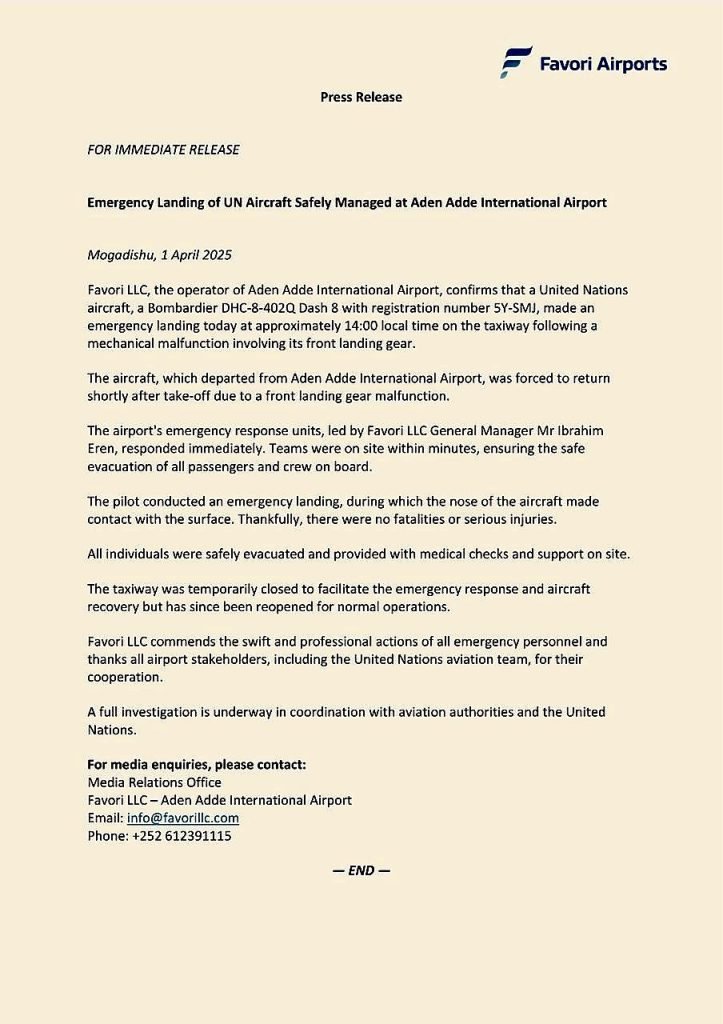
As of 5:00 p.m., the runway remains blocked by the damaged aircraft, and emergency crews are scrambling to remove the wreckage. While no fatalities have been reported, the incident has reignited concerns about Somalia’s overstretched and under-resourced aviation infrastructure.
This is more than a temporary closure. It’s a wake-up call. The crash, involving international personnel and requiring global notification, casts a spotlight on the dangerous vulnerabilities facing Somalia’s aviation sector. Aden Adde Airport is not just a gateway—it’s a geopolitical lifeline used by diplomats, aid workers, and military partners. Its temporary paralysis sends shockwaves through humanitarian operations and diplomatic engagements across the Horn of Africa.
The question now is whether this near-catastrophe will lead to serious reforms—or whether Somalia’s aviation system will continue flying on fumes.