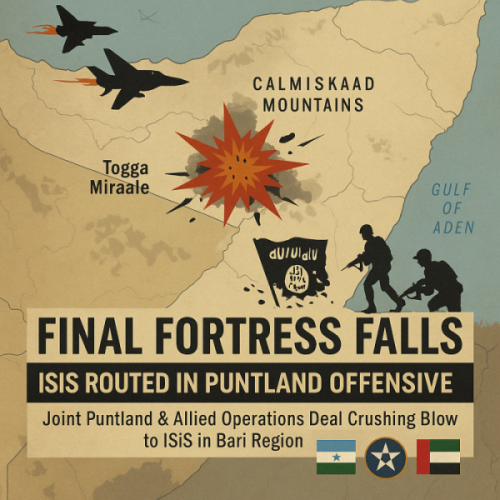
US Africa Command (AFRICOM) has executed targeted strikes against ISIS positions in Somalia’s Puntland region, southeast of Bosaso. Conducted in coordination with Somalia’s government, this operation highlights the escalating threat ISIS poses to American forces and broader regional stability.
The March 29 strikes, as detailed in AFRICOM’s official statement, targeted militant positions deemed threatening to US military personnel and interests in the strategically critical Horn of Africa. While the US provided limited operational details, the timing and location underscore significant geopolitical maneuvers unfolding in the region.
Notably, these airstrikes occur just one day after a controversial diplomatic offer from Somalia’s President Hassan Sheikh Mohamud to President Donald Trump was leaked. Mohamud proposed granting the US “exclusive operational control” over strategic assets—including Bosaso port and airbase and Somaliland’s Berbera port—in a desperate bid to bolster US involvement and counteract regional instability.
However, this diplomatic overture sparked immediate controversy, especially since these assets remain outside Mogadishu’s control. The recent US military actions, striking precisely near these contested sites, signify a robust American posture in response to ISIS threats while simultaneously underscoring the complex interplay between US strategic interests and Somalia’s fragile sovereignty.
Washington’s strikes and Somalia’s provocative diplomatic offers reveal the growing urgency in controlling critical Horn of Africa maritime routes against terrorist threats and international rivals.
Will intensified US military actions stabilize Somalia, or could they further inflame regional tensions, reshaping the strategic balance in this geopolitically sensitive corridor?