A divisive idea met with firm opposition from regional allies and fears of permanent displacement
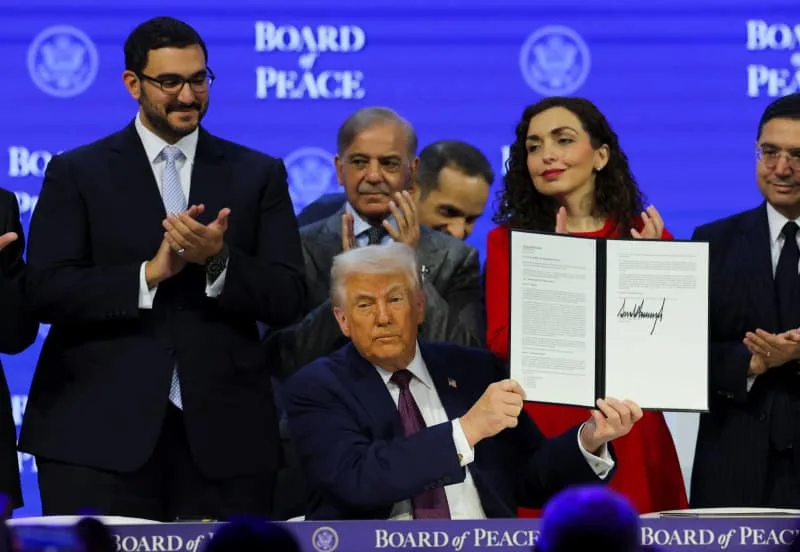
President Donald Trump’s controversial proposal to relocate Palestinians from Gaza to Egypt and Jordan has sparked sharp rejection from both nations and the Palestinians themselves. The idea, which Trump described as a solution to “clean out” the war-ravaged territory, highlights the deep geopolitical and humanitarian complexities surrounding Gaza’s future.
Trump floated the suggestion amid a fragile ceasefire between Israel and Hamas following a devastating 15-month war. Speaking over the weekend, he proposed that Egypt and Jordan temporarily or permanently absorb Gaza’s 2.3 million residents, framing the move as a pathway to peace.
However, this proposal immediately drew condemnation from all parties involved. Egypt and Jordan, two of the United States’ closest allies in the Middle East, issued strong statements opposing the plan. Egypt’s foreign ministry warned that such a move could expand the conflict, while Jordan’s Foreign Minister Ayman Safadi reiterated his country’s firm refusal to accept any resettlement of Palestinians.
Palestinian leaders also rejected the idea outright. Hamas and the Palestinian Authority condemned the plan as an attempt to ethnically cleanse Gaza, with fears that Palestinians forced to leave would never be allowed to return. This sentiment is deeply rooted in historical trauma, as the Palestinian Nakba of 1948 displaced over 700,000 Palestinians, with millions of their descendants still living as refugees across the region.
For Egypt and Jordan, the stakes are high. Both countries have maintained peace agreements with Israel while supporting the establishment of a Palestinian state. Accepting Gaza refugees could undermine those agreements, create significant security risks, and destabilize their own nations.
Egyptian President Abdel Fattah el-Sissi warned that relocating Palestinians to Egypt’s Sinai Peninsula would bring Hamas and other militant groups onto Egyptian soil, risking future wars and jeopardizing the historic Camp David peace treaty. Similarly, Jordan’s King Abdullah II has long rejected any plans that could turn Jordan into an alternative Palestinian homeland, a concept promoted by Israeli ultranationalists.
Trump’s proposal also complicates his broader Middle East strategy, including efforts to broker normalization agreements between Israel and Arab states. Forcing Egypt and Jordan to accept refugees could alienate key regional allies, jeopardizing any potential progress toward Saudi-Israeli normalization.
While Trump has not outlined specific measures to pressure Egypt and Jordan, his administration’s track record suggests economic tools like tariffs or sanctions could be on the table. Both nations rely heavily on U.S. aid, with billions of dollars in military and economic support at stake. However, such tactics risk further destabilizing countries already grappling with economic crises and large refugee populations from other regional conflicts.
The proposal, while framed as a solution to Gaza’s humanitarian crisis, underscores the immense challenges of addressing the Israeli-Palestinian conflict. For Palestinians, remaining steadfast on their land is central to their identity and struggle for self-determination. Any attempt to forcibly relocate Gaza’s population would not only exacerbate their suffering but also ignite broader instability in a region already on edge.
The international community, particularly the United States, faces a difficult balancing act in addressing the aftermath of the Gaza war. Trump’s approach, however, risks deepening divisions and undermining prospects for lasting peace.