Violence erupts in South Sudan after alleged ethnic killings in Sudan spark revenge attacks, leaving three dead and businesses destroyed.
South Sudan is reeling from a wave of violent retaliation against Sudanese nationals, spurred by viral footage of alleged ethnic killings in Sudan’s Gezira State. The escalating situation highlights the fragility of South Sudan’s internal stability and the deep-seated animosities between the two nations since their separation in 2011.
The Trigger: Viral Footage and Ethnic Tensions
The violence erupted following the circulation of harrowing footage reportedly showing Sudanese soldiers killing South Sudanese civilians in Wad Madani, Gezira State. These acts, described by South Sudanese President Salva Kiir as “heinous” and “unacceptable,” reignited longstanding grievances over racial and ethnic discrimination in Sudan.
In Sudan, darker-skinned ethnic groups, including those of South Sudanese origin, have long faced systemic racism and violent persecution by lighter-skinned Arab fighters. This animosity has reached a boiling point, with the current conflict exacerbating tensions. Rights groups confirm at least 13 ethnic South Sudanese, including children, were killed in the Wad Madani incident, fueling outrage in South Sudan.
Revenge Attacks and Economic Fallout
The viral footage triggered spontaneous revenge attacks on Sudanese nationals and their businesses across South Sudan. In Juba, Aweil, and Wau, Sudanese-owned shops and homes were set on fire or looted. Bread prices surged by 17% in Juba as fear prompted shopkeepers to shutter their businesses, including the bustling Konyo Konyo market.
The violence claimed three lives and injured seven, with South Sudanese security forces firing live rounds into the air to disperse rioters. A dusk-to-dawn curfew has been imposed nationwide, and dozens of Sudanese nationals have been placed under police protection.
The chaos illustrates how deeply intertwined the two nations remain, not just geographically but economically. Sudanese traders have become an essential part of South Sudan’s economy, making their targeting a double-edged sword that exacerbates both humanitarian and economic crises.
Underlying Humanitarian Crisis
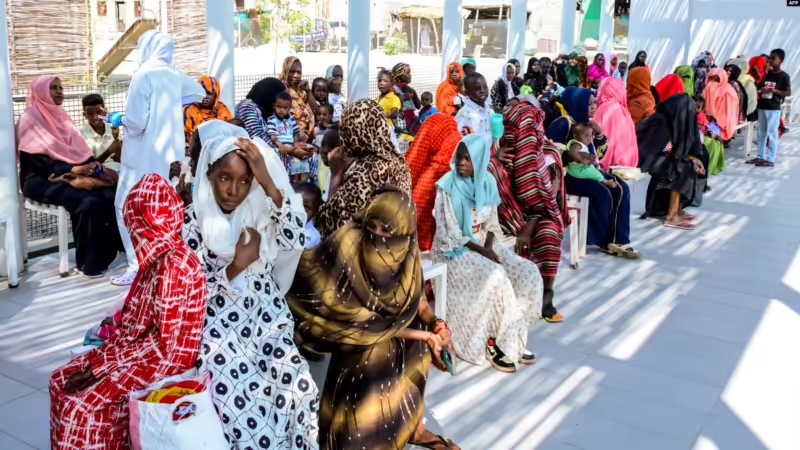
The revenge attacks come as Sudan faces what the UN has labeled the “world’s worst humanitarian crisis.” The ongoing conflict between Sudan’s rival military factions has displaced millions, with many Sudanese fleeing to South Sudan in search of safety. However, this influx has strained South Sudan’s fragile economy and rekindled old resentments.
South Sudan, already grappling with its own post-independence instability, finds itself at a crossroads. The government’s inability to swiftly quell retaliatory violence exposes a weak security apparatus and raises questions about its capacity to manage inflamed ethnic tensions.
President Salva Kiir’s Response
President Kiir has called for calm, urging South Sudanese to avoid taking the law into their own hands. He demanded that Sudan investigate the Wad Madani killings and protect South Sudanese citizens within its borders. However, his calls for restraint may ring hollow for many citizens, who see the violence as long-overdue justice for systemic discrimination and violence in Sudan.
While Kiir’s administration has implemented a curfew and deployed police to protect Sudanese nationals, the measures appear reactive and insufficient to address the deeper issues at play.
Regional and International Implications
The violence risks destabilizing relations between South Sudan and Sudan at a time when cooperation is critical to managing shared border conflicts and the humanitarian crisis. If unchecked, the violence could further isolate South Sudan diplomatically, complicating its ability to attract international support.
Moreover, the viral footage and subsequent attacks underscore the role of social media in accelerating and amplifying ethnic tensions. As South Sudan grapples with this crisis, managing misinformation and online incitement will be critical to preventing further violence.
A Nation on Edge
The revenge attacks in South Sudan illustrate the volatile interplay of ethnic grievances, economic dependency, and weak governance. While curfews and police interventions may temporarily contain the violence, they do little to address the underlying resentments that continue to fester.
President Kiir’s government faces a delicate balancing act: protecting Sudanese nationals while addressing the legitimate anger of its citizens over systemic discrimination and violence. Without meaningful efforts to foster reconciliation and address economic strains, South Sudan risks plunging further into instability, with devastating consequences for both nations.